Government has launched a strategy that seeks to rebuild the Kruger National Park’s white rhino population from just over 2 000 to 12 000 within the next decade by using technology.
Government aims to monitor rhino herds daily using drones, GPS collars, and digital reporting systems to provide real-time data to enforcement teams.
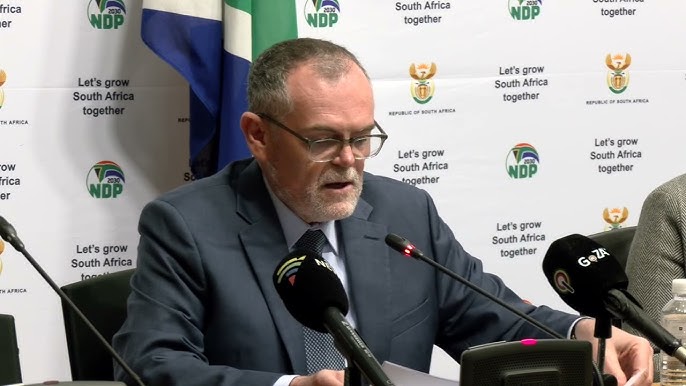
“Starting this year, 90 Rhino Monitors will be trained and deployed annually across Kruger National Park. They are not just protecting rhino. They are protecting livelihoods, family legacies, and the possibility of green jobs for a generation to come,” Forestry, Fisheries and the Environment Minister, Dr Dion George said on Tuesday.
The Minister made these remarks during the official launch of the Rhino Renaissance Campaign at the Kruger National Park, which is grounded on 24/7 rhino tracking; biological management such as targeted dehorning; DNA tagging and genetic research; enforcement cooperation across provincial, national, and regional levels and, critically, resource mobilisation to sustain operations over the long term.
With South Africa currently hosting the Group Twenty (G20) Presidency, this campaign has been adopted as a G20 Legacy Project to rally global support, both diplomatic and financial, to scale this work.
South Africa assumed the G20 Presidency on 1 December 2024, which runs to 30 November 2025, under the theme: "Solidarity, Equality, and Sustainability".
“This work does not stand alone. We are fighting wildlife crime on every front. Our National Integrated Strategy to Combat Wildlife Trafficking is anchored in the Medium-Term Development Plan, the country's roadmap for the next five years.
“This strategy brings together key government departments - including my department, Police, Justice, Border Management, Intelligence, [the] South African National Parks (SANParks) and the provincial conservation entities - in a united, multidisciplinary response. It also builds strong partnerships with the private sector, civil society, and communities on the ground,” George explained.
Tackling wildlife crimes
Fighting wildlife crime is one of the Department of Forestry, Fisheries and the Environment’s six core priorities.
“At its heart is a commitment to a fair and sustainable future - one where our iconic wildlife supports livelihoods, uplifts communities, and strengthens our national identity.
“The Rhino Renaissance Campaign is a vital part of this effort. It supports our vision of a fair industry for lions, leopards, elephants, and rhinos — a future where these species are not only protected but thrive alongside the people who live among them.
“No country or sector can tackle this threat alone. South Africa is building strong enforcement networks across borders and finalising agreements with rhino horn destination countries,” the Minister said.
Government is engaging partners such as Interpol, the Convention on International Trade in Endangered Species of Wild Fauna and Flora (CITES), the International Narcotics Control Board (INCB), and the Southern African Development Community (SADC) neighbours to strengthen intelligence-sharing and cross-border cooperation.
South Africa’s response goes beyond law enforcement. It includes financial intelligence, anti-corruption efforts, and international diplomacy- because wildlife crime is deeply embedded in global criminal networks.
Decline in rhino poaching
As of the end of June, 195 rhinos had been poached across South Africa this year - a reduction of 35 compared to the same period in 2024.
“While any loss is too many, this decrease signals that our intensified enforcement efforts are starting to have an effect. June recorded the lowest monthly poaching figures so far this year, with 22 rhinos killed nationwide. Here in the Kruger, which is still a primary target for poachers, we lost 11 rhinos in both May and June, down from 17 in January and 30 in February.
“These numbers are a stark reminder that the threat remains real and unrelenting. But they also show that progress is possible. Our rangers, enforcement teams, and intelligence units continue to work tirelessly on the front lines to protect our wildlife and hold the line,” the Minister said.
Through rhino dehorning, South Africa removes the reasons rhinos are being killed in the first place.
“Dehorning does not harm the animal. It saves its life. It buys us time - to restore numbers, upgrade security, and disrupt demand,” he explained.
The country is already seeing green shoots which include the relocation of 2 000 rhinos from African Parks to safe havens across the country; Munyawana Conservancy and others are growing populations through rewilding; cross-border work is underway in Mozambique, Zimbabwe, and across the Greater Limpopo Transfrontier Conservation Area.
Safe havens have been identified in Rwanda, Uganda, Kenya, Tanzania, and Botswana and collaboration between government and private wildlife owners in the Integrated Wildlife Zones has been enhanced.
Government aims to monitor rhino herds daily using drones, GPS collars, and digital reporting systems to provide real-time data to enforcement teams.
“Starting this year, 90 Rhino Monitors will be trained and deployed annually across Kruger National Park. They are not just protecting rhino. They are protecting livelihoods, family legacies, and the possibility of green jobs for a generation to come,” Forestry, Fisheries and the Environment Minister, Dr Dion George said on Tuesday.
The Minister made these remarks during the official launch of the Rhino Renaissance Campaign at the Kruger National Park, which is grounded on 24/7 rhino tracking; biological management such as targeted dehorning; DNA tagging and genetic research; enforcement cooperation across provincial, national, and regional levels and, critically, resource mobilisation to sustain operations over the long term.
With South Africa currently hosting the Group Twenty (G20) Presidency, this campaign has been adopted as a G20 Legacy Project to rally global support, both diplomatic and financial, to scale this work.
South Africa assumed the G20 Presidency on 1 December 2024, which runs to 30 November 2025, under the theme: "Solidarity, Equality, and Sustainability".
“This work does not stand alone. We are fighting wildlife crime on every front. Our National Integrated Strategy to Combat Wildlife Trafficking is anchored in the Medium-Term Development Plan, the country's roadmap for the next five years.
“This strategy brings together key government departments - including my department, Police, Justice, Border Management, Intelligence, [the] South African National Parks (SANParks) and the provincial conservation entities - in a united, multidisciplinary response. It also builds strong partnerships with the private sector, civil society, and communities on the ground,” George explained.
Tackling wildlife crimes
Fighting wildlife crime is one of the Department of Forestry, Fisheries and the Environment’s six core priorities.
“At its heart is a commitment to a fair and sustainable future - one where our iconic wildlife supports livelihoods, uplifts communities, and strengthens our national identity.
“The Rhino Renaissance Campaign is a vital part of this effort. It supports our vision of a fair industry for lions, leopards, elephants, and rhinos — a future where these species are not only protected but thrive alongside the people who live among them.
“No country or sector can tackle this threat alone. South Africa is building strong enforcement networks across borders and finalising agreements with rhino horn destination countries,” the Minister said.
Government is engaging partners such as Interpol, the Convention on International Trade in Endangered Species of Wild Fauna and Flora (CITES), the International Narcotics Control Board (INCB), and the Southern African Development Community (SADC) neighbours to strengthen intelligence-sharing and cross-border cooperation.
South Africa’s response goes beyond law enforcement. It includes financial intelligence, anti-corruption efforts, and international diplomacy- because wildlife crime is deeply embedded in global criminal networks.
Decline in rhino poaching
As of the end of June, 195 rhinos had been poached across South Africa this year - a reduction of 35 compared to the same period in 2024.
“While any loss is too many, this decrease signals that our intensified enforcement efforts are starting to have an effect. June recorded the lowest monthly poaching figures so far this year, with 22 rhinos killed nationwide. Here in the Kruger, which is still a primary target for poachers, we lost 11 rhinos in both May and June, down from 17 in January and 30 in February.
“These numbers are a stark reminder that the threat remains real and unrelenting. But they also show that progress is possible. Our rangers, enforcement teams, and intelligence units continue to work tirelessly on the front lines to protect our wildlife and hold the line,” the Minister said.
Through rhino dehorning, South Africa removes the reasons rhinos are being killed in the first place.
“Dehorning does not harm the animal. It saves its life. It buys us time - to restore numbers, upgrade security, and disrupt demand,” he explained.
The country is already seeing green shoots which include the relocation of 2 000 rhinos from African Parks to safe havens across the country; Munyawana Conservancy and others are growing populations through rewilding; cross-border work is underway in Mozambique, Zimbabwe, and across the Greater Limpopo Transfrontier Conservation Area.
Safe havens have been identified in Rwanda, Uganda, Kenya, Tanzania, and Botswana and collaboration between government and private wildlife owners in the Integrated Wildlife Zones has been enhanced.