Gqeberha woman home safe – three arrested

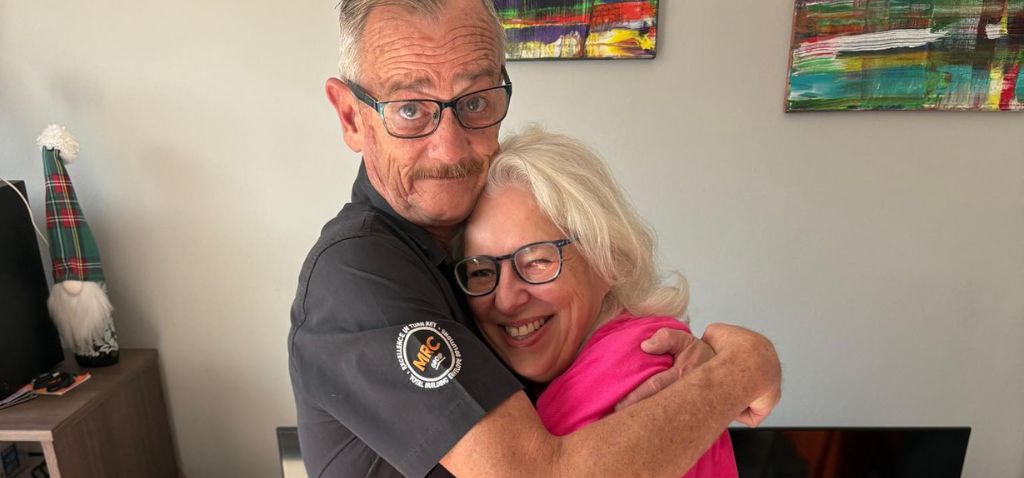
Three people have been taken into custody after the safe recovery of 62-year-old Tracey Fourie, who was allegedly kidnapped last week while returning home from work.

Although her family had not laid a formal complaint at the time, the Hawks’ kidnapping unit was immediately mobilised.

Authorities have not disclosed details of where Fourie was located, but she was medically assessed and found to be unharmed. It is not known whether a ransom was paid for her release.

The three suspects linked to the case are scheduled to appear in court on Wednesday.

Wildfire preparedness done through risk mapping

Garden Route District Municipality (GRDM) and its stakeholders prioritise risk mapping as part of its Integrated Fire Management (IFM) strategy. Risk mapping helps firefighters to identify potential fire hazards and gives them the necessary time to prioritise, mitigate, and manage such risks.

GRDM Fire Chief, Deon Stoffels explains: “By mapping areas most prone to wildfires, stakeholders are able to allocate resources strategically, improve decision-making, and ensure rapid response to predetermined risks, especially when severe weather alerts are issued”.

“This process is continuously being refined through innovation and improved software applications, like exploring OroraTech’s Wildfire Solutions and the CSIR Meraka Institute’s Advanced Fire Information System (AFIS).”

Historical Perspective: Past Wildfires

The 2017 wildfires that swept through Knysna and parts of Plettenberg Bay, in a way contributed quite significantly to the Garden Route’s current wildfire management strategies. It also paved the way for new collaborative agreements to be drawn up between municipalities, forestry companies, and landowners to share the costs of year-round aerial firefighting services. The Western Cape Provincial Government and the Department Forestry’s Fisheries and the Environment, however, still funds the provision of first hour aerial firefighting deployment for incidents in high-risk areas over the high summer season.

As of now, improvements include:

Enhanced early warning systems aligned with known risks;
Increased public awareness programmes, particularly in high-risk rural communities and schools;
Greater emphasis on prevention and risk reduction;
Enhanced Integrated Fire Management, including fire awareness, fire prevention, prescribed burning, resource coordination, fire detection, and fire suppression;
Rapid deployment of most suitable resources, including aerial firefighting; and
Increased capacity, particularly over the summer period.

 Role Players in Fire Risk Mapping
Several partners contribute to wildfire risk mapping in the Garden Route. They include the GRDM Fire and Rescue Services, Disaster Management, South African National Parks, CapeNature, Forestry companies, Southern Cape Fire Protection Association (SCFPA), Working on Fire, landowners, and communities.
To strengthen this approach, GRDM collaborates with the Council for Scientific and Industrial Research’s (CSIR) Advanced Fire Information Systems (AFIS); a satellite-based tool providing near real-time fire data and veld age maps to update local risk profiles.

Academic and Research Partnerships
Although no direct partnerships currently exist with universities or Non-Governmental Organisations (NGO) at a district level, Stellenbosch University (SU) regularly participates in provincial platforms. In May 2025, SU contributed to a Western Cape wildfire workshop focusing on evidence-based fire management policies. This workshop highlighted the Five E’s of Fire Services: Education, Engineering, Enforcement, Response, and Economics.
Future workshops are planned, including one in Central Karoo in 2026, building on the inaugural session in Overberg in 2024.

Why Certain Areas Are Riskier
Wildfire risks do increase because of the following:
Human negligence (cigarettes, broken glass, uncontrolled burning, unsafe burning practices, illegal burning) and lack of awareness;
Lightning strikes in mountainous areas;
Extreme weather such as berg winds;Variable climate patterns (heat, droughts and floods);
Lack of control over alien invasive plants;
Poor land management practices; and
Insufficient enforcement of legislation and more.
Addressing these risks requires education, compliance, and preventative measures such as alien invasive plant removal and rehabilitation, fire breaks, and risk planning.

Public’s Role in Reducing Fire Risks
Residents and landowners can play a significant role in lowering their properties’ fire risks by:
Clearing alien invasive plants (with guidance from municipalities, Fire Protection Associations, and environmental authorities);
Creating and upkeeping fire breaks;
Reporting incidents and risks to either the GRDM, local municipalities, the Department of Forestry, Fisheries and Environment, or the Southern Cape Fire Protection Association;
Municipalities monitor compliance, while enforcement is a priority improvement area for the district and relevant environmental departments;
Fire Scaping your properties and homes; and
Applying for permits to burn and burning in designated places.

Looking Ahead
While measurable district-wide data (such as hectares cleared or number of prescribed burns) is not yet centralised, municipalities and the SCFPA maintain their own records. GRDM is working towards a centralised fire permit system to strengthen data capturing and future reporting.

Western Cape welcomes efforts to reform and revitalise national rail system

The Western Cape Government welcomes the announcement by National Minister of Transport, Barbara Creecy, confirming the completion of Transnet’s adjudication process to select new Train Operating Companies (TOCs) through its Rail Infrastructure Manager.

This milestone is particularly significant for the Western Cape as two new TOCs have been allocated to the Cape Corridor, which serves the province directly. Both operators will manage manganese routes originating in the Northern Cape’s Hotazel and Postmasburg mining regions, transporting this vital mineral to the Port of Saldanha.

Saldanha Bay is South Africa’s premier bulk export port and a strategic asset for the Western Cape economy. Strengthening these manganese flows to Saldanha Bay will not only enhance the port’s global competitiveness but also ease pressure on roads by shifting heavy loads from trucks to rail.

“The Western Cape Government is encouraged by Minister Creecy’s announcement. Opening access to our freight rail network is a critical step towards building a modern, efficient, and sustainable rail system that drives economic growth, creates jobs, and strengthens our province’s role as a national and international trade hub. We look forward to working closely with Transnet, new operators, and the private sector to ensure that these reforms deliver real benefits to our communities and businesses,” said Western Cape Mobility Minister Isaac Sileku.

By boosting rail capacity into Saldanha Bay, supply chain reliability for agriculture, mining, and manufacturing exporters, who rely on efficient ports and logistics to compete globally, is further enhanced . At the same time, improved freight services can generate greater investment in rolling stock and terminals, unlocking billions of rands in private sector opportunities that will modernise South Africa’s rail system.

Western Cape Minister of Agriculture, Economic Development and Tourism Dr Ivan Meyer said, “This milestone marks a significant step forward in South Africa’s rail reform journey and aligns powerfully with the Western Cape’s Growth for Jobs Strategy. By enabling third-party access to our rail network, we are unlocking new opportunities for private sector investment, improving freight efficiency, and laying the foundation for inclusive, jobs-rich economic growth.

The allocation of new rail slots, particularly in corridors such as the Cape Corridor for manganese, will support the provincial government’s strategic goals of boosting exports, enhancing competitiveness, and driving investment in key sectors like agriculture and agri-processing.”

“By opening the Cape Corridor to new operators, we can move more cargo by rail, ease pressure on our roads, and unlock growth at the Port of Saldanha that creates jobs across the Western Cape,” concluded Minister Sileku.

Following the announcement, the focus must shift to implementation and delivery. The Western Cape Government urges all partners, including national government, Transnet, new operators, and cargo owners, to move with urgency so that the full benefits of rail reform are realised.

Another lifeline for the African Penguin

The Minister of Forestry, Fisheries and the Environment, Dr Dion George, has signed the Regulations for the Environmental Management of Offshore Ship-to-Ship Transfer, published under the National Environmental Management: Integrated Coastal Management Act, 2008 (Act No. 24 of 2008).

These regulations, which will come into force once published in the Government Gazette, provide South Africa with a clear and enforceable environmental framework to manage offshore ship-to-ship (STS) transfer operations, including bunkering.

They are designed to prevent pollution, protect coastal ecosystems, minimise and mitigate the impacts of a spill in the unlikely event that one occurs and secure the survival of the African Penguin, together with other marine species and ecosystems in the rich biodiverse Algoa Bay and along South Africa’s coastline in general.

The new measures include:
-Prohibited zones: STS operations are banned within marine protected areas, aquaculture development zones, within 5 nautical miles of each of these zones and within three nautical miles of the high-water mark.
-Wildlife protection: Operators must monitor for penguins and marine mammals, deploy hydrophone systems, and report sightings and incidents. Immediate response plans must be in place for any oiled or injured wildlife.
-Weather limits: In Algoa Bay, operations may only take place in safe conditions, with wind speeds below 22 knots and wave heights below two metres. The Minister may set conditions elsewhere.
-Pollution prevention: Operators must use drip trays, leak detection systems, inflatable booms, and have a spill-response vessel on standby within five nautical miles of shore.
-Training and compliance: All crew must receive environmental awareness training. Each operator must also submit an independent Environmental Management Plan, approved by the Minister, addressing site-specific risks.
-Algoa Bay restrictions: Operations are confined to designated anchorages, with a limit on the number of operators and tankers, and seasonal restrictions in anchorage area 2 to protect sensitive habitats.

Non-compliance will be met with firm penalties: fines of up to R2 million, imprisonment for up to five years, or both. Minister George said, “These regulations are a decisive step to safeguard our oceans and secure the future of our African Penguin. They set strict standards for offshore ship-to-ship transfers, ensuring that maritime activity can only proceed in a safe and responsible way.”
error:
Scroll to Top