Cape Town’s Aviation Growth Soars, Driving Jobs and Economic Opportunities

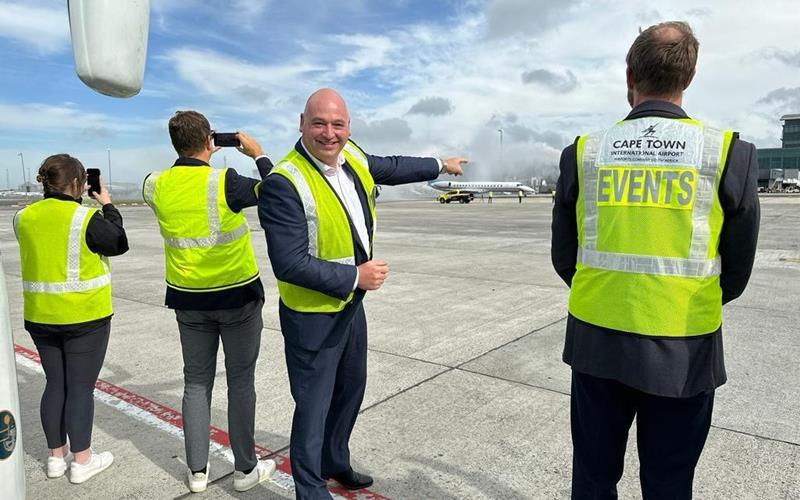
Cape Town’s booming aviation sector is helping to drive economic growth, create jobs, and boost trade, according to the City’s Mayoral Committee Member for Economic Growth, Alderman James Vos.

New figures from Cape Town International Airport show that the city’s air travel industry continues to soar. In 2024, the airport welcomed over 10 million passengers and handled 75 000 tonnes of cargo. So far this year, domestic travel has grown by 8%, international arrivals by 5%, and cargo volumes by an impressive 56%.

From November to March, during the peak international travel season, Cape Town will be directly linked by 24 airlines to 30 destinations across 35 routes, with 228 flights every week. Vos said each connection represents much more than travel convenience — it brings jobs, supports local businesses, and strengthens the city’s economy. According to Cape Town Tourism’s Economic Value of Tourism Report, every 10 tourists create one job.

Vos credited the city’s success to strong collaboration with airlines and partners in the private sector. “These results don’t just happen; they are the outcome of hard work and sustained partnerships,” he said.

He also highlighted the success of the Air Access initiative, based within Wesgro, which recently celebrated its 10th anniversary. The City funds and supports the programme through its Economic Development and Investment Department to keep Cape Town globally connected and competitive.

However, Vos warned that further infrastructure investment is essential to sustain this growth. “While Cape Town International Airport has rightly been voted Africa’s best in several categories, it has now reached the point where urgent upgrades are needed,” he said.

Planned improvements include expanding runway capacity, upgrading terminal buildings, and improving cargo handling facilities. Vos said he will continue engaging with Airports Company South Africa (ACSA) to ensure these upgrades move forward.

“We will continue building on this progress, because every new connection in the skies above Cape Town fuels growth and opportunity on the ground for our residents,” Vos added.

Government committed to vulture conservation

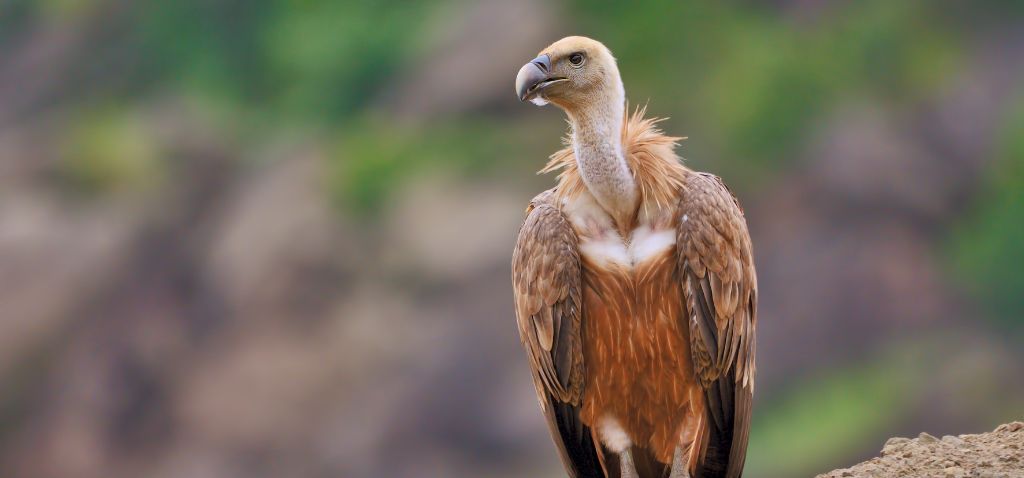
With the severe population declines of vultures over the past three decades, government has reaffirmed its commitment to ensure that vulture conservation remains a national priority.

According to the Minister of Forestry, Fisheries and the Environment, Dr Dion George, this year alone, two mass poisoning incidents resulted in the deaths of hundreds of vultures.

“If these events continue unchecked, the loss of thousands of vultures could have devastating environmental and public health consequences,” the Minister said on Monday.

He therefore called on South Africans to play an active role in protecting these critically important birds.

The Minister’s remarks comes ahead of the Session of the Meeting of the Parties (MOP9) to the African-Eurasian Migratory Waterbird Agreement (AEWA), which will take place in November 2025.

Vultures, once widespread across Africa, have suffered severe population declines over the past three decades. 

Many vultures die after feeding on carcasses laced with poison, amongst other threats, often left by poachers targeting elephants or rhinos, or by communities involved in human–wildlife conflict. 

This has far-reaching consequences as carcasses left to rot increase the risk of disease outbreaks, poor sanitation around rural settlements, rising stray dog populations, and greater incidences of human injuries and rabies fatalities.

South Africa is home to nine vulture species, seven of which have established breeding populations, and these vulture populations continue to face varying degrees of threats of extinction.

As part of government’s plan to protect vultures, the National Multi-Species Vulture Biodiversity Management Plan (BMP) was published on 18 March 2024.

The plan is now being implemented through the National Vulture Task Force (NVTF) and its subcommittees.

“The desired state is to see all vultures fulfilling their essential ecosystem services through the achievement of a safe and secure environment in which all the components of a vulture’s life cycle are fulfilled.

 “This will be achieved through the reduction of the key threats facing the species (intentional and unintentional poisoning, interactions with energy infrastructure, habitat change), the improvement of stakeholder involvement, improving knowledge gaps and developing best practice guidelines for ex situ, or off-site, conservation action,” the Minister said.

Vulture Conservation Strategy

Through the Department of Forestry, Fisheries, and the Environment (DFFE), South Africa participated in a regional workshop convened by the Southern African Development  Community (SADC), the International Union for Conservation of Nature (IUCN), and BirdLife International and the rest of the region in commemorating International Vulture Awareness Day in September. 

It was at this workshop that the SADC Vulture Conservation Strategy and Action Plan (2025–2035) was also launched. 

The strategy and plan seeks to mobilise collective action among the 12 SADC vulture range states to address these complexities through coordinated conservation efforts, while emphasising stakeholder engagement and data-driven decision-making.

The workshop not only highlighted the ongoing threats to vultures, including poisoning, collisions, and electrocutions from energy infrastructure, and habitat loss; but also the opportunities for internal and cross border collaboration and cooperation to implement targeted actions, raise awareness, and strengthen legislation to secure the future of vultures. 

“South Africa is committed to the implementation of the SADC Vulture Conservation Strategy and Action Plan (2025–2035). Without decisive and coordinated action, several vulture species face the very real threat of extinction,” George said.

Progress update on Louis Fourie Road, Mossel Bay

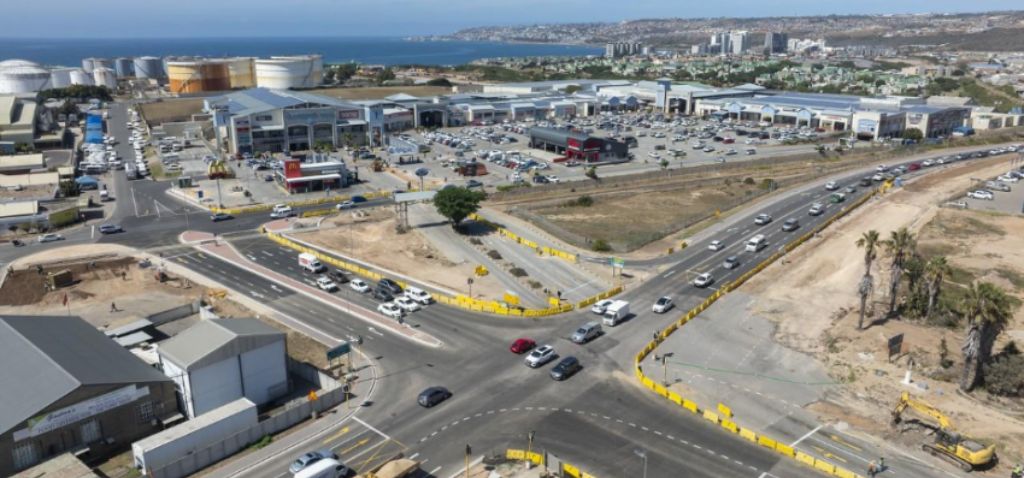
The Western Cape Department of Infrastructure (DOI) and its appointed professional team is making good progress on upgrades to Louis Fourie Road in Mossel Bay. This R540 million project is the largest ever Western Cape Government investment in road infrastructure in the Garden Route District. The project is expected to be completed in August 2026.

It entails routine maintenance work on about 6km of existing roadway, the upgrading of just over 3km of road from a single carriageway to a dual carriageway, upgrading intersections, constructing a central median, realigning and upgrading the Langeberg Mall access road, rebuilding the on- and offramp to the N2, constructing a new bridge over the Blinde River, constructing a pedestrian walkway from Waboom Road to Sonskynvallei, a new bi-directional road under rail bridge on Garret Street and building a new road to link Garret Street with Gericke Street.

“Bulk earthworks and road layers are under construction on the land side of Louis Fourie Road, the intersections on the land side are being rebuilt, the Blinde River Bridge is under construction on the land side, and stormwater infrastructure, paving, streetlights and subsoil utility works are underway,” said Jandré Bakker, DOI Director: Operational Support.

“Road users are now using the new entry to the Langeberg Mall which is already bringing great relief to the traffic congestion to and from the mall. We wish to thank road users but especially the businesses located in and management of the Langeberg Mall for their patience during the construction process and the positive spirit in which they have supported the DOI,” Bakker continued.

“While work on the intersections continues, road users are reminded of the current widening of the road embankment on a section of Louis Fourie Road between George Road and Marsh Street. Other works currently underway include the resurfacing of Louis Fourie Road between Voorbaai and Hartenbos up to the offramp towards Kleinbrakrivier. We further remind road users of the temporary closure of Bally Crescent from 6 to 29 October for reconstruction, if all goes according to plan. Alternative access is via Watson Street and Bolton Road,” he added.

“We are pleased to report that the N2 onramp and offramps have been completed, and the pedestrian walkway has been completed,” said Tertuis Simmers, Provincial Minister of Infrastructure. “We have overcome obstacles, namely underground services that had not been accurately mapped, and are replacing ageing infrastructure to avoid building a new road,” said Tertuis Simmers, Western Cape Minister of Infrastructure.

“To the last report date, the project had created 41 423 person-days of work against a target of 58 000 person-days and created 282 work opportunities against a target of 250. It spent R64.8 million of its spending on targeted enterprises, and another R6.5 million was spent on procurement from local enterprises. A total of R8.7 million has been spent on emerging contractor development and I look forward to seeing these numbers grow towards the completion of the project which is still on track,” Minister Simmers added.

“We are well aware of the inconvenience of roadworks”, added Minister Simmers.

“We remain confident that the long-term benefit of this road upgrade will outweigh the short-term inconvenience to road users and that the investment in infrastructure will unlock economic opportunities in Mossel Bay and surrounds”, he continued.

BMW Recalls Over 12,000 Vehicles in South Africa Over Fire Risk

The National Consumer Commission has issued a notice to consumers regarding a product recall by BMW Group South Africa, affecting several popular models due to a potential fire risk linked to the Starter Motor.

The recall applies to the BMW 3 Series (G20), 4 Series (G22), 5 Series (G30), Z4 (G29), X3 (G01) and X4 (G02) models. BMW has confirmed that a total of 12,491 vehicles are affected, all of which were made available in South Africa from 2016.

According to BMW, internal quality checks and customer complaints revealed that water could enter the Starter Motor at certain points, leading to corrosion. This defect may prevent the engine from starting and could, in some cases, cause a short circuit and local overheating of the starter. In the most severe instances, this may result in a vehicle fire, even when the car is parked.

Consumers are advised to avoid driving through deep water that could submerge the Starter Motor, especially for extended periods. BMW warns that in the rare event of overheating, the risk of damage to property or injury is possible.

Owners of the affected vehicles are urged to take their cars to the nearest authorised BMW dealership to have the Starter Motor replaced. The repair will be carried out free of charge.

Drivers can check whether their vehicle is part of the recall by visiting BMW’s service portal or by monitoring in-car communication for updates.

The National Consumer Commission encourages all affected owners to act promptly to ensure their safety and that of others.
error: eRadio is protected !
Scroll to Top