Government to announce major nuclear energy expansion plans

Government will soon make an announcement on plans to expand South Africa’s foray into nuclear energy.

This according to Minister of Electricity and Energy, Dr Kgosientsho Ramokgopa, who delivered the opening address at the G20 Nuclear Energy Ministerial Conference held in Durban.

“[We] will be making big announcements next week, post-Cabinet. We are close to that. Our ambition is to build a new job program [of] at least initially the size of 5000 megawatts, and we think that we can derive the benefits of industrialisation and ensuring that there is exponential increase of the skills that are required to support that build program.

“Necsa [South African Nuclear Energy Corporation] is a big part of the conversation. As we know, we are running a 60-year-old research reactor. We are looking for suitors or partners to help us to take it to another level. We have seen that there is an insatiable appetite from across the globe to partner and work with us,” he said.

The Minister highlighted that small modular reactors [SMR] present a “pristine opportunity” for expansion going into the future.

“They are rapid deployment and the fact that they can be the production can be standardised, and therefore, reducing the long lead times. But most importantly, is to power the requirements of the artificial intelligence complex. 

“I think the prospect of locating data centres across various geographies is something that is particularly attractive, and we think that small modulary actors will help us,” he said.

Turning to the African continent, the Minister noted that the continent is an important producer of uranium – used for nuclear reactors – at 14% of global production with further untapped reserves.

Countries including Egypt, Nigeria, Kenya and Ghana are either building, planning for, or considering nuclear power as a source of power.

“Africa’s time is now and given them huge endowments that we have, especially on uranium. Energy demand is going to grow exponentially on the continent as people experience upward social and economic mobility, as we bring people out of poverty and I think, nuclear to power is going to be a big part of the African story.

“A long-term view must be such that we are able to build infrastructure that will be a precondition for such enrichment to happen on the continent. We possess all the necessary apparatus that is required for us to participate meaningfully in the nuclear fuel cycle,” Ramokgopa said.

No damage caused by Germiston tornado

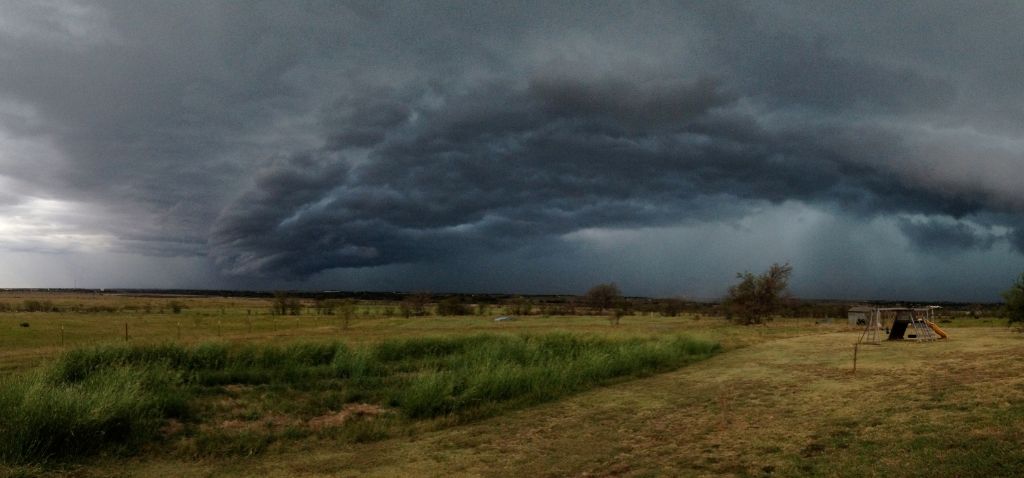
The South African Weather Service (SAWS) has confirmed that no significant damage was observed on-the-ground damage assessment of the observed tornado in the vicinity of the Rand Airport, Germiston. 

“The only impacts noted were broken tree branches at the golf course adjacent to the airport, along with signs of heavy rainfall from thunderstorms, including puddles and muddy conditions,” SAWS said on Thursday.

Community members in the area also confirmed that there were no structural damage or disruptive impacts associated with the event that was observed on social media.

Based on these findings, the SAWS has classified the event as an EF0 tornado. 

“An EF0 is the weakest category on the Enhanced Fujita Scale, with estimated wind speeds of 105 – 137 km/h. Such tornadoes typically result in minor damage, such as broken branches, shallow-rooted trees being pushed over, and light damage to roofs.

“While EF0 tornadoes are relatively weak, they remain dangerous weather phenomena, and the public is urged to always exercise caution during severe thunderstorms,” the weather service said. 

World Mental Health Day focuses on mental health and substance abuse

South Africa’s mental health system is currently facing an increasing challenge due to substance abuse, which is putting immense pressure on public health facilities, emergency services, and mental health professionals. 

This situation often leads to complex diagnoses that require multidisciplinary care.

The Department of Health said addressing substance abuse challenges necessitates enhanced prevention, rehabilitation, and health promotion interventions at all levels of the health system.

To this end, the department has decided to observe World Mental Health Day in 2025 by bringing together various stakeholders and individuals who share a common goal to improve mental health and address substance abuse issues. 

World Mental Health Day takes place every year on 10 October and serves as a reminder of the importance of good mental health and the need to prioritise and invest in good mental health.

The event will focus on sharing information, best practices, and providing feedback on the impact of current interventions, allowing for necessary adjustments to achieve the desired outcomes.

Today, the department is holding a media and mental health stakeholder engagement session to discuss the burden of mental health in South Africa, including the leading contributing factors and recommendations for improving mental healthcare.

“Mental health conditions are among the leading causes of disability globally and also impose high costs on households, employers, and economies,” the department said. 

According to new data released by the World Health Organisation (WHO), more than one billion people are living with mental health conditions such as anxiety and depression. However, most do not receive adequate care. 

“This has the potential to inflict huge human and economic tolls requiring a greater investment and action to scale up services to protect and promote people’s mental health.” 

The Deputy Minister of Health, Dr Joe Phaahla, along with Gauteng MEC for Health and Wellness, Nomantu Nkomo-Ralehoko, and other provincial MECs for Health, will participate in a panel discussion on mental health.

They will be joined by representatives from key organisations, including Shenaaz El-Halabi from the WHO, Cassey Chambers from the South African Depression and Anxiety Group, and Professor Solomon Rataemane, who represents the Ministerial Advisory Committee on Mental Health. 

Health professionals and individuals with lived experiences of mental health conditions and drug dependency will also contribute to the discussion.

This session is part of this year’s World Mental Health Day commemorative activities, which will be held under the theme: “Together for Mental Health.” 

This theme emphasises the importance of collective support and connection in promoting mental health, highlighting how collaboration fosters a sense of belonging.

“The theme also highlights the importance of stakeholders working together further to strengthen access to mental health services across the country,” the department explained. 

The WHO urges all countries to speed up the implementation of their action plans aimed at improving mental health for their populations. 

This includes integrating mental health services into primary healthcare and general hospital care. 

The department said the goal is to enhance access to care, reduce the treatment gap, combat stigma, and promote overall mental well-being.

The day will start with a walkabout in selected areas within the health facility to showcase some of the progressive interventions and investments that strengthen mental health and substance abuse service provision. 

The walk-about will also include interactions with frontline health workers who manage substance abuse patients, affected patients to better understand the challenges that they are experiencing, and to collaboratively find solutions. 

NSRI welcomes Starlink’s commitment to South Africa – a breakthrough for offshore rescue communication

The National Sea Rescue Institute (NSRI) has welcomed recent news that Starlink plans to expand its operations and infrastructure investment in South Africa, signalling a potential breakthrough for maritime search and rescue communication.

The announcement, reported by TechCentral, outlines a R2.5 billion local investment and specifically mentions plans to work with the NSRI to equip rescue vessels with Starlink connectivity, a game-changer for sea rescue communication

South Africa’s coastline stretches nearly 3,000 kilometres, featuring large areas of remote waters. During rescues in such isolated locations, NSRI rescue crews, who are all unpaid volunteers and often operate beyond the reach of land-based or mobile networks, frequently face communication issues that can be limited or completely cut off.

Maintaining reliable communication between vessels and rescue bases, as well as with partner rescue services, is one of the biggest challenges in maritime rescue. Communication breakdowns can delay response times, hinder coordination, and increase risk for both rescuers and those in distress.

Starlink’s low-latency satellite network offers the potential to bridge this gap. The system will enable high-speed, stable broadband connectivity for NSRI vessels, allowing for live communication between crews and the NSRI’s Emergency Operations Centre, wherever the rescue vessels are.

Connectivity that can save lives
Access to real-time voice, data and imagery from remote rescue zones would dramatically enhance coordination, navigation and medical decision-making. It would also improve crew safety by allowing continuous tracking of vessels and the transmission of vital situational information back to command teams on land.

NSRI Chief Executive Officer, Mike Vonk, said the progress toward bringing Starlink to South Africa represents an important milestone for marine rescue readiness.

“When our volunteers are operating far offshore in difficult conditions, every second of communication matters,” said Vonk. “Starlink’s technology will help ensure that our crews remain connected during the most complex and time-critical rescues, improving their safety and, ultimately, saving lives.”

Reliable satellite connectivity would not only support rescues but also strengthen crew training and coordination between rescue bases. It could serve as a communication platform for safety education and outreach in remote coastal communities, and as a resilient backup during terrestrial network outages caused by severe weather or infrastructure failures.

In 2024, the NSRI expressed its support for Starlink’s introduction to South Africa, recognising its potential to improve emergency communication nationwide. The renewed commitment brings that vision significantly closer to reality.

Looking ahead
“The NSRI’s mission has always been to save lives on South African waters,” added Vonk. “Reliable communication is central to that mission. The progress being made to bring Starlink to South Africa is encouraging, and we look forward to working with Starlink, government and local partners to integrate this technology safely and sustainably into our operations.”

As South Africa’s trusted maritime rescue organisation, the NSRI believes that improved connectivity at sea will not only strengthen national rescue capability but also enhance safety for all who live, work and travel along the country’s coastline.
error:
Scroll to Top