Over 77 000 candidates to sit for matric exams in the Western Cape

With the National Senior Certificate (NSC) exams set to get underway next week, 77 442 candidates are set to sit for the examinations in the Western Cape.

“Of these, 67 606 are full-time matric candidates, while 9 836 are part-time or repeat candidates. We have 3 231 more full-time candidates writing than in 2024,” said Western Cape MEC for Education, David Maynier.

The exams will start on Tuesday, 21 October 2025, with 12 736 candidates sitting for the computer applications technology (CAT) practical exam in the morning.

In total, 112 exam papers will be written by the time the exams end on 26 November 2025.
As in previous years, Maynier said the subject with the largest number of candidates is Mathematical Literacy, with 53 206 candidates writing Paper 1 on Friday, 31 October 2025, and Paper 2 on Monday, 3 November 2025. 

On the other end of the scale, two subjects have a single candidate writing in the Western Cape, and that is Sesotho First Additional Language, and Setswana Home Language. 

Maynier stated that managing the exams is a large administrative task, with candidates scheduled to write at 473 exam centres and 2 046 trained invigilators appointed to closely monitor the proceedings.
Marking will begin in December, with 954 000 examination scripts being marked by 4 190 markers.

“We appreciate the incredible work that our examination officials do each year to ensure that the exams run smoothly. Our matrics and their teachers have also put in a tremendous amount of work to prepare for these exams, so we appeal to everyone in our province to put the best interests of our candidates first during the exam period. 

“We wish our candidates all the best for the final days of revision and look forward to celebrating with them when the results are released,” Maynier said.

South Africa and China sign landmark agreement

South Africa and China have signed a historic stone fruit trade protocol, opening the Chinese market to five types of South African stone fruit — apricots, peaches, nectarines, plums, and prunes.

The agreement was signed in Shanghai by Agriculture Minister John Steenhuisen and Minister Sun Meijun of China’s General Administration of Customs (GACC) on Wednesday.

It marks the first time China has granted market access for multiple stone fruit varieties from a single country under one deal.

Speaking at the signing ceremony, Steenhuisen described the agreement as “a major breakthrough for South African fruit producers and exporters at a time when diversification is essential for our agricultural resilience.”

He said the protocol forms part of a broader strategy to reduce South Africa’s dependence on traditional export markets and more responsive to new consumption patterns, as China’s growing middle class, which is driving global demand for high-quality agricultural products.

“While markets are grown and developed over time, the access that this protocol will unlock in a vast new market, such as China, holds great potential, and will offset some of the immediate impact of the US tariffs especially on plums,” Steenhuisen said.

The Minister said the Chinese market could unlock approximately R400 million over the next five years, with that figure projected to double within a decade.
“We are of the view that the inaugural 2025/26 export season can generate approximately R28 million and R54 million in 2026/27.”

He noted that China’s demand for peach and plum imports continues to grow, with imports last year exceeding 21 million cartons of peaches and nectarines and 20 million cartons of plums, exceeding South Africa’s entire seasonal export volume.

Projections also indicate that exports to China are set to grow to 5% of South Africa’s total export volumes in 2032/2033.

Job creation

Steenhuisen said the opening of the Chinese market would also enable local producers to export more share of their harvests at more sustainable prices.
“Stronger demand in China, together with a slight reduction in exports to other markets, are expected to drive market growth. Over time, this improved demand, and increased volumes could encourage further investment at farm level, particularly the establishment of new orchards.

“Over the next decade, this protocol could create a market that will support roughly 350 new direct jobs on farms and in packhouses, and close to 600 new jobs overall once linked industries such as transport and packaging are included,” the Minister said.

During his discussions with Minister Meijun, Steenhuisen also raised the resumption of beef exports from certain South African regions and reviewed progress on foot-and-mouth disease (FMD) regionalisation.

Technical team 

He also invited a GACC technical team to visit South Africa to inspect the country’s cherry and blueberries orchards and packhouses during the current harvest season.

“If the inspection proceeds smoothly, South Africa will likely secure cherry market access to China within the next harvest cycle, strengthen its trade ties, and unlock new export and job opportunities for the fruit sector. This will also consolidate our positive momentum on broader fruit trade cooperation.”

Investment 

The Minister also highlighted the impact of Chinese infrastructure investment in upgrading South Africa’s railways, ports, and highways, improving market access for farmers and boosting logistics efficiency.
This work aligns with China’s Belt and Road Initiative (BRI), which prioritises infrastructure investment across Africa.
The Minister also encouraged trading partners to make use of the world-class Shanghai Freight Services network to leverage its extensive global logistics network for both sea and air freight, ensuring faster and more reliable delivery of South African agricultural exports to China.

“China has been South Africa’s largest trading partner for more than a decade, and our bilateral trade continues to deepen. We value China’s ongoing cooperation and the shared commitment to exploring opportunities within our agriculture sector and we look forward to building on this partnership through future agreements that benefit both our countries,” the Minister added.

Pretoria High Court Orders Full Overhaul of Aircraft Engines Older Than 12 Years

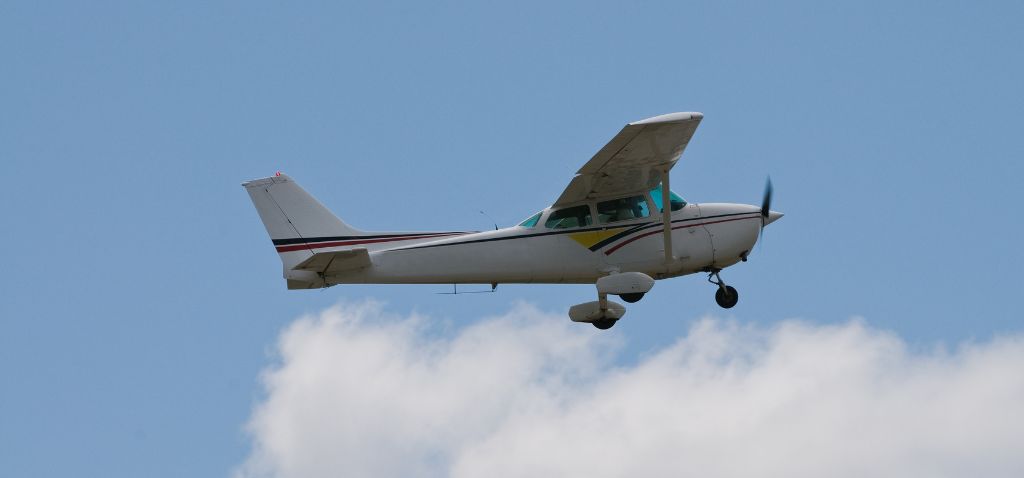
Aircraft engines older than 12 years - regardless of flight hours - must now be completely overhauled, following a ruling by the Pretoria High Court on Friday.

The decision comes after five aviation industry bodies challenged the controversial rule introduced by the South African Civil Aviation Authority (CAA).

The court upheld the requirement, which is expected to have a major impact on the aviation sector.
In June, the CAA confirmed that all aircraft with engines over 12 years old must be rebuilt in line with manufacturers’ maintenance manuals. The authority said the move followed the invalidation of the long-standing AIC 18.19 directive, which had previously made engine overhauls only a guideline rather than mandatory.

Most light aircraft in South Africa use Lycoming or Continental engines, which recommend overhauls every 2,000 flight hours or 12 years.

Industry representatives warn that enforcing this as a rule will have serious implications for private, commercial, and agricultural aviation.

Aviation expert and TV presenter Wouter Botes said the cost of overhauling an engine - around R1 million - will force many owners to sell their planes.

“This rule will hit the private sector hard. Some of these aircraft are used for crop spraying,” he said.

Progress made in removal of Western Cape abandoned vessels

Government has reported significant progress in clearing sunken and abandoned vessels from Western Cape harbours.

“The removal of these wrecks is a critical step in addressing the environmental and safety risks posed by sunken and abandoned vessels, which constitute approximately 90% of such wrecks in Hout Bay Harbour,” the Minister of Forestry, Fisheries and the Environment Dr Dion George said on Tuesday. 

By clearing these vessels, the Department of Forestry, Fisheries and the Environment’s (DFFE) is creating additional mooring and berthing space, responding to numerous requests from the fishing industry for access to these facilities. 

This development is expected to stimulate economic activity, including increased demand for vessel building and job creation in coastal communities.

These efforts are part of the DFFE ongoing revitalisation of the Proclaimed Fishing Harbours located in Lamberts Bay, St Helena Bay, Saldanha Bay, Hout Bay, and Gordon’s Bay.

A total of 37 vessels has been identified in these five harbours, comprising 17 abandoned vessels and 20 sunken vessels. To date, six vessels have been attended to or removed by their owners at their own cost, leaving 31 vessels remaining. 

Of these, 17 vessels—most of which are small leisure boats in Hout Bay Harbour—are expected to be removed through lifting and cutting operations before the end of 2025.

“The successful progress in removing sunken and abandoned vessels across our Western Cape harbours is a testament to our dedication to ensuring safe and sustainable fishing harbours. These efforts not only mitigate environmental and navigational risks but also create opportunities for economic growth by freeing up valuable mooring space,” the Minister said.

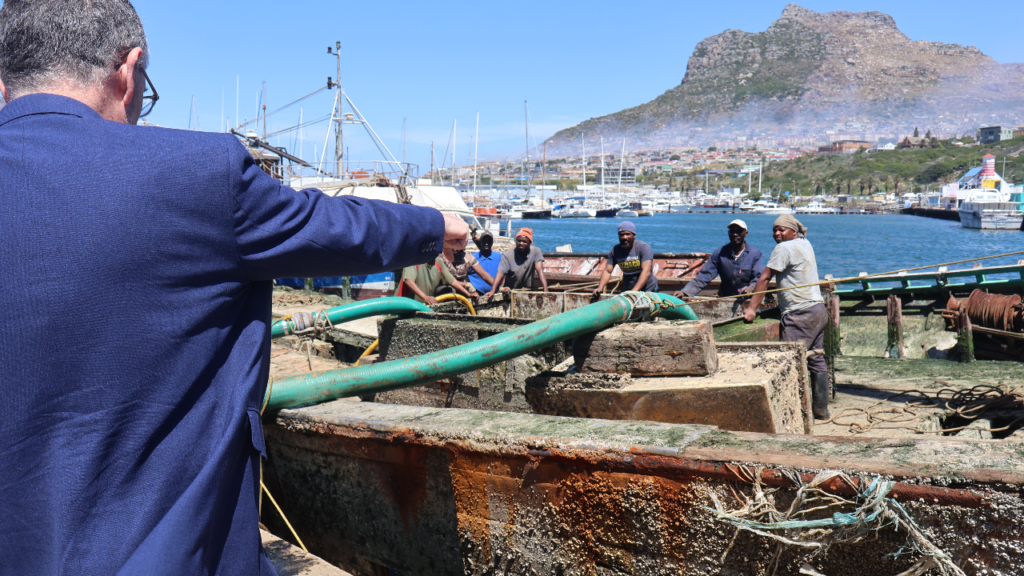
In Hout Bay, which accounts for the majority of the remaining vessels (25 identified, with 23 still to be addressed and 10 slated for lifting), the salvage operation for the vessels Edelweiss and African Unity has been underway for the past five days.

Despite initial plans to complete the removal within three days, the complexity of the operation, including the discovery of an additional unidentified vessel beneath one of the wrecks, has extended the timeline.

Collaboration
The DFFE, in collaboration with the South African Maritime Safety Authority (SAMSA), have expressed thier commitment to overseeing the completion of these operations in accordance with the Wreck and Salvage Act (Act No. 94 of 1996). 

SAMSA will continue to issue directives to vessel owners where necessary to facilitate removals.

“The collaborative efforts of our teams, SAMSA, and vessel owners are driving transformative change in our fishing harbours. We are committed to sustaining this momentum to ensure our harbours remain safe, functional, and economically vibrant,” the Minister said.

Teams have successfully pumped water from the vessels, and a team of divers is actively sealing identified holes to ensure the vessels can be safely floated and moved for salvaging. 

Additional vessels in Hout Bay, such as Merlin, Blue Boat, and Spes Nova, are scheduled for removal by the end of October 2025, while others like Grant and another Spes Nova are targeted for the end of December 2025. 

Several abandoned vessels, including SA 4256, C.Bull, Nico’s, Roly Poly, Royal Duke, Brilliant, Lucky Too, Teal, and two dinghies, are under discussion for lifting with a crane by November 2025. 

The owner of the White Boat has committed to repairing it and donating it to Small Scale Fisheries Co-Operatives.

In other harbours:
•    Gordon’s Bay (4 vessels identified, 1 remaining): The sunken Dolphin is set for removal by a diving school as part of a training programme, with a date to be confirmed by the end of October 2025. The abandoned vessels Sea Quest, Feelin Naughty, and Illusions – 29504 are also noted.
•    Lamberts Bay (2 vessels identified, 1 to be removed): The sunken Getruide ADF 549 and abandoned James Archer are pending, with SAMSA to issue a directive for Getruide ADF 549.
•    St Helena Bay (2 vessels identified, 2 to be removed): The sunken Arizon II and Anna SH1451P are pending SAMSA directives.
•    Saldanha Bay (4 vessels identified, 4 to be removed): The sunken Benguela Pride 350390, Petrie Hein –350553, OosterDAM 350481, and Angie V are pending SAMSA directives.

In May the Minister called for the urgent removal of wrecked and abandoned vessels that pose significant risks to navigation, marine ecosystems, and the safety of coastal communities.
error: eRadio is protected !
Scroll to Top