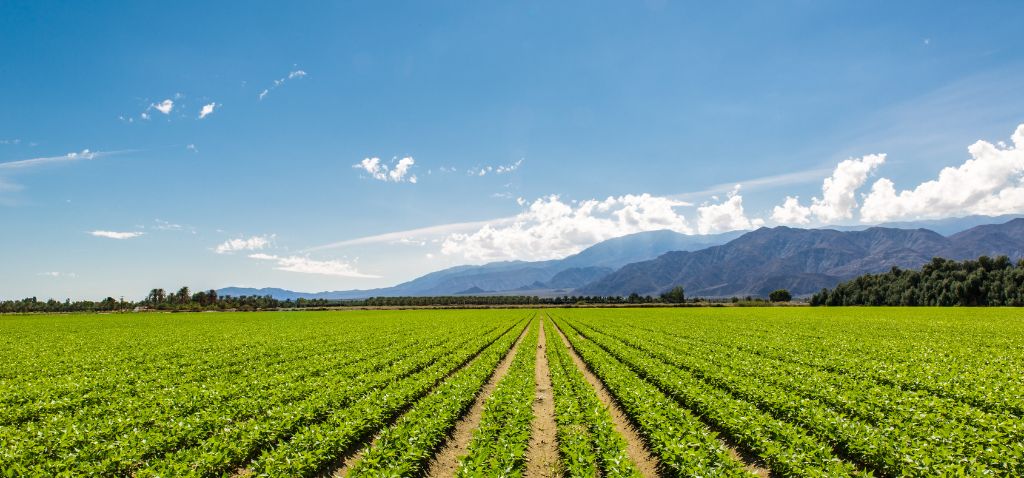
As South Africa transitions from winter to spring, the Department of Agriculture has advised farmers to closely monitor weather and climate updates to make informed decisions and delay planting until sufficient soil moisture is available.
According to the department’s climate advisory for the 2025/26 summer season, issued on Tuesday, winter crops remain in good condition overall, though drought stress in the Southern Cape is expected to impact crops negatively.
Summer crop farmers across the country are preparing for the upcoming planting season.
The veld and livestock conditions are reported to be generally in reasonable condition across the country with pockets of poor conditions. The average level of major dams remains high in most provinces.
According to the Seasonal Climate Watch issued by the South African Weather Service, dated 30 September 2025, forecasts above normal is anticipated for the north-eastern regions of the country during late spring and in the summer.
However, parts of Mpumalanga and Limpopo may experience below-normal rainfall during this period.
Minimum and maximum temperatures are expected to be above-normal for most parts of the country during the late spring and summer seasons, with notable exception along the south-western coast, where below-normal maximum temperatures are anticipated.
“With the seasonal forecast in mind, farmers are advised to follow the weather and climate forecasts regularly to make informed decisions and wait for sufficient moisture before planting. In addition, farmers must continually conserve resources in accordance with the Conservation of Agricultural Resources Act 1983, (Act No. 43 of 1983),” the department said.
The department has also advised livestock producers to balance herd sizes with veld carrying capacity, provide sufficient feed and mineral licks, and ensure access to water and shelter, particularly during adverse weather.
Since veld conditions in summer rainfall areas remain dry until consistent rains set in, the department called on farmers to construct and maintain fire belts through mechanical means and adhere to veld fire warnings in all areas.
“Episodes of heatwaves and localised flooding are likely during summer, as such, farmers should have mitigation measures in place. Farmers are encouraged to implement strategies provided in the early-warning information issued.
“The department will partner with all relevant stakeholders to continue raising awareness in the sector and capacitating farmers on understanding, interpreting, and utilising early-warning information for disaster risk mitigation and response,” the department said.
According to the department’s climate advisory for the 2025/26 summer season, issued on Tuesday, winter crops remain in good condition overall, though drought stress in the Southern Cape is expected to impact crops negatively.
Summer crop farmers across the country are preparing for the upcoming planting season.
The veld and livestock conditions are reported to be generally in reasonable condition across the country with pockets of poor conditions. The average level of major dams remains high in most provinces.
According to the Seasonal Climate Watch issued by the South African Weather Service, dated 30 September 2025, forecasts above normal is anticipated for the north-eastern regions of the country during late spring and in the summer.
However, parts of Mpumalanga and Limpopo may experience below-normal rainfall during this period.
Minimum and maximum temperatures are expected to be above-normal for most parts of the country during the late spring and summer seasons, with notable exception along the south-western coast, where below-normal maximum temperatures are anticipated.
“With the seasonal forecast in mind, farmers are advised to follow the weather and climate forecasts regularly to make informed decisions and wait for sufficient moisture before planting. In addition, farmers must continually conserve resources in accordance with the Conservation of Agricultural Resources Act 1983, (Act No. 43 of 1983),” the department said.
The department has also advised livestock producers to balance herd sizes with veld carrying capacity, provide sufficient feed and mineral licks, and ensure access to water and shelter, particularly during adverse weather.
Since veld conditions in summer rainfall areas remain dry until consistent rains set in, the department called on farmers to construct and maintain fire belts through mechanical means and adhere to veld fire warnings in all areas.
“Episodes of heatwaves and localised flooding are likely during summer, as such, farmers should have mitigation measures in place. Farmers are encouraged to implement strategies provided in the early-warning information issued.
“The department will partner with all relevant stakeholders to continue raising awareness in the sector and capacitating farmers on understanding, interpreting, and utilising early-warning information for disaster risk mitigation and response,” the department said.