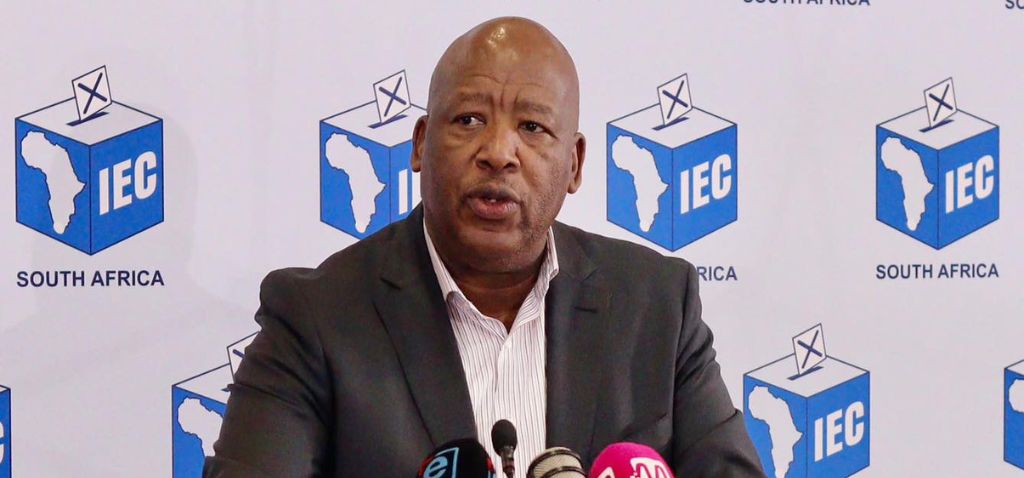
The Electoral Commission of South Africa (IEC) says it's all systems go for the Local Government Elections 2026/7.
Briefing the media in Pretoria earlier today, Deputy Chief Electoral Officer Masego Shiburi, said the Commission is encouraged by the number of South Africans who have acted on the call to register and update their details through various convenient platforms ahead of the upcoming local government general elections in 2026/2027.
The Minister of Home Affairs is yet to announce the date for the elections.
“From January to September 2025, over 305 206 new voters registered, while 60 752 voters updated their registration details,” Shiburi said.
Shiburi said the highest number of new registrations occurred in September with 71 324, followed by August with 51 714 and February with 39 967.
“Of this total of registered voters, 76.8% of voters were captured via the Voter Management Devices (VMD), 12% used the online registration portal and ten percent visited their local IEC office,” Shiburi said.
Shiburi said despite the registration activity, a lot more citizens must still register and that the Commission encourages all eligible voters to use the convenience of the self-registration platform to register to vote or update their voter details.
“Voters are urged to register where they live and vote at the voting station where they are registered.
“A registered voter who has moved since they last registered should check their voting district and voting station status and, if necessary, update their address details to ensure that they are registered in a ward linked to their new place of residence,” he said.
With regard to the Annual Report, Shiburi said on 14 October, the Portfolio Committee on Home Affairs received the Electoral Commission’s 2024/25 Annual Report, reflecting strong performance and commitment to excellence.
“The Electoral Commission continues to demonstrate strong performance across all operational areas, including electoral operations, political funding, civic and democracy education, and governance.
“Building on five consecutive clean audits, the Commission is proud to have achieved 92% of its key performance targets during the 2024/25 financial year,” he said.
With regard to political funding, Shiburi said the Electoral Commission reported a 90% compliance rate among represented political parties with 18 of 20 submitting audited financial statements for 2024/25.
“Build One SA and the National Coloured Congress (CCC) have been issued formal directions for non-submission on the due date of 30 September 2025.
Among 438 unrepresented parties, only 28% complied with the requirement to submit financial records accompanied by an affidavit. Therefore 304 unrepresented have also been served with directions,” Shiburi said.
Shiburi said the Commission continues to emphasise that all parties are legally and ethically obliged to maintain proper financial records and will continue to promote compliance, capacity-building, and accountability under the Political Funding Act.
The 30th of September 2025 marked the conclusion of the national consultation process on the feasibility and future of electronic voting (e-voting).
“The consultations allowed South Africans to share their views and perspectives on the potential introduction of digital voting in the country,” Shiburi said.
Briefing the media in Pretoria earlier today, Deputy Chief Electoral Officer Masego Shiburi, said the Commission is encouraged by the number of South Africans who have acted on the call to register and update their details through various convenient platforms ahead of the upcoming local government general elections in 2026/2027.
The Minister of Home Affairs is yet to announce the date for the elections.
“From January to September 2025, over 305 206 new voters registered, while 60 752 voters updated their registration details,” Shiburi said.
Shiburi said the highest number of new registrations occurred in September with 71 324, followed by August with 51 714 and February with 39 967.
“Of this total of registered voters, 76.8% of voters were captured via the Voter Management Devices (VMD), 12% used the online registration portal and ten percent visited their local IEC office,” Shiburi said.
Shiburi said despite the registration activity, a lot more citizens must still register and that the Commission encourages all eligible voters to use the convenience of the self-registration platform to register to vote or update their voter details.
“Voters are urged to register where they live and vote at the voting station where they are registered.
“A registered voter who has moved since they last registered should check their voting district and voting station status and, if necessary, update their address details to ensure that they are registered in a ward linked to their new place of residence,” he said.
With regard to the Annual Report, Shiburi said on 14 October, the Portfolio Committee on Home Affairs received the Electoral Commission’s 2024/25 Annual Report, reflecting strong performance and commitment to excellence.
“The Electoral Commission continues to demonstrate strong performance across all operational areas, including electoral operations, political funding, civic and democracy education, and governance.
“Building on five consecutive clean audits, the Commission is proud to have achieved 92% of its key performance targets during the 2024/25 financial year,” he said.
With regard to political funding, Shiburi said the Electoral Commission reported a 90% compliance rate among represented political parties with 18 of 20 submitting audited financial statements for 2024/25.
“Build One SA and the National Coloured Congress (CCC) have been issued formal directions for non-submission on the due date of 30 September 2025.
Among 438 unrepresented parties, only 28% complied with the requirement to submit financial records accompanied by an affidavit. Therefore 304 unrepresented have also been served with directions,” Shiburi said.
Shiburi said the Commission continues to emphasise that all parties are legally and ethically obliged to maintain proper financial records and will continue to promote compliance, capacity-building, and accountability under the Political Funding Act.
The 30th of September 2025 marked the conclusion of the national consultation process on the feasibility and future of electronic voting (e-voting).
“The consultations allowed South Africans to share their views and perspectives on the potential introduction of digital voting in the country,” Shiburi said.