CapeNature is calling on the public to stay alert and proactive as the wildfire season gears up, reminding all that the cost of runaway fires is far greater than many realise. Each year, wildfires threaten lives, destroy homes and infrastructure, and cause lasting damage to the Western Cape’s biodiversity.
From displaced families and lost livelihoods to injured wildlife and devastated habitats, the impact is felt across communities, ecosystems, and the economy.
During the 2024/25 fire season, CapeNature’s cost for fire suppression alone exceeded R20 million.
Damage to the Entity’s infrastructure was also severe, while private landowners also sustained damage.
Legal claims for damages to forests and infrastructure exceeded R300 million.
Yet the true cost of fire cannot be measured in rands alone. Wildfires take lives, displace families, and put communities at risk. They also carry a devastating price for nature. In 2024/25, a total of 97 fires covering over 75 000 hectares burned, destroying vital habitats, threatening wildlife, and reducing biodiversity resilience. Of the area burned, 42% was private land, and 58% CapeNature-managed land.
By fighting fire on both private and CapeNature-managed land, the Entity showcases its commitment to containing fire as soon as possible. The losses also remind us that the impact of fire ripples far beyond infrastructure and can undermine the ecological foundation on which both people and nature depend.
Wildfires are a natural part of the landscape, but the increasing frequency and severity of human-caused fires place an unsustainable burden on people and nature alike. With only 19.5% of fires resulting from natural means during the last fire season, preventing fire remains our best protection.
By making simple, responsible choices - such as never leaving open flames unattended, disposing of cigarette butts correctly, clearing defensible spaces around properties, and reporting smoke or fire immediately - each person can play a critical role in safeguarding lives and landscapes.
CapeNature also emphasises that fire prevention is not only a government responsibility but a shared community duty.
"When a fire breaks out, everyone pays the price, whether through lives lost, infrastructure destroyed, or biodiversity harmed. But when we act before a fire can even start, everyone benefits," said Dr Ashley Naidoo, CEO of CapeNature.
This season, CapeNature is taking an extra step to share practical knowledge with the public. Through the new Fire Fridays with Kai and Friends social media series, CapeNature will provide weekly tips on fire awareness and prevention. The campaign is designed to educate families, schools, and communities in a simple and engaging way, making fire safety knowledge more accessible.
CapeNature calls on all residents, landowners, and visitors to stay vigilant during the wildfire season and to work together in keeping the Western Cape’s people, properties, and natural heritage safe.
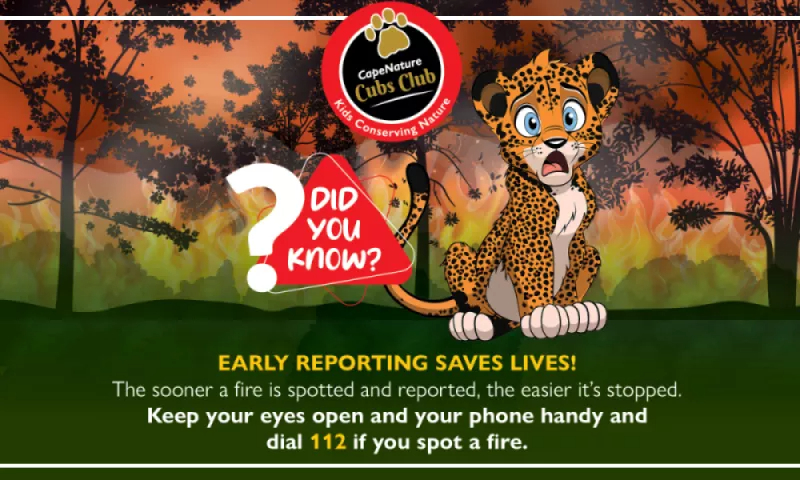
If prevention fails, detection is the next defence, and the public should report any sign of smoke or fire by dialling 112 from a mobile phone or 10177 from a landline.
From displaced families and lost livelihoods to injured wildlife and devastated habitats, the impact is felt across communities, ecosystems, and the economy.
During the 2024/25 fire season, CapeNature’s cost for fire suppression alone exceeded R20 million.
Damage to the Entity’s infrastructure was also severe, while private landowners also sustained damage.
Legal claims for damages to forests and infrastructure exceeded R300 million.
Yet the true cost of fire cannot be measured in rands alone. Wildfires take lives, displace families, and put communities at risk. They also carry a devastating price for nature. In 2024/25, a total of 97 fires covering over 75 000 hectares burned, destroying vital habitats, threatening wildlife, and reducing biodiversity resilience. Of the area burned, 42% was private land, and 58% CapeNature-managed land.
By fighting fire on both private and CapeNature-managed land, the Entity showcases its commitment to containing fire as soon as possible. The losses also remind us that the impact of fire ripples far beyond infrastructure and can undermine the ecological foundation on which both people and nature depend.
Wildfires are a natural part of the landscape, but the increasing frequency and severity of human-caused fires place an unsustainable burden on people and nature alike. With only 19.5% of fires resulting from natural means during the last fire season, preventing fire remains our best protection.
By making simple, responsible choices - such as never leaving open flames unattended, disposing of cigarette butts correctly, clearing defensible spaces around properties, and reporting smoke or fire immediately - each person can play a critical role in safeguarding lives and landscapes.
CapeNature also emphasises that fire prevention is not only a government responsibility but a shared community duty.
"When a fire breaks out, everyone pays the price, whether through lives lost, infrastructure destroyed, or biodiversity harmed. But when we act before a fire can even start, everyone benefits," said Dr Ashley Naidoo, CEO of CapeNature.
This season, CapeNature is taking an extra step to share practical knowledge with the public. Through the new Fire Fridays with Kai and Friends social media series, CapeNature will provide weekly tips on fire awareness and prevention. The campaign is designed to educate families, schools, and communities in a simple and engaging way, making fire safety knowledge more accessible.
CapeNature calls on all residents, landowners, and visitors to stay vigilant during the wildfire season and to work together in keeping the Western Cape’s people, properties, and natural heritage safe.
If prevention fails, detection is the next defence, and the public should report any sign of smoke or fire by dialling 112 from a mobile phone or 10177 from a landline.