Western Cape Budget 2026: What you should know

Western Cape Minister of Finance, Deidré Baartman, today tabled the Western Cape 2026/27 Budget in the Provincial Parliament. 

The theme ‘Delivering Growth with Discipline and Care’ sets out how the Western Cape Government will accelerate growth, protect essential services and respond decisively to rising climate and economic pressures.

The Province’s budget for the next 3 years is R285.8 billion, of which R93.5 billion is for 2026/27. 
Key insights include:

The budget places Growth and Jobs at the centre of government’s work, with R36.651 billion committed over the next three years to initiatives that strengthen water security, energy resilience, agriculture, tourism, entrepreneurship and critical infrastructure.

The province continues to prioritise frontline services. 77.48% of the budget, that is R208.643 billion over the next three years, will go to the Educated, Healthy and Caring Society priority.

Over the next three years, we will allocate R8.595 billion for Safety.

The Province will spend R31.924 billion on our Innovation, Culture and Governance priority, to build an agile, innovative government that improves service delivery.

The Western Cape faces increasing disasters, so the 2026 budget responds with R949.8 million in provincial funding for unforeseen and unavoidable events, including drought relief, energy and water resilience, combating GBV, foot-and-mouth disease, and fighting fires. 

Read the full speech here

The Budget documents can be accessed here

Progress update on Louis Fourie Road, Mossel Bay

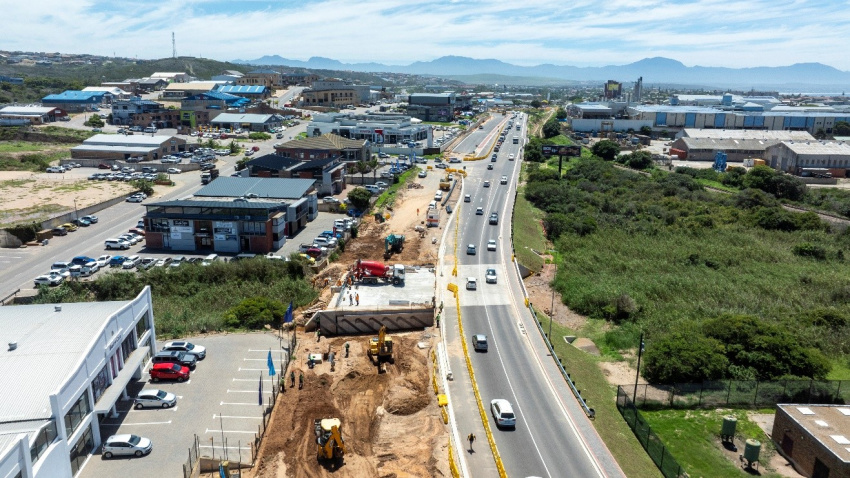
The Western Cape Department of Infrastructure (DOI) and its appointed professional team is making good progress on Louis Fourie Road in Mossel Bay. This R540 million project is the largest Provincial Government investment in road infrastructure in the Garden Route District. Works are on track and expected to be completed by the end of August 2026.

The project entails, the upgrading of just over 3.0km of road from a single carriageway to a dual carriageway including the upgrading of intersections, constructing a central median, realigning and upgrading the Langeberg Mall access road, rebuilding the on- and offramps to the N2, constructing a new bridge over the Blinde River, constructing a pedestrian walkway from Waboom Road to Sonskynvallei, a new bi-directional road under rail bridge on Garret Street and building a new road to link Garret Street with Gericke Street.

Routine maintenance work on the existing surfacing either side of the upgrade for approximately 6.0km is also being undertaken as part of this project.

“The upgrade project has reached the stage where unfortunately additional inconvenience, particularly at the Langeberg Mall entrance on Louis Fourie Road, will be experienced by road users over the coming months. If all goes according to plan relief, while not fully, should be felt by the end of March at this point. The Project Team is affording all efforts to open additional lanes before the Easter weekend.

Accommodating traffic at the Langeberg Mall intersection was always going to be one of the most critical pain points for road users because of the significant re-alignment work and pavement layer reconstruction that has to be undertaken here,” said Jandré Bakker, DOI Director of Operational Support.

“One of the more notable reasons for inconvenience and delays at this intersection is the limited available road width for right turning movements in the vicinity of the new circle and the Mall entrance. We can confirm that the current traffic signal configuration is at its most optimal for this stage of construction.

Observation have, however, indicated that a large number of the delays are due to poor driver behaviour which includes blocking of the intersection to gain an advantage over other motorists which adds to the challenge,” he continued.

“The work in the intersection at the mall will continue until end of March.  Traffic flow at the intersection will then improve as two lanes will be available on the southbound leg of the intersection, and the outbound carriageway towards Aalwyndal will also be opened to traffic,” he added.

Bakker further stated that: “Road users must please note that access to Via Appie is scheduled for reconstruction from the 7th of April for a period of two weeks, weather permitting.  Traffic can use either Bally Crescent and/or Watson Avenue as alternative accesses where pointsman will be posted. We further advise that the final surfacing layer is being paved at the moment, which may cause short term (one day) disruptions at localized intersections”.

Bakker further shared: “Further key activities currently underway include the resurfacing of the road between Voor Bay and Hartenbos as well as the final road marking of all completed road surfaces.  The resurfacing of the section between Voor Bay and Marsh Street is scheduled to start after the Easter weekend. If all goes according to plan, both carriageways will be opened to traffic between The Lofts and Bally Crescent (Suzuki) before the Easter weekend.  The final surfacing layer on this section of road will be paved in half widths during the next month though”.

“According to the latest project programme the planned progress should be at 89% complete and we are currently at 85%,” said Tertuis Simmers, Provincial Minister of Infrastructure. “I am pleased to report that good progress is being made on the Blinde River Bridge as well as the pipe-jacking site at the George Road intersection where we are increasing storm water capacity in this area. While I have noted road user frustration with the ongoing roadworks, we have reached a stage where the general public are also seeing visible progress daily after having to endure many obstacles early on during construction, namely underground services that had not been accurately mapped, and replacing of ageing infrastructure to avoid building a new road over infrastructure that would need to be replaced within a few years,” Minister Simmers continued. 

“To the last report date, which is end February 2026, the project had created 49 341 person-days of work allocated to targeted labour against a contract target of 58 000 person-days. This translates to 306 work opportunities created against a contract target of 250. To date, more than R89 million of the contract spending was on targeted enterprises which exceeds the contract target of R85 million significantly.

Through the project we invested over R12 million on procurement from local enterprises. A total of R13 million has been spent on emerging contractor development and I look forward to seeing these numbers grow even more towards the completion of the project”, Minister Simmers added. 

Inconvenience to road users

“We are well aware of the inconvenience of the roadworks to the travelling public both local road users and holiday makers to Mossel Bay”, said Minister Simmers. 

“We remain confident that the long-term benefit of this road upgrade will outweigh the short-term inconvenience to road users and that the investment in infrastructure will unlock economic opportunities in Mossel Bay and surrounds”, he continued.

FMD vaccination roll out ramps up as Western Cape receives 100,000 mores vaccine doses

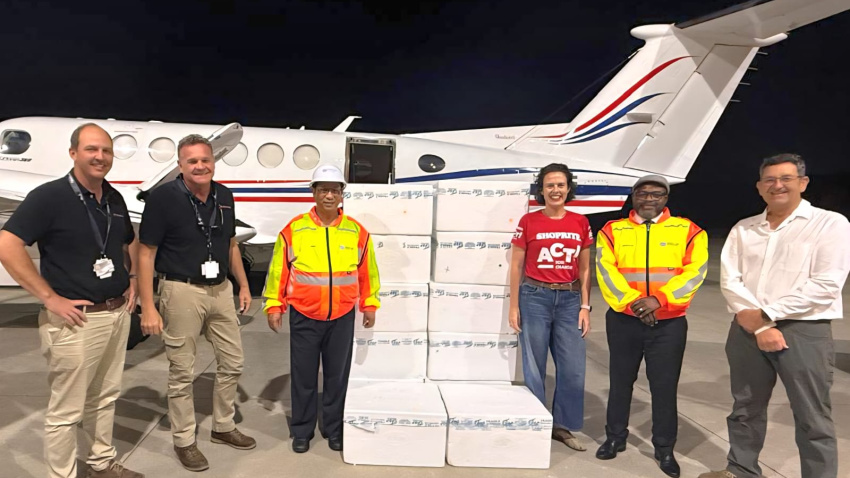
100,000 doses of Foot-and-Mouth Disease (FMD) vaccine arrived at Cape Town International Airport Tuesday night, providing a further boost to the Western Cape Government’s efforts to combat the disease in the province.

These will be distributed across the West Coast, Cape Winelands and Garden Route districts, coordinated by a provincial “war room”, which meets regularly.

The ongoing vaccination drive will be steadily scaled up to fully immunise the provincial herd.

Further notable developments include:

-48 612 animals have so far been vaccinated across the province.
-276 vaccination sites have been set up.
-29 private veterinarians are assisting State Veterinarians.
-The Western Cape has now received a total of 162,120 doses of vaccines.
-Warning road signs have been erected along all major highways which link the Western Cape to neighbouring provinces.
-Checkpoints have been set up along several major roads.

Since the first cases of Foot-and-Mouth Disease (FMD were confirmed in the Western Cape, the provincial government has pulled out all the stops in bringing the outbreak under control.

This coordinated effort is made possible by support from key stakeholders, including the Milk Producers Organisation, Red Meat Producers, Milk SA, Agri Western Cape and Shoprite. 

All affected districts are reporting encouraging progress in driving the 21-point FMD response plan being led by the Western Cape Government and numerous role players.

The plan includes:

-Movement control, including 24/7 border monitoring.
-Monitoring, surveillance, and traceability, through on-the-ground rapid response from provincial veterinary services.
-Protocols such as communication, by-law enforcement, and contingency plans.
-Recovery involving cleaning operations and monitoring quarantine areas.

“All of this progress is made possible through collaboration,” said Premier Winde. He commended all agricultural role players for their ongoing assistance in managing the outbreak.

The Premier added, “We will continue to intensify the response plan to protect this critical sector of our economy. I personally chair a weekly joint operation meeting with all stakeholders, including municipalities, to ensure that everything is being done to manage this crisis. In everything we do, we aim to protect growth, livelihoods and jobs.”

“I want to echo the Premier’s gratitude to every role player who has worked tirelessly to bring this outbreak under control. Your dedication is the backbone of our collective progress. The arrival of the 100,000 additional vaccine doses in the Western Cape marks a significant turning point. It means we can now accelerate vaccinations across the province, ensuring that we protect our livestock, support our farmers, and strengthen this vital sector of our economy,” said Dr Ivan Meyer, Western Cape Minister of Agriculture, Economic Development and Tourism, who received the new vaccine.

The Premier is in regular contact with national Minister of Agriculture, John Steenhuisen, to follow up and ensure that a livestock movement permitting system is put in place to further bolster the Western Cape containment plan.

FlySafair Introduces Temporary Fuel Surcharge Amid Rising Global Fuel Costs

Low-cost airline FlySafair will introduce a temporary fuel surcharge on certain flights as rising global fuel prices put pressure on operating costs.

The airline says it has been absorbing higher fuel prices since the Middle East crisis began on 28 February, but the situation has now reached a point where some of the costs must be passed on to customers to ensure the long-term sustainability of the airline.

Jet A1 fuel prices at South African coastal airports have increased by about 70% in just one week. The spike follows disruptions to global oil supply linked to the effective shutdown of the Strait of Hormuz, a key shipping route through which roughly 20% of the world’s oil supply normally passes.

The temporary surcharge will take effect from today, 12 March 2026 and will apply only to flights departing on or before 12 May 2026.

FlySafair’s Chief Marketing Officer, Kirby Gordon, says the airline chose to itemise the surcharge separately on tickets to ensure transparency for customers.

Fuel is one of the largest operating expenses for airlines and typically accounts for about half of FlySafair’s direct operating costs. The airline estimates that the current fuel price increases add about R35,000 per flight hour for each Boeing 737-800 aircraft in its fleet.

The airline says the surcharge is intended as a short-term measure and will be reviewed regularly based on movements in jet fuel prices. It says the amount charged will vary depending on the length of the route to reflect the fuel required for each journey.

Passengers who have already booked flights will not be affected. Their ticket prices will remain unchanged and no surcharge will be added retrospectively.

However, bookings made from 12 March for flights departing on or before 12 May will include the surcharge as a separate line item on the ticket. Passengers who change an existing booking to a flight within that period will also be subject to the surcharge.

FlySafair says it has not previously implemented a fuel surcharge and has historically avoided passing fuel price volatility on to customers.

The airline adds that the surcharge is not intended to generate profit but to help maintain operations while fuel prices remain unusually high. The charge will be reduced or removed once market conditions improve.

Airlines around the world have adjusted pricing in response to volatile fuel markets. Several international carriers, including Japan Airlines and All Nippon Airways, already use fuel surcharges linked to jet fuel benchmarks.

Industry analysts say higher fuel prices can affect both domestic and international travel demand, particularly among leisure travellers, and may have knock-on effects for tourism and hospitality sectors.

FlySafair says it continues to monitor global fuel markets and supply conditions while working with suppliers to manage costs. The airline maintains that its goal remains to keep air travel accessible while maintaining financially sustainable operations.
error: eRadio is protected !
Scroll to Top