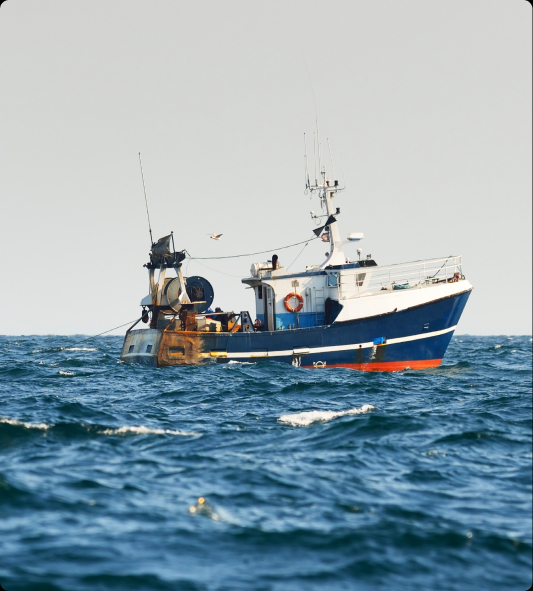
SA intercepts four Chinese fishing vessels

The Minister of Forestry, Fisheries and the Environment, Willie Aucamp, has welcomed the swift and coordinated action by law enforcement to intercept four Chinese-flagged fishing vessels that entered South Africa’s Exclusive Economic Zone (EEZ) and territorial waters without the required authorisation.

“South Africa will not tolerate the unlawful use of its maritime zones. We remain resolute in safeguarding our marine resources and ensuring that our ports are not perceived as ports of convenience. Compliance with our laws is non-negotiable,” the Minister said.

The vessels – Zhong Yang 231, Zhong Yang 232, Zhong Yang 233, and Zhong Yang 239 – were placed under guard by the South African Police Service (SAPS) Tactical Team members and Fishery Control Officers at the Port of Cape Town anchorage. 

At the same time, compliance processes were finalised between the Department of Forestry, Fisheries and the Environment and the vessel owner, Shenzhen Shuiwan Pelagic Fisheries Co. Ltd.

The vessels initially requested permission on 23 February 2026 to pass through South Africa’s EEZ under “innocent passage” - indicating they would exit by 3 March. 

On 27 February, the South African Maritime Safety Authority (SAMSA) reported that the vessels had also applied for Off-Port Limits (OPL) authorisation without the required justification or documentation, and the request was rejected.

Further investigations by the department revealed that the vessels had already entered South African territorial waters while the OPL request was under consideration. 

They were detected within 12 nautical miles of the KwaZulu-Natal coast and later tracked along the Eastern Cape coastline.

“During this time, the vessels repeatedly switched their Automatic Identification System (AIS) on and off. This is a violation of South African regulations requiring foreign vessels to keep AIS active while transiting national waters. 

“AIS is a critical safety system used to ensure navigational awareness and prevent collisions at sea. Based on the available evidence, there were reasonable grounds to suspect non-compliance with the Marine Living Resources Act 18 of 1998,” the department said.

The Masters of the vessels were charged, and an administrative penalty of R400 000 was imposed. 

The vessel owner subsequently paid the fine, after which the vessels were released and departed South African waters.

Heat wave event breaks temperature records

The South African Weather Service (SAWS) has confirmed that several weather stations across the Namakwa District and the Western Cape have officially broken their long-standing maximum temperature records for March.

The weather service explained that the presence of a strong, slow-moving high-pressure weather system in the upper levels of the atmosphere has resulted in "extremely hot" conditions. 

Preliminary data from the SAWS show that several stations in the Western Cape have recorded their highest maximum temperatures in at least 11 years during the current heat wave event. 

“These temperatures exceed those recorded during a similar extreme heat event on 3 March 2015, when parts of the province, particularly the Cape Metropole, broke long-standing temperature records.

“The temperature reading of 46,6°C recorded at the Royal Cape Yacht Club (RCYC) has since been removed from the official records. 

“This specific station was installed primarily for wind monitoring to assist with maritime activities and regattas. The sensor is located on a rooftop to ensure proper wind exposure, at a placement that does not meet the World Meteorological Organisation (WMO) standards for temperature measurements,” SAWS said.

Consequently, temperature readings from this station are not representative of the actual ambient air conditions in the area, and the temperature sensor at this station has since been disabled.

When Will the Heat Wave End?

Current meteorological models indicate that the high-pressure system responsible for the heat will begin to weaken and shift away from the region towards the end of the week.

Thursday, 12 March: Heat remains intense for the interior, particularly the Namakwa District and the interior of the Western Cape.

Friday, 13 March: This is expected to be the final day of heat wave conditions, with a gradual cooling trend starting along the coast.

Saturday, 14 March: A drop in temperatures is anticipated as the weather system moves out, bringing cooler, more seasonal conditions to the region.

Until the heat wave officially breaks, the public is urged to remain vigilant against heat-related risks:

-Stay Hydrated: Drink plenty of water even if you do not feel thirsty.
-Limit Exposure: Avoid strenuous outdoor activities between 12h00 and 15h00.
-Vulnerable Groups: Regularly check on the elderly and babies.
-Vehicle Safety: Never leave children or animals in parked cars, even for a short time.

“The SAWS will continue to monitor this system closely and will issue updates as new information becomes available. The public and relevant authorities are urged to follow official weather warnings and advisories from reliable sources.” 

Madlanga interim report – a secret, for now

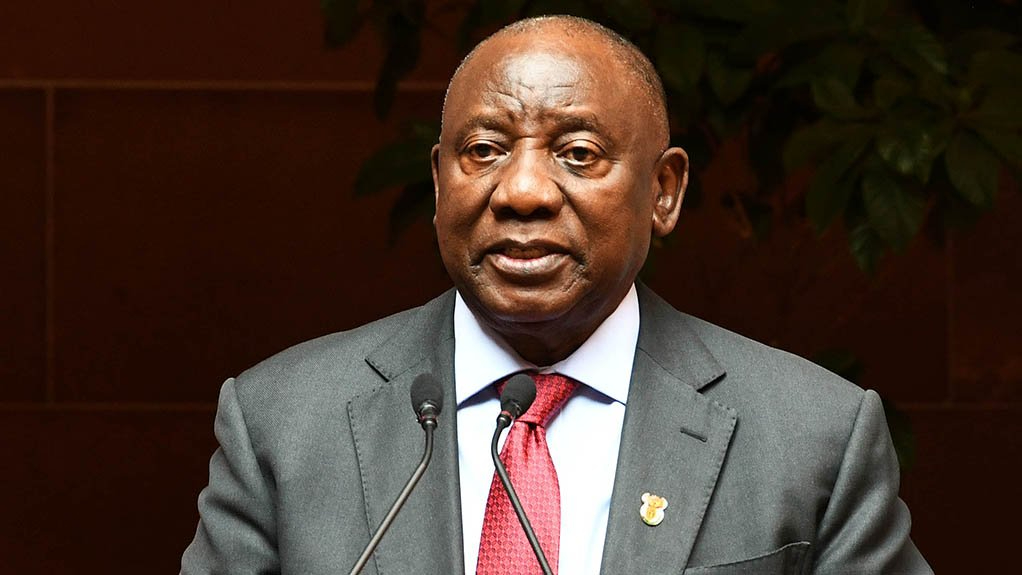
President Cyril Ramaphosa has reiterated that releasing the interim report of the Madlanga Commission could jeopardise the commission’s ongoing work and be unfair to witnesses who have not yet appeared before it.

The President was answering questions in the National Assembly on Thursday afternoon.

“The commission’s work is ongoing. In its interim report, the commission noted that it will require further evidence from a number of people who had not yet appeared before it.

“Beyond the referrals and recommendations that I have made public, it would be unfair to witnesses whose testimony is not complete or individuals against whom the commission has not yet made any findings to publicise the information at this stage.

“Furthermore, it may jeopardise investigations as well as lines of questioning of the commission, to make unconcluded avenues with regard to the investigation that could be made public,” he said.

Given the short time frame for the commission to complete its work – extended to 31 August 2026 just this week – all the reports will be made public once the final one is submitted.

A second interim report is expected at the end of May.

“This will be subject to any advice from the commission itself or other considerations on whether the publication of any portions of the report that may put persons who may have appeared before the commission in danger.

“We have already seen how a number of people who appeared before the commission have been targeted and some of them have been in serious danger,” he said.

No wrongdoer protected

The commission – led by Justice Mbuyiseli Madlanga – was established by the President to investigate allegations made by Lieutenant-General Nhlanhla Mkhwanazi on 6 July 2025 relating to criminality, political interference and corruption within the criminal justice system.

An interim report was handed over to President Cyril Ramaphosa in December last year.

The report made recommendations and referrals, including:

-Immediate criminal investigations must commence where evidence of wrongdoing is presented.
There should be urgent decisions on prosecutions where required.

-With respect to individuals currently in law enforcement or intelligence services, where wrongdoing was found, the commission made recommendations on employment statuses on individuals, including whether they should be suspended.

-At least 14 high-ranking South African Police Service (SAPS) members and Ekurhuleni Metropolitan Municipality (EMM) officials were referred for investigation after being identified as possible wrongdoers by the commission.

“To ensure that these matters are given the necessary attention, I directed the Minister of Police, as well as the National Commissioner, to constitute a special investigation task team reporting directly to the commissioner. The team will institute investigations against those identified by the commission for such investigation.

“Matters that require disciplinary action are currently being attended to by the relevant departments and some are resulting in suspensions,” President Ramaphosa told the National Assembly. 

He assured citizens that throughout the process, government has been guided by “the fundamental principle of transparency and that South Africans must know the facts” about allegations made by Mkhwanazi.

“We will implement the recommendations from the commission and we will take action.

“I can give assurance that no one - who is either implicated or will be implicated - will be shielded. When the commission does its recommendations, we will act accordingly on those recommendations.

“In the end, we will make sure that when the report is issued, the South African public will be able to see what the commissions said and what action we are going to embark upon. No big name or small name, however they are connected, will be shielded. We can assure of that,” President Ramaphosa said.

Water crisis committee

On a question related to the establishment of the National Water Crisis Committee, President Ramaphosa said an action plan setting out the way to tackle the challenge, is being drafted - similar to the approach taken to resolve the energy crisis.

“Work is currently underway to finalise the national Water Action Plan and to…get the committee to start its proceedings which it will do this coming week.

“It is expected that it will be completed by the end of March in terms of the water plan,” he said.

The committee is faced with three priorities:

-Address immediate challenges in municipality water and sanitation delivery through a focus on limited number of municipalities
-Expedite institutional, financial and systemic causes of the water crisis
-Attract investment in water infrastructure, increasing both public and private sector investment and involvement

“The main causes of the water crisis are at local government level. Maintenance of municipal water and sanitation infrastructure has been neglected in many of our municipalities over decades. There is, therefore, a big backlog for the repair and the refurbishment of water services.

“Solving South Africa’s water crisis…requires a multi-faceted approach focused on institutional reform, infrastructure maintenance and human capital development at the local level,” he said.

Where necessary and guided by the Constitution, the National Water Act and the Water Services Act, national government will intervene in municipalities that are “failing to meet their obligations or that are failing to implement corrective measures”.

“We will also, where municipalities and municipal officials fail, take action against them and we will also be focusing on how they are contravening the requirements of the National Water Act. Where there is wrongdoing, they too will be charged.

“Where necessary, national government will assume responsibilities for water services in those municipalities that fail to discharge their responsibilities.

“As has been done to great effect by the National Energy Crisis Committee, the National Water Crisis Committee will bring together role players from across the state to undertake a clear set of focused and impactful interventions that will make a real and lasting difference in people’s lives,” President Ramaphosa said.
error: eRadio is protected !
Scroll to Top