5 Essentials you should never travel without

As Easter weekend approaches and schools being to close for the Ester break, South Africans will be leaving to go on holiday or visit families. Yet, every Easter, the results of this are devastating. The Road Traffic Management Corporation (RTMC) consistently records Easter as the second deadliest period on South African roads.

Hundreds of fatalities are recorded over just four days. MasterDrive’s CEO, Eugene Herbert, expands: “What often does not get enough attention is the practical, road-specific tools that can make the difference between a close call and a tragedy. As you prepare for your Easter trip, ensure you have these five essentials packed.”

A tyre pressure gauge
Tyre blowouts remain a major cause of accidents in South Africa, particularly along long stretches of the N1, N2 and N3 during peak periods. “Many drivers assume their tyres are in good condition simply because they look fine or because the tyre pressure monitoring system has not issued an alert.
“Yet, a tyre can be dangerously underinflated without showing visible signs. Compounding the risk, filling station pressure gauges are notoriously unreliable. Do not solely depend on them. An inexpensive pressure gauge, used before departure and checked regularly throughout a trip, can make a critical difference. It costs far less than the consequences of neglect,” says Herbert.

Download offline GPS
Cell signal drops in areas like the Hex River Mountains, the Drakensberg foothills and along long stretches of the Eastern Cape. “When it does, drivers unfamiliar with the route make sudden decisions.
“Unexpected U-turns, last-minute lane changes, or stopping on the road shoulder are common crash triggers. A downloaded offline map keeps you navigating confidently through dead zones,” says Herbert.

Tyre sealant or portable compressor
A flat tyre on a busy holiday route is not just an inconvenience but a hazard. “Many newer vehicles no longer have a spare wheel, and waiting for roadside assistance on a public holiday can take hours with traffic flying past. A can of tyre sealant or a compact 12V compressor can change that.
“If you have a ‘biscuit’ spare tyre or run flats, read the owner’s manual to ensure you understand the limitations of these wheels and do not exceed this,” says Herbert.

A warning triangle and reflective vest
This is legally required but frequently absent. “If you need to stop in an emergency, these items are essential to ensuring you are visible, especially at night. Place the triangle at least 30 metres behind your vehicle on highways to give drivers plenty of time to react,” says Herbert.

Power banks or charging cords
Ensure you have a full battery in case of an emergency. “Reserve a power bank solely for the road. Alternatively, ensure you have a working charging cord that suits the charging port in the vehicle,” says Herbert.

SARS exceeds R2 trillion in 2025/26 net revenue collection

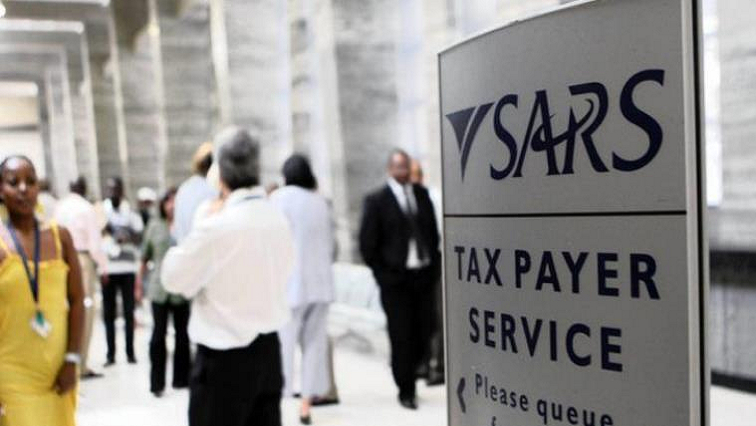
The South African Revenue Service (SARS) has collected some R2.010 trillion in net revenue for the 2025/26 financial year, breaking the threshold for the first time since its inception.

The historical milestone was announced by SARS Commissioner Edward Kieswetter during a presentation of the preliminary revenue outcome for the financial year on Wednesday.

Collections at SARS have grown at a compound annual growth rate of 5.8% since the start of Kieswetter’s tenure seven years ago.

“This is a historic milestone of crossing [the] R2 trillion threshold for the first time in our history. Indeed, a defining moment. This is R155 billion more than what we collected a year ago, a remarkable year-on-year growth of 8.4% under these economic conditions where nominal growth, for now, is projected to have grown at 4%.

“This implies a tax-to-GDP [Gross Domestic Product] ratio of 25.9% and tax buoyancy ratio of 1.73%,” Kieswetter said.

The largest contributors to the collection were individual taxes at R794 billion followed by Value Added Tax (VAT) at R500 billion, company taxes stood at R350 billion while customs reached R352 billion and excise stood at R182 billion.

Kieswetter noted that refunds stood at R458 billion at year’s end.

“Refund payments…especially during tough economic times for small businesses and families in financial stress, are an important lifesaver and a necessary injection of cash into the economy.

“The fact that the R458 billion refunds that we processed represents 5.9% of GDP. So, I am therefore pleased that our growth in refunds has consistently grown higher than gross or net revenue. This even after we’ve consistently increased refund risk management to deal with impermissible and fraudulent refund claims,” he said.

The revenue collector took some 22 years to reach the R1 trillion threshold and just ten years to double the collection to R2 trillion despite the effects of slow economic growth, load shedding and COVID-19.

“We believe that this is noteworthy and reflects the diligent work of our employees, the institutional integrity of SARS and the tax administrator centrality to the fiscal health of South Africa.

“SARS is truly a national asset that must never be taken for granted and must be treasured,” the Commissioner added.

A worthy farewell

Kieswetter will be ending his tenure as Commissioner of the revenue service at the end of this month with an announcement of his replacement to be announced by President Cyril Ramaphosa.

“As I come to the end of the seven years of national service, I recall the President’s challenge to those who cared about the future of South Africa and the generations to come to step forward, to leave behind a comfortable life of retirement, and take their place at the forefront of the struggle where real change happens.

“It was a call to service, a call to restore credibility and the capability of our damaged institutions, succinctly captured in the call ‘Thuma Mina’.

“I want to thank the President, the Minister [of Finance], and all South Africans for affording me the rare privilege to make my humble contribution to the wellbeing of our country and its people. I am filled with immense pride that thankfully, together with the help of the people at SARS, we have given our best to the nation,” he said.

The Commissioner encouraged all taxpayers to remain compliant while praising employees at the revenue service.

“Collecting over R2 trillion is not an accident, but the outcome of the more than 14 500 employees who diligently perform millions of activities meticulously to achieve this record collection.

“Every rand not only helps build a capable state that honours the social contract but also enables the state to deliver for all South Africans and strengthen fiscal integrity of South Africa.

“The record achievement we reached today is because of all compliant taxpayers; I would like to thank them for their fiscal citizenship and contribution to help the most vulnerable in our society,” Kieswetter concluded.

SA vehicle sales hit 20-year high, but rocky road ahead for motorists

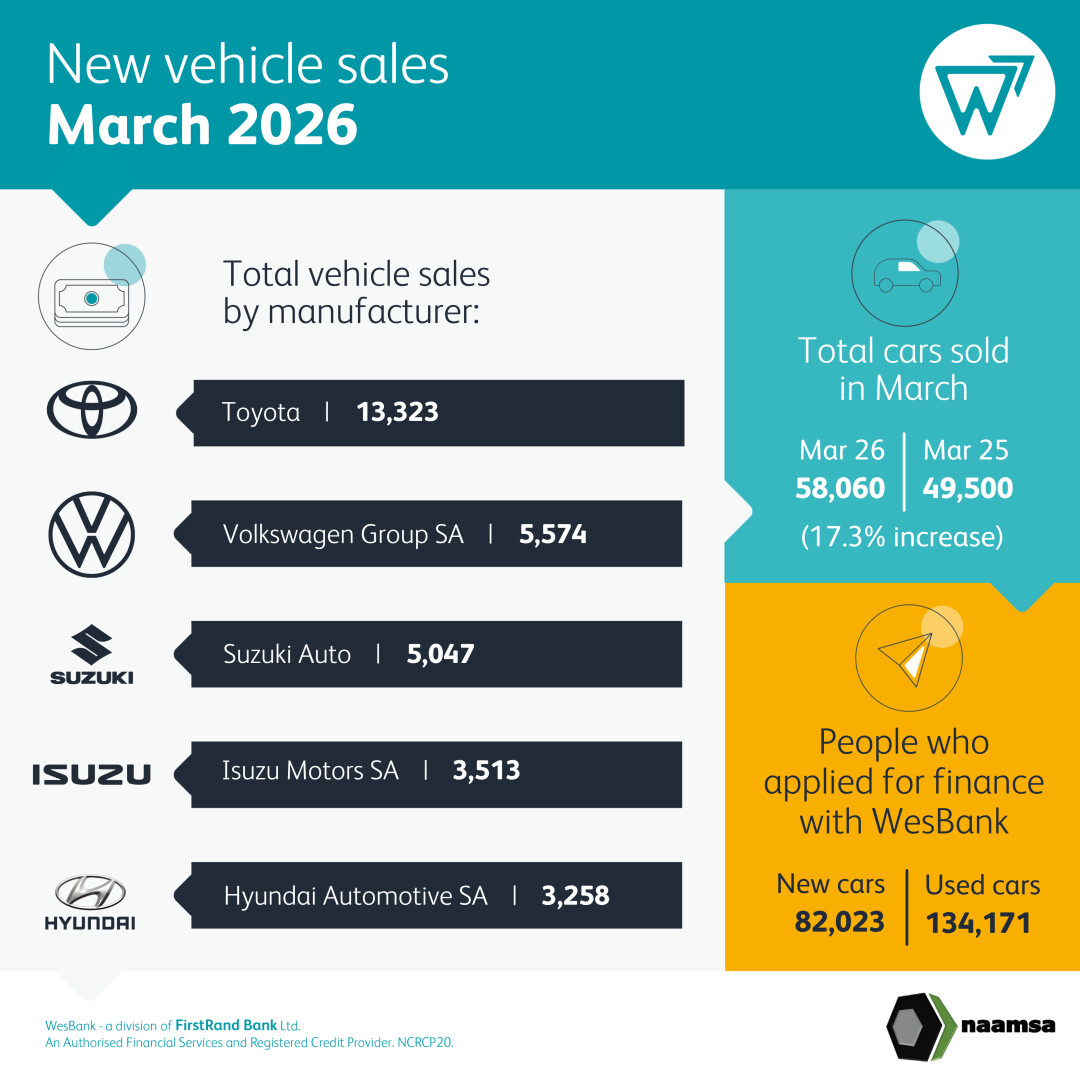
South Africa’s new vehicle market delivered its strongest March in nearly two decades, with domestic sales reaching 58,060 units according to naamsa the Automotive Business Council. This represents a 17.3% increase on the 49,500 units sold in March 2025, supported by cumulative interest rate cuts and firmer consumer and business sentiment, even as cost pressures begin to build.

March 2026 is the strongest performance for the month since 2007. Year-to-date volumes now stand at 161,978 units, 12.4% ahead of the same period last year. Dealer channels accounted for 88.7% of total sales, indicating that retail demand continues to underpin the market.

“March is a result worth noting. The market hasn’t seen numbers like this in nearly two decades, pointing to stronger domestic demand. Successive rate cuts since late 2024 are clearly feeding through, lifting both consumer and dealer confidence. The environment, however, is changing.

April introduces new pressure that households and the industry will need to manage carefully,” says Lebogang Gaoaketse, Head of Marketing and Communication at WesBank.

The March outcome precedes a marked shift in the cost environment. From 1 April, petrol increased by R3.06 per litre, while diesel rose by between R7.37 and R7.51 per litre, reflecting higher global oil prices linked to conflict in the Middle East. The average Brent crude price increased from $69.08 to $93.67 per barrel over the pricing period, with currency weakness adding to the impact. A temporary R3.00 per litre reduction in the general fuel levy provides short-term relief but is due to expire on 5 May 2026 and does not offset the full increase.

Passenger vehicle sales reached 39,370 units, up 18.2% year-on-year, with car rental accounting for 6.5% of volumes, suggesting that retail demand is carrying the bulk of growth. Light commercial vehicles recorded 15,557 units, up 15.7%, while medium commercial vehicles increased by 14.0% to 823 units. Heavy trucks and buses rose 14.5% to 2,310 units. Dealer confidence also reached a 13-year high of 67 index points, consistent with the improvement in trading conditions.

“The fuel and energy increases coming through in April present a clear headwind for consumers who were only starting to benefit from earlier rate cuts. Our focus remains on structuring finance in a way that is sustainable over time, taking into account total cost of ownership rather than purchase price alone,” says Gaoaketse.

Higher electricity tariffs will add to pressure on both households and businesses. The combined effect is likely to feed through into transport costs, food prices and overall living expenses, placing further strain on disposable income.

“A first quarter of this quality provides a solid base for the year. The underlying drivers of demand remain in place, and WesBank will continue to support customers with finance solutions aligned to their circumstances as conditions evolve,” he says.

SAWS warns of scattered showers ahead of Easter travel period

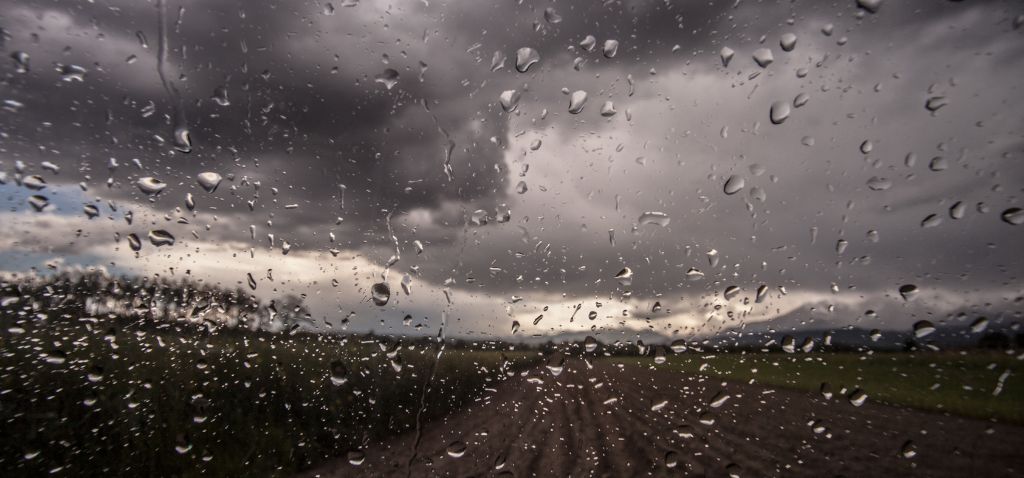
The South African Weather Service (SAWS) has forecast partly cloudy conditions with isolated to scattered showers and thundershowers across parts of the country on Thursday and Friday, as many South Africans prepare to travel for the Easter period.

In its latest weather outlook, SAWS said conditions will be cool to warm in most areas, but hot in some regions, with a higher likelihood of scattered showers in the western parts of the country.

The forecast comes as increased traffic volumes are expected on major routes, with authorities urging motorists to plan their journeys carefully and remain weather-aware.

Safety focus for Easter travellers

With changing weather conditions, SAWS is encouraging travellers to prioritise safety on the roads, particularly in areas prone to thunderstorms and reduced visibility.

The weather service encourages travellers to download its WeatherSmart app which will help in detecting weather conditions ahead of time.

“Headed somewhere this Easter? Our weatherSmart App helps you know when to stop, stay safe from lightning and arrive relaxed. Your safety travel this Easter is only as good as your data,” the weather service said in a post on X, highlighting the importance of using reliable weather data to make informed travel decisions. 

The WeatherSmart App is among the tools being promoted to help motorists track conditions in real time. According to SAWS, the app enables users to monitor weather patterns, identify when it may be safer to delay travel, and stay alert to lightning risks.

Lightning awareness and verification

As thunderstorms are expected in some areas, SAWS has also emphasised the importance of lightning awareness, particularly for those travelling long distances or leaving property unattended.

The service offers a Lightning Verification Report at a fee, which can confirm whether a lightning strike occurred at a specific location a tool aimed at helping citizens protect valuable assets and support insurance claims if needed.

SAWS has urged the public to stay updated through official weather platforms and to adjust travel plans where necessary. 

With variable conditions expected over the Easter period, travellers are advised to remain cautious, take regular breaks, and ensure their journeys are guided by up-to-date weather information to arrive safely at their destinations.
error: eRadio is protected !
Scroll to Top