Nationwide crime-fighting operations nets over 15 000 suspects

The South African Police Service (SAPS) ongoing nationwide crime-fighting operations have resulted in the arrest of 15 884 suspects for various crimes between 13 and 19 April 2026.

The operations also involved intelligence-driven raids conducted by detectives to trace and arrest of 1 822 wanted suspects linked to murder, attempted murder, rape, carjacking, illegal possession of firearms, assault GBH (Grievous Bodily Harm), house and business robberies.

“Among those arrested are two Ekurhuleni Metropolitan Municipality senior officials on charges of fraud, corruption, and defeating and or obstructing the ends of justice. These suspects appeared before the Boksburg Magistrate's Court on Monday,” the police said in a statement.

The police are also intensifying operations targeted at combating the trade of illicit cigarettes. These efforts aim to curb the smuggling, distribution and sale of illegal tobacco products.

On 17 April 2026, police successfully intercepted a truck loaded with illicit cigarettes along the Molatedi Road in Mabeskraal, leading to the arrest of a 35-year-old Botswana national for possession of illicit cigarettes with an estimated street value of over R2 million.

In addition, the police arrested a 44-year-old man and confiscated illicit cigarettes with an estimated value of R1 663 045 during a stop-and-search operation conducted at Muswodi village, in Limpopo, on 16 April 2026.

Other key arrests include: 
115 – Murder
128 –  Attempted Murder
179 – Rape and 5 – Attempted rape
1 258   – Assault GBH 
508  – Possession of dangerous weapons
95 – Illegal possession of ammunitions
330 – Dealing in drugs
2 856 – Possession of drugs (WC-1 845)
757 – Driving under the influence of alcohol or drugs
871 – Illegally dealing in liquor
1 767 – Illegal immigration-related offenses                                                                                                                                                                                                        
Confiscation/recoveries:
128 illegal firearms confiscated
1 247 rounds of ammunition
859  dangerous weapons 
52 stolen and hijacked vehicles recovered
More than 41 000 litres of alcohol seized

Highlights of provincial breakdowns:
In Gauteng, a Tactical Response Team intercepted a hijacked vehicle with false plates on 13 April 2026 in Sebokeng. The suspects opened fire, leading to a chase and shootout. The suspect's vehicle overturned, and both died at the scene.  Police confiscated a firearm and explosives. They confirmed that the vehicle was stolen in Carletonville (January 2026). 

In addition, two suspects were arrested for an ATM bombing on 15 April 2026. One was found with dye-stained cash in Orlando East and the other with explosives in Diepkloof.  Both were linked to the Kliprivier ATM bombing (February 2026). They are facing charges of possession of explosives and suspected stolen money.

Police also recovered two unlicensed 9mm pistols and 92 rounds of ammunition from four suspects in Jeppe, Johannesburg, on 13 April 2026. The suspects, aged between 23 and 37, were arrested. 

Meanwhile, in Mpumalanga, police arrested three suspects in April for extorting workers at the Tekwane West dumping site, demanding “protection fees.”

In addition, police in KwaZulu-Natal arrested six suspects in Umhlali for evading arrest for a shootout that took place on 28 March 2026.  They have been linked to the murder of a 52-year-old farmer in Riet Valley and multiple robberies. 

Fire reported at Lower Sabie in Kruger National Park

A fire was reported on Tuesday morning at Lower Sabie Rest Camp in the Kruger National Park, affecting the shop and restaurant. 

“The Ranger team and other staff members reacted quickly and managed to contain the fire before it could spread to other structures,” the South African National Parks (SANParks) said.

No injuries or fatalities were reported. The cause of the fire is still being investigated at this stage, and an update will be provided in due course. 

The restaurant and reception area are currently inaccessible for safety reasons

Western Cape records one month without new Foot-and-Mouth Disease cases

Premier Alan Winde and Western Cape Minister of Agriculture, Economic Development and Tourism, Dr Ivan Meyer, have welcomed signs of stabilisation in the national Foot-and-Mouth Disease (FMD) outbreak in the Western Cape. But the Premier stresses that continued vigilance remains essential to prevent further spread.

“The most recent case of FMD was identified on 22 March 2026 in Prospect Hill in the City of Cape Town. Since then, no new confirmed cases have been detected, marking one month without a new case in the province,” said Premier Winde.

Suspected cases in Hessequa and Bonnievale have tested negative, and the last confirmed case in the Garden Route District was recorded on 28 February 2026. 

Minister Meyer highlighted that vaccination remains the cornerstone of the province’s disease control strategy.

“Foot‑and‑Mouth Disease presents a serious and ongoing threat to our livestock industry, food security and rural livelihoods. Vaccination remains the cornerstone of the Western Cape’s disease control strategy, as clearly articulated in our 21‑point plan. The Western Cape will continue to actively engage with the national Department of Agriculture to ensure the province receives its fair share of vaccines, so that we can act decisively to protect our farmers and the wider agricultural economy.” 

A total of 161, 713 vaccine doses have so far been administered at 730 sites, representing 35% coverage across the province. This includes 7 925 booster doses.

Vaccination coverage is currently highest in the West Coast (63%) and the City of Cape Town (56%), followed by the Cape Winelands (35%) and Garden Route (31%). No vaccinations have been required in the Central Karoo and Overberg districts, where no confirmed outbreaks have been recorded.

To strengthen immunity and close remaining gaps, an additional 50, 000 doses of the Bioaftogen vaccine are being deployed to priority areas. This phase will focus on booster vaccinations, revaccination of previously affected farms, beef herds within a 10 km radius of infected farms, and communal and peri-urban cattle in affected municipalities.

The Premier noted that enhanced surveillance, strict movement control, permit enforcement, and traceability measures remain in place to limit the risk of further spread.
Premier Winde called on livestock owners to play their part in protecting the province’s agricultural sector.

“Farmers and livestock owners are critical partners in this effort. We urge them to maintain strict on-farm biosecurity, comply with movement control regulations, report any suspected cases immediately, and cooperate fully with vaccination teams,” he said.

He continued, “The absence of new cases since 22 March, combined with our expanding vaccination and surveillance programme, shows that our control measures are working. However, the risk remains, and we must not become complacent.”

The Western Cape Government remains committed to protecting animal health, safeguarding livelihoods, and ensuring the stability of the province’s agricultural economy.

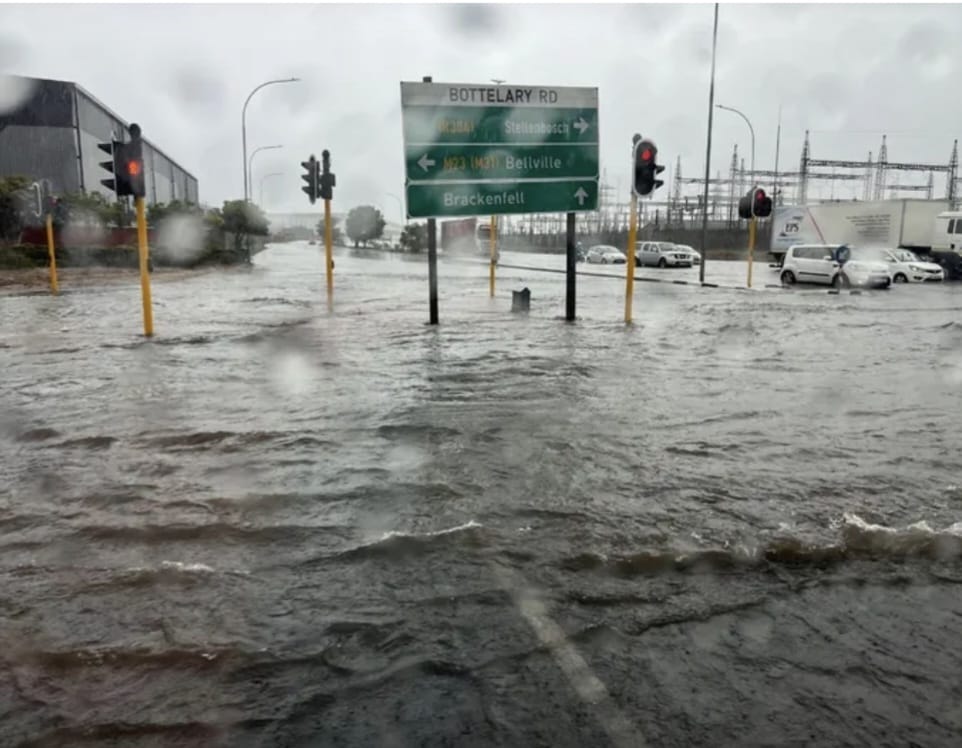
Cape Town mops up after weekend storms

The City of Cape Town’s Urban Mobility Directorate, in collaboration with Disaster Risk Management and various service departments, is working around the clock to respond to the impact of heavy rainfall that swept across the metro over the weekend.

According to the city, approximately 480 flooding-related complaints were recorded between Friday and early Monday morning.

The City’s Mayoral Committee Member for Urban Mobility, Rob Quintas, said while response teams are currently on the ground, it is still too early to provide verified figures on the total number of incidents or the full extent of the damage. 

He added that confirmed assessments will be communicated once completed and verified.

Widespread localised flooding was reported across both formal and informal residential areas following sustained downpours. Affected communities include Parkwood, Gugulethu, Khayelitsha, Delft, Ndabeni, Mitchells Plain, Southfield, Nyanga, Philippi, Elsies River, Kraaifontein and parts of Dunoon, among others.
Quintas said mop-up operations are underway in several areas, including Parkwood and Dunoon, where water has largely subsided. 

However, he noted that illegal structures built over bulk stormwater and sewerage infrastructure continue to hamper maintenance efforts, as the teams cannot physically access the system to clear them.

“We saw mattresses and wheelie bins pulled from our stormwater system, among other wildly inappropriate objects and materials. Obviously, this can create massive blockages. This notwithstanding, our teams are deployed to areas where flooding is reported, and this is happening throughout all eight districts across the metro,” Quintas said.

He explained that heavy rainfall places pressure on the stormwater system, often resulting in water backing up onto roads, which then act as water conduits.

Low-lying areas, including areas below steep mountainous terrain, near canals and water bodies, are particularly vulnerable to localised flooding whilst rainfall remains heavy.

Quintas emphasised that stormwater infrastructure is designed to drain rainwater away over a period of time, and not to remove water instantly during heavy downpours.

“Localised flooding is expected while rain is falling. It is only considered a fault or a system failure if the water does not drain away after the rain has subsided. 

“Residents in low-lying areas or those situated near water bodies are naturally more susceptible to localised flooding during intense weather events, [while] illegal buildings are also at risk, especially if they are erected in detention ponds,” Quintas said.

The City of Cape Town has since activated a multi-departmental emergency response and has assigned an additional budget for proactive stormwater management.

While the funding is specifically intended to mitigate the impact of heavy weather, the city noted that it cannot fully prevent flooding during extreme conditions.

Current interventions include clearing blocked stormwater drains and managing flooded roads, providing sand and milling for flood mitigation, and providing emergency assistance to residents in informal settlements with emergency materials like plastic sheeting. 

The Disaster Operations Centre is prioritising the most vulnerable and high-risk areas.
Blocked stormwater and post-rain flooding can be reported via the city’s call centre on 0860 103 089. 

Illegal dumping can also be reported on 0860 103 089 or email [email protected].

Water and sewer-related issues can be reported via WhatsApp on 060 018 1505, SMS 31373, or email [email protected].

Electricity faults can be logged via WhatsApp on 060 018 1505 or SMS 31220. 

Life-threatening emergencies should be reported to the Public Emergency Communication Centre on 021 480 7700. 

Provincial Traffic Crackdown: 65 Arrested

Provincial Traffic Services maintained a high-visibility presence across the province over the past week, resulting in 65 arrests for serious offences. Between 13 and 19 April 2026, officers stopped more than 30 000 vehicles as part of ongoing operations targeting high-risk behaviour.  

The Western Cape Government takes road safety seriously and will continue implementing interventions and vehicle checkpoints to ensure that all road users can travel safely.

Of those arrested, 39 motorists were charged with driving under the influence of alcohol. Officers also dealt with incidents involving interference with law enforcement, including two arrests for resisting arrest on Saturday, a man at the N7 Vissershok Weighbridge and another involving a motorcyclist near Somerset West.

On Sunday, a man driving a minibus taxi was arrested near the N2 Garden Route Mall after allegedly threatening violence against a traffic officer, including threats of harm to the officer, their relatives or property. In a separate incident, a man driving a bakkie was arrested for excessive speeding (112 km/h in an 80 km/h zone) at the Beaufort West weighbridge on Friday, highlighting ongoing reckless behaviour on major routes.

Further arrests included two incidents involving the illegal possession of Cape lobster (crayfish tails). On Monday, a man was arrested on the R43 near Bot River for being in possession of 101 crayfish tails valued at R12 654 without a permit. In a second incident on Friday, a man was arrested on the N2 near Grabouw for being in possession of 50 units of crayfish tails valued at approximately R5 000.

Western Cape Mobility Minister, Isaac Sileku, expressed concern over ongoing unsafe behaviour on the roads and the rise in pedestrian fatalities. 

“The 39 drinking and driving arrests show a continued disregard for the law and for human life. Equally concerning is the hostility towards traffic officers who are working to keep our roads safe. This behaviour, together with the high number of pedestrian fatalities recorded this week, is why our enforcement efforts remain firm. With the payday weekend approaching, we urge drivers to think carefully about their choices. Do not drink and drive, plan ahead, and prioritise your safety and that of others.”

Tragically, 26 crashes were recorded during the reporting period, resulting in 28 fatalities. Of these, 18 were pedestrians, highlighting a serious risk to vulnerable road users.

Enforcement outcomes:
7 176 fines issued for driver and vehicle fitness offences
17 vehicles impounded
152 unroadworthy vehicles removed from service
354 speeding offences recorded 
Every intervention, from roadside checks to arrests, helps make roads safer. Residents and visitors are urged to follow the rules of the road, avoid driving under the influence, and stay alert, especially in areas with high pedestrian activity.

New regulations to curb spam calls

The National Consumer Commission (NCC) has welcomed the amendment of Regulation 4 of Section 11(3) of the Consumer Protection Act. The changes were gazetted by Trade, Industry and Competition Minister, Parks Tau, on 15 April 2026.

The amended regulations introduce a national Opt Out Registry system. This will allow consumers to block unwanted direct marketing communications, either from specific companies or across the entire industry.

The regulations designate the NCC as the official administrator of the registry. To ensure the system functions effectively, all direct marketers will be required to register. The framework also outlines fees for registration, renewals and the cleansing, or “deduping”, of marketing databases.

In terms of the Consumer Protection Act, read together with the amended regulations, direct marketers must update their contact lists before conducting marketing campaigns. This includes removing the details of consumers who have opted out via the registry.

Registration for both direct marketers and consumers is set to begin in July 2026. The NCC says it will provide further details on the registration process ahead of the launch.

Non-compliance with the regulations will be considered a violation of the Act. Offenders could face administrative penalties of up to one million rand or 10 percent of their annual turnover, whichever is higher.

Acting NCC Commissioner, Hardin Ratshisusu, says the changes are long overdue. He says consumers have been exposed to intrusive marketing for too long, and the new system will provide a strong mechanism to curb unwanted calls and messages.
error: eRadio is protected !
Scroll to Top