Rising fuel prices drive higher inflation

The Consumer Price Index (CPI), known as inflation, has risen by some 1.1% in April to reach some 4% mainly driven by rising fuel prices.

According to Statistics South Africa (Stats SA), this is the highest inflation has been since August 2024 when it stood at 4.4%.

“Consumers were dealt a painful fuel price blow in April. The index for fuel rose by 18.2% from March, the steepest monthly increase since the current CPI series began in 2008.

“Petrol prices were up by 15.2% and diesel by 35.4%. The price for inland 93-octane petrol rose from R20.19 per litre in March to R23,25 per litre in April. This is the fifth-largest increase for this grade in 50 years, and the biggest this century. Motorists using diesel felt the most pain. The average price for a litre of diesel jumped from R21.28 in March to R28.80 in April,” Stats SA said.

Furthermore, passenger transport services index climbed by some 3.1% between March and April, the “largest monthly rise since July 2022”.

“Following a 14.3% hike in March, the price of an air ticket jumped by a further 24.5%. This is the largest monthly increase in airfares since March 2008, when ticket prices rose by 32.4%,” the statistical service said.

Contrastingly, annual food and non-alcoholic beverages (NAB) inflation slowed for the third month in a row, decreasing from 3.6% in March to 2.9% in April.

“Meat registered the largest decline, easing from 11.6% in March to 9.4% in April. Beef mince inflation slowed from 22.2% to 15.3% and stewing beef from 22.6% to 8.7%. The rate for pork moderated from 19.5% to 17.7%.

“The cereal products category recorded its third consecutive month of deflation. Five of the 19 items in the category are cheaper than a year ago. These include white rice, maize meal, porridge, basmati rice and bread flour.

“Milk, other dairy products and eggs recorded its first annual increase since May 2025. The rate was 0.1%, up from March’s -0.5%. Powdered milk and eggs continue to occupy deflationary territory, at -3.4% and -5.8% respectively,” Stats SA highlighted.

The insurance index rose by some 1.3% owing to increase in medical aid contributions.

“Health insurance recorded a monthly rise of 1.8%, taking the annual increase to 8.3%.

“Several medical schemes increased their contributions earlier in the year, with the remainder implementing new premiums in April,” Stats SA noted. 

Eskom warns it will interrupt power to Joburg

Eskom has issued a notice of intent to reduce, interrupt and/or terminate electricity supply to certain bulk supply points in the City of Johannesburg (CoJ).

The power utility said this was due to the R5.2 billion owed by the city and City Power (CP) to Eskom. 

The debt does not include the R1.5 billion that is due to Eskom in June.

“Eskom has been working with CoJ and/or CP for over two years to support the metro in meeting its payment obligations.

“As a result of CoJ/CP’s continued failure to honour its Electricity Supply Agreement with Eskom, including repeated defaults, Eskom has been forced to issue a notice of its intention to reduce, interrupt and/or terminate the supply of electricity to certain bulk supply points against the City of Johannesburg and City Power,” Eskom said.

The power utility maintained that it “cannot be acceptable to the City’s residents and all South Africans” that the city is “failing to pay over Eskom’s share” of electricity revenue collected.

“While Eskom continues to focus on being cost-efficient, escalating municipal and metro arrear debt undermines these efforts.  Eskom’s financial sustainability and ability to supply electricity at affordable prices are dependent upon its ability to improve its balance sheet by increasing revenue and reducing expenses. Revenue can only be increased by collecting electricity debts and/or increasing electricity tariffs.

“Across the country, many municipalities and metros are working with Eskom to develop sustainable debt solutions and Eskom is continuing to accelerate its support for this approach.  Eskom announced on 5 May that nine municipalities have received council resolutions to sign Distribution Agency Agreements following consultation processes,” Eskom said.

Furthermore, the power utility has also developed the Distribution Agency Agreement (DAA), a “long-term, non-permanent contract between a municipality or metro and Eskom, as part of the Active Partnering initiative”.

“This agreement offers a suite of services and solutions aimed at restoring the sustainability of electricity provision in a municipality or metro by enhancing its technical and financial sustainability.

“The services include skill development and training, replacement or installation of smart meters, as well as Eskom collecting revenue on behalf of the municipality.  Eskom is working nationwide to assist in the rollout of this initiative,” Eskom said. 

SA officials to crack down on illegal plastic waste trade at sea

SA Government has, for the first time, provided international training to officials to equip them with the skills needed to manage the complex global trade in hazardous waste and plastic pollution at sea.

While the government has intensified efforts to curb plastic pollution through stronger waste regulations, Deputy Minister of Forestry, Fisheries and the Environment, Narend Singh, said legislation and policy frameworks alone were not enough and had to be supported by skilled officials.

“Real impact depends on skilled, knowledgeable and committed officials who can translate legal requirements into practical action. It depends on competent authorities correctly administering prior informed consent and other transboundary controls. 

“It depends on customs officers and Border Management Authority officials who can identify suspicious shipments, apply appropriate risk management, and facilitate legitimate trade while intercepting illegal waste movements,” the Deputy Minister said on Tuesday.

Singh was addressing the opening session of the training programme in Cape Town, where he highlighted the need for Environmental Management Inspectors to have both legal expertise and technical knowledge to effectively combat hazardous pollution at sea.

According to the recent Custos Viridis operational report, environmental crime generates annual losses estimated between 80 and 230 billion Euros. 

The report also points to growing links between waste trafficking, organised crime syndicates, document fraud, illicit financial flows and other forms of transnational crime.

The Deputy Minister said seamless collaboration among regulators, scientists, investigators and prosecutors was critical in combating environmental crime, which is ranked as the world’s fourth-largest organised criminal activity.

“This training programme has been specifically designed to strengthen precisely these capabilities. Through its combination of technical sessions, practical exercises and international perspectives, it will equip participants with the knowledge and networks necessary to enhance implementation and enforcement effectiveness,” he said.

Singh described plastic pollution as one of the defining environmental crises of our time.

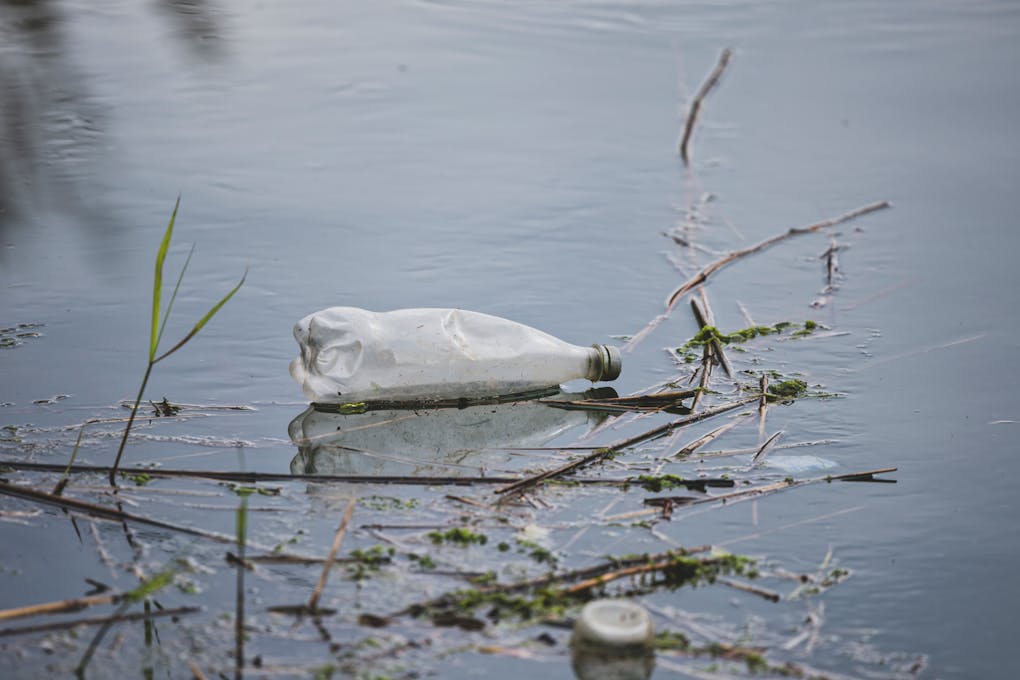
“Our oceans, rivers, estuaries, coastlines and terrestrial ecosystems are under growing pressure from plastic waste and microplastics. 

“The consequences extend far beyond environmental degradation: marine plastic pollution threatens fisheries, biodiversity, tourism, coastal livelihoods, and, ultimately, human health and food security. With its extensive coastline and vibrant ocean economy, South Africa is acutely aware of these risks,” he said.
Government has therefore intensified efforts to curb plastic pollution through stronger waste regulation, Extended Producer Responsibility schemes, waste diversion and recycling programmes, and the promotion of circular economy principles. 

“We are equally committed to broader ocean governance initiatives aimed at protecting marine ecosystems and advancing sustainable blue economy outcomes. 

“The Plastic Waste Amendments provide an essential international framework to support these domestic actions and to prevent the dumping of problematic plastic wastes on developing countries,” Singh said.

 The training was aimed at addressing a critical gap in enforcing the Basel Convention and its Plastic Waste Amendments. 

For the first time, international experts and officials came together to strengthen cross-border controls on illegal waste trafficking and marine plastic pollution.

The training brought together officials and experts involved in environmental regulation, customs coordination, compliance monitoring and enforcement, with a particular focus on implementing the Basel Convention Plastic Waste Amendments and measures to address the growing global challenge of plastic pollution at sea.

EMS, Communities Unite in 40+ Flood Rescues Across Province

“When access is cut off due to flooding, you rely on your training, your team and your community to make sure no one is left without care, you make a plan.”

This was how Mrs Janine Ruiters‑Makier, EMS Ladismith Station Manager, described the moment when rising floodwaters cut off access to a pregnant patient due to give birth and community members in Calitzdorp and surrounding areas.

During the severe storm conditions that affected parts of the Garden Route and Central Karoo, Emergency Medical Services (EMS), healthcare teams and local community members, including Kannaland farmers, worked together under challenging circumstances to safely deliver a baby and support communities isolated by flooding.

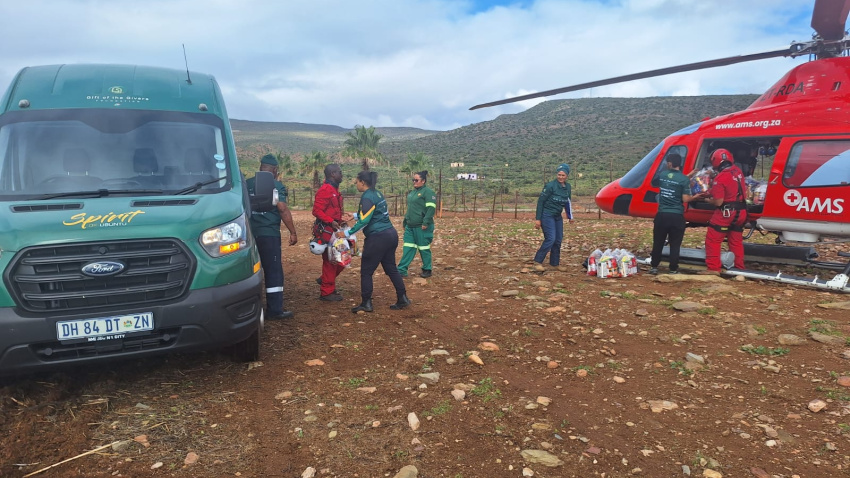
In the aftermath of the floods, areas in Warmbad, Calitzdorp, were left completely cut off. Through coordinated efforts, 60 households received food supplies and blankets. “The reality is many people at that point may not have had the opportunity to buy food yet and local organisations made a plan,” Janine shared.

This response was made possible through collaboration between Western Cape Emergency Medical Services, Air Mercy Services (AMS), Garden Route Fire Services, Gift of the Givers, Provincial Traffic Services, Karoowater Guest Farm and local partners, who assisted with receiving and distributing supplies once access was possible.

The relief effort formed part of a broader response that began earlier that day, under urgent and restricted conditions.

A birth delivery guided across distance
On the afternoon of the incident, EMS were dispatched to a maternity case on a farm outside Calitzdorp. Floodwaters prevented ambulance access, while adverse weather conditions meant AMS could not respond by air.

On the ground, Calitzdorp EMS Shift Leader Mr Norman Swartz worked closely with Janine to assess access routes and coordinate the response. Their efforts were supported by local farmers, who were monitoring river levels and road conditions in the area.

“We knew there was flooding. We know the river and thought if we could just find a road to get through, or get a ladder from the local fire station, we could reach the mom and baby. But after assessing, we realised this would not be possible,” said Janine.

At the patient’s side was Mrs Cornelle Meiring, a local teacher from Calitzdorp, who stepped in to assist. Together, Janine and Norman made the decision to provide remote clinical support. Working with the local emergency control centre and healthcare colleagues, including the Oudtshoorn Hospital maternity unit, arrangements were made to support the patient as best as possible under the circumstances. The maternity team also made telephonic contact to check on the mother and offer additional support.

Janine guided Cornelle through preparing for the delivery, using available resources to ensure basic safety measures. ‘We asked her to get the supplies needed. If there were gloves, scissors and some other supplies, we asked her to get them ready.”

As labour progressed, a video call was made to guide the process. At approximately 17:15, the patient went into active labour. With calm, step-by-step support, the baby was successfully delivered.

“When I saw the baby for the first time, I was so grateful. I could see the pink cheeks and that the baby was okay. We asked them to check the fingers and toes to make sure everything was fine,” Janine said.

She remained in contact to monitor both mother and baby until further assistance could be arranged.

A shared effort, rooted in community
Once weather conditions improved, AMS airlifted the mother and baby for further care. EMS teams, including Norman and on-duty staff, then supported the coordination and loading of food parcels for distribution to affected households.

Janine emphasised that the response was a collective effort: “In rural areas, you help each other. Because we know each other, everyone comes together and does their part,” she said.

She highlighted the role of local farmers, including farmers from Kannaland, and community members, who provide early warnings and critical local knowledge. “They tell us when the rivers are coming down and when flooding starts. They help us stay aware of what is happening on the ground.”

Expressing her appreciation, she added: “To the community of Calitzdorp, the farmers in Kannaland and beyond, and all the EMS staff and local municipality, I can only thank them. I can only be the manager I am because of them, they are my hands and my eyes.”

Provincial EMS Manager, Mrs Shameem Modack‑Robertson, commended the collective response: “This incident demonstrates the extraordinary resilience of both our EMS teams and the communities we serve.

When access was impossible and conditions were at their worst, our staff and community partners worked together to ensure a safe delivery and continued support to those cut off by the floods. We are incredibly proud of Mrs Ruiters‑Makier, Mr Swartz, Mrs Meiring, and all partners involved.”

Mr Craig Wylie, Western Cape EMS Director added, “In total, we, alongside our partners, were involved in more than 40 rescues affecting the lives and well-being of more than 650 people during the floods. This is in addition and above the day-to-day work that continued in the background. My personal thanks go out to everyone involved. I remain proud of our EMS team.”

From a delivery guided across distance to coordinated support reaching isolated households, this response reflects the strength of relationships between EMS, healthcare services and the communities they serve.
error: eRadio is protected !
Scroll to Top