Tourism Minister welcomes increase in tourist arrivals

Tourism Minister Patricia de Lille has welcomed the increase in international tourism arrivals in the month of April 2026 which is the highest increase the country has seen since the start of the year.

“This is our highest monthly year-on-year increase since the start of the year. This means that despite the ongoing conflict in the Middle East, which has led to global flight disruptions and ticket fare price increases South Africa has not only defended its markets but has also grown in some regions, “Minister de Lille said on Wednesday.

According to Statics South Africa’s monthly International Tourism Report, which was released on Wednesday, the month of April recorded 989 329 tourist arrivals marking a 19.5% increase when compared to the same period last year.

Inbound travel from Singapore increased by 70.5% (938 arrivals) in April 2026 while arrivals from Brazil increased by 37.5% (5 953 arrivals).

The total number of arrivals from January 2026 to April 2026 increased by 14.1% year-on-year, to 3 899 358. This is an additional 482 935 increase in international arrivals when compared to Jan-April 2025.

The Minister said that in July Brazilian carrier LATAM airline will launch three weekly direct flights between São Paulo and Cape Town. 

“The airline was initially scheduled to launch these flights in September but has brough the date forward due to increased demand. Meanwhile, on 24 June 2026 Spanish carrier, Air Europa will launch its inaugural direct flight between Madrid and Johannesburg,” said the Minister.

According to the report, overseas tourists constituted 18.4% (181 796) of all tourists.

IEC officially launches the 2026 Local Government Elections campaign

The Electoral Commission has officially launched the 2026 Local Government Elections (LGE), marking the commencement of the mass awareness campaign towards Election Day in November. 

This is after President Cyril Ramaphosa has announced 4 November 2026 as the date for South Africa’s upcoming Local Government Elections.

Wednesday’s launch set the stage for political parties and voters to begin preparations for the polls with the Commission to rollout a national campaign across multiple platforms, including television, radio, digital, and social media, to ensure broad reach and accessibility.

Speaking at the launch held in Midrand, near Johannesburg, the Commission’s Chief Electoral Officer Sy Mamabolo said since the dawn of democracy in 1994, the Electoral Commission has successfully delivered five LGEs, each marking a significant milestone in the evolution of local democracy and the consolidation of municipalities as theatres of civic engagement. 

“As the 6th instalment, the 2026 Local Government Elections take place amid notable changes in domestic and global political landscapes. The announcement of the 4 November 2026 election date by His Excellency, President Cyril Ramaphosa, has provided the Electoral Commission and all stakeholders with clarity and certainty for planning,” Mamabolo said. 

Mamabolo said the launch is a practical manifestation of that certainty and an assurance that plans are firmly in the execution phase for delivering an election that meets the standard envisioned in the Constitution. 

On 1 April 2026, the Commission unveiled the elections logo and media campaign under the tagline, “Get Up, Show Up, Vote.” 

This powerful call to action is aimed at motivating all eligible voters, particularly young people to actively participate in the electoral process. 

According to Mamabolo, Wednesday’s launch marks the beginning of intensified public awareness ahead of the national voter registration weekend on 20 and 21 June 2026. 
Just under 24 000 registration stations across 4 488 municipal wards will open over the two days to enable citizens to register, verify their personal details and ensure correct registration. 

“Preparations are well advanced, with the Department of Home Affairs ensuring that offices will be open nationwide to facilitate citizens’ applications for identity documents, which are a prerequisite for voter registration. 

“The Commission has deployed over 800 Municipal Outreach Coordinators, including persons with disabilities, across the country to drive voter education and awareness, reinforcing inclusive participation ahead of the elections.” 

Mamabolo said since the beginning of 2026, more than 62,336 community events have been conducted nationwide, strengthening sustained voter education and public engagement adding that a targeted door-to-door voter communication and registration campaign has been completed across 99% of municipalities (212 out of 214) between 11 and 24 May 2026. 

“This campaign informed citizens of recent Municipal Demarcation Board changes to certain ward boundaries and the consequential revision of some voting districts. The Commission thanks the Board for its cooperation in completing the ward delimitation process and handing over final ward boundaries. 

“The Commission’s voter education and registration programmes continue to yield strong results. The Tertiary Institutions Campaign has reached 97 894 students across 1086 activations in all nine provinces, with 45 757 students successfully registered – demonstrating its impact in promoting youth participation. 

“The Schools Democracy Programme, implemented in partnership with the Department of Basic Education, continues to build awareness by educating learners on democratic principles and electoral processes, while encouraging eligible learners aged 16 and older to pre-register,” he said. 

Draft code of conduct
With regard to combating disinformation, Mamabolo said the Electoral Commission recognises that the pervasive use of social media is a double-edged sword. 

“The Commission has previously mitigated disinformation through, among others, collaboration with civil society and the use of the Real411 platform for flagging and reporting misleading content. This work has been strengthened through policy development. 

Guided by the Constitution and other relevant prescripts, the Commission will issue a draft Code of Conduct on Misinformation for public comment. The draft seeks to embed safeguards against fraudulent and manipulated content to preserve information integrity during the elections,” he said. 

Online registrations
The Commission said the online registration portal has improved the accuracy and stability of the voters’ roll by enabling real-time updates and offsetting losses due to mortality. Between January and May 2026, 376,140 new registrations were recorded, reflecting strong uptake - particularly among young voters.

The total number of registered voters currently stands at 27,912,415, exceeding the figures recorded at the time of the 2024 general elections. 

Mamabolo said the achievement comes despite an average monthly loss of 34 000 voters due to mortality. 

Cooperative Governance and Traditional Affairs Minister Inkosi Velenkosini Hlabisa said he is confident that the number of registered young people will increase.

“I am confident that this time we are going to have more young people registering to vote and taking part in the elections,” he said.

In a bid to encourage young people to participate the elections, the Commission has introduced a youth-focused series, “Beats for My Peeps,” in partnership with the SABC.

The programme uses music, culture, and digital creators to address voter apathy, dispel misinformation, and promote participation.

It will air on SABC1 at 6pm from 3 June 2026. Meanwhile, the IEC Podcast launched in April 2026 and provides accessible, real-time information via mobile and digital platforms. 

How can citizens register
Get your identity document ready and register or check your address details online at: registertovote.elections.org.za 
Find your correct voting station to visit on the registration weekend at maps.elections.org.za/vsfinder 
Visit your local Electoral Commission offices on weekdays between 8am and 5pm.

Construction begins on Eskom’s R1.2 billion 75MW solar power plant

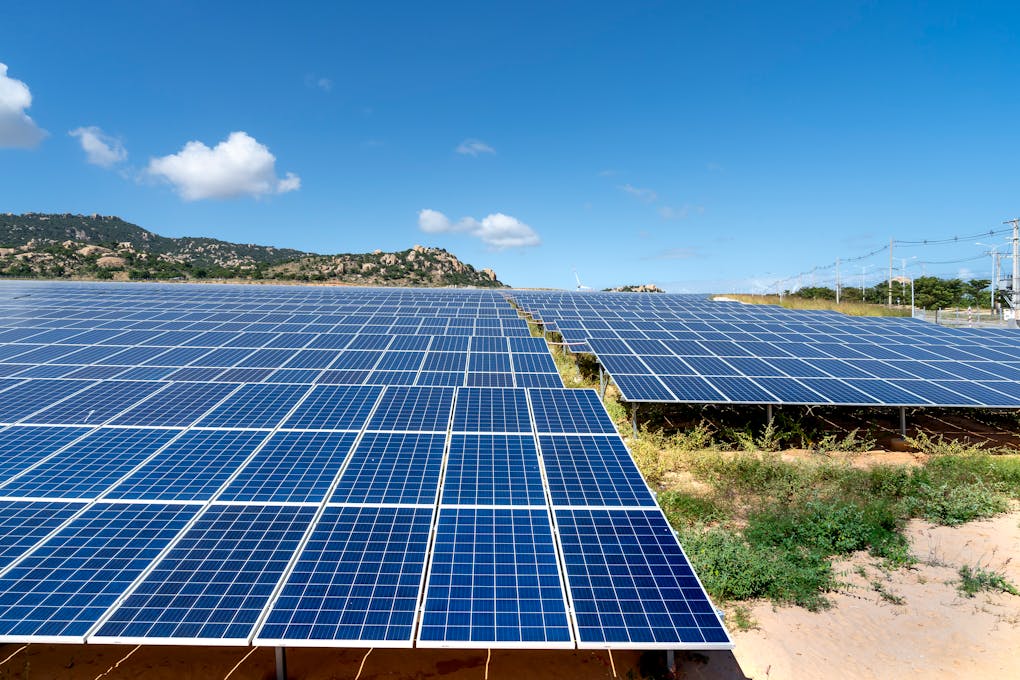
Eskom has broken ground on a new R1.2 billion 75MW solar power plant to be based at the Lethabo Power Station in the Free State, marking a major step in integrating renewable generation within the power utility’s coal-fired power station-heavy fleet.

“Once completed, the plant is expected to generate approximately 147GWh of electricity annually, supplying power to an estimated 60,000 households. In addition to its energy contribution, the project will create vital local economic opportunities and contribute significantly to skills development during both the construction and operational phases,” Eskom said on Wednesday.

Speaking at a ceremony marking the start of construction, Eskom’s Group Chief Executive, Dan Marokane, noted that the much-improved performance of the coal-fired fleet is setting a platform to phase in renewable energy.

“Last week we celebrated 365 days without loadshedding, as a result of the focused delivery over the past three years of the generation recovery plan by our skilled employees.

“Now that we have delivered a stable electricity platform for the South African economy to grow from, we can seamlessly enable the integration of renewable energy sources as required by the 2025 Integrated Resource Plan [IRP] to maintain future energy security.

“We are playing our part in bringing online the new generation capacity required by focusing on the deep technical and institutional capability of our employees, built over decades of public investment, that remains a critical part of our national capacity towards delivering cleaner sources of energy,” Marokane said.

Eskom’s Group Executive for Renewables, Rivoningo Mnisi, described the solar power plant as “a significant milestone” in the power utility’s renewable energy pipeline and forms part of the “broader strategy to diversify the generation mix, support South Africa’s Just Energy Transition objectives and provide customers with lower carbon electricity”.

“By leveraging existing power station infrastructure, this project demonstrates the practical integration of renewable energy technology within our existing coal-fired power station fleet infrastructure and signals Eskom’s continued commitment to strengthening security of supply while transitioning toward a lower-carbon future,” Mnisi said.

Investing in renewable energy

According to Eskom, the solar power plant is one of 17 high‑priority projects expected to be implemented across the electricity supplier’s existing coal‑fired power station footprint.

Construction on these is expected to kick off between now and 2028, with those projects representing 6GW of new capacity by the end of the decade.

“These developments will be strategically located at power stations including Arnot, Duvha, Majuba, Tutuka, Lethabo, Komati, Kendal, Kusile, Hendrina, Camden and Grootvlei, leveraging existing infrastructure to accelerate deployment, reduce costs and strengthen grid resilience.

“The Lethabo project also forms part of Eskom’s construction‑ready pipeline of at least 2GW of renewable energy and pumped storage projects progressing during 2026.

“Funding for these projects has been provisioned within Eskom’s approved capital expenditure program and will be financed through on‑balance sheet funding, in line with National Treasury debt relief conditions, without reliance on additional project finance borrowing,” Eskom explained.

Eskom Green will also adopt a “proactive growth strategy that extends beyond Eskom-owned land and existing decommissioning sites”.

“While these anchor projects provide a critical foundation, Eskom Green’s long-term value creation requires expanding into new geographic and technological opportunities.

“To this end, Eskom Green will actively pursue partnerships, co-development opportunities and strategic acquisitions of advanced-stage development projects and operating renewable assets located in high-resource areas with superior wind and solar irradiation,” the power utility said.

This will enable Eskom to “optimise its generation portfolio, diversify its revenue base, and ensure alignment with customer load profiles” by balancing technological advancements like pumped-storage, wind, PV, BESS and other alternatives such as green hydrogen.

“Eskom Green will provide a fit-for-purpose structure to facilitate utility-scale renewables through public-private partnerships, leveraging Eskom’s existing footprint and system knowledge.

“The proposed funding framework ensures limited recourse to the Eskom balance sheet using project finance principles for the renewable energy projects through dedicated project Special Purpose Vehicles.

“This will lead to the advancement of Eskom’s pipeline of more than 32GW of cost-competitive renewable energy and storage projects by 2040 to diversify its energy mix as part of the emissions reduction strategy and enable customers to decarbonise over the life of their operations,” Eskom concluded. 
error: eRadio is protected !
Scroll to Top