South Africans urged to register for Local Government Elections

Cabinet has called on all eligible South Africans to register to vote ahead of the 2026 Local Government Elections, stressing the importance of citizen participation in shaping the future of communities across the country. 

Addressing a post-Cabinet media briefing on Friday, Minister in The Presidency Khumbudzo Ntshavheni reminded citizens that the first voter registration weekend for the upcoming municipal elections will take place on 20 and 21 June 2026.

South Africans will head to the polls on 4 November 2026 to elect councillors, who will be responsible for governing municipalities and overseeing the delivery of basic services at local government level.

Cabinet encouraged all eligible voters who have not yet registered, as well as those who may have changed their residential address, to use the registration weekend to ensure that their details are correctly captured on the voters' roll.

“The first voter registration weekend is taking place on Saturday, 20 June 2026, and Sunday, 21 June 2026 at their nearest voter registration station, or by visiting registertovote.elections.org.za, or visiting their local Electoral Commission offices during working hours,” Ntshavheni said.

Citizens were reminded that they can only vote at the voting station where they are registered and should therefore verify their registration details ahead of the elections.

Voters can also locate their correct voting station by using the Electoral Commission's online voting station finder.

Cabinet placed particular emphasis on youth participation, calling on young people to play an active role in the democratic process.

“Cabinet calls on young people, in particular, to participate actively in shaping the future of their communities through participation in elections,” Ntshavheni said.

The call comes as government and the Electoral Commission continue efforts to encourage greater participation among first-time voters and young South Africans, who constitute a significant portion of the country's voting-age population.

Local government elections are regarded as one of the most important pillars of South Africa's democratic system, as they determine the leadership responsible for delivering essential services such as water, sanitation, electricity, roads, refuse removal and local economic development.

The elections also provide communities with an opportunity to hold local leaders accountable and influence decisions that directly affect their daily lives.

The Electoral Commission has in recent years expanded digital registration services, allowing eligible voters to register online, update their details and check their registration status without visiting a registration station. 

Government has repeatedly emphasised that voter registration is a critical step in ensuring that every eligible citizen can exercise their constitutional right to vote.

Cabinet said active participation in elections strengthens democracy and enables communities to help shape the development priorities of their municipalities. 
Government unveils comprehensive plan to tackle illegal immigration

Government has adopted a Comprehensive Approach for Migration Management aimed at strengthening border security, enforcing immigration laws, tackling corruption and closing policy loopholes as part of a broader effort to address illegal immigration in South Africa.

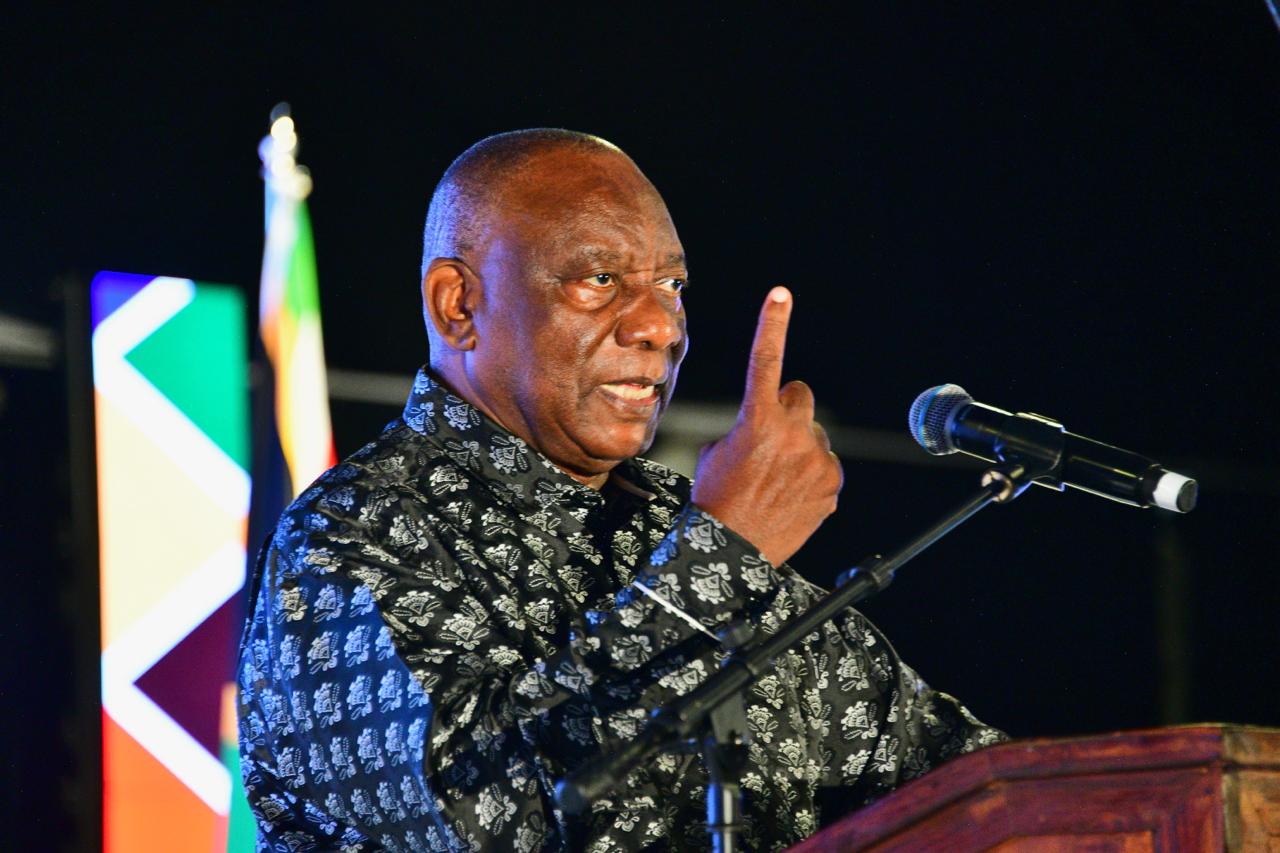
Addressing the nation on Sunday, President Cyril Ramaphosa said the plan was adopted by Cabinet last week and endorsed by the President's Coordinating Council, which includes Premiers, local government representatives and traditional leaders.

“As government our objective is clear. We want a South Africa where every person who enters the country does so lawfully; a South Africa where immigration laws are respected and enforced; a South Africa where businesses compete fairly; a South Africa where communities feel safe and secure, and a South Africa that remains true to its constitutional values and its commitment to human dignity,” the President said. 

The plan rests on five pillars, namely, cracking down on violations of immigration and labour laws, preventing illegal entry into the country, stamping out corruption in the immigration system, strengthening immigration laws and policies, and working with other countries to address migration challenges across the region and continent.

Cracking down on law violations
The first part of the response focuses on a well-coordinated effort to crack down on violations of existing immigration, labour and other laws. 

The President said the Department of Home Affairs, the Border Management Authority (BMA), South African Police Service (SAPS) and other law enforcement agencies have been and will intensify the process of identifying and deporting undocumented foreign nationals residing illegally in South Africa.

“In the past year alone, the BMA managed to intercept and stop over 450 000 people who were attempting to enter South Africa illegally,” the President said.

Furthermore, he said dedicated courts will be set up to deal with immigration to speedily support the deportation of undocumented migrants. 

Securing the borders
The second pillar of the approach to illegal immigration is anchored on knowing who enters the country, why they are entering and how long they are permitted to stay.

“Secure borders are not a sign of hostility towards other countries. They are a fundamental requirement of a sovereign and well-governed State,” the President said.

He said government will continue to invest in modern technology, infrastructure and personnel to ensure that borders are secure, while facilitating legitimate trade, travel and economic activity.

We will undertake a phased relocation of refugee reception centres to border posts, starting with the Tshwane centre this year. 

Rooting out corruption
The third part of the approach focuses on efforts to strengthen the immigration system by stamping out corruption and deploying cutting-edge technology.

“We are continuing the crackdown on corruption and inefficiencies in the Department of Home Affairs. 

“We must recognise that illegal immigration is often enabled by corruption. Officials who sell documents, facilitate unlawful entry or abuse public office for personal gain betray the trust of the South African people. We will pursue these cases relentlessly.

“Those responsible are facing dismissal, criminal prosecution and the full consequences of the law,” said the President.

He cited the establishment of an Intelligent Population Register that contains biometric data for every person in the country, laying the foundation for the Digital ID.

Efforts to discontinue the green ID book, which has been described as vulnerable to identity theft, will go on, closing the space for undocumented immigrants and criminal syndicates.

The Department of Home Affairs is to set a date after which the green ID books will not be recognised.                                               
This, the President said, will end the abuse of the Traffic Registration Number, which foreign nationals require to register or buy vehicles, but which is being used as a form of identification.

“The Department of Transport will issue new regulations to align with the identification laws of our country within the next three months,” President Ramaphosa said.

Bolstering laws and policies
The fourth part of the response is to close the gaps in the country’s laws and policies.

The President acknowledged that the laws that regulate immigration in South Africa are fragmented and often contradictory.
“They allow legal loopholes that are exploited by undocumented migrants. We are addressing these loopholes.”

Cooperation on immigration
The final part of the response hinges on work with other countries in the region and across the continent to address the broader challenge of migration. 

“We need to address the factors that drive migration on our continent and elsewhere,” President Ramaphosa said.

South Africa, the President said, will continue working with its sister countries to build an Africa in which people move by choice and not by desperation.

“As part of this effort, I will be sending envoys to a number of sister African countries to outline the measures that we are announcing this evening.

“Cabinet will remain seized with this matter and will regularly review progress in implementing these measures,” the President said.

Tourism sector shows strong signs of recovery and growth

Minister in the Presidency Khumbudzo Ntshavheni says Cabinet has welcomed the positive developments in the tourism sector, which continues to show strong signs of recovery and growth.

According to Statistics South Africa's International Tourism Report, the country recorded 989 329 tourist arrivals in April 2026.

“This marks the highest monthly year-on-year growth ever recorded, reaffirming South Africa’s enduring appeal as a global tourism destination,” said the Minister, who was briefing the media on the outcomes of the Cabinet meeting held on Wednesday.

She said to sustain this momentum, government continues to expand international air connectivity.

Recently LATAM Airlines decided to bring forward the launch of its three weekly direct flights between São Paulo and Cape Town to July 2026, ahead of its original September schedule.
 
In addition, on 24 June 2026, Air Europa’s launched its direct flight between Madrid and Johannesburg which will strengthen connectivity with Europe and support growth across the tourism and hospitality sectors.

Multimillion rand drug bust at Durban Harbour

The Directorate for Priority Crime Investigation (DPCI), through the Serious Organised Crime Investigation (SOCI) South African Narcotics Enforcement Bureau (SANEB), seized approximately 90 kilograms of suspected cocaine with an estimated street value of R36 million at the Durban Harbour on Saturday, 6 June 2026. 

Also taking part in the seizure were officials from Customs, the Durban Visible Policing Operations (VPO) and the Local Criminal Record Centre (LCRC).

The members of the SANEB section attached to Durban SOCI were alerted by a Customs official to suspected cocaine concealed within an excavator that had arrived at the Q and R Car Terminal aboard the vessel, Neptune Ace Tokyo, from Santos, Brazil.

“Upon arrival, the scene was handed over to DPCI members by Customs officials. A thorough inspection of the excavator revealed suspicious packages concealed within a panel leading to the engine compartment. Further examination resulted in the seizure of 47 blocks containing a powdered substance suspected to be cocaine,” the police said in a statement

“While the first scene was being processed, Customs officials reported the discovery of a second concealment on another excavator that had already been offloaded from the vessel. A subsequent inspection led to the seizure of an additional 43 blocks of suspected cocaine.

“In total, approximately 90 kilograms of suspected cocaine was seized. Based on an estimated value of R400 000 per kilogram, the drugs have an approximate street value of R36 million.

“No arrests have been made at this stage, and the matter remains under investigation. The seized exhibits will be transported to the Forensic Science Laboratory for chemical analysis,” the police said in a statement.

The acting Provincial Head, Brigadier Zenobia Mulligan, applauded the multi disciplinary team for their alertness and dedication. 
“The DPCI remains committed to disrupting transnational drug trafficking networks and safeguarding South Africa’s ports of entry from organised criminal activities, even when their integrity is under scrutiny. 

“The DPCI will continue executing their mandate without fear or favour,” Mulligan said.

SAPS takes action against alleged corrupt police official

The South African Police Service (SAPS) management in Gauteng has noted a video circulating on social media platforms, particularly Facebook, depicting a police official  in full uniform allegedly returning money to a member of the public following an alleged bribery incident.

The police officer featured in the video has been identified, and immediate disciplinary processes have been instituted. A departmental investigation has also been launched to establish the full circumstances surrounding the incident.

SAPS maintains a zero-tolerance approach to corruption. The acceptance, solicitation or facilitation of a bribe constitutes a criminal offence and a serious violation of the SAPS Code of Conduct.

The Gauteng Provincial Commissioner, Lieutenant General Tommy Mthombeni, has strongly condemned the alleged conduct."The South African Police Service will not tolerate corruption in any form. Members who abuse their authority, compromise their integrity, or betray the trust placed in them by the public will be dealt with decisively. We are committed to ensuring that every allegation of corruption is thoroughly investigated and that appropriate disciplinary and criminal action is taken where warranted.

Our communities deserve professional, ethical and accountable policing, and we remain steadfast in protecting the integrity of the organisation," said Lieutenant General Mthombeni.

All SAPS members are expected to conduct themselves with integrity and professionalism, in compliance with the Constitution of the Republic of South Africa, the SAPS Code of Conduct, and all applicable legislative and policy frameworks.

Members of the public are urged not to offer bribes and to report any allegations of corruption or extortion involving SAPS members through the following channels:

* SAPS Anti-Corruption Hotline: 0800 701 701
* SAPS National Complaints Service Centre: 0800 333 177
* Corruption Watch WhatsApp Line: 072 013 5569
* Gauteng Service Complaints Standby: 082 442 2000
* Independent Police Investigative Directorate (IPID)

SAPS remains committed to rooting out corruption within its ranks and ensuring accountability, professionalism and public trust in policing.
error: eRadio is protected !
Scroll to Top