SAPS suspends additional five senior police officers

The South African Police Service (SAPS) has confirmed the suspension of five additional senior officers in relation to matters arising from the Medicare 24 tender.

“Internal departmental processes are underway, and in the interest of preserving the integrity of these processes, the SAPS will not provide further comment at this stage,” SAPS said in a statement.

Earlier this month, SAPS suspended nine police officers, who served as members of the Bid Evaluation Committee (BEC) in relation to the Medicare24 tender process.

The affected members have been placed on suspension pending the finalisation of disciplinary and related investigations. 

“SAPS remains committed to maintaining the highest standards of integrity, transparency and ethical conduct in all its operations,” SAPS said at the time. 

May 2026 storm damage tops R9 Billion

The Western Cape Department of Local Government revealed in a briefing to the Standing Committee on Local Government, Environmental Affairs and Development Planning today that preliminary estimates of damage from the May 2026 floods exceed R9 billion. Despite the severity of the damage, the Western Cape’s disaster risk management system proved its value with proactive planning, which saved hundreds of lives during the flooding.

The severe weather between 5 and 12 May brought 300 mm of rain and 120 km/h winds. Provincial disaster centres activated early, pre-positioning rescue teams and closing schools based on flood-risk profiling. Despite 11 fatalities, a coordinated response prevented greater tragedy: 651 rescues, 3 690 people sheltered, over 56 000 reached with humanitarian aid, 97% of power restored, and 70% of road disruptions cleared within days.

It was also revealed that tourism impacts in CapeNature reserves included 1 241 days lost and 306 bookings affected, with the potential revenue lost estimated at R2.5 million.

A written parliamentary reply from the Department of Agriculture further confirmed that over 1 400 hectares of farmland were damaged by the inclement weather, resulting in over R1.2 billion in agricultural and export losses. Consequently, 1 568 agricultural jobs were disrupted, with agricultural infrastructure damage exceeding R3.9 billion.

Dave Bryant, MPP, DA Western Cape Spokesperson on Local Government, Environmental Affairs and Development Planning, said: “The briefing shows that the DA-led Western Cape Government leads in disaster preparedness. Our officials activated Joint Operations Centres, pre-deployed rescue teams, and issued warnings that saved lives. This includes 650 rescues, thousands sheltered, and repairs started within days. The DA in the Western Cape commend every official and volunteer who kept our province safe.”

Noko Masipa, MPP, DA Western Cape Spokesperson on Agriculture, Economic Development and Tourism, said: “Our farmers and farmworkers have shown incredible resilience, but 1 400 hectares lost, 1 500 jobs disrupted, and R3.9 billion in infrastructure damage is devastating. The DA-led Western Cape Government has activated the Rural and Sector Support structure, fast-tracked relief, and ensured commodity formations deliver aid. We will rebuild and leave no farming community behind.”

DA Opposes Proposed New Motorist Charge to Fund RAF


The Democratic Alliance (DA) has intensified its opposition to proposals being considered by Transport Minister Barbara Creecy to introduce an additional charge on motorists to help fund the financially troubled Road Accident Fund (RAF).

According to the DA, government is considering attaching a new fee to annual vehicle licence renewals as part of efforts to secure alternative funding for the RAF. The party argues that motorists are already contributing to the fund through the fuel levy and should not face additional financial burdens.

The DA maintains that the RAF's financial difficulties stem from years of mismanagement, corruption, wasteful expenditure and poor governance rather than insufficient funding from motorists. The party says the focus should be on reforming the system rather than introducing new taxes or levies.

DA transport spokesperson Dr Chris Hunsinger said the party is engaging with the Transport Minister on proposals to replace the RAF through legislative amendments and is awaiting confirmation of a meeting to discuss the matter.

The party argues that South Africans are already under financial pressure due to rising fuel costs, food inflation and other household expenses, and that any additional charges would place further strain on consumers.

The DA has reiterated its call for the RAF to be replaced with what it describes as a more sustainable, efficient and affordable system that can support road accident victims without requiring increased contributions from the public.

Government has reportedly indicated that the proposed licence renewal charge remains one of several options under consideration as it explores alternative funding mechanisms for the RAF.

The DA has pledged to oppose any measures that would increase costs for motorists.

Statistics South Africa reports 0.5% GDP growth

The South African economy maintained its positive momentum in the first quarter of 2026 (January - March). Real gross domestic product (GDP) increased by 0,5%,1 marking a sixth consecutive quarter of growth. Finance, agriculture, trade and transport did the heavy lifting on the production (supply) side of the economy. The expenditure (demand) side was supported by a decline in imports and a rise in household consumption, government consumption and exports.

Nine industries were stronger
The finance industry was the main positive contributor on the production side of the economy, expanding by 0,9% and adding 0,2 of a percentage point to GDP growth. Agriculture, trade, and transport & communication also made notable contributions.

Agriculture grew for a sixth consecutive quarter, expanding by 3,9%. Field crops and horticulture products (particularly fruit) underpinned the industry’s stronger performance.

The trade industry also extended its gains for a sixth straight quarter, supported by stronger wholesale trade, motor trade, food & beverages and accommodation. Retail trade was the exception, recording zero growth.

Positive results from land transport, air transport and transport support services pushed the transport & communication industry higher by 0,7%. Economic activity in communications, however, was down in the quarter.

Mining was stronger on the back of higher production levels for platinum group metals, gold, chromium ore and diamonds.

Manufacturing misfired in the first quarter, weakening by 0,8%. This is the industry’s second consecutive decline, dragged lower mainly by the petroleum & chemicals; iron & steel; and wood, paper & publishing divisions.

Glass & non-metallic mineral products, motor vehicles & transport equipment, electrical machinery and textiles & clothing were stronger, but not enough to lift the industry into positive territory.

Expenditure on GDP was also positive
The expenditure side of the economy was lifted by weaker imports, together with a rise in household consumption, government consumption and exports.

Household consumption expanded by a marginal 0,1%, the lowest growth rate in eight quarters. Household utilities (such as water and electricity) and transport were the largest positive contributors.

Consumers spent less on food & non-alcoholic beverages and alcoholic beverages, tobacco & narcotics. This was consistent with the zero per cent growth rate in retail trade on the production side of the economy. Spending on restaurants & hotels was also down. The miscellaneous goods & services category was the most significant negative contributor, reflecting a decline in insurance expenditure.

Following two consecutive increases, capital formation pulled back in the first quarter, declining by 1,1%. This was mainly due to a decrease in investments in machinery & other equipment and residential buildings.

The slowdown in imports was largely influenced by weaker trade in precious metals, mineral products, machinery & electrical equipment, textiles & textile articles, and animal & vegetable fats and oils. Exports rose by 0,5%, driven by rise in the trade of mineral products, vegetable products (reflecting the rise in the production of fruit in the agricultural industry), and prepared foodstuffs, beverages & tobacco.

The manufacturing, trade and mining industries dipped into their stockpiles to meet demand, resulting in an annualised R22,4 billion drawdown in inventories. Manufacturing’s drawdown was the largest (-R14,5 billion).

The impact of the conflict in the Middle East?
The conflict in the Middle East began towards the end of February, more than half-way through the first quarter. The impact of the conflict was felt in the sharp fuel price increases in April, which may reflect in the second quarter GDP estimates. These will be released on 08 September 2026.

Operation Shanela cracks down on organised criminal networks

The South African Police Service (SAPS) has intensified its nationwide Operation Shanela crackdown on organised criminal networks involved in illicit trade, drug trafficking, illegal immigration and other serious and violent crimes.

These intelligence-led operations were conducted between 1 and 7 June across the country, resulting in the arrest of 17 587 suspects, including 2 549 wanted individuals linked to serious and violent crimes. 

During the same period, 2 399 illegal foreigners were arrested for contravention of the Immigration Act, with the most arrests recorded in Gauteng (959), followed by 529 in KwaZulu-Natal.

Police have also conducted operations targeting transitional criminal networks involved in illicit trade, including significant seizures of illicit cigarettes across multiple provinces.

On 3 June 2026, police intercepted a suspicious truck and arrested a 35-year-old male suspect for possession of suspected illicit cigarettes worth R7.5 million on the N1 near Vaal Plaza in the Free State.

On 5 June 2026, police seized illicit cigarettes worth R3 million and arrested two foreign nationals in Nelspruit, Mpumalanga.

On 4 June 2026, police arrested a 49-year-old Zimbabwean national after intercepting a Nissan truck carrying illicit tobacco, worth R1.5 million, along the R518 road in Limpopo.

In the Western Cape, police seized illegal liquor worth more than R9 million and arrested three Chinese nationals following a coordinated operation in Paarl on 4 June 2026. 

In the fight against transnational drug syndicates, law enforcement agencies secured a major victory when they seized 90 kilograms of suspected cocaine, worth R36 million, at the Durban Harbour on 6 June 2026.

Other key arrests this week include 1 564 suspects arrested for assault GBH [grievous bodily harm]; 153 for murder; 157 for attempted murder; 135 for rape; 567 for driving under the influence of alcohol or drugs; 196 for dealing in drugs; 3 115 for possession of drugs; 499 for illegal dealing in liquor and 26 for human trafficking.

Police also confiscated and recovered 127 unlicensed firearms of various calibres; 1 898 rounds of ammunition; contraband goods worth more than R21 million; various types of drugs, and 59 hijacked and stolen vehicles. 

Garden Route Climate Summit to Focus on Disaster Preparedness and Resilience

The Garden Route has faced some of South Africa’s most severe climate-related disasters in recent years, including the 2017 Knysna fires, repeated floods, storm damage and ongoing threats to infrastructure and communities.

Most recently, strong winds, flooding and coastal damage in May and June have again highlighted the region’s vulnerability, prompting calls for stronger coordination and preparedness.

In response, the Garden Route Environmental Forum (GREF), with partners and Nelson Mandela University, will host the 2026 Extreme Weather Reflection Summit at NMU’s George Campus on 2 July.

The summit will bring together experts, government, business, agriculture and civil society to review recent events and develop practical resilience and disaster-risk solutions.

Preceding the event will be training for disaster management teams, including chainsaw operation and biomass clearing.

Discussions will focus on climate adaptation, disaster risk reduction, water security, biodiversity, environmental restoration and sustainable development. The summit is supported by the Garden Route District Municipality and George Municipality.

RSVP is essential via [email protected].

South Africans urged to register for Local Government Elections

Cabinet has called on all eligible South Africans to register to vote ahead of the 2026 Local Government Elections, stressing the importance of citizen participation in shaping the future of communities across the country. 

Addressing a post-Cabinet media briefing on Friday, Minister in The Presidency Khumbudzo Ntshavheni reminded citizens that the first voter registration weekend for the upcoming municipal elections will take place on 20 and 21 June 2026.

South Africans will head to the polls on 4 November 2026 to elect councillors, who will be responsible for governing municipalities and overseeing the delivery of basic services at local government level.

Cabinet encouraged all eligible voters who have not yet registered, as well as those who may have changed their residential address, to use the registration weekend to ensure that their details are correctly captured on the voters' roll.

“The first voter registration weekend is taking place on Saturday, 20 June 2026, and Sunday, 21 June 2026 at their nearest voter registration station, or by visiting registertovote.elections.org.za, or visiting their local Electoral Commission offices during working hours,” Ntshavheni said.

Citizens were reminded that they can only vote at the voting station where they are registered and should therefore verify their registration details ahead of the elections.

Voters can also locate their correct voting station by using the Electoral Commission's online voting station finder.

Cabinet placed particular emphasis on youth participation, calling on young people to play an active role in the democratic process.

“Cabinet calls on young people, in particular, to participate actively in shaping the future of their communities through participation in elections,” Ntshavheni said.

The call comes as government and the Electoral Commission continue efforts to encourage greater participation among first-time voters and young South Africans, who constitute a significant portion of the country's voting-age population.

Local government elections are regarded as one of the most important pillars of South Africa's democratic system, as they determine the leadership responsible for delivering essential services such as water, sanitation, electricity, roads, refuse removal and local economic development.

The elections also provide communities with an opportunity to hold local leaders accountable and influence decisions that directly affect their daily lives.

The Electoral Commission has in recent years expanded digital registration services, allowing eligible voters to register online, update their details and check their registration status without visiting a registration station. 

Government has repeatedly emphasised that voter registration is a critical step in ensuring that every eligible citizen can exercise their constitutional right to vote.

Cabinet said active participation in elections strengthens democracy and enables communities to help shape the development priorities of their municipalities. 

Government unveils comprehensive plan to tackle illegal immigration

Government has adopted a Comprehensive Approach for Migration Management aimed at strengthening border security, enforcing immigration laws, tackling corruption and closing policy loopholes as part of a broader effort to address illegal immigration in South Africa.

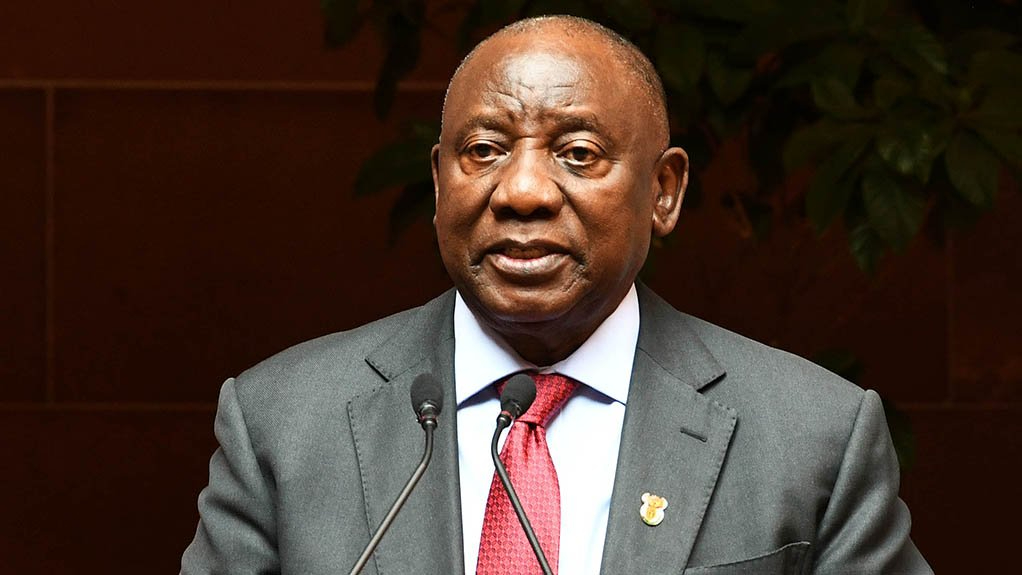
Addressing the nation on Sunday, President Cyril Ramaphosa said the plan was adopted by Cabinet last week and endorsed by the President's Coordinating Council, which includes Premiers, local government representatives and traditional leaders.

“As government our objective is clear. We want a South Africa where every person who enters the country does so lawfully; a South Africa where immigration laws are respected and enforced; a South Africa where businesses compete fairly; a South Africa where communities feel safe and secure, and a South Africa that remains true to its constitutional values and its commitment to human dignity,” the President said. 

The plan rests on five pillars, namely, cracking down on violations of immigration and labour laws, preventing illegal entry into the country, stamping out corruption in the immigration system, strengthening immigration laws and policies, and working with other countries to address migration challenges across the region and continent.

Cracking down on law violations
The first part of the response focuses on a well-coordinated effort to crack down on violations of existing immigration, labour and other laws. 

The President said the Department of Home Affairs, the Border Management Authority (BMA), South African Police Service (SAPS) and other law enforcement agencies have been and will intensify the process of identifying and deporting undocumented foreign nationals residing illegally in South Africa.

“In the past year alone, the BMA managed to intercept and stop over 450 000 people who were attempting to enter South Africa illegally,” the President said.

Furthermore, he said dedicated courts will be set up to deal with immigration to speedily support the deportation of undocumented migrants. 

Securing the borders
The second pillar of the approach to illegal immigration is anchored on knowing who enters the country, why they are entering and how long they are permitted to stay.

“Secure borders are not a sign of hostility towards other countries. They are a fundamental requirement of a sovereign and well-governed State,” the President said.

He said government will continue to invest in modern technology, infrastructure and personnel to ensure that borders are secure, while facilitating legitimate trade, travel and economic activity.

We will undertake a phased relocation of refugee reception centres to border posts, starting with the Tshwane centre this year. 

Rooting out corruption
The third part of the approach focuses on efforts to strengthen the immigration system by stamping out corruption and deploying cutting-edge technology.

“We are continuing the crackdown on corruption and inefficiencies in the Department of Home Affairs. 

“We must recognise that illegal immigration is often enabled by corruption. Officials who sell documents, facilitate unlawful entry or abuse public office for personal gain betray the trust of the South African people. We will pursue these cases relentlessly.

“Those responsible are facing dismissal, criminal prosecution and the full consequences of the law,” said the President.

He cited the establishment of an Intelligent Population Register that contains biometric data for every person in the country, laying the foundation for the Digital ID.

Efforts to discontinue the green ID book, which has been described as vulnerable to identity theft, will go on, closing the space for undocumented immigrants and criminal syndicates.

The Department of Home Affairs is to set a date after which the green ID books will not be recognised.                                               
This, the President said, will end the abuse of the Traffic Registration Number, which foreign nationals require to register or buy vehicles, but which is being used as a form of identification.

“The Department of Transport will issue new regulations to align with the identification laws of our country within the next three months,” President Ramaphosa said.

Bolstering laws and policies
The fourth part of the response is to close the gaps in the country’s laws and policies.

The President acknowledged that the laws that regulate immigration in South Africa are fragmented and often contradictory.
“They allow legal loopholes that are exploited by undocumented migrants. We are addressing these loopholes.”

Cooperation on immigration
The final part of the response hinges on work with other countries in the region and across the continent to address the broader challenge of migration. 

“We need to address the factors that drive migration on our continent and elsewhere,” President Ramaphosa said.

South Africa, the President said, will continue working with its sister countries to build an Africa in which people move by choice and not by desperation.

“As part of this effort, I will be sending envoys to a number of sister African countries to outline the measures that we are announcing this evening.

“Cabinet will remain seized with this matter and will regularly review progress in implementing these measures,” the President said.

Tourism sector shows strong signs of recovery and growth

Minister in the Presidency Khumbudzo Ntshavheni says Cabinet has welcomed the positive developments in the tourism sector, which continues to show strong signs of recovery and growth.

According to Statistics South Africa's International Tourism Report, the country recorded 989 329 tourist arrivals in April 2026.

“This marks the highest monthly year-on-year growth ever recorded, reaffirming South Africa’s enduring appeal as a global tourism destination,” said the Minister, who was briefing the media on the outcomes of the Cabinet meeting held on Wednesday.

She said to sustain this momentum, government continues to expand international air connectivity.

Recently LATAM Airlines decided to bring forward the launch of its three weekly direct flights between São Paulo and Cape Town to July 2026, ahead of its original September schedule.
 
In addition, on 24 June 2026, Air Europa’s launched its direct flight between Madrid and Johannesburg which will strengthen connectivity with Europe and support growth across the tourism and hospitality sectors.

Multimillion rand drug bust at Durban Harbour

The Directorate for Priority Crime Investigation (DPCI), through the Serious Organised Crime Investigation (SOCI) South African Narcotics Enforcement Bureau (SANEB), seized approximately 90 kilograms of suspected cocaine with an estimated street value of R36 million at the Durban Harbour on Saturday, 6 June 2026. 

Also taking part in the seizure were officials from Customs, the Durban Visible Policing Operations (VPO) and the Local Criminal Record Centre (LCRC).

The members of the SANEB section attached to Durban SOCI were alerted by a Customs official to suspected cocaine concealed within an excavator that had arrived at the Q and R Car Terminal aboard the vessel, Neptune Ace Tokyo, from Santos, Brazil.

“Upon arrival, the scene was handed over to DPCI members by Customs officials. A thorough inspection of the excavator revealed suspicious packages concealed within a panel leading to the engine compartment. Further examination resulted in the seizure of 47 blocks containing a powdered substance suspected to be cocaine,” the police said in a statement

“While the first scene was being processed, Customs officials reported the discovery of a second concealment on another excavator that had already been offloaded from the vessel. A subsequent inspection led to the seizure of an additional 43 blocks of suspected cocaine.

“In total, approximately 90 kilograms of suspected cocaine was seized. Based on an estimated value of R400 000 per kilogram, the drugs have an approximate street value of R36 million.

“No arrests have been made at this stage, and the matter remains under investigation. The seized exhibits will be transported to the Forensic Science Laboratory for chemical analysis,” the police said in a statement.

The acting Provincial Head, Brigadier Zenobia Mulligan, applauded the multi disciplinary team for their alertness and dedication. 
“The DPCI remains committed to disrupting transnational drug trafficking networks and safeguarding South Africa’s ports of entry from organised criminal activities, even when their integrity is under scrutiny. 

“The DPCI will continue executing their mandate without fear or favour,” Mulligan said.
error: eRadio is protected !
Scroll to Top