Western Cape SAPS reports encouraging decline in serious violent crime during fourth quarter

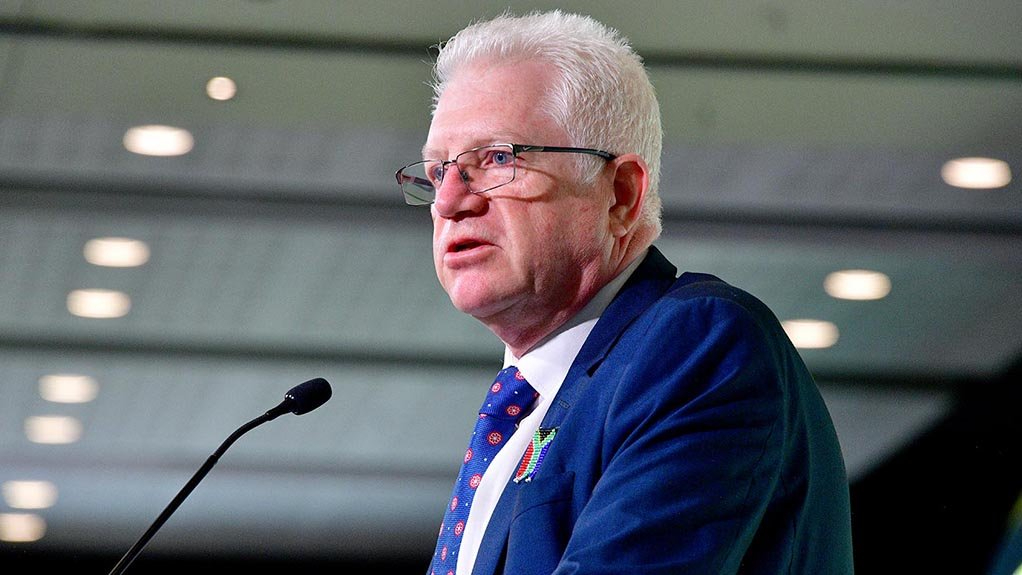
Western Cape Provincial Commissioner Lt Gen (Adv.) Thembisile Patekile, joined by the MEC for Police Oversight and Community Safety, Ms Anroux Marais this week released the fourth quarter crime statistics for the 2025/2026 financial year at the Provincial Police Head Office in Green Point.

The latest statistics for January to March 2026 reflect encouraging reductions in key crime categories compared to the same period last year:

* Murder decreased by 8%
* Attempted murder decreased by 10.3%
* Contact crime decreased by 6.5%

While these reductions are welcomed, SAPS management reiterated that violence in communities across the Western Cape remains unacceptably high. Ongoing policing interventions continue to focus on gang-related violence, retaliation attacks, robbery-related crime, firearm-related offences and violence in certain areas.

The Western Cape SAPS remains committed to intensifying crime-fighting operations, strengthening partnerships and enhancing visibility to create safer communities.

SARB raises repo rate to 7%

The South African Reserve Bank’s Monetary Policy Committee (MPC) has increased the repo rate by 25 basis points to 7%, effective from 29 May 2026.

SARB Governor Lesetja Kganyago said four MPC members supported the increase, while two preferred to keep the rate unchanged.

At a media briefing on Thursday, Kganyago said the committee acted because inflation risks had intensified and overlapping shocks could trigger second-round effects. 

He explained that the decision was meant to manage those risks and help bring inflation back to target.

At this meeting, the MPC considered three main risk scenarios.

The first was a prolonged Middle East conflict, which could push up oil and food prices and weaken the rand.

The second was the possible emergence of El Niño, a weather pattern that often brings drought to parts of South Africa.

The third scenario considered non-linear effects, meaning large shocks could have an outsized impact on inflation as more costs are passed on to consumers.

Kganyago said all three scenarios pointed to higher inflation and weaker economic growth.

“The scenario with a longer Strait closure has inflation at about 5%, with two more hikes than the baseline. With El Niño added, rates stay high for longer. The most adverse scenario puts all the risks together, causing inflation to peak above 6%, requiring three extra hikes,” Kganyago said.

He said these scenarios highlighted the role of food and fuel in transmitting geopolitical shocks and showed the added risks posed by a severe El Niño.

The MPC has also raised its oil price assumptions and now expects renewed pressure on food prices, with the agricultural sector facing higher diesel and fertiliser costs.

“Looking forward, we have raised our oil price assumptions. In addition, we see renewed pressure on food prices, with the agricultural sector facing higher costs for both diesel and fertiliser. Our forecast now has headline inflation averaging 4.4% this year and 3.7% next year, before returning to the 3% target in 2028. Core inflation is also higher, peaking early next year,” he said.

Recent inflation data also reflected mounting price pressures

In April, consumer inflation rose to 4%, up from 3.1% in the previous month, mainly because of higher energy costs.

Kganyago said fuel prices, after falling by 8.7% in March, increased by 11.4% in April, making it one of the biggest jumps in fuel inflation on record. 

Services inflation also accelerated to 4.6%, well above the bank’s 3% target. 

He said this was partly due to transport costs, but also reflected broader price pressures in areas such as insurance and financial services.

Tourism Minister welcomes increase in tourist arrivals

Tourism Minister Patricia de Lille has welcomed the increase in international tourism arrivals in the month of April 2026 which is the highest increase the country has seen since the start of the year.

“This is our highest monthly year-on-year increase since the start of the year. This means that despite the ongoing conflict in the Middle East, which has led to global flight disruptions and ticket fare price increases South Africa has not only defended its markets but has also grown in some regions, “Minister de Lille said on Wednesday.

According to Statics South Africa’s monthly International Tourism Report, which was released on Wednesday, the month of April recorded 989 329 tourist arrivals marking a 19.5% increase when compared to the same period last year.

Inbound travel from Singapore increased by 70.5% (938 arrivals) in April 2026 while arrivals from Brazil increased by 37.5% (5 953 arrivals).

The total number of arrivals from January 2026 to April 2026 increased by 14.1% year-on-year, to 3 899 358. This is an additional 482 935 increase in international arrivals when compared to Jan-April 2025.

The Minister said that in July Brazilian carrier LATAM airline will launch three weekly direct flights between São Paulo and Cape Town. 

“The airline was initially scheduled to launch these flights in September but has brough the date forward due to increased demand. Meanwhile, on 24 June 2026 Spanish carrier, Air Europa will launch its inaugural direct flight between Madrid and Johannesburg,” said the Minister.

According to the report, overseas tourists constituted 18.4% (181 796) of all tourists.

IEC officially launches the 2026 Local Government Elections campaign

The Electoral Commission has officially launched the 2026 Local Government Elections (LGE), marking the commencement of the mass awareness campaign towards Election Day in November. 

This is after President Cyril Ramaphosa has announced 4 November 2026 as the date for South Africa’s upcoming Local Government Elections.

Wednesday’s launch set the stage for political parties and voters to begin preparations for the polls with the Commission to rollout a national campaign across multiple platforms, including television, radio, digital, and social media, to ensure broad reach and accessibility.

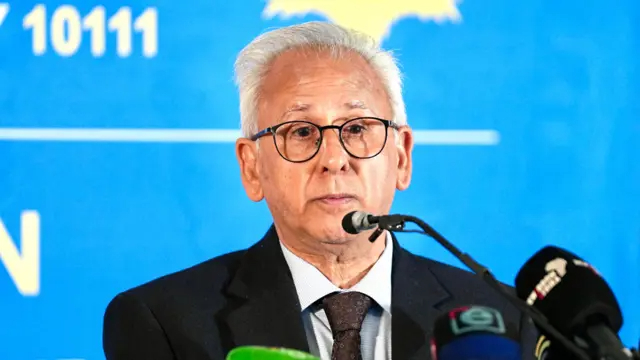
Speaking at the launch held in Midrand, near Johannesburg, the Commission’s Chief Electoral Officer Sy Mamabolo said since the dawn of democracy in 1994, the Electoral Commission has successfully delivered five LGEs, each marking a significant milestone in the evolution of local democracy and the consolidation of municipalities as theatres of civic engagement. 

“As the 6th instalment, the 2026 Local Government Elections take place amid notable changes in domestic and global political landscapes. The announcement of the 4 November 2026 election date by His Excellency, President Cyril Ramaphosa, has provided the Electoral Commission and all stakeholders with clarity and certainty for planning,” Mamabolo said. 

Mamabolo said the launch is a practical manifestation of that certainty and an assurance that plans are firmly in the execution phase for delivering an election that meets the standard envisioned in the Constitution. 

On 1 April 2026, the Commission unveiled the elections logo and media campaign under the tagline, “Get Up, Show Up, Vote.” 

This powerful call to action is aimed at motivating all eligible voters, particularly young people to actively participate in the electoral process. 

According to Mamabolo, Wednesday’s launch marks the beginning of intensified public awareness ahead of the national voter registration weekend on 20 and 21 June 2026. 
Just under 24 000 registration stations across 4 488 municipal wards will open over the two days to enable citizens to register, verify their personal details and ensure correct registration. 

“Preparations are well advanced, with the Department of Home Affairs ensuring that offices will be open nationwide to facilitate citizens’ applications for identity documents, which are a prerequisite for voter registration. 

“The Commission has deployed over 800 Municipal Outreach Coordinators, including persons with disabilities, across the country to drive voter education and awareness, reinforcing inclusive participation ahead of the elections.” 

Mamabolo said since the beginning of 2026, more than 62,336 community events have been conducted nationwide, strengthening sustained voter education and public engagement adding that a targeted door-to-door voter communication and registration campaign has been completed across 99% of municipalities (212 out of 214) between 11 and 24 May 2026. 

“This campaign informed citizens of recent Municipal Demarcation Board changes to certain ward boundaries and the consequential revision of some voting districts. The Commission thanks the Board for its cooperation in completing the ward delimitation process and handing over final ward boundaries. 

“The Commission’s voter education and registration programmes continue to yield strong results. The Tertiary Institutions Campaign has reached 97 894 students across 1086 activations in all nine provinces, with 45 757 students successfully registered – demonstrating its impact in promoting youth participation. 

“The Schools Democracy Programme, implemented in partnership with the Department of Basic Education, continues to build awareness by educating learners on democratic principles and electoral processes, while encouraging eligible learners aged 16 and older to pre-register,” he said. 

Draft code of conduct
With regard to combating disinformation, Mamabolo said the Electoral Commission recognises that the pervasive use of social media is a double-edged sword. 

“The Commission has previously mitigated disinformation through, among others, collaboration with civil society and the use of the Real411 platform for flagging and reporting misleading content. This work has been strengthened through policy development. 

Guided by the Constitution and other relevant prescripts, the Commission will issue a draft Code of Conduct on Misinformation for public comment. The draft seeks to embed safeguards against fraudulent and manipulated content to preserve information integrity during the elections,” he said. 

Online registrations
The Commission said the online registration portal has improved the accuracy and stability of the voters’ roll by enabling real-time updates and offsetting losses due to mortality. Between January and May 2026, 376,140 new registrations were recorded, reflecting strong uptake - particularly among young voters.

The total number of registered voters currently stands at 27,912,415, exceeding the figures recorded at the time of the 2024 general elections. 

Mamabolo said the achievement comes despite an average monthly loss of 34 000 voters due to mortality. 

Cooperative Governance and Traditional Affairs Minister Inkosi Velenkosini Hlabisa said he is confident that the number of registered young people will increase.

“I am confident that this time we are going to have more young people registering to vote and taking part in the elections,” he said.

In a bid to encourage young people to participate the elections, the Commission has introduced a youth-focused series, “Beats for My Peeps,” in partnership with the SABC.

The programme uses music, culture, and digital creators to address voter apathy, dispel misinformation, and promote participation.

It will air on SABC1 at 6pm from 3 June 2026. Meanwhile, the IEC Podcast launched in April 2026 and provides accessible, real-time information via mobile and digital platforms. 

How can citizens register
Get your identity document ready and register or check your address details online at: registertovote.elections.org.za 
Find your correct voting station to visit on the registration weekend at maps.elections.org.za/vsfinder 
Visit your local Electoral Commission offices on weekdays between 8am and 5pm.

Construction begins on Eskom’s R1.2 billion 75MW solar power plant

Eskom has broken ground on a new R1.2 billion 75MW solar power plant to be based at the Lethabo Power Station in the Free State, marking a major step in integrating renewable generation within the power utility’s coal-fired power station-heavy fleet.

“Once completed, the plant is expected to generate approximately 147GWh of electricity annually, supplying power to an estimated 60,000 households. In addition to its energy contribution, the project will create vital local economic opportunities and contribute significantly to skills development during both the construction and operational phases,” Eskom said on Wednesday.

Speaking at a ceremony marking the start of construction, Eskom’s Group Chief Executive, Dan Marokane, noted that the much-improved performance of the coal-fired fleet is setting a platform to phase in renewable energy.

“Last week we celebrated 365 days without loadshedding, as a result of the focused delivery over the past three years of the generation recovery plan by our skilled employees.

“Now that we have delivered a stable electricity platform for the South African economy to grow from, we can seamlessly enable the integration of renewable energy sources as required by the 2025 Integrated Resource Plan [IRP] to maintain future energy security.

“We are playing our part in bringing online the new generation capacity required by focusing on the deep technical and institutional capability of our employees, built over decades of public investment, that remains a critical part of our national capacity towards delivering cleaner sources of energy,” Marokane said.

Eskom’s Group Executive for Renewables, Rivoningo Mnisi, described the solar power plant as “a significant milestone” in the power utility’s renewable energy pipeline and forms part of the “broader strategy to diversify the generation mix, support South Africa’s Just Energy Transition objectives and provide customers with lower carbon electricity”.

“By leveraging existing power station infrastructure, this project demonstrates the practical integration of renewable energy technology within our existing coal-fired power station fleet infrastructure and signals Eskom’s continued commitment to strengthening security of supply while transitioning toward a lower-carbon future,” Mnisi said.

Investing in renewable energy

According to Eskom, the solar power plant is one of 17 high‑priority projects expected to be implemented across the electricity supplier’s existing coal‑fired power station footprint.

Construction on these is expected to kick off between now and 2028, with those projects representing 6GW of new capacity by the end of the decade.

“These developments will be strategically located at power stations including Arnot, Duvha, Majuba, Tutuka, Lethabo, Komati, Kendal, Kusile, Hendrina, Camden and Grootvlei, leveraging existing infrastructure to accelerate deployment, reduce costs and strengthen grid resilience.

“The Lethabo project also forms part of Eskom’s construction‑ready pipeline of at least 2GW of renewable energy and pumped storage projects progressing during 2026.

“Funding for these projects has been provisioned within Eskom’s approved capital expenditure program and will be financed through on‑balance sheet funding, in line with National Treasury debt relief conditions, without reliance on additional project finance borrowing,” Eskom explained.

Eskom Green will also adopt a “proactive growth strategy that extends beyond Eskom-owned land and existing decommissioning sites”.

“While these anchor projects provide a critical foundation, Eskom Green’s long-term value creation requires expanding into new geographic and technological opportunities.

“To this end, Eskom Green will actively pursue partnerships, co-development opportunities and strategic acquisitions of advanced-stage development projects and operating renewable assets located in high-resource areas with superior wind and solar irradiation,” the power utility said.

This will enable Eskom to “optimise its generation portfolio, diversify its revenue base, and ensure alignment with customer load profiles” by balancing technological advancements like pumped-storage, wind, PV, BESS and other alternatives such as green hydrogen.

“Eskom Green will provide a fit-for-purpose structure to facilitate utility-scale renewables through public-private partnerships, leveraging Eskom’s existing footprint and system knowledge.

“The proposed funding framework ensures limited recourse to the Eskom balance sheet using project finance principles for the renewable energy projects through dedicated project Special Purpose Vehicles.

“This will lead to the advancement of Eskom’s pipeline of more than 32GW of cost-competitive renewable energy and storage projects by 2040 to diversify its energy mix as part of the emissions reduction strategy and enable customers to decarbonise over the life of their operations,” Eskom concluded. 

Ceres records the highest 24-hour rainfall since 1955

The South African Weather Service (SAWS) has confirmed that exceptionally high rainfall totals have been recorded at the Ceres Automatic Weather Station (AWS), highlighting a notably active start to the winter rainfall season over parts of the south-western interior in the Western Cape.

“Climatologically, May marks the transition into the Western Cape winter rainfall season. However, the magnitude of rainfall observed during May 2026 was significantly above normal,” the weather service said on Tuesday.

Rainfall observations extracted on 22 May 2026 indicate that the Ceres AWS has already accumulated a monthly total of 507,0 mm for May to date. 

“This amount far exceeds rainfall totals recorded during the preceding months of 2026. The most significant rainfall event occurred between 10 and 12 May 2026, when two persistent and intense cold fronts affected Ceres and much of the Western Cape,” SAWS said.

During these three days, the station recorded 69,4 mm on 10 May, an exceptional 333,2 mm on 11 May and 75,6 mm on 12 May.
According to the weather service, the May 2026 rainfall total recorded at the Ceres AWS was exceptionally high when compared to the station’s long-term climatological monthly averages.

The station recorded 507,0 mm during May 2026 (to date), while the long-term average rainfall for May is approximately 80,4 mm. 

This means that rainfall during May 2026 was more than six times the average monthly rainfall normally expected for this time of year.

The rainfall total also exceeded the climatological monthly averages for the peak winter rainfall months, including the June average of 245,2 mm, the July average of 182,0 mm and the August average of 120,0 mm.

While the substantial rainfall contributed positively to dam levels, groundwater recharge, river flows, and agricultural water availability, the excessive rainfall over this short period had adverse impacts on communities.  

“Much of the impact associated with these extraordinary rainfall amounts was experienced across the Witzenberg, Breede Valley and Langeberg Municipalities, largely due to the Breede River catchment system originating in the Skurweberg Mountains near Ceres. 

“The river flows through Mitchell’s Pass into the Breede River Valley and continues through major agricultural and wine-producing towns such as Worcester, Robertson and Swellendam before reaching the Indian Ocean at its estuary in Witsand. As a result, heavy runoff and rising river levels contributed to widespread impacts across parts of the catchment,” SAWS said. 

Live crocodiles seized from Gauteng residence

On Monday, 25 May 2026, a coordinated operation involving Tshwane K9, the Gauteng Department of Environment, the Vereeniging Stock Theft and Endangered Species Unit, the Johannesburg Wildlife Veterinary Hospital, and the Springs SPCA was carried out at a residence in Springs following information that two tortoises and two crocodiles were being kept without the required permits.

A search warrant, approved by the Springs Magistrate’s Court, was obtained to allow authorities to enter and search the property. The joint team arrived at around 10:00 to execute the warrant. The property owner was not present, and officials were escorted inside by an alleged manager of the owner’s company

During the search, officers discovered a black steel enclosure measuring approximately 5.6 metres by 1.8 metres, containing two Nile crocodiles and a small blue splash pool. The crocodiles measured 1.48 metres and 1.7 metres respectively and were reportedly kept at the property for more than two years. No tortoises were found.

The crocodiles were confiscated and transferred to the Johannesburg Wildlife Veterinary Hospital for medical care and housing.
A case has been opened at SAPS Springs for alleged contravention of the National Environmental Management: Biodiversity Act relating to the unlawful keeping of protected species without a permit. Investigations are ongoing.

Authorities have urged members of the public who intend to keep exotic animals or wildlife to ensure they are aware of the legal requirements and permit regulations governing such species.

Lights will stay on in Joburg following Eskom, CoJ agreement

Electricity and Energy Minister, Dr Kgosientsho Ramokgopa, says an agreement has been reached between Eskom, the City of Johannesburg (CoJ) and its power utility, City Power, to keep the lights on in the city.

About a week ago, Eskom issued a notice of intent to reduce, interrupt and/or terminate electricity supply to certain bulk supply points in the city due to the R5.2 billion owed by the City and City Power (CP) to Eskom. 

“I’m delighted to say that we have found a path to resolve this problem,” the Minister said, following a meeting with all stakeholders, including Joburg Mayor Dada Morero and Eskom Group Chief Executive Dan Marokane.

Some two years ago, the two parties had reached an Electricity Supply Agreement to address the debt issue. 

“The City… experienced a number of challenges leading up to the end of last year and the beginning of this year, and they were unable to keep up with the provisions of that agreement. Eskom… then issued a notice of either interruption, disruption or discontinuation of bulk electricity supply to the City of Johannesburg.

“What we have agreed to… reaffirms the provisions of the existing agreement, which says we need to keep up with the current account and find a way of servicing the debt that has now grown,” Ramokgopa said.

The Minister said Eskom, the City and City Power will “work out a partnership” because of the sheer magnitude of the City and the residents who are paying for services.

“Johannesburg is just too big to fail. It is the powerhouse of the South African economy and the epicentre of the financial markets in the country and across the continent. As opposed to dealing with Johannesburg at arm’s length…we have accepted that we need to provide some degree of support to City Power. 

“There are a lot of customers who are paying and I think it would be particularly unfair for those customers to be collateral damage, so we need to find a solution,” Ramokgopa said. 

Western Cape Government to Support Nearly 6 000 Homeless People Through 35 Night-Shelters

The Western Cape Government has expanded its homelessness support programme, funding 2 610 bed spaces across 35 night-shelters that will collectively assist approximately 6 000 people annually through a rotational shelter model.

The Democratic Alliance (DA) in the Western Cape has welcomed the intervention, which forms part of the province’s winter readiness programme aimed at supporting vulnerable residents during colder months. The programme provides temporary accommodation as well as access to meals, psychosocial support, and reintegration services.

For the 2026/27 financial year, the Western Cape Department of Social Development has allocated R36.8 million to homelessness services.

Support provided through the shelters includes temporary accommodation, daily meals and additional food assistance, counselling and psychosocial support, skills development and income-generating initiatives, family reunification and reintegration services, as well as essential items such as blankets, mattresses, and toiletries. Additional operational support is also provided during winter.

The DA has also highlighted the ongoing work of the DA-led City of Cape Town in addressing homelessness through coordinated social programmes and partnerships with non-governmental and community organisations. The city recently joined the global Vanguard Cities network, which focuses on reducing homelessness, and continues to expand programmes aimed at moving people off the streets into support services.

DA Western Cape Spokesperson on Social Development, Wendy Kaizer-Philander, said homelessness remains a significant social challenge, particularly during winter when vulnerable individuals are exposed to harsh weather conditions.

She said the provincial government and City of Cape Town are prioritising interventions that provide immediate relief while also supporting longer-term reintegration and stability for affected individuals.

Tourism sustains jobs, drives international arrivals

Tourism Minister Patricia de Lille says tourism sustained 954,000 direct jobs in the economy in 2024, meaning tourism now supports 1 in every 18 jobs in South Africa and for every 13 international tourists who arrive, one job is supported. 

“South Africa welcomed a record 10.5 million international arrivals in 2025. In the first quarter of 2026 alone, more than 2.9 million inbound travellers were welcomed - representing 12.6% growth compared to the same period last year,” the Minister said.

Delivering her department’s Budget Vote in Cape Town on Tuesday, De Lille said domestic spend reached R111.6 billion, outweighing international spend of R102.2 billion, reinforcing domestic tourism as the bedrock of the sector. 

Government and industry have jointly adopted the Tourism Growth Partnership Plan, which the Minister described as a working compact between the public and private sectors with measurable targets, shared accountability and clear implementation plans, not another strategy document gathering dust on shelves. 

“Together, government and industry are pursuing National Development Plan (NDP) 2030 goals, including increasing domestic tourism spend to R139.4 billion, increasing international tourist spend to R115.2 billion, growing international tourist arrivals to 15 million, increasing annual domestic trips to 45.1 million, increasing direct employment to 1 million and increasing indirect and induced employment to 1.5 million,” De Lille said.

De Lille said the Electronic Travel Authorisation system is now live in China, India, Indonesia and Mexico - travellers from these source markets can receive visa outcomes digitally within 24 hours from their homes and cellphones. 

“Once fully rolled out, the ETA system is expected to increase arrivals in a way that could create between 80 000 and 100 000 jobs,” the Minister said.

The Minister said new air routes have been launched between Johannesburg and Perth, Cape Town and Mauritius and that soon Madrid and Johannesburg through Air Europa will be launched.

“The Department continues working through the Inter-Ministerial Committee on Visas with the Department of Home Affairs to further expand visa reforms and air access, recognising that if tourists cannot get to South Africa easily, they will simply go elsewhere,” the minister said.

De Lille said the Kgodumodumo Dinosaur Interpretation Centre, a R120 million project developed together with the European Union, has already attracted more than 90 000 visitors since its launch last year, where the world's oldest dinosaur embryo was discovered.

“A Tourism Infrastructure Facilitation Unit has been established to remove barriers for investors. The second Tourism Infrastructure Investment Summit will be hosted in Gauteng in October 2026, following the inaugural Cape Town summit, where eight projects worth R1 billion were unveiled and three have already secured funding,” De Lille said.

De Lille said the South African National Convention Bureau secured 66 international and regional conferences expected to contribute over R1.2 billion to the economy between 2025 and 2030, with events scheduled across Bela-Bela, Cape Town, Durban, Grabouw, Hermanus, Johannesburg, Makhanda, Mbombela, Polokwane, Skukuza, Sun City and Tshwane,  demonstrating geographic spread of business events.

The Department of Tourism has been allocated R2.54 billion for 2026/27, with R1.278 billion transferred to South African Tourism for destination marketing and sector growth.
error: eRadio is protected !
Scroll to Top