Register to vote using online platforms now

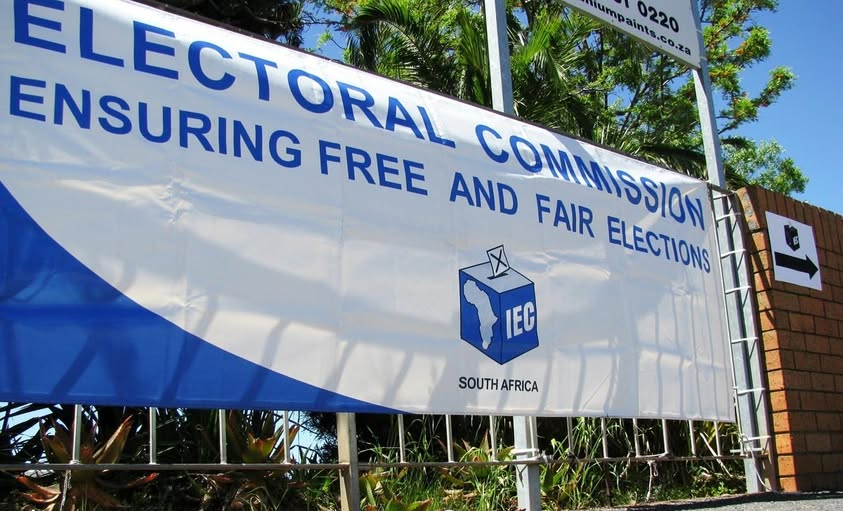
South Africans do not have to wait for the upcoming voter registration weekend to confirm their status on the voters’ roll ahead of the 2026 Local Government Elections.

The Electoral Commission has encouraged citizens to use its online platform to check and update their details.

While the first voter registration weekend is scheduled for 20 - 21 June, the Commission said voters can already verify and update their registration details online, including their residential address, to ensure they are correctly assigned to a voting station and able to participate without delays on election day.

The online voter registration portal can be accessed HERE

Citizens can also use the portal to apply for a special vote and check their special vote applications status.

The commission unveiled its new election logo and tagline: “Get Up. Show Up. Vote” on 1 April 2026, signaling what it described as an advanced stage of readiness for the polls. 

The campaign is aimed at driving participation, particularly among young voters, while promoting a sense of shared responsibility in shaping the country’s future.

IEC chairperson Mosotho Moepya said the call to action was designed to resonate with citizens in a simple and emotionally engaging way, encouraging them to see voting as part of a broader national effort. 

He described the logo as a symbol of inclusive civic activism and national pride that belongs to all South Africans.

Moepya called on political parties, government bodies and civil society to work together to strengthen democracy, stressing that collaboration is essential to the success of the electoral process. 

The date for the Local Government Elections is yet to be announced by government. 

Nine held for illegal harvesting attempt of marine resources in Robben Island

Department of Forestry, Fisheries and the Environment (DFFE) Minister, Willie Aucamp, has commended the arrest of nine suspects who allegedly attempted to illegally harvest marine resources within the Robben Island Marine Protected Area.    

In a statement on Saturday, the Minister confirmed that the department initiated these arrests in two separate incidents involving attempts to harvest marine resources illegally. 

“I want to send a stern warning to poaching syndicates that the senseless and untethered poaching and plundering of our natural resources will come to an end, whether they like it or not. We will continue to fight until we win the fight against poaching,” the Minister said. 

In the first incident on the evening of Tuesday, 07 April 2026, two rubberducks carrying suspects approached the Robben Island Marine Protected Area and DFFE officials responded immediately.

To evade arrest, the suspects rammed their vessel into a departmental vessel, causing damage to both vessels.

Two suspects were apprehended and handed over to the South African Police Service (SAPS) in Table Bay SAPS for processing. The rubberduck used in the incident was recovered with assistance from South African National Parks (SANParks) and the National Sea Rescue Institute.

In the second incident on Thursday, 09 April 2026, officials were again alerted to the presence of two rubberducks approaching the Robben Island Marine Protected Area.

A joint response by DFFE and SANParks resulted in the successful interception and arrest of seven suspects during the early hours of Friday. 

The department reported that no serious injuries were sustained by its officials or SANParks officials during these two operations.

“The Department continues to collaborate with relevant authorities to strengthen enforcement operations and ensure the protection and sustainability of South Africa’s marine biodiversity. 

“In fact, we have recently established a joint enforcement-based task team with other relevant stakeholders, including Western Cape Province, City of Cape Town, South African Police Services and SANParks, to further intensify the fight against the illegal use of natural resources,” Aucamp said. 

The Minister has urged all stakeholders, including citizens and community leadership, to join the fight by remaining vigilant and supporting ongoing efforts to combat the illegal exploitation of our marine resources.

Western Cape receives additional 50 000 FMD vaccine doses

Western Cape Premier Alan Winde, together with the MEC of Agriculture, Economic Development and Tourism, Dr Ivan Meyer, has welcomed the arrival of an additional 50 000 Foot-and-Mouth Disease (FMD) vaccine doses in the province. 

In a joint statement, Premier Winde said the province’s efforts to combat FMD continue to make strong progress.

“This latest shipment will further bolster our drive to vaccinate the province’s entire herd and is critical in protecting our economy and jobs. I want to thank all our partners who continue to work with us in containing and ultimately eradicating FMD in our province,” he said.

The latest allocation was made possible through a partnership with Dairy Management Consulting.
More than 155 000 vaccine doses have so far been administered across 629 vaccination sites, with the support of 29 private veterinarians.

“As a province, we will continue pushing to procure our own FMD vaccines. This will further streamline and strengthen our response to the outbreak,” the Premier added. 

While the outbreak remains under control, the Premier stressed the importance of continued vigilance. 
“We must remain alert and agile. By working together, we can protect both our provincial herd and our economy,” he said.

MEC Meyer emphasised the importance of strengthened control measures.

“We continue to prioritise the strengthening of systems that monitor and manage animal movement across the province. These controls are one of our most important lines of defence against the further spread of FMD,” Meyer said.

Apart from the assistance of Dairy Management Consulting, the Western Cape Government also thanked Nova Feeds for covering the cost of the flight that transported the latest vaccine consignment to the province.

Hill-Lewis elected as new DA Leader – Read full speech here:

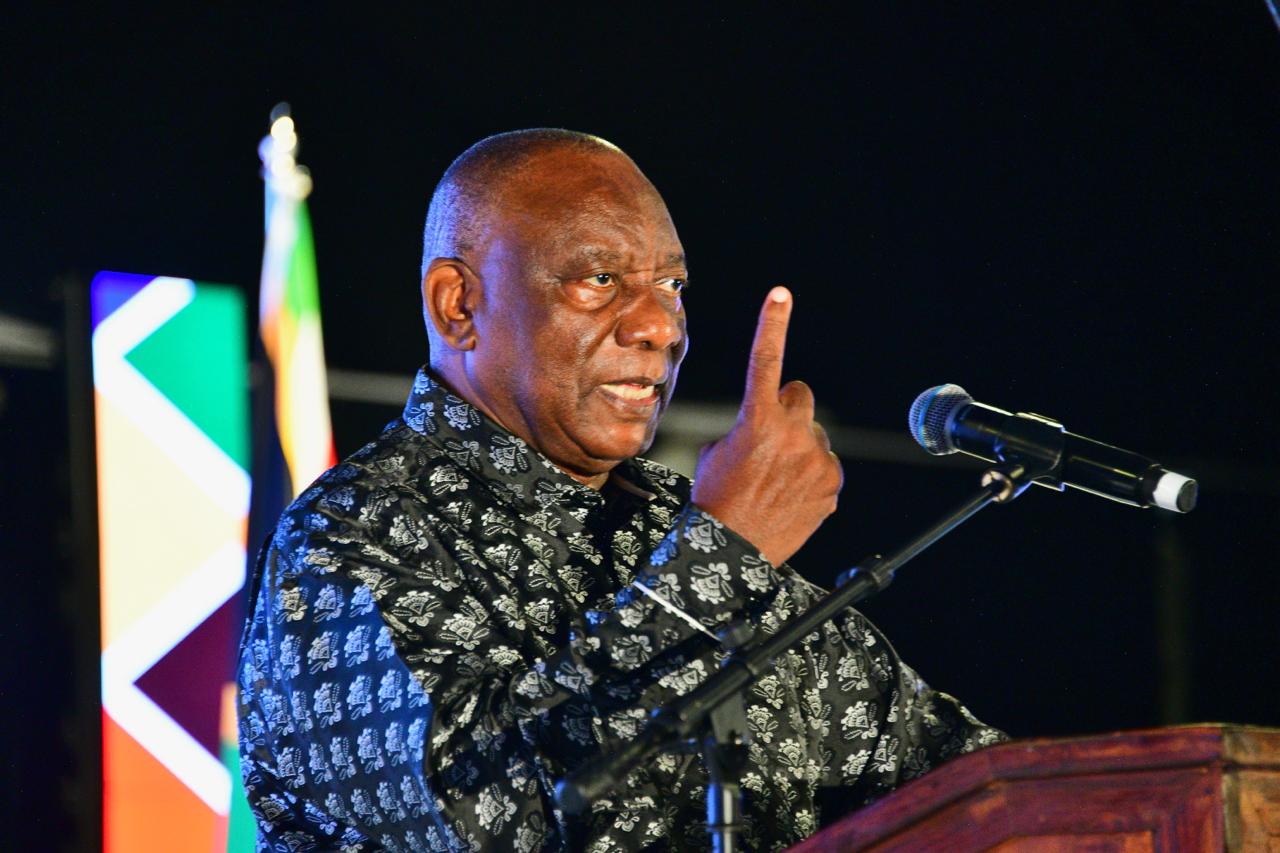
Cape Town Mayor Geordin Hill-Lewis has been elected leader of the Democratic Alliance (DA).

Hill-Lewis defeated Sedi-beng caucus leader Sibu-siso Dyo-nase.

The Cape Town Mayor says he will do everything in his power to ensure the party helps shape the direction the government takes, reflecting the DA’s values.

Here's his full acceptance speech:

Friends, democrats, people of South Africa,
Bahlobo, Bantu baseMzansi Afrika,
Vriende, wonderlike mense van Suid Afrika
I am deeply honoured to be standing here today.

Thank you to my beautiful wife Carla, who you just met, and our amazing daughter who is watching at home. They are my biggest supporters, I love them so much, and they are the inspiration for all that I do.
My mom is also watching from home and, while my dad has passed away, I know he is watching us here. I’m so grateful to both of them for the values they taught me, that guide me in life today.

I must say something to Solly Malatsi, who is our Minister of Communications. I have never told anyone this story, but when I ran in my first election my dad cut a job advert out of the newspaper and gave it to me with a handwritten note. It was a vacancy at the SA Post Office, and his note said: “Son, please rather apply for this job, because politics is too stressful.”

I’m sorry I didn’t listen dad, but I know you are proud now.

My sincere ‘thank you’ to all the delegates of the Democratic Alliance for placing your trust in me.
I accept this responsibility with humility, with gratitude, and with a deep sense of duty.
I stand before you as your newly elected leader with one promise:

However long I have the privilege of serving in this job, I will be dedicated to the mission of building a stronger South Africa for everyone.

South Africa is worth it. We have a great country. And we are a great people. We all love this country too much to see it fail. Together we will build a stronger South Africa. And, to do that, we will build a stronger Democratic Alliance.

But before I speak about the future, I would like to reflect for a moment on how we got here.

A legacy of leadership
The Democratic Alliance did not become the party it is today by accident. It was built over many years by leaders who each strengthened this party in different ways, often in difficult times, and against the prevailing tide.

Our party’s roots run deep. From the formation of the Progressive Party sixty-seven years ago – and Helen Suzman’s often lonely fight as a liberal voice standing against Apartheid – to the Democratic Party which played an outsized role in shaping our Constitution and our new South Africa.

One of the architects of that document, when he was even younger than I am now, was Tony Leon.
Later, as leader, Tony went on to take a party with just 1.7% of the vote and make it electable by turning it into a fearless party of opposition. At a time when many believed that South Africa did not need a strong opposition, Tony insisted that our democracy could not succeed without one.

I remember watching Tony debate President Thabo Mbeki when I was just sixteen years old. While President Mbeki eloquently defended the brutality of the Mugabe regime and denied the truth of the AIDS pandemic, Tony stood up and said what others were unwilling to say: that defending Mugabe was indefensible, and AIDS was a crisis causing untold loss and grief.

I remember watching on tv – completely mesmerised by the quality of the debate. Here were two leaders engaging not in a war of words, but in a battle of ideas, about the future and the values that should guide our country. Tony understood that democracy required someone willing to speak uncomfortable truths. Someone willing to say what others will not say, and to challenge power.

Tony Leon laid the foundation for the modern DA by proving that opposition matters, and that principled opposition is never unpatriotic. On the contrary: principled opposition is loyalty to the Constitution.

After Tony came Helen. In 2004, I attended a DA Youth meeting in Bonteheuwel. At the time, I was still a schoolboy, trying to understand what the DA was all about. There I remember meeting someone I had never heard of before: a Member of Parliament called Helen Zille.
We spoke for a long time that afternoon about politics, and activism, and the work she was doing in communities across the Cape Flats.
I remember walking away from that conversation slightly star-struck: it was the first time I had ever met a real-life Member of Parliament.
But what struck me more was Helen’s ability to connect with people. She was as comfortable speaking to residents on their doorsteps, as she was debating in the National Assembly.
Daai dag in Bonteheuwel sal altyd met my bly.
The following year, in 2005, I began my studies at UCT.
And when I arrived there, I discovered something surprising: there was no alternative at all to the ANC-aligned student wing called SASCO. No opposition. No competing ideas.
Tony Leon had taught us that democracy cannot function without opposition.
So it seemed obvious to me that something had to be done about this.
So we started a DA students organisation on campus, and DASO was born.
Now I wish I could tell you that we came out of nowhere and swept the floor with our opponents. But let me tell you, friends, our first election was a disaster. We were thoroughly defeated.
That experience taught me an important lesson about politics and about life.
There are moments when the cause you believe in suffers defeat. When the odds seem overwhelming. When it seems easier to walk away.
But those are the moments when the commitment to our cause matters most.
Theodore Roosevelt once spoke about the man in the arena – the person who strives valiantly, who errs and comes short again and again, but who commits themselves to a worthy cause.
That idea shaped my political journey from early on.
So we built on our lessons, and we worked hard, with focus and discipline. The next year we won two seats, and just a year later DASO won the SRC Presidency for the first time on any campus in SA.
I saw then that the idea that the ANC was the natural and permanent party of government – that its dominance was inevitable – was simply not true.
The ANC could be beaten.
Around that same time, Helen Zille was demonstrating the very same lesson on a much larger stage.
In 2007 I was here among the crowds at Gallagher Estate in this very hall when Helen Zille was elected leader of the DA.
Under her leadership our party transformed itself from a party known as a strong opposition, to a party that could govern.
In cities, towns, and provinces the DA began to show South Africans something new.
That good government was possible, and institutions could work.
That public money could be spent on the people it belongs to.
And that a government that serves people with integrity can restore hope where decline once seemed inevitable.
Helen Zille proved that strong opposition is not enough.
A party must also prove that it can govern.
Helen did this – and not without a fight.
We respect all who have led our party through its history. When Mmusi Maimane became the leader of the DA, I had the privilege of serving as his Chief of Staff.
During that time, I learned something that shaped my understanding of leadership: I learned that politics is not only about policy or ideas, it is about people.
Mmusi had an ability to connect with South Africans from every background and every community. He reminded all of us that a political movement must remain rooted in the lives and experiences of the people it seeks to serve.
He brought a new voice, a new energy and new ambition to our party.
That chapter remains an important part of the DA’s journey.
And then came John Steenhuisen.
John took the next great step in the story of this party.
John led the DA into national government for the first time in our history.
When he became leader in 2019, the DA faced a difficult time. Many commentators predicted the decline, even the collapse, of our party.
But John steadied the ship.
He rebuilt the party’s confidence, strengthened our leadership team, and prepared the DA for a new era in South African politics: the era of national coalitions.
And in 2024, under John’s leadership, the DA entered the Government of National Unity and began shaping the direction of national government for the first time.
That achievement will stand as one of the most important milestones in the history of this party.
John showed that the DA would never be content to shout from the sidelines while our country fell deeper into decline.
John said: “We are here to govern. We are here to make a difference.”
And John deserves our thanks and our gratitude for leading the party to that moment.
You see, each generation of leaders has built something that the next generation could build on. Each generation of leaders deserves our gratitude. Let us take a moment together now to show our honour and respect for them all.

A new chapter
And now the question before me – before us – concerns the next chapter in our party’s story.
The question is not whether we can oppose, or whether we can govern.
The question is whether the DA can lead the country.
Whether we can become the largest party in national government.
And, as your newly elected leader, my answer is a resounding “YES!” Yes we can.
That is the mission you have assigned to me: To grow the DA into the largest party in South Africa.
And to lead a new national government.
Everything I do, as your leader, will be to complete that mission.

How we will win
To win, we must do four things.
The first is this: we must continue to show that the DA governs well – for everyone.
Where the DA governs, the basics work.
Budgets are managed responsibly.
Competent people are appointed.
Institutions function.
Services are delivered.
And when we do the basics well, it is the poor who benefit the most.
Because, getting the basic rights means the economy grows and jobs are created.
When the fire department answers your calls and actually sends help when you need it.
When the local clinic treats you with respect and gives you care you deserve.
When you have growing access to the dignity of basic services.
When your community is cleaner.
These things make life better for all, and especially for the poor.
Over the past four years as Mayor of Cape Town I have worked hard every day to demonstrate that we govern well for everyone.
We are fixing broken sewers.
We built better public transport.
We upgraded community sports facilities.
We invested in sanitation for communities that had gone without for too long.
We made sure, and this one is personal for me, we made sure that children on the Cape Flats have a safe, clean swimming pool to swim in.
Because every child deserves to grow up with a government that cares for them.
And this is what we can expect from every DA government.
On the national stage, for the first time in our history, DA leaders are helping shape the direction of national government.
And they are already making a difference.
In Home Affairs, we are replacing corruption and inefficiency with a system that works.
In Education, we are restoring accountability and raising standards.
In Public Works, we are unlocking investment and putting public assets to work.
In Communications, we are expanding digital access and opening doors for innovation and job creation.
In Agriculture, we are championing South Africa’s farmers – fighting the scourge of foot-and-mouth disease, and we are starting to win that battle.
In Forestry, Fisheries and the Environment, we are protecting our natural resources while keeping coastal and rural communities in work.
Across every sphere of government, the DA is proving something that South Africans have long believed:
That good government is possible.
That competence matters.
That honesty and integrity matter.
That hope for a better future can be restored.
And that a government that works can build a country that works.
And I want to say to DA activists:
To every DA activist in this hall and watching at home: We wear our colours with pride.
There are hundreds of parties in this country. Most of them specialise in talking. Many of them specialise in attacking us.
But when you put on DA blue, you represent the only party in South Africa that has actually proved it can govern – for everybody.
We are NOT a party of talk. We are a party that gets things done.
The second thing we must do to win: We must connect more deeply with the millions of South Africans who have never voted for us before.
Most people already know that the DA governs better.
Now we must win their trust so they vote for us for the first time.
That is our responsibility.
We must start by listening more carefully. We must not come with the answer before we’ve even heard the question.
We must be more present in more communities.
And I mean really present: standing with people, shoulder to shoulder, helping them solve their problems.
Of course, connecting with more voters doesn’t mean neglecting the people that have supported us over many years.
I completely reject the idea that politics is a choice between competing groups, or that we must trade one community’s support for another.
I believe that, if we work with focus and discipline, we can build a party that truly represents the hopes and aspirations of all South Africans.
We all remember what our parents taught us: respect is given, but trust is earned.
Trust cannot be earned on tv screens or social media feeds.
We must earn trust the old-fashioned way – community by community, street by street, conversation by conversation.
The third thing we must do to win: be a strong and principled partner in national government.
The Government of National Unity is a complex and fraught thing.
But we must never forget why it exists.
It exists because South Africans rejected decline.
It exists because people want co-operation NOT chaos.
And it exists because the alternative – a radical coalition of populism and destruction – would place our country in grave danger.
The DA did the right thing by stepping forward and accepting responsibility.
But we must always remember that we are not in government for positions or titles.
We are there to show the DA difference in word and deed.
Under my leadership, the DA will fight every day to shape the direction of government so that it reflects our values.
And that is why we will continue to oppose policies in the GNU that block progress.
We will show that it is possible to build a health system that better serves the poor, without taking anything away from those who have worked hard to afford medical aid.
We will oppose crony enrichment schemes that see the same politically-connected elites making billions while millions of people remain poor. We know we can build a model of empowerment that delivers real advancement for millions more families.
And we will fight for the right of every South African to learn in their mother tongue, to own property without fear of expropriation, and to live in a country where government jobs are awarded to the best candidates – not through cadre deployment.
Our purpose is to see people lifted out of poverty. That is why we are here.
Because defending these freedoms is essential to building the future that South Africa deserves.
A country in which every person, no matter the circumstances of their birth, has the right and the opportunity to be the best they can be. That’s what freedom must mean in South Africa.
The fourth thing we must do to win: lead with belief in South Africa.
We will not listen to the naysayers.
To the people who say the country cannot be fixed.
To the ones who say that decline is inevitable.
I reject that completely.
I love this country.
And I believe deeply in its future.
South Africa is filled with people who work hard every day to build better lives for their families.
They deserve a government that works just as hard for them.
And they deserve a political movement that believes in our country’s potential.
The DA must be that movement.
Not a movement based on empty slogans and false promises.
A movement based on action.
A movement that rolls up its sleeves and fixes what is broken.
If we do these four things, we will be strong enough to win power at a national level.
And when we win, South Africans deserve to know what we will do with the trust they place in us.
My national policy priority is quite simple.
We are a country of many crises – but there is one crisis above all others that holds our country back.
It is the fear that people wake up with every morning.
The fear that is with us all the time, while we walk in our neighbourhoods and even in our homes.
The fear that our children won’t make it home from school.
The fear of every woman – knowing they are a target, simply because they are a woman.
The fear of the elderly person who double-locks the door and prays that tonight will be quiet.
The fear of the small business owner who wonders whether they should just close their business and go hungry rather than pay protection money.
The fear of the farmer who goes to sleep knowing that help, if he calls for it, is hours away.
And then there are the people who live with no fear at all:
The criminals. The syndicates. The extortionists who threaten every part of life.
They have no fear because they have learned that in South Africa, there are no consequences.
When law and order breaks down,
No economy can grow.
No community can flourish.
No democracy can thrive.
Bringing law and order to South Africa must be our top priority. Not one priority among many. The priority.
We must take back our streets.
We must restore faith in our criminal justice system.
And we must break the criminal syndicates that are strangling our economy and terrorising our communities.
We must end SAPS capture and get the criminals out of the police.
We must totally shake up policing powers in our country, because that is the only way we will get criminals off the streets and into orange overalls.
South Africa will never become the country we know it can be until we win this fight.
For years we’ve thought that we need the economy to grow so we can have law and order. But we also need law and order so that the economy can grow.
It is when we beat crime – and the corruption that feeds it – that we will see many more jobs being created in our country.

The road ahead
Friends,
We can win power in South Africa. We can do it.
But only if we:
Govern well, for every South African;
Are present in every community;
Act as a strong and principled coalition partner; and
Lead with belief and optimism.
This work starts now.
In just a few months’ time, South Africans will choose their councillors and mayors in the local government elections.
If we work hard, we can win more towns and cities than ever before: Joburg, Tshwane, Ekurhuleni, Cape Town, Nelson Mandela Bay, Durban, and others.
These will be the first steps on a longer journey.
In 2029, our people will once again choose the national government that leads this country.
That is our chance to restore hope in South Africa as a whole, and build the country we all know in our hearts is possible.
Because, I don’t know about you, but I am not satisfied with being a junior partner in a government of national unity.
Our ambition must be to lead the national government.
That is the next chapter in our party’s proud history. And we will write it together.
The journey ahead will not be easy.
Sometimes it will feel that, for every person we win over to our cause, there will be another who falls to the cynicism and division of our opponents.
But we dare not falter.
We all love this country too much to see it fail.
It will take focus, discipline from us, and hard work.
We will get up earlier, walk further, work harder – because we know deeply that only our ideas and our values can make our country work for everyone.
And because our love for the people of South Africa is more powerful than our opponents.
The greatness of our country demands our very best efforts.
We spent years building a party that could be a strong opposition.
Then we built a party that could govern.
Now we must build the biggest party in South Africa – a party that is strong enough to win.
That is the mandate you have given me today.
I accept it with determination, and with complete belief in this party, and our country.
Now let us join hands and go out from this place to every corner of our beautiful land.
And together let us build a country that WORKS!


Steyn eyes 7th title at Two Oceans this weekend

As Gerda Steyn targets a historic seventh victory and a host of capable men look to dethrone defending champion Joseph Khoarahlane Seutloali, the battle lines have been drawn ahead of Saturday’s (11 April 2026) Totalsports Two Oceans Ultra Marathon powered by BYD.

Smiling her trademark smile as she sat on stage at the Southern Sun Cape Sun Hotel during today’s (8 April) pre-race press conference, six-time champion Steyn let the media in on the winning mentality that has driven her unparalleled 56km success.

“I know I have done it before and so I believe that I can do it again,” said the Hollywood AC top runner who first won the race in 2018. “But I don’t ever allow myself to be too comfortable just because I have won it six times. I know that I have to put in 110% of my effort because every single athlete is going to be focused on winning this race.”

Steyn will face tough opposition from three-time runner-up Irvette Van Zyl and Lesotho 42km record holder Neheng Khatala who claimed third place in 2025. Last year’s runner-up, Shelmith Muruiki of Kenya, will be joined by debutants Margaret Jepchumba of the Nedbank Running Club and Elizabeth Mukoloma of Entsika AC – who finished first and second respectively at the 2025 Africanbank Soweto Marathon in December – in what promises to be a stern test for the course record holder (3:26:54).

Steyn admits that she will have to be at her very best to win The World’s Most Beautiful Marathon for a seventh time.

“I must respect the quality of the field. My guess is that it won’t be a one woman show. We’ve got such amazing runners this year. I can only control how I run and make sure that I run my very, very best. If everyone else around me is suffering and I’m suffering too, then I will perform the best in that situation. I know it’s going to be a big challenge. But it means so much to me, so I’ll give everything I can to achieve that goal.”

The men’s race is less clear cut with a number of athletes capable of breaking the finishing tape. Defending champion Seutloali, 2024 winner Onalenna Khonkhobe and last year’s runner-up Sibonsio Sikhakhane all believe that they are in the right shape at the right time to emerge victorious. While Seutloali kept his cards close to his chest, Khonkhobe who failed to finish the race last year, was bolder saying he is ready to right the wrongs of 2025 and is prepared to challenge the clock if needed.

“This is my show,” he declared when asked about the possibility of the men delivering the race’s first sub 3:09 clocking since ultra marathon legend Bongumusa Mthembu ran 3:08:39 to win in 2019. “Last year we were a bit fast for the first 10km that’s why we ran 3:10. In 2024 we were slow for the first 10km, that’s why we ended up running 3:09. If anyone wants to run fast and chase the record, I’m going with them.”

Chris Goldschmidt, Chairperson of the Two Oceans Marathon NPC: “We are incredibly proud of the calibre of elite athletes that will be lining up at the Totalsports Two Oceans Ultra Marathon powered by BYD in 2026. The strength and depth of this year’s field promise an exciting and highly competitive race from start to finish. It’s always inspiring to see some of the world’s top ultra-distance runners take on this iconic course, and we look forward to witnessing outstanding performances on race day.”

Echoing Goldschmidt’s remarks, Totalsports Two Oceans Marathon powered by BYD General Manager Wade Bromfield added: “The elite field assembled for the 2026 Totalsports Two Oceans Ultra Marathon reflects the growing stature of the event on the international running calendar. With a strong mix of defending champions, established stars, and rising talent, spectators and runners alike can expect exciting racing on the day. We are confident that the quality of the field will once again deliver a memorable chapter in the history of this legendary race.”

Product safety recall – ESR HaloLock Wireless Power Banks

The National Consumer Commission (NCC) informed consumers this week of the recall of ESR HaloLock Wireless Power Banks, as notified by Waymeet Limited.

The affected products were imported from China and sold through online stores like Takealot between 2023 and 2024. This recall applies to the ESR HaloLock Kickstand Wireless Power Banks, Model 2G505B, which were sold in black and feature five circular LED display lights.

According to the supplier, the power bank presents a risk of fire as the lithium-ion batteries can overheat whilst in use. The lithium-ion batteries of the recalled product may overheat during use, posing a risk of fire and burns to consumers.

Consumers in possession of the affected products are urged to immediately stop using them and return them to a point of purchase for a refund.

Volkswagen Group Africa celebrates production of 500 000 Polos for export

Volkswagen Group Africa (VWGA) has reached another major milestone with the production of the 500 000th unit of the current Polo for the export market. The milestone vehicle was a Crystal Ice Blue, right-hand-drive Polo destined for the United Kingdom, which is one of VWGA’s main export markets.

The current Polo has been in production at Plant Kariega since 2021. On average it takes three days and 1 985 sets of hands to build one Polo, with around 1 400 individual parts coming together to create this popular Volkswagen model. Over the past 30 years, four generations of the Polo have been produced in Kariega, showing the plant’s long-standing stature of building this iconic model.

In 2024, Plant Kariega became the sole global exporter of the Polo to 38 international markets. Earlier this year, the Polo was voted “Best Small Car” in the 50th edition of Auto Motor und Sports Best Cars readers poll, which is the largest car reader survey in Europe. Additionally, the Polo was recently announced by CAR as the winner in the Small Cars segment in its 2026 Top 12 Best Buys.

The Polo remains a favourite in South Africa. At the point of achieving this milestone, VWGA had produced 2 044 761 Polos in Kariega. Of these, 596 631 were sold in the local market, while 1 448 130 have been exported. The current facelift Polo accounts for 51.2% of all Polos built for export since 1996.

Germany is now the biggest export market for the Polo, with 124 711 vehicles shipped between 2020 and 2026, followed closely by the United Kingdom at 113 171 units.

2026 is a special year for VWGA; not only does the company celebrate 75 years of building vehicles in South Africa, it also marks 30 years of Polo production in Kariega. 

“Reaching the milestone of producing the 500 000th current generation Polo is a proud moment for our Production and Logistics team,” said Ulrich Schwabe, VWGA Production Director. “This milestone shows the hard work, skill, and dedication of every employee at Plant Kariega. Our people have dedicated three decades to building and delivering this beloved vehicle to our customers, and these teams are the reason the Polo continues to shine, both here at home and across the world.”

Western Cape records 14% drop in Easter road fatalities

The Western Cape Government has recorded a 14% drop in road traffic deaths over the 2026 Easter period, thanks to increased visible traffic policing and stricter enforcement. 

Traffic officers had a busy week, stopping and checking 44 555 vehicles and making 149 arrests, including 108 for driving under the influence. In a firm stance against corruption, two drivers were arrested in Citrusdal and Worcester on Saturday and Sunday for allegedly attempting to bribe traffic officers.

In a separate incident, a driver was arrested near Laingsburg on Saturday for allegedly assaulting a traffic officer, driving under the influence, failing to provide his name and address, and resisting arrest.

Sadly, 19 people lost their lives on the province’s roads, compared to 22 during the same period last year.

While this is an improvement, the Western Cape Government remains deeply concerned that pedestrians and passengers remain the most vulnerable road users, accounting for the vast majority of fatalities.

“This past weekend, I joined traffic officers at various roadblocks and was encouraged by the overall compliance from most motorists. However, there were still some serious concerns, including drivers getting behind the wheel under the influence, bribing and assaulting traffic officers, and allowing unlicensed drivers to operate minibus taxis carrying passengers. These are the reckless risks our traffic officers are working hard every day to prevent.

“The decrease in fatalities is an encouraging result and shows that stronger enforcement by our traffic officers and better behaviour by road users are making a difference. This includes a 36.1% drop in driving under the influence of alcohol arrests, suggesting that constant visible policing is effectively discouraging risky behaviour. We thank residents and visitors who played their part in keeping our roads safer during this busy period,” said Western Cape Minister of Mobility, Isaac Sileku.

Driving under the influence remains a serious concern. A total of 108 drivers were arrested, with the highest alcohol reading recorded in Vredendal at 1.46 mg/l, more than five times the legal limit. Traffic officers also removed 293 unroadworthy vehicles from the roads and identified 1 778 unlicensed vehicles, highlighting a serious compliance gap and the risk posed by unsafe and potentially uninsured vehicles.

Despite adverse weather on Good Friday, especially along the N1 and in Cape Town, operations continued unabated. Innovative technology played a key role, as drones were used to monitor pedestrian movement and public transport areas. Despite these efforts, 9 pedestrians and 7 passengers tragically lost their lives. Many of these incidents involved pedestrians walking on high-speed roads, often under the influence of alcohol.

Although total arrests dropped by 29%, indicating some improvement in behaviour, the Western Cape Government warns that speeding, reckless and negligent driving, not wearing seatbelts, and driving or walking under the influence of alcohol remain major risks.

“Our high-visibility approach is working, but road safety is a shared responsibility. We urge residents and visitors to wear seatbelts, never drink and drive, avoid walking while intoxicated, and always follow the rules of the road,” said Maxine Bezuidenhout, Chief Director of Traffic Management.

SAWS releases seasonal climate forecast

The South African Weather Service (SAWS) forecast indicates that warmer conditions are expected in most parts of the country in the late autumn and winter, while significant rainfall is expected mainly over the southern and eastern coastal parts of South Africa.

In its seasonal climate watch released on Tuesday, the weather service said the El Niño-Southern Oscillation (ENSO) is currently still in a neutral state.

Current predictions indicate a rapid shift over the next few months toward an El Niño state [associated with hotter and drier conditions], with further strengthening expected through spring and into the start of the next summer season.

“Caution is advised, however, as the prediction skill of the ENSO phenomena can be limited during the winter months, and therefore it is highly recommended to keep track of the forecasts during and after winter,” SAWS said.

Above-normal rainfall is expected over the south-eastern and eastern coastal areas during late autumn, with the eastern coastal areas remaining likely to receive above-normal rainfall during the winter season.

“This is likely to bring positive impacts for crop and livestock production. However, the south-western part of the country, which normally receives significant rainfall during the winter season, is expected to receive below-normal rainfall during this period. 

“Therefore, the relevant decision-makers are encouraged to advise farmers in these regions to practice soil and water conservation, proper water harvesting and storage, and other appropriate farming practices,” SAWS said.

The weather service warned that the wetter-than-normal conditions may increase the risk of localised flooding, temporary waterlogging, and poor drainage in vulnerable coastal and low-lying areas, particularly in settlements located near rivers, estuaries, and flood-prone zones. 

Such conditions may elevate the potential for waterborne disease outbreaks, contamination of water sources, and water-related injuries or accidents. 

In contrast, the south-western and southern coastal regions are expected to receive below-normal rainfall during winter, which may place pressure on local water availability and hygiene conditions in some communities if dry conditions persist.

Minimum and maximum temperatures are also expected to be above normal across most parts of the country during autumn and early winter. 

These warmer-than-usual conditions may increase the risk of heat-related illnesses, especially among vulnerable groups such as older persons, young children, people with chronic illnesses, and those working outdoors. 

Elevated temperatures may also heighten exposure to ultraviolet (UV) radiation, increasing the likelihood of sunburn, skin damage, and other UV- related health impacts. 

“Communities are therefore encouraged to remain alert to both heat- and rainfall-related health risks by staying hydrated, limiting unnecessary exposure to heat, using sun protection, avoiding flooded areas, and ensuring safe water and sanitation practices. 

“Health authorities and disaster management structures are advised to strengthen public health messaging and ensure the timely dissemination of heat-health information, flood alerts, and hygiene awareness measures to support preparedness and response,” SAWS said. 

The forecast is updated monthly, and users are advised to monitor the updated forecasts, as there is a possibility for them to change, especially the longer lead-time forecasts.  

“Moreover, farmers are advised to keep monitoring the weekly and monthly forecasts issued by the SAWS. Farmers are also advised to keep monitoring advisories from the Department of Agriculture, Land Reform and Rural Development, and make the necessary adjustments accordingly,” the weather service said. 

Western Cape allocates R22m for livestock drought relief

The Western Cape Department of Agriculture has approved R22 million in risk reduction funding to provide fodder support to livestock farmers affected by ongoing dry grazing conditions linked to climate variability.

In a statement issued on Wednesday, the department said extended periods of limited rainfall have placed significant pressure on grazing veld across several regions, negatively affecting livestock conditions and threatening farm sustainability.

Agriculture, Economic Development and Tourism MEC, Dr Ivan Meyer, said livestock farmers are under real pressure because of prolonged dry conditions.

“This intervention is about acting early to protect herds, livelihoods and grazing resources. We cannot allow short-term climate shocks to undermine the long-term sustainability of agriculture in the Western Cape,” Meyer said.

Meyer said the department is implementing this intervention to reduce immediate pressure on natural grazing resources and stabilise production systems ahead of the winter season.

He said the fodder support forms part of the department’s broader risk reduction strategy.

“By easing pressure on natural grazing now, we help farmers bridge difficult conditions while safeguarding the veld so that it can recover when rains return. Climate variability is no longer a future threat; it is already shaping farming conditions across our province,” the MEC said.

While stressing the need for a decisive government response, Meyer also highlighted the importance of collaboration with farmers to build “resilience into our production systems”.

The department has encouraged livestock farmers to apply for the available relief and to continue implementing sustainable grazing and veld management practices, as part of long-term climate resilience planning.

error: eRadio is protected !
Scroll to Top