Over 14 000 arrested in police operations

Over 14 000 suspects have been arrested in police operations across the country.

In Operation Shanela activities, which ran from 21 - 27 July 2025, a total of 14 273 suspects were arrested, including 2 081 wanted suspects implicated in serious and violent crimes, such as business and house robberies, car hijackings, murder, rape and attempted murder.

According to the South African Police Service (SAPS), 172 suspects were arrested for murder, while 138 individuals were arrested for attempted murder, 170 for rape and 1 598 others for assault with intent to cause grievous bodily harm (GBH).

A further 324 suspects were arrested for drug dealing, 1 376 were held for the possession of drugs. A total of 119 suspects were held for the illegal possession of firearms, with 45 from KwaZulu-Natal, while 672 were arrested for driving under the influence of alcohol or drugs.

Police also recovered and confiscated 140 firearms, 1 720 rounds of ammunition and 81 hijacked or stolen vehicles.

“The South African Police Service remains resolute in its nationwide operations to combat and prevent criminal activities, threatening public safety and sabotaging South Africa’s economic infrastructure,” SAPS said on Tuesday.

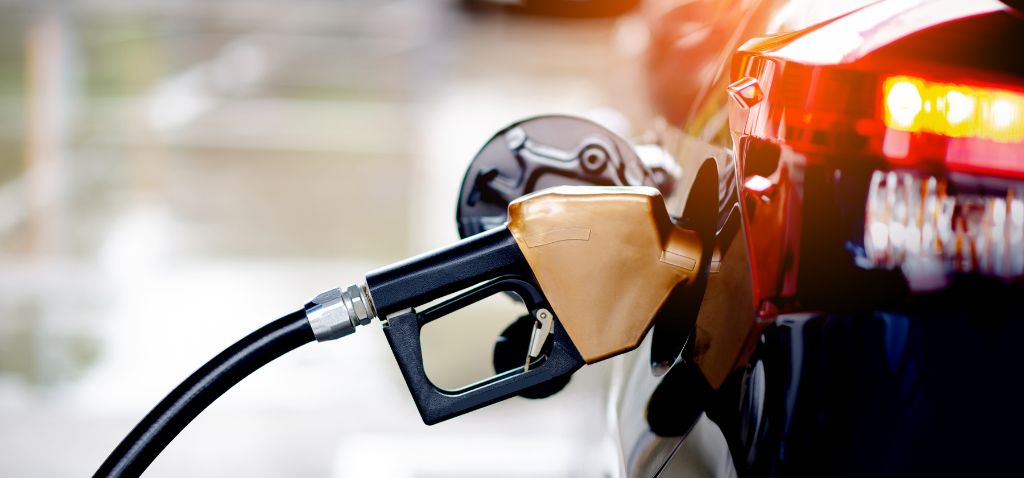
Diesel Price Hike Looms While Petrol May Drop Slightly Next Month

Diesel users may face higher costs at the pump next month, while petrol prices are set to ease slightly.

According to the Central Energy Fund’s latest unaudited figures, the price of diesel could rise by between 62 and 63 cents per litre, depending on the grade.

The cost of illuminating paraffin is also expected to increase by 29 cents per litre.

In contrast, motorists using unleaded petrol could see some relief, with a projected drop of around 29 cents per litre for 95-octane and 33 cents for 93-octane.

The Department of Mineral Resources and Energy is expected to confirm the official fuel price changes later this week or early next week.

Two nabbed for possession of lobsters valued over R1.2 million

PORT ALFRED - The combination of sixth sense (intuition), and alertness were instrumental in the arrest of two male suspects, who were found in possession of lobsters valued at more than one million rand outside Port Alfred.

On Sunday evening, 27 July 2025, at about 20:30, members attached to the Port Alfred K9 Unit were conducting routine patrols along route R72, when they noticed a suspicious Toyota Light Delivery Vehicle traveling towards East London.

The suspicious vehicle was pulled-off the road, and the two occupants were questioned. At the back of the vehicle, police found boxes containing West Coast Rock Lobster tails.

The two occupants could not produce any documentation or permit to be in possession and/or transportation of the West Coast Lobsters. Police confiscated the lobsters weighing 822.76 kilograms, and with a street value of R 1 200 000.00. The two suspects were arrested and charged for contravening the Marine Living Resources Act 18 of 1998.

The two men, aged 34 and 62 are due to appear before the Port Alfred Magistrate’s Court soon.

Minister Dion George, DFFE Team Nab Suspected Cape Town Abalone Poachers

In a proactive effort to combat abalone poaching, the Minister of Forestry, Fisheries and the Environment, Dr Dion George, joined a routine marine patrol led by the department’s enforcement unit on 27 July 2025.

During the patrol, the team intercepted a group of suspected abalone poachers en route to Hout Bay. When approached, the suspects abandoned their vessel in rocky waters and fled the scene.

The DFFE team seized and towed the abandoned vessel to Cape Town Harbour. A criminal case was opened with Hout Bay SAPS (case number 13/278/2025), and seizure proceedings are underway.

The vessel, a Gemini 5.5m rigid-hull inflatable boat (RHIB) fitted with a Yamaha 200HP outboard motor and Garmin Fishfinder, contained items consistent with abalone poaching. These included approximately 15 abalone extraction tools, three dive cylinders, and three abalone bags.

Minister George commended the successful interception, stating “This operation underscores our department’s commitment to safeguarding South Africa’s marine biodiversity. Poaching threatens the sustainability of our resources and the livelihoods that depend on them. When you steal abalone, you are stealing from everyone. By acting swiftly and decisively, we send a clear message: environmental crime will not be tolerated in our waters.”

He further praised the enforcement officers, “I want to thank our fisheries control officers and environmental management inspectors for their vigilance and tireless efforts to protect our oceans.

Their work on the frontline is vital to upholding the rule of law and stopping the scourge of abalone poaching.”

The DFFE continues to strengthen patrol operations and inter-agency collaborations to protect South Africa’s coastal ecosystems. Investigations into the incident are ongoing.

Three suspected poachers arrested with firearms and a rhino horn

DURBAN - In the early hours of Saturday Morning, 26 July 2025, police in KwaZulu-Natal working together with private security, arrested three suspected rhino poachers aged between 34 and 50 years in Paulpietersburg who were found in possession of two unlicensed rifles and a rhino horn.

It is reported that in the early hours of Friday morning, the three suspects, who were wearing face concealing masks, entered a game reserve, and accosted two security guards, tied them up and robbed them of a shotgun, an R5 assault rifle, as well as their cellphones.

They then proceeded to shoot a rhino and removed its horn. Whilst busy with their criminal activity, they were distracted by the sound of an alarm which had been activated. They fled the scene, leaving behind the shotgun next to the rhino carcass.

Police officers were alerted of the incident, and they responded swiftly. Upon their arrival at the scene, the suspects had already fled the game reserve. Police members, together with private security personnel, worked tirelessly throughout the day looking for the suspects.

With assistance from community members, the suspects were eventually arrested as they took refuge in the bush. In their possession was an R5 rifle, a 303 rifle, and a rhino horn. The vehicle in which they were traveling in was was sized by the police.

The suspects were charged with armed robbery, rhino poaching, and possession of unlicensed firearms and ammunition. They will appear at the Vryheid Magistrates Court today (Monday, 28 July 2025).

Concerns over ineffective measures to curb prison overcrowding


The Portfolio Committee on Correctional Services has expressed concern over the low success rate of the current legislation aimed at reducing overcrowding in the country's correctional facilities.

This comes after the committee received a briefing from the Department of Correctional Services (DCS) regarding the implementation of Section 49G of the Correctional Services Act (CSA) and Section 62F of the Criminal Procedures Act (CPA) applications.

Both sections aimed to alleviate pressure on the country’s overburdened correctional facilities.
Section 49G of the Act determines that a remand detainee may not be detained for a period exceeding two years without such matter having been brought to the attention of the court concerned.

The referral of the remand detainee by the head of the remand detention centre must be done three months prior to the completion of two years in detention. This will provide sufficient time for the courts to apply their minds. 

If a remand detainee remains in detention after the first consideration, further submissions must be made annually.

Section 62(f) makes provision for the placement of awaiting trial detainees under the supervision of a correctional official as a condition of bail.

During a briefing on Friday, the committee heard that the success rate under Section 49G of the CSA for the 2022/23 financial year is 1.25% of 12 283 court referrals nationally, with the Eastern Cape and Western Cape both indicating a 0% success rate. 

In terms of 2023/24, the Eastern Cape once again showed a 0% success rate. 

In the 2024/25 financial year the province had 142 court referrals and only one was successful and in the current financial year it has had two successful court referrals.

“The committee also heard that approximately 40% of the total sentenced offender population are serving sentences above 15 years, inclusive of those serving life sentences.

Lifers will typically remain incarcerated for longer periods of time and are sentenced/ convicted of serious crimes. This means that bed spaces will not become readily available, which places more pressure on already overcrowded correctional facilities,” Committee Chairperson, Kgomotso Anthea Ramolobeng said. 

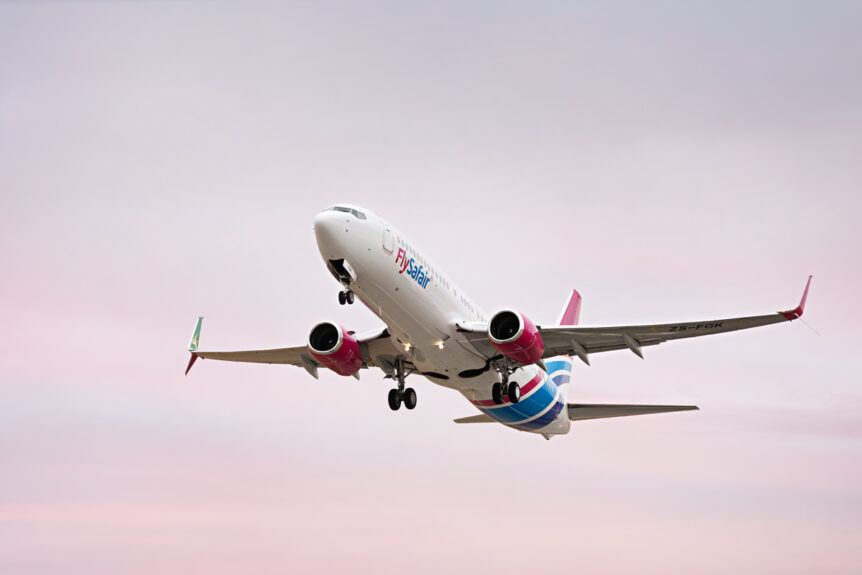
FlySafair strike enters second week

The ongoing standoff between FlySafair and its striking pilots will continue into a second week after pilots voted on Sunday to reject a revised offer on wages and working conditions put forward by the airline on Saturday.

Despite the airline's attempt to reach a compromise, Solidarity, the union representing the majority of FlySafair’s pilots, said the proposal failed to address key concerns - particularly around scheduling and the breakdown of trust between staff and management.

FlySafair, meanwhile, says it is maintaining a reduced but steady flight schedule as more pilots begin returning to work. According to the airline’s Chief Marketing Officer, Kirby Gordon, operations remain reliable, though seat availability is limited due to the scaled-back schedule.

Conflicting reports have emerged about the number of pilots still participating in the strike. The airline claims nearly two-thirds of its pilot workforce have resumed duties - suggesting a significant portion of Solidarity members have crossed the picket line. However, Solidarity disputes this, stating that 190 of its approximately 220 members remain on strike.

At the heart of the dispute is a change in how pilot schedules are determined. Pilots currently receive their monthly rosters on the 20th of each month, based on an automated system. Solidarity argues this system leaves pilots with little control over their personal time, particularly family commitments. The union is calling for more predictable rosters and a guaranteed weekend off each month.

FlySafair has pushed back, saying rigid scheduling would undermine its operational flexibility. In an attempt to find middle ground, the airline proposed creating a joint scheduling committee chaired by an independent party. However, Solidarity says the proposed committee would be merely advisory, with the airline retaining final authority - a clause that undermines any meaningful input from pilots.

With the strike and company lockout still in place, Solidarity says it will approach the Commission for Conciliation, Mediation and Arbitration (CCMA) again today in the hopes of restarting talks.

Power system continues to meet winter demand

Eskom says the power system continues to operate reliably, showing ongoing resilience in effectively meeting winter electricity demand. 

“When occasional system constraints arise, they are effectively managed through the strategic deployment of emergency reserves during morning and evening peak periods,” the power utility said on Friday.

Since 15 May 2025, there has been no loadshedding, with only 26 hours recorded between 1 April and 24 July 2025. 

With 37 days of Eskom’s Winter Outlook period still remaining, Eskom said the system remains well-positioned to maintain stability and meet demand effectively.

“As of today [Friday], unplanned outages are at 11 695MW and the available generation capacity is 30 236MW. Tonight’s electricity demand is expected to reach 27 715MW. The current capacity is sufficient to meet both today’s demand and anticipated requirements over the weekend.

“During the week of 18 to 24 July 2025, planned maintenance averaged 5 050MW. Over the same period, the Energy Availability Factor (EAF) ranged between 62% and 66%, with the month-to-date average further increasing to 63.11%,” Eskom said.

To further strengthen grid stability, Eskom is planning to return a total of 3 960MW of generation capacity to service ahead of the evening peak on Monday, 28 July 2025, and throughout this week.

Between 1 April and 24 July 2025, the Unplanned Capability Loss Factor (UCLF), which measures the percentage of generation capacity lost due to unplanned outages, decreased to 28.99%. 

This marks a reduction of an ~0.5% compared to the previous week but remains about 2.4% higher than the 26.60% recorded during the same period last year. 

“As of Thursday, the UCLF stood at 23.79%, consistently indicating a notable improvement in performance. The open-cycle gas turbine (OCGT) load factor decreased this week, reaching 1.86%, down from the 8.6% recorded during the previous week (11 to 17 July 2025). This indicates less reliance on OCGTs,” Eskom said.

From 1 April to 24 July 2025, diesel spend remains within the budget allocated for 1 April to 31 July 2025.

“The Winter Outlook, published on 5 May 2025, covering the period ending 31 August 2025, remains valid. It indicates that loadshedding will not be necessary if unplanned outages stay below 13 000MW. If outages rise to 15 000MW, loadshedding would be limited to a maximum of 21 days out of 153 days and restricted to Stage 2,” Eskom said.

The power utility has encouraged all South Africans to use electricity efficiently throughout the winter season. 

To help manage household electricity consumption, Eskom customers are encouraged to use the Eskom Residential Calculator, a convenient tool for tracking and optimising energy usage: 
https://www.eskom.co.za/distribution/residential-calculator/

Correction on diesel spend 
Meanwhile, Eskom has corrected the diesel spend figure published in the Power Alert for the week ending 17 July 2025. 

“We identified a discrepancy in the reported diesel amount. The actual diesel spend should have been R5.554 billion, not R5.897 billion as stated. The figure 5 897 was in fact the R/MWh and was mistakenly captured as spend instead of R/MWh.

This regretfully resulted in an inadvertent overstatement of the diesel spend, which we hereby correct. Eskom continuously reviews its diesel spend and energy output figures as part of its monthly reporting and reconciliation processes,” Eskom said.

Western Cape works to enhance road safety

The Western Cape is working to enhance efforts aimed at preventing road incidents, particularly those involving pedestrians.

This as the Western Cape Mobility Department is working closely with law enforcement, municipalities, and Joint Traffic Control Centres (JTCCs) in this undertaking.

According to the provincial department, pedestrians are the most vulnerable road users, accounting for the majority of lives lost on the province’s roads this month.

Of the 72 road fatalities recorded across the province from 1 to 22 July 2025, pedestrians account for the most deaths, highlighting the need for focused interventions.

The department said many of these incidents occurred in high-density municipal areas, with Khayelitsha, Milnerton, Paarl, and Kuilsriver repeatedly emerging as hotspots for multiple pedestrian deaths.

In addition, the R300 corridor, a provincial route, also recorded several fatalities. 

Meanwhile, outside the primary hotspots, there were over 20 individual pedestrian deaths spread across the province, from metro suburbs to smaller rural towns. 

“This wide distribution highlights that no community is immune and underscores the need for a province-wide safety response. Recent statistics reveal that pedestrian fatalities occur mostly at night, along highways, and on poorly lit roads,” the statement read. 

Contributing factors include jaywalking, alcohol use by both pedestrians and drivers, speeding, and non-utilisation of pedestrian infrastructure.

The department stated that it was collaborating with relevant stakeholders to prevent road incidents involving road users. 

In the meantime, the province has conducted 442 vehicle checkpoint operations in the first three weeks of July, including 219 drunk driving operations, 84 public transport checks, and targeted operations focusing on seatbelt use, vehicle fitness, learner and farm worker transport.

The team is deploying road safety ambassadors in high-risk areas to educate communities on safe road use and is launching awareness campaigns supported by schools, neighbourhood watches, non-governmental organisations (NGOs), and other community groups.

They are also enhancing law enforcement visibility on highways and provincial routes, with improved monitoring.

Western Cape Mobility MEC, Isaac Sileku, said the loss of pedestrian lives is not just a statistic; it represents families torn apart and communities left in mourning. 

“We urge both motorists and pedestrians to take responsibility. Motorists must slow down and remain vigilant, while pedestrians should always use designated crossings, wear visible clothing at night, and avoid walking under the influence of alcohol,” Sileku said.

Meanwhile, the department is also preparing to roll out new pedestrian safety infrastructure and interventions in identified high-risk zones in the coming months, as part of its ongoing strategy to reduce road deaths.

“Road safety is a collective effort. By working together, as government, drivers, and pedestrians, we can turn the tide on these preventable deaths,” it said. 

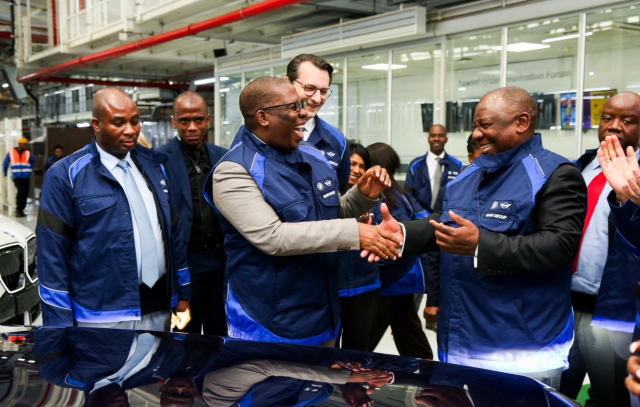
President hails BMW’s local production of plug-in hybrid as milestone for green mobility

President Cyril Ramaphosa has lauded BMW South Africa’s launch of the locally produced BMW X3 plug-in hybrid electric vehicle (PHEV) as a significant leap toward a low-carbon future and a boost for South Africa’s industrial and economic growth.

Speaking at BMW’s Rosslyn plant in Tshwane on Thursday, the President praised the milestone as a symbol of trust in the country, as well as a demonstration of BMW Group’s long-standing commitment to the South African market. 

The President highlighted that this world-class facility was the first BMW plant to be built outside of Germany and has been at the centre of the group’s operations since 1973.
 
“A number of world-class vehicles are manufactured right here at this plant, including both ICE and hybrid models from the BMW X family. And now, we have reached another milestone with the production of the BMW X3 plug-in hybrid electric vehicle.  

“The shift to green mobility and electrification in vehicle production is in line with commitments by countries to reduce emissions and support the transition to a low-carbon, climate resilient global economy. We are greatly encouraged by this milestone reached by the BMW Group,” the President said. 

President Ramaphosa said the Rosslyn plant remains a pillar of South Africa’s automotive sector, which contributes approximately 4.9% to the country’s GDP, sustains over 115 000 direct manufacturing jobs, and supports more than half a million jobs across its value chain.

BMW’s investment in local manufacturing comes at a time when South Africa is working to position itself as a globally competitive hub for future mobility. 

“As the transition to battery electric vehicles, plug-in hybrids and hydrogen mobility gathers momentum, South Africa is perfectly positioned as a key global manufacturing base for the mobility of the future,” President Ramaphosa said.

He reaffirmed government’s commitment to enabling this shift, highlighting the recently released Electric Vehicle White Paper and an incentive programme under the Automotive Production and Development Programme (APDP). 

These are aimed at creating a stable and predictable policy environment to attract investment, grow exports, and expand the local electric vehicle (EV) market. 

“The production of the BMW X3 plug-in hybrid locally is a testament to the trust placed in our skills, our workers, our partnerships and our potential. Let us honour this achievement by staying the course, driving transformation, creating jobs and leading Africa’s industrial future,” he said.

President Ramaphosa also touched on the strategic opportunity presented by South Africa’s mineral wealth. 

“The global shift to clean vehicles presents opportunities for the local component manufacturing sector, whose focus has been on ICE components. With our significant reserves of critical minerals, we must become a hub for processing and beneficiation. 

“We are finalising targeted incentives for battery cell localisation, EV component manufacture, clean mobility research and design, and critical mineral beneficiation,” he said. 

The President also acknowledged the changing global trade landscape – particularly the recent announcements on tariffs by the United States. 

“The recent announcements on tariffs by the United States, an important market for our vehicle exports, further underscores the need to diversity our export base and accelerate domestic value creation,” he said. 

Youth development
The President commended BMW’s commitment to youth development, including its training academy that produces 300 apprentices annually, its long-term support for the Youth Employment Service (YES), and its initiatives to develop young women leaders and black industrialists. 

He also praised BMW’s investment in digital skills through its partnership with UNICEF and its Tshwane-based IT Hub, which employs more than 2 000 digital professionals.

“As a founding partner of the Youth Employment Service, BMW has supported over 3 500 youth, with placements across all provinces and in diverse sectors such as retail, IT, education and health. 

“BMW’s roots may be in Bavaria, but its beating heart is South African. We are proud of your presence. We are greatly encouraged by your ongoing investment as we strive to build the low-carbon economies of the future,” the President said.

Looking ahead
Calling on BMW to continue its role as a flagship partner in the South Africa Investment Conference (SAIC), the President urged the company to deepen localisation, expand youth training, lead in EV battery development, and support township-based supplier development.

“As the Government of National Unity, we welcome the role you continue to play in supporting our drive for inclusive growth and job creation.  

“BMW’s presence in the country is one of mutual interest and shared value. To the entire BMW team, you are building more than cars. 

“You are building a legacy of excellence, inclusion and hope among South Africans. We look forward to continuing this partnership and supporting the next chapter of your journey,” the President said. 
error:
Scroll to Top