Home Affairs reaches milestone with over 100 bank branches

The Department of Home Affairs has reached yet another major milestone on its digital transformation journey, with 110 branches already live across the length and breadth of South Africa.  

The department has exceeded its own internal target of rolling out its new Digital Partnership Model to 100 bank branches by the end of March.

Additionally, First National Bank (FNB) has officially become the third bank to join the rollout of this ground-breaking project at their branches.

Just three weeks after the first branch was launched, 77 branches of Capitec Bank, 30 branches of Standard Bank, and the first three branches of First National Bank are now live throughout the country, offering Smart ID replacement services in communities that never had access before.

When compared to the existing 248 Home Affairs offices offering Smart ID services, the addition of 110 more service points constitutes a 44% service expansion in just three weeks.

To date, more than 25 000 Smart ID applications have already been processed through participating bank branches, with the system processing applications at a rate of more than one per minute. 

Through this new model, citizens are now able to apply to replace their Green ID Book or a lost Smart ID at participating bank branches in as little as five minutes, avoiding long travel times and queues.

This initiative forms part of the Department’s Home Affairs @ home reform programme, which aims to build a modern, digital-first Home Affairs ecosystem and transform how citizens access government services.

Instead of citizens being forced to travel great distances and stand in long queues to access services at just a few physical locations around the country, Home Affairs @ home is using digital transformation to bring services to citizens right where they live.

This new service does not require any prior booking or paperwork, and is secured through cutting-edge fingerprint and facial recognition technology.

By eliminating paper-based manual processes and official discretion, the application process has also been secured against manipulation and fraud.

Having already exceeded the initial target of 100 bank branches by March 2026, Home Affairs is firmly on track to deliver on its target in the Medium-Term Development Plan to reach 1 000 bank branches by 2029. 

The rollout remains deliberate and phased to ensure system stability and service quality, with further expansion planned in the coming weeks. Absa Bank and Nedbank are currently in varying stages of testing and are expected to go live once testing is complete.

“The rapid pace at which Home Affairs is fixing long-standing problems is a testament to the power of reform-minded leadership that embraces innovation. 

“In addition to what we have already delivered, over the coming weeks, first time Smart ID applications, Passport applications, secure courier delivery of IDs and Passports, as well as applications submitted via digital banking apps will all become reality through these reforms,” Home Affairs Minister, Dr Leon Schreiber, said. 

“By expanding access and inclusion at a scale and pace not seen before, we are eliminating long queues and freeing up Home Affairs resources and officials to focus on complex tasks that have been neglected for decades, including late birth registrations and ensuring the systematic documentation of all South Africans in underserved areas. This is how we are delivering dignity for all,” Minister Schreiber concluded.

Existing Home Affairs branches and mobile offices remain available to all citizens. To find your nearest bank branch offering Smart ID services, visit: www.dha.gov.za/banks

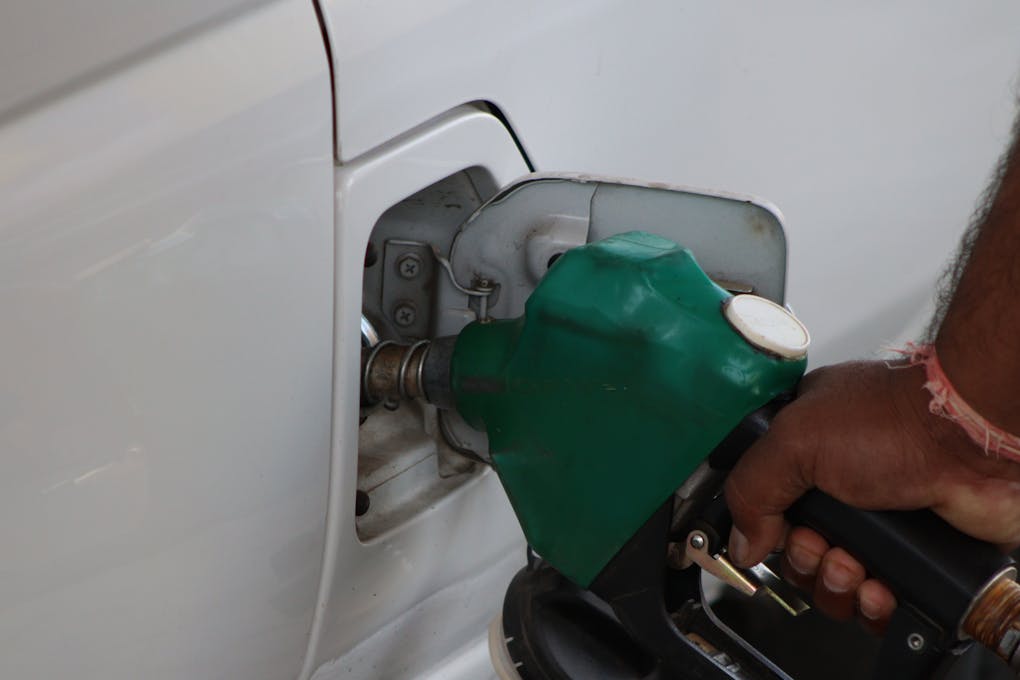
How the Basic Fuel Price is calculated: A breakdown

For South African motorists, the price paid at the pump is far more than just the cost of the fuel itself. It is the end result of many global and domestic factors, including the fluctuating price of crude oil, the strength of the rand, shipping and storage costs, and several government levies and taxes.

According to the Department of Mineral and Petroleum Resources (DMPR), the fuel price is calculated using an import parity model designed to balance international competitiveness with local economic realities.

The department says the Basic Fuels Price (BFP) represents the realistic market-related cost of importing fuel into South Africa. Petrol prices are therefore directly linked to the price quoted in US dollars at refining centres in the Mediterranean, the Arab Gulf and Singapore.

Domestic fuel prices are therefore influenced by:

• International crude oil prices
• Global supply and demand for petroleum products
• The Rand/US Dollar exchange rate
The import parity principle is used to ensure that local refineries compete with international counterparts and to promote cost efficiency in a competitive global market.

International influences include:

Free-on-Board (FOB) values – Petroleum product prices quoted daily by export-oriented refining centres in the Mediterranean, Arab Gulf and Singapore.
Freight – The cost of transporting refined petroleum products from these centres to South African ports. Rates are based on freight data published annually and adjusted monthly using the Average Freight Rate Assessment (AFRA).
Demurrage – Charges for delays while petroleum products are loaded and offloaded at ports. The calculation allows for a maximum delay of three days.
Insurance – About 0.15% of the FOB value and freight cost, covering insurance and related costs such as letters of credit, surveyors and laboratory fees.
Ocean loss – A loss allowance of 0.3% to account for normal losses during transportation.
Cargo dues (wharfage) – Charges for using harbour facilities to offload fuel into onshore storage tanks. These tariffs are set by the National Ports Authority.
Coastal storage – The cost of storing fuel at coastal terminals. The calculation provides for 25 days of storage and is adjusted annually according to the Producer Price Index (PPI).
Stock financing – The cost of financing stored fuel, based on the landed cost of petroleum products, 25 days of stockholding and the prime interest rate minus 2%.
The BFP, quoted in US dollars per barrel or ton, is converted to US cents per litre and then to South African cents per litre using the applicable exchange rate.

Domestic influences also affect the final fuel price and include:

Inland transport costs – The cost of transporting fuel from coastal refineries to inland depots by road, rail or pipeline.
Wholesale margin – A regulated margin granted to fuel wholesalers. It aims to provide an industry-average return of about 15% on depreciated asset values.
Retail profit margin – A margin set by government to cover service station operating costs, including rent, labour, overheads and business compensation.
General Fuel Levy – A tax collected on every litre of fuel to fund government spending.
Road Accident Fund levy – Adjusted annually to fund compensation for road accident victims.
Carbon Fuel Levy – Introduced to reduce carbon emissions.
Customs and Excise Levy – A tax imposed by the South African Revenue Service.

Another component is the Slate Levy, which is a temporary adjustment based on daily calculations.
If the daily BFP is higher than the fuel price at the pump, an under-recovery occurs, meaning consumers are paying too little. If the daily BFP is lower, an over-recovery occurs, meaning consumers are paying too much.

These daily calculations are averaged over the monthly review period. The difference is multiplied by the volume of fuel sold and recorded in a cumulative recovery account.

If this account moves into a negative balance, a Slate Levy is added to fuel prices to recover the shortfall.

2 200 soldiers deployed to five provinces

2 200 members of the South African National Defence Force (SANDF) will be deployed from today to assist the South African Police Service (SAPS) in the fight against crime.

According to the Presidency, the deployment serves to prevent and combat crime, and support and preserve law and order under Operation Prosper which is targeting illegal mining and gangsterism.

“The deployed members of the SANDF will assist the South African Police Service to prevent and combat illegal mining and gangsterism in the Eastern Cape, Free State, Gauteng, North West and Western Cape.

“The deployment is until 31 March 2027,” said the Presidency in a statement.

The Presidency said expenditure for this employment is estimated at R823 153 960.

President Cyril Ramaphosa has called on communities to welcome and work more closely with the South African Police Service and the South African National Defence Force to identify and alienate criminal elements and make neighbourhoods safer in the process.

R1bn tourism infrastructure pipeline to boost investment and jobs

Government’s push to build tourism infrastructure has begun to yield results, with eight investment-ready projects worth more than R1 billion now unveiled.

About 18 months ago, government called on provinces and cities to submit proposals aimed not only at attracting visitors, but at building long-term infrastructure to sustain the tourism sector. The response, officials say, was overwhelming.

Following a rigorous evaluation process, eight projects have been identified as fully structured and bankable.

Speaking at the Investment Opportunity Commission on Infrastructure, Tourism and Hospitality, during the Sixth South Africa Investment Conference on Tuesday, Tourism Minister Patricia de Lille said the projects mark a shift in how tourism is being positioned.

“For the first time at this Investment Conference, tourism infrastructure investment projects are being presented not as ideas, but as opportunities,” de Lille said.

She said the initiative is aimed at diversifying South Africa’s tourism offering, introducing new products, and maintaining existing infrastructure.

“We have to diversify our tourism offering to the rest of the world, bring in new products, but also look at maintenance of our existing tourism infrastructure,” she said.

De Lille emphasised that tourism is one of the most employment-intensive sectors, making infrastructure development critical to job creation and economic growth.

She added that investor confidence depends on how projects are structured.

“Investors ask the same questions: is there a credible pipeline? Is the regulatory pathway clear? Are risks allocated appropriately, and are revenue streams predictable? These are the central considerations,” she said.

To improve the investment process, the department has established an investment facilitation unit to streamline engagement and reduce bureaucratic delays.

John Lamola, Group Chief Executive Officer of South African Airways, highlighted the critical role of air connectivity in tourism growth.

He said air travel, often driven by tourism, plays a broader role in fostering global understanding.

“When people travel, they don’t just move across borders — they move across understanding,” Lamola said.

He stressed that without adequate air access, even the strongest tourism offerings would struggle to succeed.

“If we cannot bring people here, then even the best tourism product cannot succeed,” he said.

Brand South Africa CEO Neville Matjie underscored tourism’s importance to economic development, noting that investment in the sector helps bridge social and cultural divides.

Panelists agreed that tourism should be approached as an infrastructure and competitiveness issue rather than purely a destination-driven sector.

They emphasised the need for projects to be structured with clear revenue models, defined risks and long-term viability to attract investment.

“Tourism must be understood not just as a destination story, but as an infrastructure and competitiveness story. That’s where the real competitive advantage lies,” one panelist noted.

“Investors don’t invest in stories; they invest in certainty.”

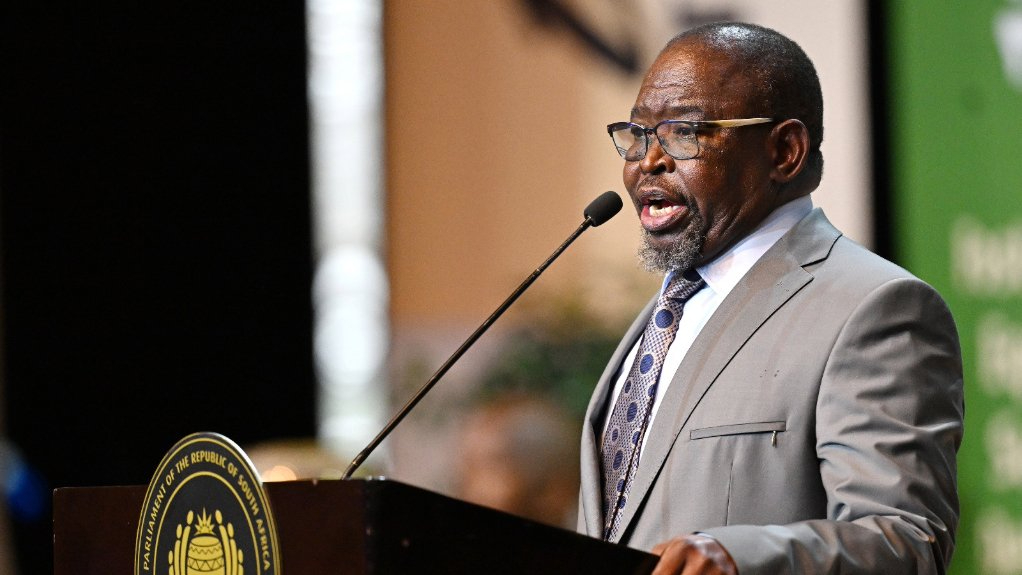
Godongwana: R3 fuel levy relief to cushion South Africans

Finance Minister Enoch Godongwana says government’s decision to introduce a temporary R3 per litre fuel levy reduction is aimed at cushioning South Africans from what he describes as a significant economic shock driven by global oil price pressures. 

The R3 per litre reduction in the fuel levy announced, is aimed at lessening the impact of severe fuel price hikes, that come into effect Wednesday. 

Speaking to the media on the sidelines of the South Africa Investment Conference (SAIC) on Tuesday, Godongwana said government had been closely monitoring rising tensions in the Middle East and their impact on global oil markets, which threatened to trigger steep fuel price hikes locally.

“We are aware that developments in the Middle East and their impact on oil prices are likely to affect our economy. We discussed different models and had to arrive at one that is affordable within the current fiscal environment,” the Minister said. 

Government ultimately settled on a R3 per litre relief for petrol and diesel adjustment through a temporary reduction in the general fuel levy.

The intervention comes into effect from 1 April and will run for one month, significantly softening the expected fuel price increase, which was projected to exceed R5 per litre for petrol and climb even higher for diesel.

This as the price of  all grades of petrol are set to rise by R3.06 a litre on Wednesday. The price of diesel will also rise by between R7.37 per litre and R7.51 per litre. 

While motorists will still feel the increase, Godongwana said the relief ensures the impact is less severe.

“This is still for April. We are going to assess what to do in May and June,” he said, noting that the current intervention alone will cost the country around R6 billion in foregone revenue.

The Minister acknowledged that diesel prices remain a major concern due to their broader impact on the economy.

“The diesel sector powers the economy, and changes in diesel prices affect everything – food, fertiliser and transport costs,” he said.

To address this, the Minister said an interdepartmental team is exploring additional interventions beyond fiscal measures to mitigate knock-on effects across key sectors. 

Despite the relief, Godongwana cautioned that government’s ability to sustain such measures is limited.

“This is a shock to the economy and a blow. Government can mitigate the effects for a specific period, but we cannot sustain it for longer without collapsing the tax system.”

He indicated that any continued relief would likely be limited to a maximum of three months, depending on global developments. 

The Minister also stressed that South Africa is not alone in facing these pressures, as countries worldwide grapple with rising energy costs linked to geopolitical instability.

“If the war continues, a number of countries throughout the world are facing similar challenges,” he said. 

On concerns about a potential recession, Godongwana said it was too early to raise alarm.

“Not at this stage,” he said, adding that inflation is expected to rise moderately by around 1.2 percentage points, remaining within the targeted range.

Government said the relief forms part of a broader, phased response that balances consumer protection with fiscal sustainability, with further support measures expected to be announced in the coming months.
error: eRadio is protected !
Scroll to Top