Several people arrested for looting and attempted looting

The South African Police Service (SAPS) has, since the early hours of this morning, arrested several individuals in connection with incidents of looting and attempted looting reported in various parts of the country, as law enforcement continues to monitor the planned marches taking place nationwide today. 

According to the police, policing operations have been effective thus far, with demonstrations remaining largely peaceful across the country. Police have, however, responded to isolated incidents of looting and attempted looting.

“Police remain on high alert, with heightened deployments in place to ensure public safety, protect businesses and critical infrastructure and maintaining law and order. 

“Members deployed across the country have been instructed to act swiftly and decisively against anyone who engages in criminal activities, including looting, attempted looting, public violence, malicious damage to property, intimidation or any other unlawful conduct.

“We urge citizens to exercise their constitutional rights responsibly and to ensure that demonstrations remain peaceful and lawful. 

“Those who choose to exploit the marches to commit criminal acts will face the full might of the law. Police will continue to identify, arrest, and prosecute all those responsible for criminal conduct,” Acting Police Minister Firoz Cachalia said.

On Monday evening, the National Joint Operational and Intelligence Structures (Natjoints) chairperson, Lieutenant General Tebello Mosikili, warned that where criminality presents itself, law enforcement agencies would respond swiftly, proportionately and decisively within the confines of the law.

Mosikili said specialised operational units were ready to respond at a moment's notice.

Mosikili warned those who intend to break the law that “they should not test the resolve of the State”.

“To those who intend to demonstrate peacefully, we assure you that your constitutional rights will be protected. To every South African: be confident that your safety remains our highest priority,” Mosikili said.

She said contingency plans had been tested and law enforcement was ready, adding that the Air Wing would provide aerial surveillance and operational support wherever required.

“There is a clear distinction between exercising democratic rights and committing criminal offences. Anyone who crosses that line must expect the full and immediate consequences of the law,” she said.

Mosikili said no dangerous weapons including firearms, knives and traditional weapons will be allowed in terms of Section 17 of the Constitution.

“The State will act decisively against any person who seeks to exploit demonstrations to commit acts of lawlessness,” she said.

Consumer relief as petrol, diesel and paraffin prices decrease

Overburdened consumers will be in for some relief from tomorrow after the Department of Mineral and Petroleum Resources (DMPR) announced a decrease in fuel prices, excluding LP Gas.

The adjustment for prices from July are as follows:
Petrol 93 (ULP & LRP): R2.01 decrease.
Petrol 95 (ULP &LRP): R1.96 decrease.
Diesel (0.05% sulphur): R3.13 decrease.
Diesel (0.005% sulphur): R3.58 decrease.
Illuminating Paraffin (wholesale): R5.23 decrease.
Single Maximum National Retail Price for Illuminating Paraffin: R6.97 decrease.
Maximum Retail Price of LPGas: 16c/kg increase and nineteen cents per kilogram (19.00 c/kg) increase in the Western Cape.

This means that a litre of 95 petrol which currently costs R28.06 in Gauteng will now cost R26.10 as of Wednesday. In the coast the price will come down from R27.19 to R25.23 a litre.

“The average Brent Crude oil price decreased from 104.59 US Dollars [USD] to 86.53 USD during the period under review. This is due to the signing of the Memorandum of Understanding between the US and Iran which has improved global supply outlook.

“The average international product prices followed the decreasing trend of crude oil during the period under review. These factors led to lower contributions to the Basic Fuel Prices of petrol, diesel and illuminating paraffin by 295.97 cents per litre, 498.47 [cents a litre] and 510.51 [cents a litre], respectively. The prices of Propane and Butane increased during the period under review,” the department said.

During the same period, the Rand strengthened against the dollar from R16.52 to R16.38 per USD.
“This led to lower contributions to the Basic Fuel Prices of petrol, diesel and Illuminating Paraffin by 11.27 cents a litre, 13.75 cents a litre and 13.37 cents a litre respectively,” the department stated.

The DMPR also announced that the short-term fuel levy relief by government has “been phased out”.

“The short-term relief measures have been completely phased out and the full fuel levies of 429.00 cents per litre on petrol and 416.00 cents per litre on diesel will be reinstated,” the DMPR said. 

Police arrest five for breaking in to tuck shop

Five people have been arrested for allegedly breaking into a tuck shop in Woody Glen, on the outskirts of Hammarsdale, as authorities have heightened security during protests against illegal immigration across KwaZulu-Natal.

KwaZulu-Natal Premier Thamsanqa Ntuli commended police and other law enforcement agencies for the swift arrests, saying criminal activity would not be tolerated under the guise of protest.

"We acknowledge and respect that civil society has the right to protest and voice their concerns. However, we urge all those participating in today's marches against illegal immigration to do so within the prescript of the law," Ntuli said.

He described the arrests as a warning to anyone considering engaging in criminal behaviour.

"The arrest in Woody Glen is a stern warning to everyone that we will not tolerate any acts of criminality. We cannot and will not allow anarchy and lawlessness to be the order of the day," he said.

Ntuli said law enforcement agencies, private security companies and community safety structures had been deployed to monitor the area throughout the day and would continue maintaining a visible presence to ensure law and order.

The Premier also announced that the provincial government had established a rapid response nerve centre in Durban and similar centres in all district municipalities to coordinate a swift response to any incidents of crime or unrest.

In addition, all members of the provincial executive council have been deployed to their respective districts to work with local leadership in preventing disruptions.

Ntuli said the coordinated deployment was aimed at reinforcing the rule of law across KwaZulu-Natal during the protests and beyond. 

President calls for peaceful protest

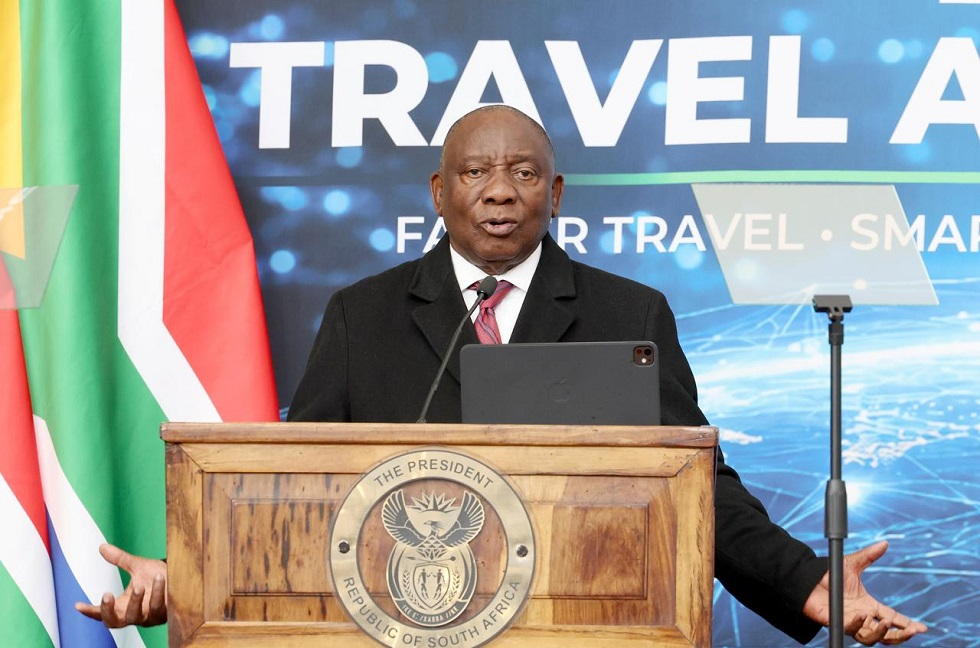
President Cyril Ramaphosa has called on South Africans to exercise their constitutional right to protest peacefully and responsibly, while warning that acts of violence, intimidation and vigilantism have no place in the country's constitutional democracy. 

In his weekly newsletter on Monday, ahead of planned demonstrations against undocumented immigration, the President acknowledged that South Africans have raised legitimate concerns about illegal immigration, border management, pressure on public services and criminal syndicates that exploit the country's immigration system.

He stressed, however, that government is addressing these challenges through lawful means, while urging citizens to ensure that Tuesday remains business as usual.

“South Africans have raised deep concerns about illegal immigration, border management, pressure on public services, criminal syndicates that exploit our immigration system and the impact these challenges have on communities. These concerns are real and they deserve to be heard,” the President said. 

The President said while the Constitution guarantees the right to protest, this right must be exercised responsibly.

“The right to protest is enshrined in our Constitution. It is a credit to our robust democratic order that people are able to express their grievances openly. But the right to protest and freedom of expression does not allow people to threaten or intimidate others, or to engage in acts of vandalism or violence,” the President said. 

He emphasised that South Africa is governed by the rule of law and that grievances must be addressed through democratic institutions. 

“South Africa is a constitutional republic governed by the rule of law. The exercise of rights by any citizen in a constitutional democracy cannot be determined by intimidation, threats or ultimatums. It must be determined through democratic institutions, evidence and the rule of law,” President Ramaphosa said. 

The President said government has accepted that the country's immigration system requires significant reform and is taking steps to strengthen institutions responsible for managing migration.

“Government has accepted that our immigration system requires substantial reform. We are strengthening border management, increasing enforcement against undocumented immigration, improving the integrity of the asylum and visa systems, and taking action against corruption that has weakened immigration control,” the President said. 

He added that government is committed to addressing weaknesses in the system.

“We also recognise that where our systems have failed, they must be corrected. Where corruption has enabled illegal immigration, those responsible must be held accountable. Where enforcement has been inadequate, it must improve,” President Ramaphosa said. 

The President said government has also consulted extensively with various sectors of society, including traditional leaders, business, labour, religious organisations and civil society, who have expressed support for lawful reforms to the immigration system.

He reiterated that while citizens have a right to protest, they also have a responsibility to respect the rights and safety of others.
“Freedom comes with responsibility. The right to protest is one of the defining freedoms of our democracy, but every right carries corresponding responsibilities. Those who intend to protest should do so peacefully, lawfully and with respect for the rights, dignity and safety of others,” he said. 

The President warned that any criminal conduct during protests would be dealt with decisively.

“Where there is criminal conduct, those responsible will be held accountable and the law will take its course. We must reject the idea that acts of violence or intimidation are justified on the basis of a grievance, for political reasons, or because those who commit such acts claim they were somehow provoked,” he said.

President Ramaphosa also reminded South Africans that many foreign nationals are in the country legally and are protected by the Constitution.

“Some foreign nationals who live in South Africa are here lawfully. They work, study, raise families, invest in our economy and contribute positively to our society. They too are entitled to the protection of our laws and our Constitution,” he said. 

The President welcomed assurances from some protest organisers that demonstrations would remain peaceful.

“We welcome the assurances by some of the organisers of the planned protests that they stand against violence on the part of their supporters. They will be held to this undertaking, because no cause, no matter how legitimate, will be an excuse to shift responsibility for violent acts,” the President said. 

He also welcomed the support of traditional, religious and community leaders, as well as business, labour and civil society organisations that have called for tolerance and respect for the rule of law.

President Ramaphosa cautioned against citizens taking immigration enforcement into their own hands, saying this undermines constitutional governance.

“The painful history of the pass laws reminds us why the authority to demand identification and enforce immigration laws belongs to government law enforcement officers acting within the Constitution, not to private individuals. Whatever the motivation, taking the law into one's own hands is vigilantism and has no place in our constitutional democracy.

“This is a betrayal of the very constitutional order those who commit such acts claim to be defending. It is vigilantism thinly disguised in the language of patriotism,” the President said. 

He further warned against repeating the injustices of the past.

“We must never allow ourselves to return to that painful chapter of our history where people were stopped on the street, had their physical identities scrutinised, and their right to move freely in the country hindered by suspicion and humiliation,” he said. 

The President assured South Africans that law enforcement agencies are prepared to safeguard both public safety and the constitutional right to protest.

“Our country's law enforcement authorities stand ready in defence of the rule of law. Let us work together to keep communities, businesses and individuals safe, all the while protecting people's right to protest,” he said. 

President Ramaphosa concluded by urging South Africans to choose unity, dialogue and constitutionalism over division and vigilantism.

“Throughout our history, we have overcome difficult moments not through fear or division, but by choosing law over lawlessness, dialogue over confrontation and justice over vengeance. Let us once again choose that path. Let us protect both our borders and our Constitution, both our security and our humanity. We are capable of doing both, and we must,” the President said. 

Operation Shanela II nets 15 000 suspects for various offences

The South African Police Service (SAPS) arrested 15 384 suspects for various offences during nationwide Operation Shanela II operations conducted last week.  

The suspects, arrested between 22 and 28 June 2026, are facing charges including murder, attempted murder, rape, assault with intent to cause grievous bodily harm and drug trafficking.

Among those arrested were 2 884 foreign nationals of different nationalities, apprehended in various parts of the country for contravening the Immigration Act. 

“South Africans can rest assured that law enforcement agencies are fully prepared to safeguard the country, protect lives and property, and maintain law and order,” the SAPS said in a statement on Monday.

Meanwhile, police have reiterated their commitment to protecting citizens' constitutional right to protest ahead of demonstrations taking place across the country on Tuesday against illegal migration.

“The SAPS’ role is to maintain public order, protect lives and property, and act decisively against any criminality that threatens public safety,” the Acting National Commissioner, Lieutenant General Puleng Dimpane, said.

Protesters have been urged to demonstrate peacefully while ensuring the safety and security of all South Africans. 

No tolerance for violence, police warn ahead of 30 June

Police Deputy Minister Polly Boshielo has warned that authorities will not tolerate vigilantism, xenophobic violence, intimidation, or any form of lawlessness aimed at dictating who may or may not live within communities.

Addressing a police parade at FNB Stadium on Friday ahead of deployments planned for 30 June, Boshielo said law enforcement officers are bound by the Constitution of the Republic of South Africa, which remains the highest authority guiding their actions.

“Our law enforcement agencies are mandated to arrest and deport those who are in the country unlawfully, but this must be done in a fair, transparent and lawful manner,” she said.

Boshielo emphasised that police officers must remain impartial and must not take sides based on nationality, language or origin.

“Your job is to take the side of the law - to protect the vast majority of law-abiding citizens and foreign nationals who are legally in the country from violence and harm driven by a misguided few and criminal networks seeking to exploit chaos,” she said.
She stressed that the deployment was primarily preventive in nature.

“We are not deploying you only to respond to violence after it occurs. We are deploying you to prevent violence from happening in the first place,” Boshielo said.

She added that visible policing plays a critical role in deterring criminal behaviour.

“A blue uniform, a marked vehicle, and a trained officer on the ground ready to protect communities are often the strongest message that the state is present and alert,” she said.

Boshielo urged officers to act early and decisively where there are signs of potential unrest.

“Do not wait for the first stone to be thrown or the first shop to be looted. When crowds begin to gather or intelligence indicates planned attacks or marches, intervene early, lawfully and decisively,” she said.

She also called for active engagement with community structures.

“Engage community leaders, councillors, business forums and other stakeholders who can help maintain calm. Clearly communicate the legal boundaries — no one has the right to threaten or harm another person,” she said.

Boshielo said crime intelligence and other security agencies were working to identify individuals responsible for instigating violence, including those planning, financing or directing attacks.

“We must not only arrest the foot soldiers; we must also go after those behind keyboards who spread hate and issue instructions to burn, loot and attack. These individuals are enemies of our society and will be held accountable,” she said.

She warned that anyone inciting violence or targeting foreign nationals would be treated as a criminal suspect.

“Anyone who threatens violence, incites attacks or spreads messages calling for harm will be investigated and prosecuted,” she said.

“If you receive complaints or intelligence about threats, investigate them thoroughly. Trace the origin of messages, identify those responsible and open criminal dockets where there is evidence of incitement or intimidation,” the Deputy Minister added.

Meanwhile, Acting Police Minister Firoz Cachalia said R600 million has been redirected within the South African Police Service (SAPS) budget to ensure operational readiness ahead of the planned nationwide demonstrations on 30 June.

He said the anticipated demonstrations are placing additional strain on resources, requiring enhanced coordination and support.
Cachalia added that SAPS, working with metro police and private security partners, is fully prepared to manage the planned demonstrations across the country. 

Government commends Bafana Bafana for historic campaign after team crashes out of FIFA World Cup

Government has commended Bafana Bafana for an outstanding and historic FIFA World Cup 2026 campaign following their encounter against Canada.

The match resulted in a 0 – 1 win for Canada.

In a statement after the game on Sunday night, government expressed “immense pride” in what Bafana Bafana has achieved in the duration of the World Cup.

“For the first time in South Africa’s history, Bafana Bafana reached the knockout stages of the FIFA World Cup, inspiring millions of South Africans and making the Southern African region proud.

“Throughout the tournament, the players, coaches and technical team displayed courage, resilience, discipline, and an unwavering commitment to representing the country with honour and distinction. Their performances demonstrated that South African football can compete confidently on the biggest stage in world football.”

Government also thanked all South Africans who united behind the national team throughout the tournament. 

“The overwhelming support shown by citizens across the country reflected the spirit of unity, patriotism, and hope inspired by Bafana Bafana.

“Although this marks the end of South Africa’s FIFA World Cup 2026 journey, Bafana Bafana has left an enduring legacy and laid a strong foundation for the future of South African football. The nation celebrates this historic achievement and looks forward with confidence to even greater success in the years ahead.

“Thank you, Bafana Bafana. You made South Africa proud!”

30 June will be a normal day, not a national shutdown

Government says 30 June 2026 will be a normal working day, warning that any acts of intimidation, violence or disruption will be met with the full force of the law.

The Inter-Ministerial Committee (IMC) on Migration said this at a media briefing in Pretoria on Friday, following its weekly meeting to assess progress on government's response to irregular migration.

“Enforcement of the law is the responsibility of the State. Thus, we are ready as a State to protect every person, citizens and foreign nationals, against any form of abuse and intimidation. We therefore declare that the 30th of June 2026 as a normal day for the country," Minister of Justice and Constitutional Development Mmamaloko Kubayi said.

The IMC said no unauthorised individuals were permitted to demand documentation or proof of nationality from members of the public, while blocking access to schools, hospitals, clinics or other public services is unlawful.

The Minister also warned that violence, intimidation, vigilantism, xenophobia, hate speech and the spread of misinformation, including fake news on social media, would be prosecuted.

She said law enforcement agencies had intensified intelligence-led operations across the country in response to growing public tensions. A total of 89 public order and incitement-related incidents had been registered as criminal cases by 21 June, up from 53 the previous week.

A total of 164 people had been arrested for offences including incitement to violence and contraventions of the Regulation of Gatherings Act, while 36 cases were already before the courts.

The South African Police Service also arrested more than 5 000 people for immigration-related offences during Operation Shanela in the week ending 15 June.

The Minister condemned recent anti-immigration protests that were accompanied by looting in parts of the Free State, saying vigilantism and attacks targeting people based on nationality are criminal acts.

Government has engaged social media platforms over content linked to the 30 June date, following some users circulating manipulated videos and images allegedly intended to incite violence and undermine the country's international reputation.

Kubayi stressed that while freedom of expression and peaceful assembly are protected by the Constitution, those rights do not extend to incitement of violence or the advocacy of hatred.

The IMC called on South Africans not to allow legitimate concerns about illegal migration to be exploited by individuals seeking to incite violence or destabilise the country.

“We repeat that the 30th of June 2026 will be a normal day for the country, economic and social activities will not be disrupted,” said Kubayi.

Bafana Bafana qualify for the World Cup knockout round

Bafana Bafana boosted their 2026 FIFA World Cup campaign with a hard-fought 1-0 victory over South Korea in their Group A clash at the Estadio Monterrey in Guadalupe early on Thursday morning.

The South African team enter the history books as they progress to the next round of the FIFA World Cup for the first time ever thanks to a Thapelo Maseko goal in the 2nd half.

The victory marks a significant boost for Hugo Broos’ side following their 1-1 draw against Czechia at Atlanta Stadium last Thursday and keeps their hopes of progressing in the tournament firmly on track.

South Africa entered the match without experienced midfielders Themba Zwane and Teboho Mokoena, both serving suspensions.

Zwane continued to serve the three-match ban imposed by the FIFA Disciplinary Committee following the red card he received in the tournament opener against Mexico, while Mokoena was unavailable after accumulating yellow cards.

However, Sphephelo Sithole returned to the squad after completing his one-match suspension following the red card he received against Mexico.

Bafana Bafana showed discipline and resilience throughout the match, successfully containing the South Korean attack before Maseko's winning goal handed South Africa a crucial victory.

Attention now turns to Sunday's encounter against Canada, where South Africa will look to build on the momentum from their victory over South Korea and strengthen their position in Group A.

The national team is expected to return to training at its base camp in Pachuca, Mexico, as preparations begin for the important clash against the Canadians.

Premier Winde commits to securing additional funding for disaster recovery

Premier Alan Winde on Wednesday, 24 June 2026, chaired a meeting of the Western Cape Government Cabinet, where provincial ministers received an update on the preliminary costs associated with the severe weather events that affected the province in May 2026.

While damage assessments remain ongoing, Cabinet noted that initial estimates indicate that the cost of repairs and recovery will exceed the Western Cape Government’s current affordability levels. 

Provincial departments affected by the disaster have submitted requests to national government as part of the broader assessment and recovery process.

To support urgent recovery efforts, Provincial Treasury today presented a proposal to Cabinet to allocate funding from the province’s Unforeseen and Unavoidable Reserve during the current financial year. The funding will be directed towards critical infrastructure repairs and other immediate recovery priorities.

Cabinet has also authorised all departments to reprioritise spending within their existing budgets and to make use of disaster procurement mechanisms to accelerate the delivery of goods and services required for response, recovery, and maintenance efforts.

Premier Winde said, "The funding available through our Unforeseen and Unavoidable Reserve will assist with immediate recovery needs, but it will only cover a portion of the overall costs. The scale of this disaster requires us to work even harder to secure every available rand needed to rebuild damaged infrastructure and support affected communities. The financial impact extends across multiple departments, which adds urgency to our response. We are committed to doing everything possible to ensure that recovery efforts continue without delay."

Cabinet further resolved to continue engaging with national government on reforms to the current disaster funding model to ensure provinces are better equipped to respond to increasingly frequent and severe weather-related events.

In addition, the provincial government will explore longer-term resilience measures, including self-insurance mechanisms in sectors such as agriculture, as well as appropriate insurance-linked products that can help residents better manage future disaster risks.

Premier Winde concluded that the Western Cape Government remains committed to working closely with all stakeholders, including national government, municipalities, businesses, and affected communities, to secure additional funding and support a coordinated recovery effort. 

“What adds to this urgency is the fact that at most risk from this disaster is our economy and jobs. We will not rest until the recovery is completed,” concluded Premier Winde.
error: eRadio is protected !
Scroll to Top