Knysna Municipality condemns attack on traffic warden

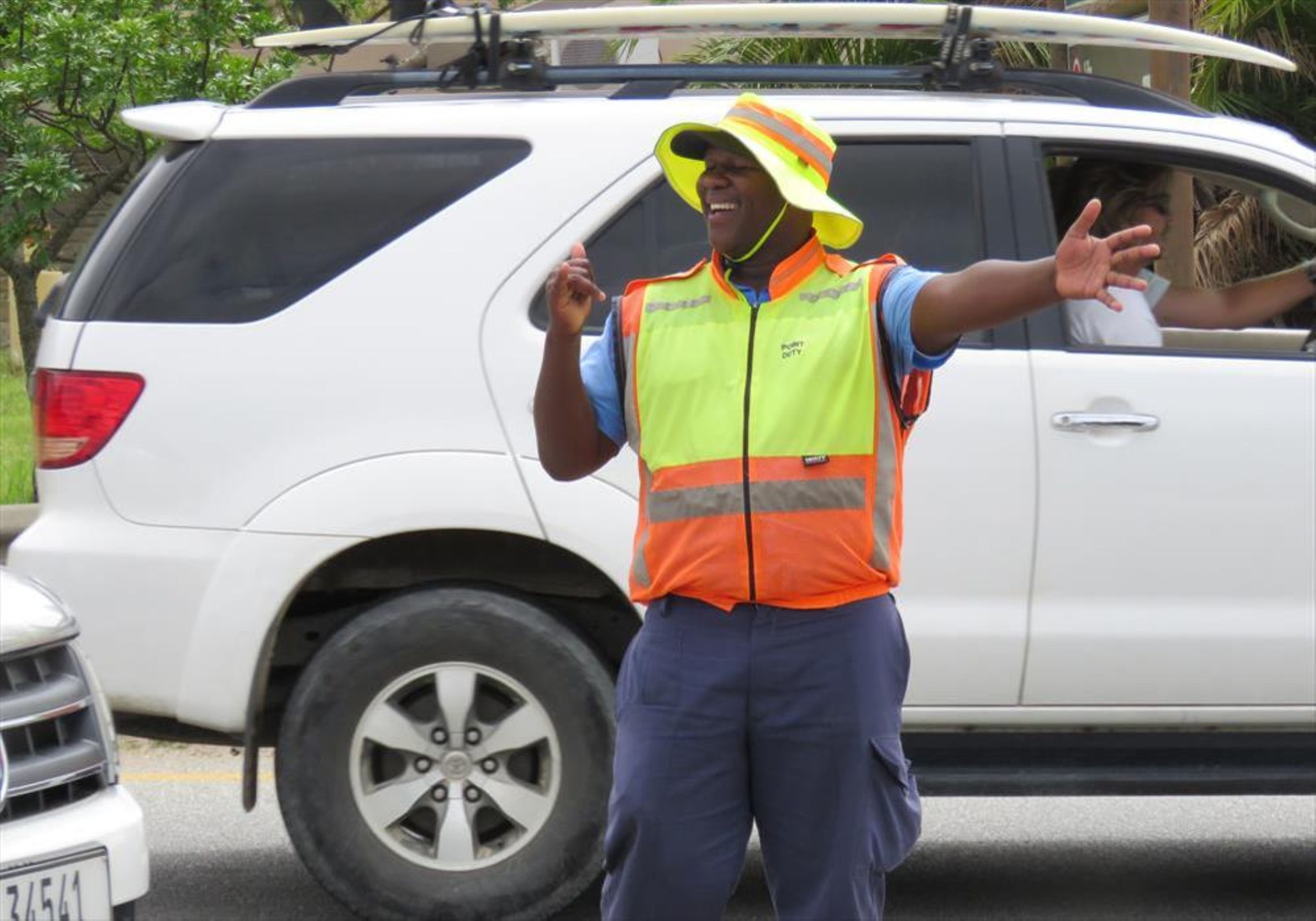
The Knysna Municipality has strongly condemned an attack on traffic warden Ernest Nqoko, affectionately known as “Smiley,” who was injured during a road rage incident on Tuesday afternoon (21 April 2026).

Nqoko was struck by a vehicle while directing peak-hour traffic at the George Rex intersection. The incident was followed by an altercation between him and the driver, causing significant traffic disruption and distress among commuters.

Executive Mayor Thando Matika denounced the incident, saying violence against municipal staff will not be tolerated. He praised Nqoko’s dedication, describing him as a familiar and positive presence to motorists along the N2.

Matika also expressed concern that this marks the fifth time Nqoko has been struck while on duty, calling the situation both devastating and traumatic.

A case has been opened with the South African Police Service, and investigations are underway.

Authorities have urged road users to remain patient and respectful, especially during busy traffic periods, and have appealed to anyone with information to contact Knysna SAPS.

Parliament approves government spending budget

The National Assembly has passed the Division of Revenue Bill and the Special Appropriation Bill, which were tabled by the Minister of Finance in February, as part of the national Budget. 

The Division of Revenue Bill sets out how government funds are shared across national, provincial and local government, with a strong focus on improving the capacity of municipalities to deliver services where people live. 

The Bill aims to ensure that public money is used to provide basic services, support economic growth and job creation, and keep government debt under control.

As part of this effort, government is investing R12.8 billion over the medium term to expand Early Childhood Development (ECD) programmes. 

At the same time, R800 million in 2026/27 is being redirected to protect key priorities, including R446 million for the National School Nutrition Programme, R13 million for learners with severe to profound intellectual disabilities, and R342 million to progressively equalise the salaries of Grade R educators. 

A further R175 million has been allocated to implement the e-Cares system to improve data collection and strengthen the management of Early Childhood Development (ECD) services.

Additional funding shifts include R109 million for agriculture to modernise systems such as e-certification and animal traceability, ensuring the sector becomes more efficient and competitive.

Following extensive engagement with the National Treasury, the Parliament Budget Office and other stakeholders, the Standing Committee on Appropriations welcomed the proposed allocations. 

However, the Committee stressed that their success will depend on strong governance, effective oversight and responsible spending.

“The Committee has recommended that the Minister of Finance ensure the National Treasury presents a clear plan to stabilise the public service wage bill so that rising personnel costs do not crowd out spending on critical services and infrastructure. 

“It has also called for a full cost-benefit analysis on the use of implementing agents, such as the Development Bank of Southern Africa, to deliver infrastructure projects on behalf of municipalities. National Treasury is required to report back to Parliament on these matters twice a year,” Parliament said.

The Special Appropriation Bill provides an additional R13.5 billion for the 2025/26 financial year to address urgent and unforeseen spending needs. 

This mechanism allows government to respond quickly to pressing national priorities without waiting for the next budget cycle.

This funding will support Parliament and key departments, namely Home Affairs, National Treasury, Transport and Communications and Digital Technologies. 

A significant portion is allocated to the Passenger Rail Agency of South Africa (PRASA), an entity of the Department of Transport, to procure new locomotives, repair trains, and improve commuter rail services - helping millions of South Africans travel safely and affordably.

Funding has also been allocated to Sentech to help resolve its ongoing dispute with the South African Broadcasting Corporation over approximately R1.6 billion in unpaid fees, while also supporting the long-term financial sustainability of the entity.

The Committee further welcomed the allocation of R2.081 billion for the rebuilding of Parliament and R1.116 billion for the Electoral Commission of South Africa to support the 2026 local government elections. 

This election funding is recognised as a necessary, once-off constitutional cost to ensure free, fair and credible elections.

Both Bills will now be referred to the National Council of Provinces for concurrence.

Law enforcement to intensify road safety compliance over long weekends

The Road Traffic Management Corporation (RTMC) has identified high-risk areas across all provinces to ramp up coordinated, intelligence-led law enforcement operations over the next two long weekends, as traffic volumes are expected to rise.

Authorities will increase the visibility of police patrols to ensure motorists comply with road rules.

With Freedom Day falling on Monday, 27 April 2026, and Workers’ Day on Friday, 1 May 2026, within the same week, a surge in travel — including interprovincial trips — is expected. This will likely lead to higher traffic volumes on national routes, elevating the risk of crashes and fatalities.

Key routes expected to experience heavy traffic and congestion include the N1, N2, N3, N4 and R61.
Pedestrian activity is also anticipated to increase, particularly around entertainment venues and areas hosting special events. According to the RTMC, pedestrian safety remains a significant concern, with pedestrian-vehicle collisions accounting for 43% of road fatalities.

“The top 10 districts or municipalities contributing the highest number of pedestrian crashes and fatalities have been identified. These are the City of Johannesburg, eThekwini, City of Cape Town, Ekurhuleni, City of Tshwane, Nkangala, Bojanala, Ehlanzeni, Gert Sibande and Sekhukhune,” the RTMC said.

These districts account for about 46% of fatal crashes and 44% of road deaths.

High-risk routes within these areas have been earmarked for targeted enforcement and intensified monitoring.

Authorities will also enforce public transport safe stop zones to discourage operators from dropping off passengers in unsafe areas.

“Motorists are urged to remain patient and vigilant, especially near residential areas and informal settlements.Pedestrians are advised not to walk on roads while under the influence of alcohol, to avoid highways, to use pedestrian bridges on busy freeways, and to wear bright clothing at night,” the RTMC said. 

Slight increase in inflation for March – Stats SA

Annual Consumer Price Inflation (CPI) has increased, expanding from 3.0% in February to 3.1% in March.
This according to Statistics South Africa’s (Stats SA) monthly CPI findings released on Wednesday morning.

Stats SA said the main contributors to the 3.1% rate were:

-housing and utilities (5,1% and contributing 1,2 percentage points); 
-food and non-alcoholic beverages (3,6% and contributing 0,6 of a percentage point), and
-insurance and financial services (4,6% and contributing 0,5 of a percentage point)

“In March 2026, the annual inflation rate for goods was 1.8%, down from 1.9% in February 2026, and services were 4.2%, up from 3,8% in February 2026,” Stats SA said in brief key findings. 

R25.9 billion: International tourists spend big in the Western Cape

1.5 million international tourists spent almost R26 billion in the Western Cape in 2025. This accounts for a quarter of South Africa’s 2025 international tourism revenue.

According to this newly released data from South African Tourism, tourism in the Western Cape is booming, with the number of international tourist arrivals having grown by 11.1%. When tourism grows, jobs are created. With the lowest unemployment rate in the country, the Western Cape is the land of opportunity.

The Western Cape is one of Africa’s leading tourism destinations.

Western Cape tourism organisations were recognised at the 2026 WTM Africa Responsible Tourism Awards, further reinforcing the province’s commitment to ensuring that tourism growth delivers meaningful economic, social, and environmental benefits.

Western Cape Minister of Agriculture, Economic Development and Tourism, Dr Ivan Meyer, said the combined results highlight a tourism sector that is growing with purpose.

“The Western Cape’s tourism performance in 2025 confirms that our province remains a top choice for both international and domestic travellers. We are building a tourism economy that continues to create jobs, supports communities, and protects our natural heritage.”

Strong performance across international and domestic markets

The United Kingdom and Germany remained the Western Cape’s largest international source markets in 2025, underlining the province’s strength in attracting long-haul holiday travellers.

Domestic tourism also showed solid recovery and expansion. The Western Cape recorded approximately four million domestic overnight trips in 2025, a 15.4% increase, and achieved the highest average spend per domestic overnight trip in the country, at R3,172.

“These figures demonstrate the Western Cape’s ability to attract higher‑value visitors and to support a wide range of tourism businesses, even in a constrained economic environment,” said Dr Meyer.

Recognising responsible tourism champions

During World Travel Market Africa, several Western Cape organisations received top honours at the African Responsible Tourism Awards for their leadership and innovation:

V&A Waterfront Academy and the Table Mountain Aerial Cableway Company received Gold Awards, recognising excellence in skills development, environmental management, and inclusive economic outcomes.
Unexplored Cape Town received a Silver Award for community‑based, locally led tourism experiences.
The Cape Tourist Guides Association was named “One to Watch”, acknowledging its commitment to ethical, professional, and responsible guiding.
Township & Village, based in Stellenbosch, was praised for its impactful, community‑driven tourism model that keeps value within local economies.
“These award winners show what is possible when tourism is designed to benefit local people as much as visitors,” Dr Meyer said. “They set an example for the sector – not only in the Western Cape, but across Africa.”

Focus on sustainable and inclusive growth

Nationally, domestic travel volumes are increasing, but per-trip spending remains under pressure. In response, the Western Cape Government is using the latest tourism data to refine its strategy and strengthen the sector's resilience.

The Department of Economic Development and Tourism will continue to:
Encourage value‑for‑money offerings that stimulate additional spending linked to Visiting Friends and Relatives (VFR) travel.
Promote geographic spread, enabling visitors to explore more towns and regions across the province.
Support responsible tourism practices that create jobs, grow small businesses, and protect natural and cultural assets.

“Our approach is clear,” Dr Meyer concluded. “Tourism must work for the people of the Western Cape. By combining strong demand, responsible leadership, and targeted support, we are ensuring that tourism growth translates into real and lasting value for our communities.”
error: eRadio is protected !
Scroll to Top