Home Affairs Deputy Minister, Njabulo Nzuza says the department issued a record-breaking number of Smart ID cards during the 2025/26 financial year, while accelerating efforts to digitise civic records and improve access to services across the country.
Delivering the Home Affairs Budget Vote Debate in the National Assembly on Friday, Nzuza said the department’s progress reflects an ongoing institutional culture shift aimed at building a modern, efficient and citizen-centred Home Affairs system.
“The Budget we are tabling today is shaped by clearly visible gains that our citizens continue to reap from the Department of Home Affairs.
“The progress we are making demonstrates that meaningful transformation is only possible through a deliberate shift in organisational culture,” Nzuza said.
He said the department remains focused on building “a Home Affairs that is modern, secure, efficient, and truly citizen-centred”.
Record Smart ID card issuance
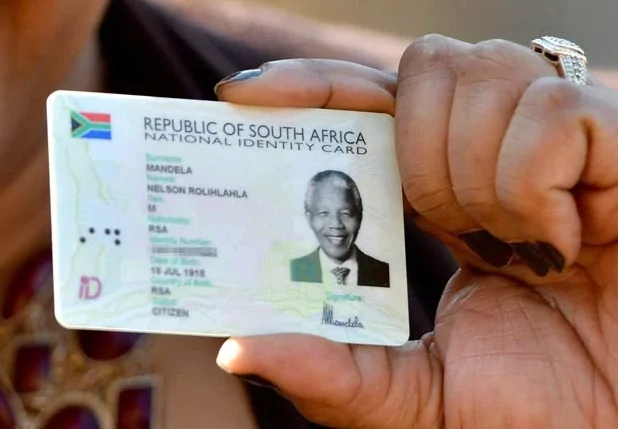
Nzuza told Parliament that Home Affairs issued more than four million Smart ID cards during the 2025/26 financial year, significantly exceeding its target.
“In the 2025/26 financial year, we issued a record-breaking number of Smart ID Cards of just above four million, far exceeding the target of 2 750 000. This is the highest single-year output in our department’s history,” he said.
The Deputy Minister added that first-time Smart ID issuances have also increased sharply over recent years.
“The first time issues over the past financial years have grown from 622 539 in the 20/21 financial year to 1 032 327 in the 25/26 Financial Year, far surpassing our targets,” he said.
According to Nzuza, the department has expanded mobile office services and community outreach programmes to improve access in rural and underserved communities.
“It is through collaborative partnerships, community outreach and the expansion of mobile offices that we continue to take services directly to the people, particularly those in rural, remote and historically underserved communities,” he said.
More than 60 million civic records digitised
Nzuza said the digitisation of civic records remains one of the department’s most significant reform initiatives.
“As part of our Digital Transformation Journey, the digitisation of Civic Records is a remarkable achievement that stands among the most significant administrative reform efforts undertaken in the democratic era.
“Since the inception of the project, more than 60 million civic records have been digitised, with a further 25 million records targeted for digitisation during the 26/27 Financial Year,” he said.
He described the project as more than simply converting paper records into digital files.
“This is not merely the transfer of paper to digital platforms; it is the construction of a modern, efficient and accessible state capable of responding to the needs of its people with speed, dignity and integrity,” Nzuza said.
The Deputy Minister, however, acknowledged ongoing staffing and budgetary pressures affecting the department.
“Whilst we celebrate this progress, we must equally acknowledge the persistent human resource and budgetary pressures confronting the project and the department more broadly,” he said.
Early birth registration exceeds target
Nzuza said Early Birth Registration continues to play a critical role in strengthening the country’s identity management system and protecting children’s rights.
“A legal identity secured at birth is not merely an administrative process; it is the first recognition of citizenship, dignity and belonging,” he said.
He told Parliament that the Civic Services Branch exceeded its annual target by registering more than 680 000 babies within 30 days of birth.
“I am proud to report that the Civic Services Branch exceeded its target of 677 000 by successfully registering 680 555 babies within 30 days of birth,” Nzuza said.
The Deputy Minister announced that the department plans to automate birth registration processes at health facilities during the 2026/27 financial year.
“In 2026/27 financial year, we intend to automate birth process at health facilities, which will be implemented for first registrations of citizens.
“This will improve the security of the process by minimising fraud and corruption and turnaround time for issuing birth certificates. This will also end the unsustainable generation of paper records,” he said.
Mobile offices expand services to schools and vulnerable communities
Nzuza said Home Affairs mobile offices exceeded their annual target, conducting more than 6 300 visits during the year under review.
“Our mobile offices exceeded the annual target, visiting 6 304 sites. This included 5 010 visits to public schools and 516 to special schools, providing vital services to young citizens – the inheritors of our future,” he said.
He highlighted the impact of the programme through individual success stories, including that of 94-year-old Mandla Mziwabantu, who received his first Smart ID card during a departmental outreach in Matatiele
The Deputy Minister also said mobile units continue to assist communities affected by disasters.
“When fire engulfed Du Noon in Cape Town earlier this year, destroying hundreds of structures, the department responded with urgency and compassion.
“Through a targeted cost waiver intervention, affected residents were able to replace lost identity documents and birth certificates free of charge,” he said.
He added that the department is prepared to deploy mobile units to disaster-affected areas in Gqeberha and the Northern Cape.
Passport services outperform targets
Nzuza said Home Affairs continues to improve passport turnaround times to support South Africans travelling for work, study and leisure.
“To enable South Africans to travel-wide for business, study, work and leisure, Home Affairs strives to issue 90% of passports in the country within 13 working days for adults and 18 days for minors,” he said.
According to the Deputy Minister, the department exceeded both targets during the year under review.
“In the year under review, Home Affairs surpassed its target by issuing 98.72% of Passports for minors within 18 days, and 96.32% of adult passports within 13 days,” he said.
He added that passport services have also been expanded to some South Africans living abroad.
Preparing for 2026 local government elections
Nzuza urged South Africans to collect their identity documents ahead of the 2026 local government elections.
“As we look toward the 2026 Local Government Elections, I encourage all citizens to collect their IDs. Your identity is your Voice. It is your Heritage. It is your Freedom,” he said.
The Deputy Minister said Home Affairs will continue working with stakeholders to support free and credible elections.
“Through strengthened collaboration, efficient service delivery, and expanded access to identity services, we remain committed to supporting free, fair, and credible elections that reflect the will of the people,” he said.
Culture change and digital skills development
Nzuza said the department is implementing a culture change strategy focused on ethics, innovation and citizen-centred services.
“Key milestones from the past financial year include digital upskilling, with 2 861 officials completing mandatory Digital Literacy training, thus exceeding our target of 2 500,” he said.
He added that the department also established five provincial virtual training hubs and launched e-learning modules in ethics and client relations.
“Women represented over 65% of training beneficiaries. We also implemented targeted measures to improve disability representation and gender parity at Senior Management level,” Nzuza said.
He reaffirmed the department’s commitment to institutional reform.
“We’re resolute in our mission to transform Home Affairs into a professional, ethical, high-performing institution serving all people with dignity,” he said.
Delivering the Home Affairs Budget Vote Debate in the National Assembly on Friday, Nzuza said the department’s progress reflects an ongoing institutional culture shift aimed at building a modern, efficient and citizen-centred Home Affairs system.
“The Budget we are tabling today is shaped by clearly visible gains that our citizens continue to reap from the Department of Home Affairs.
“The progress we are making demonstrates that meaningful transformation is only possible through a deliberate shift in organisational culture,” Nzuza said.
He said the department remains focused on building “a Home Affairs that is modern, secure, efficient, and truly citizen-centred”.
Record Smart ID card issuance
Nzuza told Parliament that Home Affairs issued more than four million Smart ID cards during the 2025/26 financial year, significantly exceeding its target.
“In the 2025/26 financial year, we issued a record-breaking number of Smart ID Cards of just above four million, far exceeding the target of 2 750 000. This is the highest single-year output in our department’s history,” he said.
The Deputy Minister added that first-time Smart ID issuances have also increased sharply over recent years.
“The first time issues over the past financial years have grown from 622 539 in the 20/21 financial year to 1 032 327 in the 25/26 Financial Year, far surpassing our targets,” he said.
According to Nzuza, the department has expanded mobile office services and community outreach programmes to improve access in rural and underserved communities.
“It is through collaborative partnerships, community outreach and the expansion of mobile offices that we continue to take services directly to the people, particularly those in rural, remote and historically underserved communities,” he said.
More than 60 million civic records digitised
Nzuza said the digitisation of civic records remains one of the department’s most significant reform initiatives.
“As part of our Digital Transformation Journey, the digitisation of Civic Records is a remarkable achievement that stands among the most significant administrative reform efforts undertaken in the democratic era.
“Since the inception of the project, more than 60 million civic records have been digitised, with a further 25 million records targeted for digitisation during the 26/27 Financial Year,” he said.
He described the project as more than simply converting paper records into digital files.
“This is not merely the transfer of paper to digital platforms; it is the construction of a modern, efficient and accessible state capable of responding to the needs of its people with speed, dignity and integrity,” Nzuza said.
The Deputy Minister, however, acknowledged ongoing staffing and budgetary pressures affecting the department.
“Whilst we celebrate this progress, we must equally acknowledge the persistent human resource and budgetary pressures confronting the project and the department more broadly,” he said.
Early birth registration exceeds target
Nzuza said Early Birth Registration continues to play a critical role in strengthening the country’s identity management system and protecting children’s rights.
“A legal identity secured at birth is not merely an administrative process; it is the first recognition of citizenship, dignity and belonging,” he said.
He told Parliament that the Civic Services Branch exceeded its annual target by registering more than 680 000 babies within 30 days of birth.
“I am proud to report that the Civic Services Branch exceeded its target of 677 000 by successfully registering 680 555 babies within 30 days of birth,” Nzuza said.
The Deputy Minister announced that the department plans to automate birth registration processes at health facilities during the 2026/27 financial year.
“In 2026/27 financial year, we intend to automate birth process at health facilities, which will be implemented for first registrations of citizens.
“This will improve the security of the process by minimising fraud and corruption and turnaround time for issuing birth certificates. This will also end the unsustainable generation of paper records,” he said.
Mobile offices expand services to schools and vulnerable communities
Nzuza said Home Affairs mobile offices exceeded their annual target, conducting more than 6 300 visits during the year under review.
“Our mobile offices exceeded the annual target, visiting 6 304 sites. This included 5 010 visits to public schools and 516 to special schools, providing vital services to young citizens – the inheritors of our future,” he said.
He highlighted the impact of the programme through individual success stories, including that of 94-year-old Mandla Mziwabantu, who received his first Smart ID card during a departmental outreach in Matatiele
The Deputy Minister also said mobile units continue to assist communities affected by disasters.
“When fire engulfed Du Noon in Cape Town earlier this year, destroying hundreds of structures, the department responded with urgency and compassion.
“Through a targeted cost waiver intervention, affected residents were able to replace lost identity documents and birth certificates free of charge,” he said.
He added that the department is prepared to deploy mobile units to disaster-affected areas in Gqeberha and the Northern Cape.
Passport services outperform targets
Nzuza said Home Affairs continues to improve passport turnaround times to support South Africans travelling for work, study and leisure.
“To enable South Africans to travel-wide for business, study, work and leisure, Home Affairs strives to issue 90% of passports in the country within 13 working days for adults and 18 days for minors,” he said.
According to the Deputy Minister, the department exceeded both targets during the year under review.
“In the year under review, Home Affairs surpassed its target by issuing 98.72% of Passports for minors within 18 days, and 96.32% of adult passports within 13 days,” he said.
He added that passport services have also been expanded to some South Africans living abroad.
Preparing for 2026 local government elections
Nzuza urged South Africans to collect their identity documents ahead of the 2026 local government elections.
“As we look toward the 2026 Local Government Elections, I encourage all citizens to collect their IDs. Your identity is your Voice. It is your Heritage. It is your Freedom,” he said.
The Deputy Minister said Home Affairs will continue working with stakeholders to support free and credible elections.
“Through strengthened collaboration, efficient service delivery, and expanded access to identity services, we remain committed to supporting free, fair, and credible elections that reflect the will of the people,” he said.
Culture change and digital skills development
Nzuza said the department is implementing a culture change strategy focused on ethics, innovation and citizen-centred services.
“Key milestones from the past financial year include digital upskilling, with 2 861 officials completing mandatory Digital Literacy training, thus exceeding our target of 2 500,” he said.
He added that the department also established five provincial virtual training hubs and launched e-learning modules in ethics and client relations.
“Women represented over 65% of training beneficiaries. We also implemented targeted measures to improve disability representation and gender parity at Senior Management level,” Nzuza said.
He reaffirmed the department’s commitment to institutional reform.
“We’re resolute in our mission to transform Home Affairs into a professional, ethical, high-performing institution serving all people with dignity,” he said.