The Garden Route District Municipality (GRDM) through its regional tourism office hosted a two-day Garden Route and Klein Karoo Regional Tourism Industry Workshop in the towns of George and Oudtshoorn, on 26-27 May 2026. During these workshops, various stakeholders engaged in an information-sharing session about the status quo of the tourism sector.
This engagement was in partnerships with the National Department of Tourism, South African Tourism, the Tourism Business Council of South Africa, the Tourism Grading Council of South Africa, and attended by various tourism businesses and industry stakeholder across the region such as SANPARKS, CapeNature, Wesgro, Local Tourism Offices, established and emerging business enterprises, and the hospitality industry.
The Executive Mayor, Alderman Marais Kruger welcomed everyone present under the theme “Unlocking Opportunities, Support & Benefits Across Key Tourism Institutions” reflecting our collective commitment to strengthening tourism growth, collaboration, and sustainable development across the Garden Route and Klein Karoo region.
These industry leading voices dissected a myriad of areas that requires improvement and highlighted opportunities across the entire tourism value chain. If this is realised, it could potentially open pathways for increased collaboration – a shared commitment to grow the region’s tourism industry.
South African Tourism representative responsible for stakeholder relations, Tony Nkadimeng, acknowledged that although the Garden Route had experienced natural disasters such as fires and the recent floods, the tourism industry remained resilient despite these challenges. “Regardless of these challenges, we are encouraged to see that the industry is still thriving,” he said.
Capitalising on its recognition as the best scenic route, the Garden Route and Klein Karoo Tourism Regional Office, together with the stakeholders at workshops, explored existing opportunities for the region to entrench its brand equity among both domestic and international travellers.
Dealing with matters pertinent to the Sector, the discussions centred around strengthening tourism marketing initiatives, promoting sports tourism such as golfing, supporting small businesses, especially women-led enterprises and positioning the Garden Route and Klein Karoo as the preferred tourism destination.
Chief Director-Enterprise Development & Transformation from the National Department of Tourism, Sbonelo Nzimande, said: “We have made a concerted effort in supporting women-led businesses, digitising services offered by small businesses and enabling transactions for operators in the rural areas as well”. Nzimande added that Micro-, Small and Medium Enterprises needed to embrace research, technology, innovation and creativity to move the needle in the trajectory of their entrepreneurship endeavours.
Smalls businesses were also encouraged to apply for grading through the Tourism Grading Council of South Africa.
Hospitality businesses called for strategic coordination from the GRDM to ensure the sector becomes more attractive to investment. Funding and compliance were cited as the biggest stumbling blocks for entrepreneurs who emphasised the need to bridge the gap in the dissemination of information and mentorship.
Tourism, LED and EPWP Manager at the GRDM, Richard Dyantyi, recognised small businesses and various stakeholders for their contributions in the region and how these efforts made a tangible difference to the tourism landscape.
“This engagement will not be another talk-shop. I will ensure that the GRDM management and political leadership reflect on the issues raised at this platform so that when we meet again, I will be able to report back on what we have done from our side,” he said.
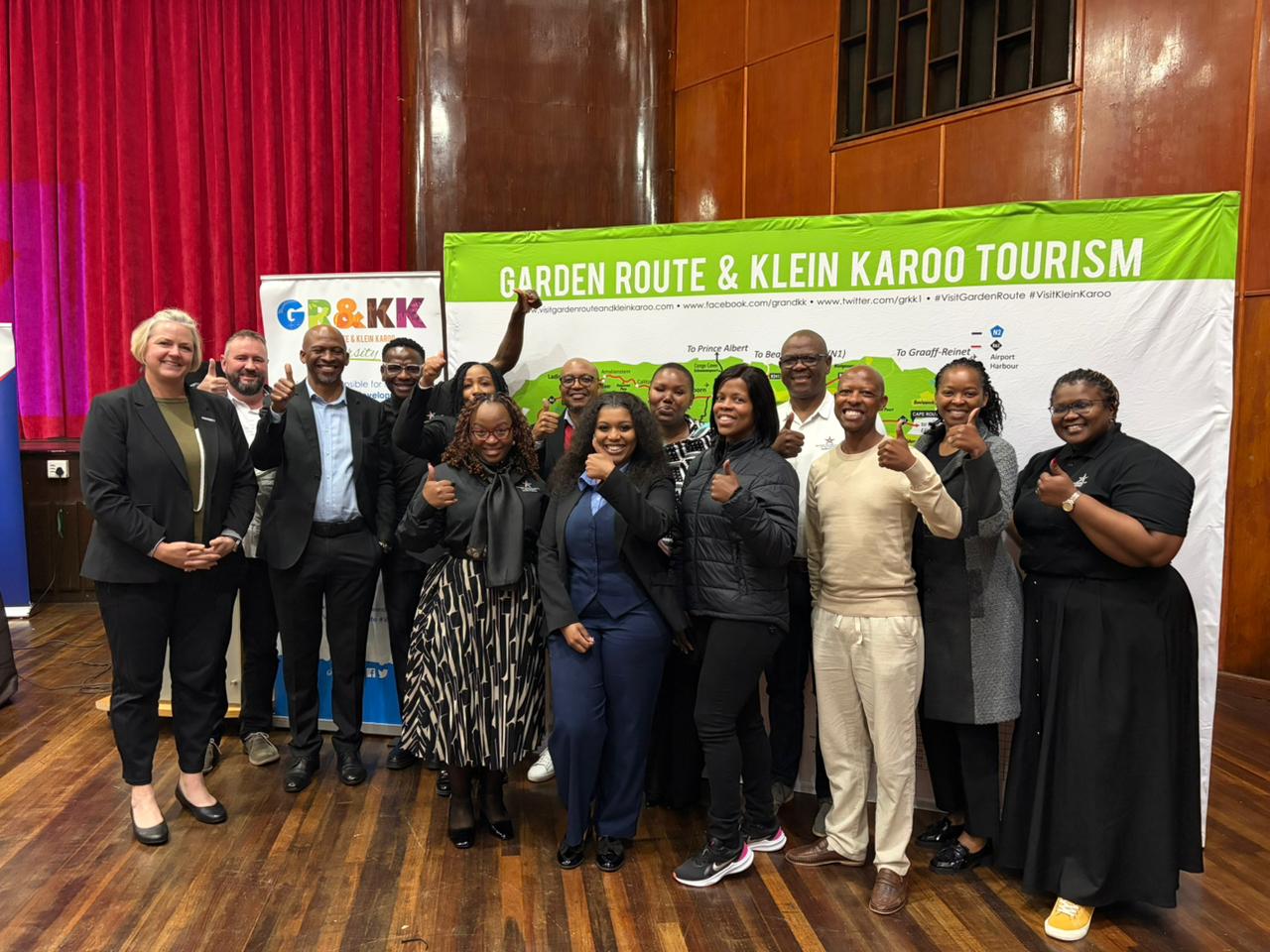
Photo: Presenters of the day representing the GRDM and various key stakeholders after an insightful engagement at the George leg of the Garden Route and Klein Karoo Tourism Industry Workshop held at the George Civic Centre.
This engagement was in partnerships with the National Department of Tourism, South African Tourism, the Tourism Business Council of South Africa, the Tourism Grading Council of South Africa, and attended by various tourism businesses and industry stakeholder across the region such as SANPARKS, CapeNature, Wesgro, Local Tourism Offices, established and emerging business enterprises, and the hospitality industry.
The Executive Mayor, Alderman Marais Kruger welcomed everyone present under the theme “Unlocking Opportunities, Support & Benefits Across Key Tourism Institutions” reflecting our collective commitment to strengthening tourism growth, collaboration, and sustainable development across the Garden Route and Klein Karoo region.
These industry leading voices dissected a myriad of areas that requires improvement and highlighted opportunities across the entire tourism value chain. If this is realised, it could potentially open pathways for increased collaboration – a shared commitment to grow the region’s tourism industry.
South African Tourism representative responsible for stakeholder relations, Tony Nkadimeng, acknowledged that although the Garden Route had experienced natural disasters such as fires and the recent floods, the tourism industry remained resilient despite these challenges. “Regardless of these challenges, we are encouraged to see that the industry is still thriving,” he said.
Capitalising on its recognition as the best scenic route, the Garden Route and Klein Karoo Tourism Regional Office, together with the stakeholders at workshops, explored existing opportunities for the region to entrench its brand equity among both domestic and international travellers.
Dealing with matters pertinent to the Sector, the discussions centred around strengthening tourism marketing initiatives, promoting sports tourism such as golfing, supporting small businesses, especially women-led enterprises and positioning the Garden Route and Klein Karoo as the preferred tourism destination.
Chief Director-Enterprise Development & Transformation from the National Department of Tourism, Sbonelo Nzimande, said: “We have made a concerted effort in supporting women-led businesses, digitising services offered by small businesses and enabling transactions for operators in the rural areas as well”. Nzimande added that Micro-, Small and Medium Enterprises needed to embrace research, technology, innovation and creativity to move the needle in the trajectory of their entrepreneurship endeavours.
Smalls businesses were also encouraged to apply for grading through the Tourism Grading Council of South Africa.
Hospitality businesses called for strategic coordination from the GRDM to ensure the sector becomes more attractive to investment. Funding and compliance were cited as the biggest stumbling blocks for entrepreneurs who emphasised the need to bridge the gap in the dissemination of information and mentorship.
Tourism, LED and EPWP Manager at the GRDM, Richard Dyantyi, recognised small businesses and various stakeholders for their contributions in the region and how these efforts made a tangible difference to the tourism landscape.
“This engagement will not be another talk-shop. I will ensure that the GRDM management and political leadership reflect on the issues raised at this platform so that when we meet again, I will be able to report back on what we have done from our side,” he said.
Photo: Presenters of the day representing the GRDM and various key stakeholders after an insightful engagement at the George leg of the Garden Route and Klein Karoo Tourism Industry Workshop held at the George Civic Centre.