South Africa and Namibia have reaffirmed their commitment to deepening bilateral cooperation by signing seven agreements aimed at boosting trade, investment, industrialisation and regional integration during the Fourth Session of the South Africa -Namibia Bi-National Commission (BNC) in Pretoria.
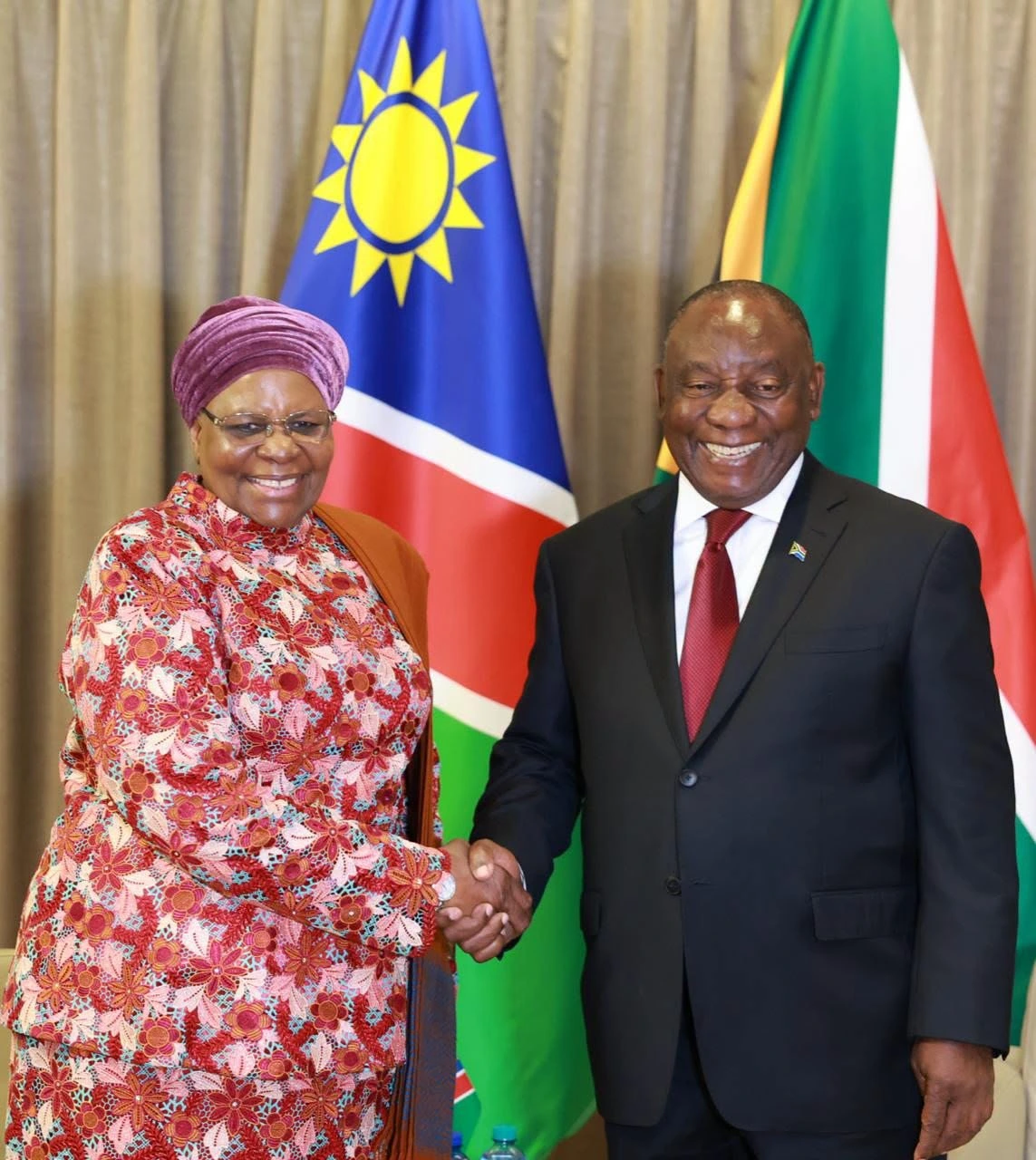
Co-chaired by President Cyril Ramaphosa and Namibian President Netumbo Nandi-Ndaitwah, the Commission reviewed progress in bilateral relations and adopted measures to accelerate implementation of agreements and programmes that will deliver tangible economic and developmental benefits to the people of both countries.
The Fourth Session was preceded by meetings of senior officials from 14 to 15 July and a ministerial segment on 16 July, where progress on previous decisions was assessed and recommendations prepared for consideration by the two Heads of State.
In a joint communiqué issued after the meeting on Friday, the two Presidents reaffirmed the historic bonds of friendship forged during the struggle against colonialism and apartheid.
“The two Presidents reviewed the full spectrum of bilateral relations and expressed satisfaction with the steady growth of cooperation between the two countries. They reiterated their commitment to further strengthening political, economic, social and cultural relations for the mutual benefit of their peoples,” the joint communiqué said.
The leaders also reaffirmed their commitment to strengthening cooperation within the Southern African Development Community (SADC), the African Union (AU) and other multilateral forums, while advancing regional peace, security, economic integration and sustainable development.
They underscored the urgency of accelerating implementation of regional and continental frameworks, including the SADC Regional Indicative Strategic Development Plan (RISDP) 2020–2030, the African Union's Agenda 2063 and the African Continental Free Trade Area (AfCFTA).
Namibia also expressed its support for South Africa as host of the 46th Ordinary SADC Summit of Heads of State and Government in August 2026.
Recognising the geographical proximity, economic interdependence and complementary resource endowments of the two countries, the Presidents agreed to intensify economic cooperation.
“They agreed to promote greater trade and investment, strengthen cross-border value chains, facilitate private-sector partnerships and pursue opportunities for joint industrial development and beneficiation,” the joint communiqué said.
The two countries also agreed to deepen collaboration in the mining, petroleum and natural gas sectors by expanding cooperation across mineral and energy value chains.
The communiqué said the partnership would place greater emphasis on exploration, research, technology, skills development, local value addition and beneficiation to support industrialisation, economic diversification, energy security and employment creation.
Energy cooperation featured prominently during the discussions, with the two leaders agreeing to strengthen collaboration in electricity generation and transmission, renewable energy and regional energy security.
They also committed to accelerating implementation of the Kudu Gas Power Project.
Transport and logistics were identified as critical enablers of trade, with both countries reaffirming their commitment to strengthening cooperation on the Trans-Kalahari Corridor and other transport links connecting South Africa, Namibia and the broader Southern African region.
The two governments also agreed to strengthen cooperation in water resource management, agriculture and food security, public health, skills development and public-sector capacity building to improve resilience, service delivery and socio-economic development.
The Commission culminated in the signing of seven bilateral agreements and instruments of cooperation covering:
-Employment and labour;
-Public administration capacity building between South Africa's National School of Government and Namibia's Institute of Public -Administration and Management;
-Bilateral air services;
-Legal cooperation;
-Correctional services;
-An economic partnership agreement between the Namibia Chamber of Commerce and Industry and the South African Chamber of Commerce and Industry; and
-Gender equality and women's empowerment.
The two Heads of State also welcomed the convening of the South Africa-Namibia Business Forum, describing it as a strategic public-private partnership platform that will promote greater economic cooperation between the two countries.
Held under the theme: “Driving Regional Industrialisation, Investment and Sustainable Growth Through Strategic South Africa–Namibia Partnerships”, the forum brought together government and business leaders to strengthen trade, investment and industrial partnerships.
South Africa and Namibia already enjoy strong trade and investment relations, with more than 50 South African companies investing in Namibia between 2023 and 2025. These investments contributed approximately US$1.2 billion in capital and created around 4 900 jobs across sectors including mining, banking, insurance, property and renewable energy.
Established in 2013, the Bi-National Commission is the highest formal mechanism for cooperation between South Africa and Namibia. Since its inception, it has become the principal platform for coordinating bilateral relations across political, economic, social, environmental, science and technology, defence and security sectors.
The two countries have concluded 75 agreements and memoranda of understanding covering a broad range of areas, including political and economic cooperation, social development, defence and security, as well as historical agreements relating to the handover of Walvis Bay.
To ensure decisions taken during the Fourth Session are implemented, the two Presidents directed relevant ministries, departments and agencies to develop clear implementation plans with defined responsibilities and timelines.
They further instructed senior officials to monitor implementation regularly and use the Mid-Term Review mechanism to assess progress, address challenges and ensure accountability.
President Nandi-Ndaitwah also invited President Ramaphosa to undertake a working visit to Namibia to co-chair the Fifth Session of the Bi-National Commission at a mutually agreed date. President Ramaphosa accepted the invitation.
Co-chaired by President Cyril Ramaphosa and Namibian President Netumbo Nandi-Ndaitwah, the Commission reviewed progress in bilateral relations and adopted measures to accelerate implementation of agreements and programmes that will deliver tangible economic and developmental benefits to the people of both countries.
The Fourth Session was preceded by meetings of senior officials from 14 to 15 July and a ministerial segment on 16 July, where progress on previous decisions was assessed and recommendations prepared for consideration by the two Heads of State.
In a joint communiqué issued after the meeting on Friday, the two Presidents reaffirmed the historic bonds of friendship forged during the struggle against colonialism and apartheid.
“The two Presidents reviewed the full spectrum of bilateral relations and expressed satisfaction with the steady growth of cooperation between the two countries. They reiterated their commitment to further strengthening political, economic, social and cultural relations for the mutual benefit of their peoples,” the joint communiqué said.
The leaders also reaffirmed their commitment to strengthening cooperation within the Southern African Development Community (SADC), the African Union (AU) and other multilateral forums, while advancing regional peace, security, economic integration and sustainable development.
They underscored the urgency of accelerating implementation of regional and continental frameworks, including the SADC Regional Indicative Strategic Development Plan (RISDP) 2020–2030, the African Union's Agenda 2063 and the African Continental Free Trade Area (AfCFTA).
Namibia also expressed its support for South Africa as host of the 46th Ordinary SADC Summit of Heads of State and Government in August 2026.
Recognising the geographical proximity, economic interdependence and complementary resource endowments of the two countries, the Presidents agreed to intensify economic cooperation.
“They agreed to promote greater trade and investment, strengthen cross-border value chains, facilitate private-sector partnerships and pursue opportunities for joint industrial development and beneficiation,” the joint communiqué said.
The two countries also agreed to deepen collaboration in the mining, petroleum and natural gas sectors by expanding cooperation across mineral and energy value chains.
The communiqué said the partnership would place greater emphasis on exploration, research, technology, skills development, local value addition and beneficiation to support industrialisation, economic diversification, energy security and employment creation.
Energy cooperation featured prominently during the discussions, with the two leaders agreeing to strengthen collaboration in electricity generation and transmission, renewable energy and regional energy security.
They also committed to accelerating implementation of the Kudu Gas Power Project.
Transport and logistics were identified as critical enablers of trade, with both countries reaffirming their commitment to strengthening cooperation on the Trans-Kalahari Corridor and other transport links connecting South Africa, Namibia and the broader Southern African region.
The two governments also agreed to strengthen cooperation in water resource management, agriculture and food security, public health, skills development and public-sector capacity building to improve resilience, service delivery and socio-economic development.
The Commission culminated in the signing of seven bilateral agreements and instruments of cooperation covering:
-Employment and labour;
-Public administration capacity building between South Africa's National School of Government and Namibia's Institute of Public -Administration and Management;
-Bilateral air services;
-Legal cooperation;
-Correctional services;
-An economic partnership agreement between the Namibia Chamber of Commerce and Industry and the South African Chamber of Commerce and Industry; and
-Gender equality and women's empowerment.
The two Heads of State also welcomed the convening of the South Africa-Namibia Business Forum, describing it as a strategic public-private partnership platform that will promote greater economic cooperation between the two countries.
Held under the theme: “Driving Regional Industrialisation, Investment and Sustainable Growth Through Strategic South Africa–Namibia Partnerships”, the forum brought together government and business leaders to strengthen trade, investment and industrial partnerships.
South Africa and Namibia already enjoy strong trade and investment relations, with more than 50 South African companies investing in Namibia between 2023 and 2025. These investments contributed approximately US$1.2 billion in capital and created around 4 900 jobs across sectors including mining, banking, insurance, property and renewable energy.
Established in 2013, the Bi-National Commission is the highest formal mechanism for cooperation between South Africa and Namibia. Since its inception, it has become the principal platform for coordinating bilateral relations across political, economic, social, environmental, science and technology, defence and security sectors.
The two countries have concluded 75 agreements and memoranda of understanding covering a broad range of areas, including political and economic cooperation, social development, defence and security, as well as historical agreements relating to the handover of Walvis Bay.
To ensure decisions taken during the Fourth Session are implemented, the two Presidents directed relevant ministries, departments and agencies to develop clear implementation plans with defined responsibilities and timelines.
They further instructed senior officials to monitor implementation regularly and use the Mid-Term Review mechanism to assess progress, address challenges and ensure accountability.
President Nandi-Ndaitwah also invited President Ramaphosa to undertake a working visit to Namibia to co-chair the Fifth Session of the Bi-National Commission at a mutually agreed date. President Ramaphosa accepted the invitation.