Western Cape speeds up flood-damaged road repairs

Western Cape Premier Alan Winde has assured residents and farmers that a temporary crossing at the flood-damaged Smalblaar Bridge will be in place before the end of the year, while the  permanent restoration of the bridge is expected to take more than 12 months.

The bridge serves as a vital transport link for farms, residents and businesses in the Rawsonville area and was one of the sites Winde visited during a two-day oversight visit to flood-damaged infrastructure in the Central Karoo and Cape Winelands Districts on 16 and 17 July 2026.

During the visit, the Premier met members of the farming community in Rawsonville to discuss progress on the bridge's reconstruction and the measures being implemented to restore access as quickly as possible.

"These bridges and passes enable businesses to thrive and residents to access opportunities. I understand their importance and am focused on ensuring we get safe solutions in place as quickly as possible," Winde said.

Winde also assessed damage to the Meiringspoort and Swartberg passes, which were severely affected by recent record-breaking floods. The infrastructure is critical to connecting communities and supporting economic activity across the Klein and Groot Karoo regions.

Meiringspoort, which links De Rust and Klaarstroom, sustained extensive damage during the floods. The route comprises 20 river crossings, all of which were affected, while four major sections of the road were completely washed away.

According to the provincial government, permanent restoration of the pass is expected to take at least two years and cost hundreds of millions of rand.

Restoration work has already started from the De Rust side, with a temporary route expected to be completed by December 2026. Once opened, the road will operate under strict access controls.

Winde also inspected the Swartberg Pass, which was closed following the floods before reopening in June after emergency repairs. During the visit, Department of Infrastructure officials briefed the Premier at the Teeberg Lookout Point on the progress of ongoing restoration work.

The Premier acknowledged infrastructure teams currently working across the province to restore roads and other public infrastructure damaged by the severe weather.

“These recent severe weather events were unprecedented, with hundreds of thousands of people affected, and many hundreds of roads closed. The Western Cape road network connects communities, businesses and families, driving growth and jobs in every town and city.

“There are people on site across the province restoring roads in just about every district. Thank you for the hard work. We have a long way to go still, but we are moving in the right direction,” Winde said.

He also urged road users adhere to road regulations, warning that heavy vehicles should not use the Swartberg Pass.

“The Swartberg pass is not designed for use by heavy motor vehicles, such as semi-trailers and trucks. These vehicles must find alternative routes, via Laingsburg or Willowmore. While we rebuild bridges, passes and roads, I urge road users to follow road signs and adhere to warnings,” the Premier said.

The Premier is expected to continue receiving regular progress briefings from provincial officials, with further oversight visits to flood-affected districts. 
Operation Shanela strikes blow against organised crime

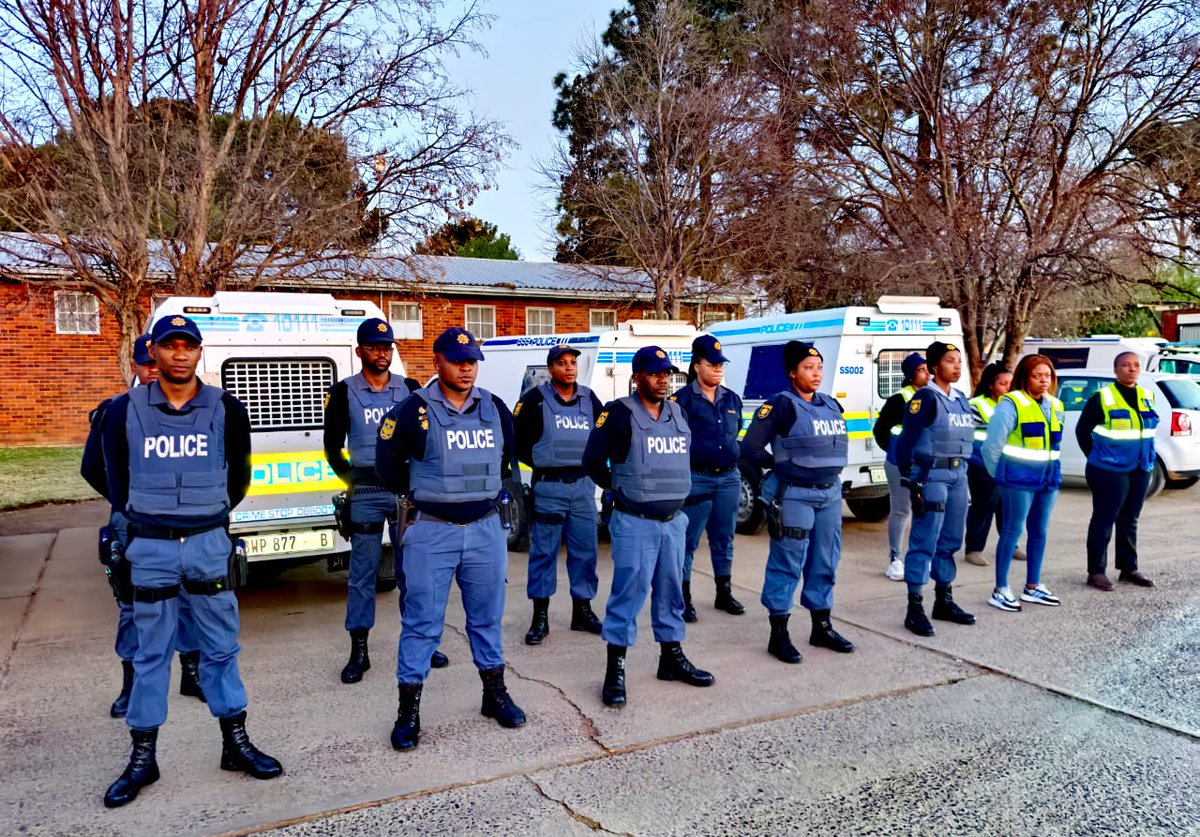
The South African Police Service (SAPS) has intensified its nationwide fight against organised crime, arresting more than 17 500 suspects during its latest high-density Shanela operations conducted between 13 and 19 July 2026.

The week-long operations targeted violent crime, drug trafficking, illegal firearms, illicit trade, immigration offences and wanted suspects, resulting in the arrest of 17 583 people for various crimes across the country.

"In just seven days, 17 583 suspects were arrested for various offences. In addition, detectives traced and arrested 1 777 wanted criminals linked to violent offences including murder, attempted murder, rape, carjackings, illegal possession of firearms, house and business robberies," SAPS said in a statement.

Illegal immigration enforcement
Police also stepped up the enforcement of immigration laws, arresting 3 622 illegal migrants in operations conducted across the country.
The Western Cape recorded the highest number of arrests, with 1 484, followed by Gauteng with 1 257.
According to SAPS, the operations form part of ongoing efforts to enforce the Immigration Act and dismantle criminal networks linked to illegal immigration.

Millions of rands worth of illicit goods seized
The operations also dealt a significant blow to illicit trade and counterfeit goods.
In the Western Cape, a joint operation involving SAPS, the Western Cape Liquor Board and the SARS Customs Unit seized illicit liquor worth an estimated R12 million in Stellenbosch on 16 July.
In Gauteng, the Provincial Counterfeit Unit confiscated contraband and counterfeit goods valued at R5 million during a three-day enforcement operation.
Meanwhile, in Acornhoek, Mpumalanga, police intercepted a truck transporting illicit cigarettes worth an estimated R1.9 million and arrested a 45-year-old suspect.

Drug trafficking remains a key focus
SAPS also intensified its campaign against drug-related crime, arresting 320 suspected drug dealers and 3 113 people for possession of drugs.
The Western Cape accounted for the highest number of drug possession arrests, with 1 800 suspects taken into custody.
In another major breakthrough, SAPS and the National Prosecuting Authority secured a High Court preservation order on 19 July against a Rietfontein property linked to a R100 million crystal meth laboratory.
The order authorises the seizure and sale of the property, together with R27 800 in cash confiscated during a raid conducted in November 2024.
A Mexican national was previously arrested in connection with the operation, which police described as a significant blow against international drug syndicates.

Hundreds arrested for violent and serious crimes


Among those arrested during the week were:
156 suspects for murder.
99 for attempted murder.
147 for rape.
1 223 for assault with intent to cause grievous bodily harm (GBH).
639 for the illegal dealing of liquor.
84 for illegal possession of firearms.
75 for illegal possession of ammunition.
586 for possession of dangerous weapons.
744 for driving under the influence of alcohol or drugs.
Police also confiscated 138 unlicensed firearms, including handguns, shotguns and rifles, seized 1 178 rounds of ammunition, recovered various types of drugs and traced 60 hijacked and stolen vehicles.

Provincial operations
Several provinces recorded significant breakthroughs during the week.

In the Free State, the Provincial Tracking Team rearrested 45-year-old Tshidiso Michael Mokhuane, who had been wanted for rape since 2020. He was apprehended in Bloemspruit on 15 July.

In the Eastern Cape, police arrested three suspects for murder and attempted murder following a mob justice incident in Soweto-on-Sea on 14 July that claimed two lives. In a separate operation in Lusikisiki, Crime Intelligence officers arrested a 35-year-old suspect found in possession of three homemade firearms.

In Gauteng, two suspects were arrested in Mamelodi East on 14 July for allegedly extorting residents by demanding payments for illegal electricity connections.

In a separate intelligence-led operation on 17 July, police arrested two suspects, aged 54 and 59, in Tembisa and Ivory Park in connection with ATM bombings. Officers seized two 9mm pistols, three magazines and 26 rounds of live ammunition.

Operation Dig Deep in the Northern Cape led to the arrest of four foreign nationals in Kuruman and Postmasburg, where controlled purchases and raids resulted in the seizure of mandrax and tik worth R15 000.

In Mpumalanga, police arrested a 44-year-old suspect in Bushbuckridge on 19 July in connection with the murder of a police sergeant and the attempted murder of a police constable. The officers had come under attack after responding to a domestic violence complaint the previous evening.

In the North West, a 52-year-old Lesotho migrant was arrested in Seraleng after being found in possession of dye-stained banknotes linked to ATM bombings.

In Limpopo, intelligence-driven operations in the Capricorn District led to several arrests and the recovery of stolen property. Four suspects were arrested following a business robbery at a lodge in Lebowakgomo, where police also recovered two pistols and ammunition.

SA, World Bank sign $1.5bn loan to support infrastructure reforms

The South African government and the World Bank have signed a US$1.5 billion Development Policy Loan aimed at supporting infrastructure reforms and boosting inclusive economic growth.

The loan, announced by National Treasury on Tuesday, is intended to help address infrastructure constraints that the government identifies as a major barrier to job creation, amid persistent challenges of low economic growth and high unemployment.

The financing will support reforms in the electricity, freight and logistics sectors, as well as efforts to address challenges in water and sanitation.

Treasury said the funding forms part of the government’s broader programme of structural reforms in the energy, logistics and water sectors, which it described as critical to laying the foundation for faster and more inclusive growth.

The fourth development policy loan under the partnership between South Africa and the World Bank is built around three key areas: strengthening energy competitiveness and security, upgrading freight transport services, and improving the delivery of water and sanitation services.

According to Treasury, these reforms are expected to contribute to economic growth and job creation.

The loan is valued at US$1.5 billion and has a 15-year maturity, including a three-year grace period. The interest rate is set at the six-month Secured Overnight Financing Rate (SOFR) plus 1.35%.

Treasury said the financing terms are aligned with the National Treasury’s borrowing strategy, which seeks to maintain long-term debt sustainability and affordability by securing funding at the lowest possible cost.

It said the loan’s favourable interest rate and flexible repayment terms would help minimise the increase in debt-service costs.

The World Bank loan, together with financing secured from other multilateral development partners, has enabled the government to meet its US$3.2 billion foreign currency borrowing requirement for the 2026/27 financial year, according to Treasury.

National Treasury thanked the World Bank for its continued support, saying the partnership was critical to maintaining momentum on reforms and advancing South Africa’s broader development objectives.

Macpherson requests audit into state-owned properties

The Minister of Public Works and Infrastructure, Dean Macpherson, has requested the department’s Director-General Sifiso Mdakane to conduct a comprehensive investigation into the 6 238 State-owned residential properties allocated to various user Departments and those occupied by government officials across the country.

Mdakane has also been requested to develop a comprehensive strategy for the disposal of properties that are not required for legitimate operational purposes. 

Of these properties, 3 626 are situated in KwaZulu-Natal, 566 in the Western Cape and 407 in Gauteng. 

The department further recorded that an estimated R39.6 million was spent from its day-to-day maintenance budget during the 2025/26 financial year, although the available expenditure information relates to only 108 of the 6 238 properties. 

The Director-General has been requested to submit a comprehensive report to the Minister within 30 days. 

“The report must include a complete assessment of the 3 626 properties situated in KwaZulu-Natal, identifying the user department to which each property has been allocated, its intended purpose and operational need, the capacity in which the current occupant resides at the property and which properties should be retained, repurposed or disposed of,” the Department of Public Works and Infrastructure said in a statement. 

According to the department, the report must separately identify properties occupied by officials of the department and determine whether the same allocation criteria, governance requirements, rental provisions, housing entitlement checks and tax treatment applicable to other departments have been applied without exception or preferential treatment. 

The investigation must further examine: 
● The legislative and regulatory basis for the leasing of State-owned residences, including compliance with the Government Immovable Asset Management Act, the Public Finance Management Act and applicable National Treasury regulations. 
● Whether the rentals charged are market-related and whether the necessary approvals were obtained for any deviations. 
● Whether officials occupying work facility or official housing qualify for such accommodation under their conditions of employment and whether the appropriate fringe benefit tax treatment has been applied. 
● Whether user departments have surrendered properties that are no longer required for service delivery and whether any surplus properties should be repurposed, redeveloped, disposed of or released from the State’s portfolio. 

“It is my view that the State should not own more than 6 000 residential properties for government officials, particularly when many officials already receive housing allowances, subsidies or other housing-related benefits as part of their remuneration packages. 

“Unless there is a clear and compelling operational reason for the State to retain a residential property, it should be sold. The default position cannot be that the State indefinitely carries the maintenance, rates and other costs of thousands of residential properties, while the public fiscus remains under immense pressure.

“We need to establish who is occupying each property, the basis on which it was allocated and whether it still serves a legitimate public purpose. Where properties are underutilised, unnecessary or no longer required for government operations, they should be released from the State’s portfolio through a transparent and legally compliant disposal process. 

“Selling properties that the State does not need will reduce unnecessary expenditure, generate value for the public and ensure that government focuses its limited resources on infrastructure and assets that directly support service delivery. This is central to our commitment to use public assets for the public good and build a better South Africa,” the Minister said.
error: eRadio is protected !
Scroll to Top