President unveils national plan to tackle SA’s water crisis

President Cyril Ramaphosa has unveiled a National Water Action Plan aimed at addressing South Africa's worsening water supply crisis and ensuring a reliable supply of quality water across the country.

The plan was released on Thursday, following a meeting of the National Water Crisis Committee (WATERCOM) at the Union Buildings in Pretoria.

The National Water Action Plan sets out short, medium-and long-term interventions to tackle the root causes of persistent water supply challenges affecting municipalities, communities and businesses.

Among the measures outlined in the plan are increased investment in water infrastructure, including through private-sector participation, legal and regulatory reforms to improve municipal service delivery, and efforts to tackle corruption and criminality in the water sector.

WATERCOM, which is chaired by President Ramaphosa, was established following the 2026 State of the Nation Address in response to increasingly severe water supply interruptions in parts of the country.

The committee brings together government departments and public agencies responsible for implementing the plan, as well as the South African Local Government Association (SALGA).

The Presidency said the plan was developed following extensive consultations across all three spheres of government and with key stakeholders.

WATERCOM will work with municipalities to mobilise resources, technical expertise and new partnerships to stabilise failing water systems, restore critical services and expand access.

A key part of the plan is to reform the way water services are managed and financed, including ring-fencing water revenues to ensure that money collected for water services is used to maintain and upgrade water infrastructure.

The plan also seeks to increase investment in bulk water and distribution infrastructure.

According to the Presidency, the water crisis is partly rooted in a delivery model that has resulted in water revenues being diverted to other municipal functions, leaving insufficient funds for infrastructure maintenance, investment and the recruitment of skilled personnel.

The government also identified fragmented accountability as a challenge, saying municipal water and sanitation departments often oversee technical operations while having limited control over billing, revenue collection and the protection of water assets.

The Presidency said dedicated teams have been appointed to drive implementation of the plan, accelerate results and support long-term reforms in the sector.

President Ramaphosa compared the approach to the government's response to the energy crisis, saying the same focus used to improve Eskom and reform the energy system would now be applied to the country's water challenges.

“By acting boldly and decisively to improve the performance of Eskom and reform our energy system, we were able to end load shedding and achieve a secure and reliable energy supply.

“Now, we are applying the same approach to the water crisis that has been unfolding in many parts of our country,” the President said.

The President said the plan provided a “clear, practical and focused approach” to achieving water security for all South Africans.

WATERCOM is expected to meet regularly to oversee implementation of the plan and hold government departments and agencies accountable for delivering on the proposed interventions.

Crime-Combatting Operations Yield Success in Garden Route District

Ongoing crime combatting operations yielded success when police confiscated an unlicensed firearm at a roadblock on the N2 highway and arrested several suspects at drug outlets during mid-week operations in the Garden Route District.
 
On Wednesday, 22 July 2026 at about 17:25 police were strategically deployed at the entrance to Plettenberg Bay where the vigilant members conducted a roadblock. The members pulled of a Suzuki motor vehicle and a search ensued. The members found a handgun with eight 9mm round in the possession of one of the occupants. He was unable to provide any documentation for his possession thereof and was subsequently arrested. The 37 year old suspect 4 He is facing charges of unlawful possession of a firearm and ammunition.
 
Meantime, on Thursday, 23 July 2026 at about 14:00 Western Cape Tactical Response Team and Conville Crime Prevention Unit members, armed with a search warrant conducted an operation at O’Connell Street, Rosemore in George. A search of the premises resulted in the confiscation of small quantities of drugs. Four suspects aged 18, 20, 21 and 37 were arrested on charges of possession of drugs.
 
Later the same day, the same team raided a house at Tiptol Street, Rosemore, George where they found 30 mandrax tablets. A 27 year old man was subsequently arrested on a charge of dealing in drugs.
 
All arrested will appear in court once charged.
 
These operations forms part of concerted efforts by police to rid communities of unlicensed firearms and drugs.

President to mark launch of 155MW wind facility

President Cyril Ramaphosa will next week officiate the start of commercial operations at a 155MW wind energy facility in Mpumalanga, in a move expected to add renewable generation capacity to South Africa's electricity system.

The President will officially mark the commencement of operations at the Ummbila Emoyeni Wind Energy Facility near Bethal on Friday, 31 July 2026.

The facility's launch comes as South Africa continues efforts to strengthen energy security, expand electricity generation capacity and accelerate the country's transition towards a more diversified energy mix.

The first phase of the project will generate 155MW of wind power and forms part of a planned 900MW renewable energy programme.

Located in Mpumalanga, traditionally South Africa's energy-producing heartland, the project is being positioned as an example of the country's Just Energy Transition, combining renewable energy generation with investment in transmission infrastructure and regional economic development.

The project also includes commitments to local supplier participation, skills development, employment opportunities and community investment.

The commencement of commercial operations comes three years after the investment commitment linked to the Seriti Green project was announced at the South African Investment Conference.

The milestone is expected to highlight the role of public-private partnerships and private investment in translating commitments made at investment conferences into operational infrastructure capable of contributing to the country's long-term economic growth.

The project brings together government, private-sector investors and local communities, with the broader programme expected to increase renewable electricity generation while supporting infrastructure development and economic activity in the region.

Western Cape Government invests R550 000 in Swartland Municipality’s firefighting capacity

On Friday, 24 July 2026, the Western Cape Department of Local Government handed over specialised firefighting equipment valued at R550 000 to Swartland Municipality at Banquet Mall, Malmesbury, further strengthening the municipality's emergency response capability and enhancing the safety of firefighters.

The equipment was procured by Swartland Municipality with financial support through the Municipal Fire Services Capacity Grant, administered by the Department of Local Government's Sub-Directorate: Fire and Rescue Services.

The specialised equipment consists of a Self-Contained Breathing Apparatus (SCBA) compressor and associated respiratory protection equipment. This investment will strengthen the municipality's firefighting capability by improving the maintenance and operational readiness of breathing apparatus used by firefighters during emergencies, ensuring they have reliable respiratory protection when responding to fires and hazardous incidents.

Speaking at the handover, Western Cape Minister of Local Government, Environmental Affairs and Development Planning, Anton Bredell, said "Our firefighters put themselves in harm's way to protect our communities, often under extremely difficult conditions. The least we can do is ensure they have the right equipment to do their jobs safely and effectively. This investment is about strengthening Swartland Municipality's ability to respond quickly and professionally when lives, property and the environment are at risk. Well-equipped local fire services are an essential part of building resilient municipalities, and the Western Cape Government remains committed to supporting them."

The handover demonstrates the Western Cape Government's continued investment in building resilient municipal fire services, improving emergency preparedness and enhancing the safety of communities throughout the province.

This investment reflects the Department's commitment to supporting municipalities with the resources they need to protect lives, property and the environment, while strengthening local disaster response capacity across the Western Cape.

Saldanha Bay shellfish fall below safety limits

The Department of Forestry, Fisheries and the Environment has advised the public that paralytic shellfish toxin levels in mussels and oysters from monitored production areas in the Saldanha Bay Aquaculture Development Zone have dropped below the regulatory safety limits for human consumption. 

The latest monitoring results confirmed that shellfish from these approved areas are within safe levels and may be harvested, marketed and consumed, provided they remain compliant with the official shellfish monitoring and control programme.
The programme is implemented in line with local and international standards.

The department said it will continue to monitor toxin levels and issue further advice should conditions change. 

Reserve Bank keeps interest rate unchanged

The South African Reserve Bank’s Monetary Policy Committee (MPC) has kept the repo rate unchanged at 7%.
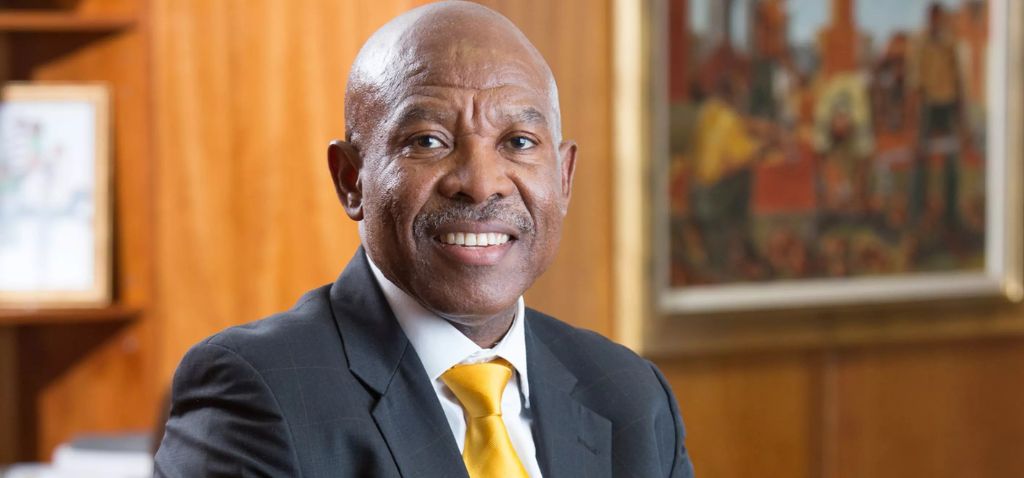
This was announced by Reserve Bank Governor, Lesetja Kganyago on Thursday.

The prime lending rate will also stay steady at 10.50%.

“Four members preferred a hold, while two favoured an increase of 25 basis points.

“The committee agreed that the outlook is uncertain, and with the rate increase at our previous meeting, the policy stance is appropriate for now, with rates somewhat restrictive,” Kganyago said.

Turning to growth, the Governor said that while first quarter growth stood “stronger than expected”, the MPC expects sluggish growth through the second and third quarter.

“Consumer confidence has fallen sharply, and business confidence has also weakened. Sectoral data show generally lower activity, since the start of the war. Prices for our export commodities have also fallen, although terms of trade are better, given lower prices for imports.

“We started this year with good momentum, but households have suffered from higher fuel prices, while uncertainty has weighed on investment. It is also increasingly clear that municipal dysfunction has become a binding constraint on growth,” he said.
Kganyago added however that domestic reforms can propel the economy toward a “rising growth trend, as global conditions stabilise”.

“Our baseline forecast is that the economy starts to recover in the second half of this year, as the shock fades. But the outlook is uncertain. We see downside risks to growth,” he noted.

Stabilising inflation

On Wednesday, Statistics South Africa revealed that the inflation rate hit its highest reading since June 2024, reaching 5% in June.
Kganyago highlighted that this was driven by higher fuel costs as a result of the war in the Middle East.

“Petrol and diesel prices eased this month, but global prices have now risen again. We expect headline inflation to stay above 4% until early next year.

“Aside from fuel, goods prices have been relatively contained. The exchange rate has been resilient, with the rand close to where it started the year against the dollar, and stronger against the euro. This has helped with import prices.

“Food inflation has also slowed recently, which reflects good harvests, as well as fading effects from the outbreak of foot-and-mouth disease. El Niño may start affecting food supply next year, but this is still a risk factor, not part of our baseline,” he explained.

The Governor reiterated that while inflation outlook has “improved slightly” it still remains too high with slow growth.

“We are setting policy to achieve 3% inflation over time, ensuring the current supply shock does not de-anchor inflation expectations.

“At the same time, we recognise that South Africa’s growth prospects will be driven mainly by domestic reforms. This covers structural interventions, such as fixing local government, and improving productivity in the network sectors, like transport and energy. It also includes the macroeconomic goals of sustainable debt and permanently lower inflation.

“Our main contribution is to stabilise inflation in line with our 3% target, over time, and the MPC will act as needed to achieve that,” Kganyago concluded. 

Western Cape businesses urged to apply for export support programme

Western Cape Agriculture, Economic Development and Tourism MEC, Dr Ivan Meyer, has encouraged businesses across the province to apply for the Export Competitiveness Enhancement Programme (ECEP), an initiative aimed at helping businesses expand into international markets and grow their export potential.

Meyer said applications for the programme are now open, offering practical support to both existing and aspiring exporters to improve their competitiveness, overcome technical barriers to trade and meet global market requirements.

Meyer said growing exports remains one of the most effective ways to create jobs, attract investment and stimulate economic growth.

“Through the Export Competitiveness Enhancement Programme, we are investing directly in the competitiveness of Western Cape businesses and unlocking new opportunities for them to succeed in international markets,” Meyer said.

The programme offers a range of support measures to help businesses become export-ready and strengthen their competitiveness in global markets.

These include assistance to comply with international standards, certification and regulatory requirements; support to improve products through reformulation, testing, labelling, packaging and registration; support to improve products through reformulation, testing, labelling, packaging and registration; help to improve products through reformulation, testing, labelling, packaging and registration; and help with export compliance requirements, including specialised permits and nutritional analysis.

Businesses may also receive support to access e-commerce platforms, diversify into new export markets, assistance with equipment, machinery and technology that can improve production capacity and export competitiveness; and opportunities to grow exports, reach new customers and contribute to job creation in the Western Cape.

Meyer encouraged businesses with ambitions, whether they are established exporters or entering international markets for the first time, to submit their applications as soon as possible.

"Whether you are already exporting or planning to enter international markets for the first time, the Export Competitiveness Enhancement Programme can provide the support needed to strengthen your business and unlock new growth opportunities. I encourage qualifying businesses to apply and take advantage of this opportunity to grow their exports and their contribution to the Western Cape economy," the MEC said.

The department has advised applicants to review the programme guidelines, eligibility criteria, exclusions and supporting document requirements before submitting their applications to https://www.westerncape.gov.za/edat/export-competitiveness-enhancement-programme-ecep 
error: eRadio is protected !
Scroll to Top