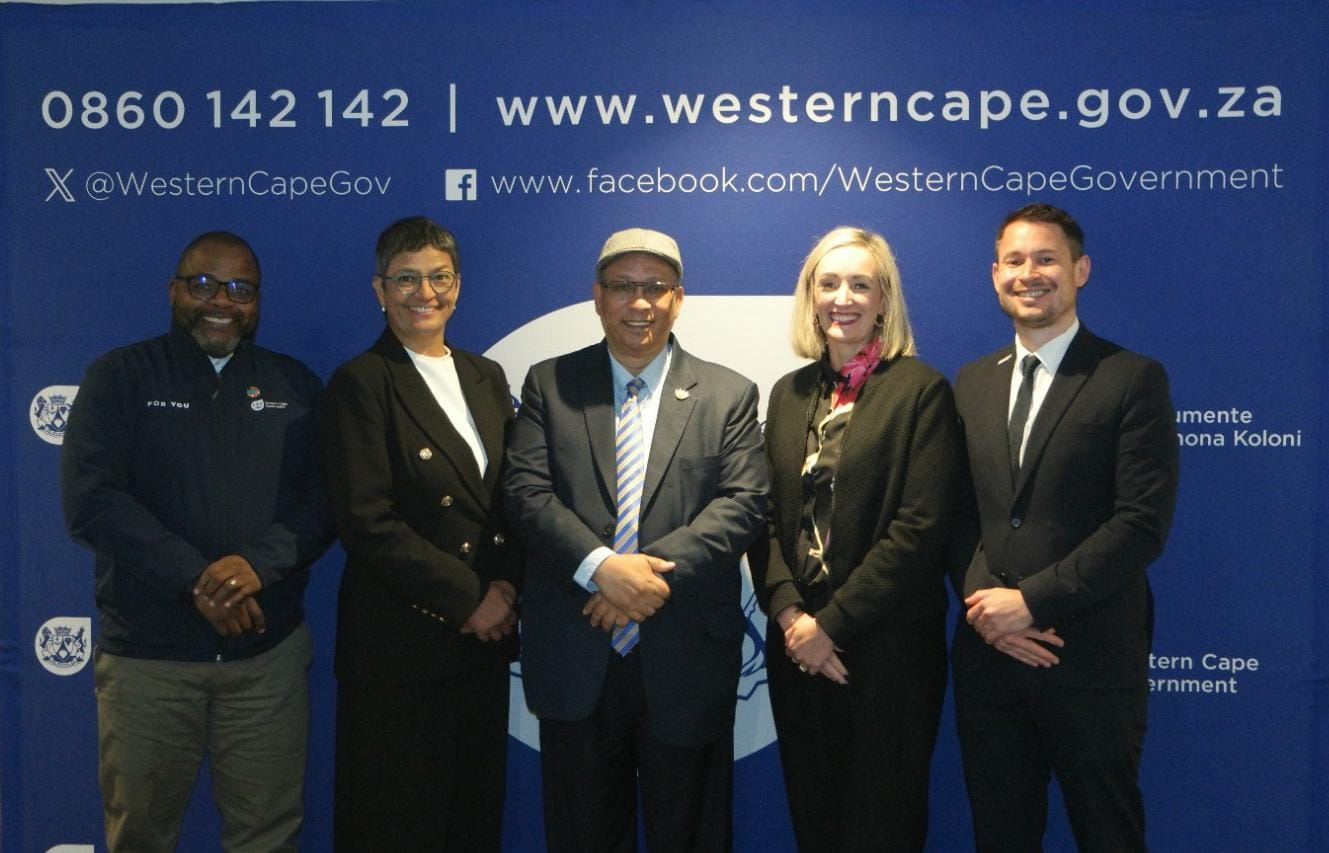
Western Cape welcomes disaster classification following severe weather

The Western Cape Provincial Government has welcomed the classification of a provincial disaster following severe weather conditions that affected large parts of the province between 10 and 14 May 2026.

The classification forms part of a process led by the National Disaster Management Centre towards the formal declaration of a disaster, which is expected to unlock additional funding for emergency response and recovery efforts.

Western Cape Premier, Alan Winde, chaired a Provincial Executive Council meeting on Wednesday, where the impact of the recent storms and flooding dominated discussions.

Minister of Cooperative Governance and Traditional Affairs, Velenkosini Hlabisa, attended the meeting and engaged with the council on the ongoing disaster response and recovery operations.

Winde stressed the importance of ensuring that funding is made available urgently to support affected communities, restore damaged infrastructure, and strengthen resilience against future disasters.

“These kinds of disasters are becoming more frequent and more destructive. We need a new approach from national government that prioritises proactive budgeting and futureproofing of public infrastructure.

“The Western Cape remains committed to investing in resilience, preparedness and protecting our residents, but we need national support to move faster and respond more effectively,” the Premier said.

Hlabisa commended the provincial government for its leadership and proactive response to the severe weather conditions and assured the province of continued support from national government wherever possible.

The Executive Council meeting noted that the provincial response has now shifted toward ongoing humanitarian relief, the repair of critical infrastructure, and the restoration of essential services.

Electricity restoration 

Representatives from Eskom informed the council that electricity supply had already been restored to 72% of the areas affected by the severe weather.

Restoration teams remain on the ground and continue working to reconnect remaining communities as quickly and safely as possible.

The council also expressed its gratitude to disaster management teams, including municipalities, emergency services personnel, humanitarian organisations, volunteers, businesses, and residents for assisting affected communities during the crisis.

“The response from communities across the Western Cape has once again demonstrated the strength, compassion and resilience of our province. We thank every individual and organisation who stepped up to help those in need,” Winde said.

Government allocates R1.6bn to fight GBVF

Government has set aside R1.6 billion for activities related to the fight against Gender-Based Violence and Femicide, with an additional R50 million allocated to provincial baselines - demonstrating that GBVF remains a whole-of-government priority within the policing budget.

Presenting the 2026/27 South African Police Service (SAPS) Budget Vote in Parliament on Tuesday, Acting Minister of Police Firoz Cachalia said policing alone could not solve South Africa’s crime crisis and stressed the importance of coordinated action across government and communities.

“Policing alone cannot solve crime. Crime is driven by deep social and economic challenges that require a whole-of-government and whole-of-society response,” Cachalia said.

He said the Integrated Crime and Violence Prevention Strategy remains central to government’s approach, emphasising that preventing crime requires stronger families, safer schools, youth development, substance abuse prevention, better urban planning, stronger community partnerships and intergovernmental cooperation.

Cachalia said government remains firmly committed to tackling Gender-Based Violence and Femicide, with Deputy Minister Polly Boshielo leading initiatives aimed at improving the response to GBV.

The Minister also announced the implementation of a structured national community patroller programme aimed at improving visibility and strengthening community-based crime prevention in high-crime areas.

“These patrollers will not do police work, and will be properly regulated, community-centred and implemented under SAPS coordination, with appropriate vetting, training and oversight mechanisms,” Cachalia said.

He also commended the role already being played by community structures across the country in supporting law enforcement and strengthening social cohesion.

“Across the country, Community Policing Forums (CPF), neighbourhood structures, faith-based organisations and community volunteers continue to play an important role in strengthening safety and social cohesion,” he said. 

Rising fuel prices drive higher inflation

The Consumer Price Index (CPI), known as inflation, has risen by some 1.1% in April to reach some 4% mainly driven by rising fuel prices.

According to Statistics South Africa (Stats SA), this is the highest inflation has been since August 2024 when it stood at 4.4%.

“Consumers were dealt a painful fuel price blow in April. The index for fuel rose by 18.2% from March, the steepest monthly increase since the current CPI series began in 2008.

“Petrol prices were up by 15.2% and diesel by 35.4%. The price for inland 93-octane petrol rose from R20.19 per litre in March to R23,25 per litre in April. This is the fifth-largest increase for this grade in 50 years, and the biggest this century. Motorists using diesel felt the most pain. The average price for a litre of diesel jumped from R21.28 in March to R28.80 in April,” Stats SA said.

Furthermore, passenger transport services index climbed by some 3.1% between March and April, the “largest monthly rise since July 2022”.

“Following a 14.3% hike in March, the price of an air ticket jumped by a further 24.5%. This is the largest monthly increase in airfares since March 2008, when ticket prices rose by 32.4%,” the statistical service said.

Contrastingly, annual food and non-alcoholic beverages (NAB) inflation slowed for the third month in a row, decreasing from 3.6% in March to 2.9% in April.

“Meat registered the largest decline, easing from 11.6% in March to 9.4% in April. Beef mince inflation slowed from 22.2% to 15.3% and stewing beef from 22.6% to 8.7%. The rate for pork moderated from 19.5% to 17.7%.

“The cereal products category recorded its third consecutive month of deflation. Five of the 19 items in the category are cheaper than a year ago. These include white rice, maize meal, porridge, basmati rice and bread flour.

“Milk, other dairy products and eggs recorded its first annual increase since May 2025. The rate was 0.1%, up from March’s -0.5%. Powdered milk and eggs continue to occupy deflationary territory, at -3.4% and -5.8% respectively,” Stats SA highlighted.

The insurance index rose by some 1.3% owing to increase in medical aid contributions.

“Health insurance recorded a monthly rise of 1.8%, taking the annual increase to 8.3%.

“Several medical schemes increased their contributions earlier in the year, with the remainder implementing new premiums in April,” Stats SA noted. 

Eskom warns it will interrupt power to Joburg

Eskom has issued a notice of intent to reduce, interrupt and/or terminate electricity supply to certain bulk supply points in the City of Johannesburg (CoJ).

The power utility said this was due to the R5.2 billion owed by the city and City Power (CP) to Eskom. 

The debt does not include the R1.5 billion that is due to Eskom in June.

“Eskom has been working with CoJ and/or CP for over two years to support the metro in meeting its payment obligations.

“As a result of CoJ/CP’s continued failure to honour its Electricity Supply Agreement with Eskom, including repeated defaults, Eskom has been forced to issue a notice of its intention to reduce, interrupt and/or terminate the supply of electricity to certain bulk supply points against the City of Johannesburg and City Power,” Eskom said.

The power utility maintained that it “cannot be acceptable to the City’s residents and all South Africans” that the city is “failing to pay over Eskom’s share” of electricity revenue collected.

“While Eskom continues to focus on being cost-efficient, escalating municipal and metro arrear debt undermines these efforts.  Eskom’s financial sustainability and ability to supply electricity at affordable prices are dependent upon its ability to improve its balance sheet by increasing revenue and reducing expenses. Revenue can only be increased by collecting electricity debts and/or increasing electricity tariffs.

“Across the country, many municipalities and metros are working with Eskom to develop sustainable debt solutions and Eskom is continuing to accelerate its support for this approach.  Eskom announced on 5 May that nine municipalities have received council resolutions to sign Distribution Agency Agreements following consultation processes,” Eskom said.

Furthermore, the power utility has also developed the Distribution Agency Agreement (DAA), a “long-term, non-permanent contract between a municipality or metro and Eskom, as part of the Active Partnering initiative”.

“This agreement offers a suite of services and solutions aimed at restoring the sustainability of electricity provision in a municipality or metro by enhancing its technical and financial sustainability.

“The services include skill development and training, replacement or installation of smart meters, as well as Eskom collecting revenue on behalf of the municipality.  Eskom is working nationwide to assist in the rollout of this initiative,” Eskom said. 

SA officials to crack down on illegal plastic waste trade at sea

SA Government has, for the first time, provided international training to officials to equip them with the skills needed to manage the complex global trade in hazardous waste and plastic pollution at sea.

While the government has intensified efforts to curb plastic pollution through stronger waste regulations, Deputy Minister of Forestry, Fisheries and the Environment, Narend Singh, said legislation and policy frameworks alone were not enough and had to be supported by skilled officials.

“Real impact depends on skilled, knowledgeable and committed officials who can translate legal requirements into practical action. It depends on competent authorities correctly administering prior informed consent and other transboundary controls. 

“It depends on customs officers and Border Management Authority officials who can identify suspicious shipments, apply appropriate risk management, and facilitate legitimate trade while intercepting illegal waste movements,” the Deputy Minister said on Tuesday.

Singh was addressing the opening session of the training programme in Cape Town, where he highlighted the need for Environmental Management Inspectors to have both legal expertise and technical knowledge to effectively combat hazardous pollution at sea.

According to the recent Custos Viridis operational report, environmental crime generates annual losses estimated between 80 and 230 billion Euros. 

The report also points to growing links between waste trafficking, organised crime syndicates, document fraud, illicit financial flows and other forms of transnational crime.

The Deputy Minister said seamless collaboration among regulators, scientists, investigators and prosecutors was critical in combating environmental crime, which is ranked as the world’s fourth-largest organised criminal activity.

“This training programme has been specifically designed to strengthen precisely these capabilities. Through its combination of technical sessions, practical exercises and international perspectives, it will equip participants with the knowledge and networks necessary to enhance implementation and enforcement effectiveness,” he said.

Singh described plastic pollution as one of the defining environmental crises of our time.

“Our oceans, rivers, estuaries, coastlines and terrestrial ecosystems are under growing pressure from plastic waste and microplastics. 

“The consequences extend far beyond environmental degradation: marine plastic pollution threatens fisheries, biodiversity, tourism, coastal livelihoods, and, ultimately, human health and food security. With its extensive coastline and vibrant ocean economy, South Africa is acutely aware of these risks,” he said.
Government has therefore intensified efforts to curb plastic pollution through stronger waste regulation, Extended Producer Responsibility schemes, waste diversion and recycling programmes, and the promotion of circular economy principles. 

“We are equally committed to broader ocean governance initiatives aimed at protecting marine ecosystems and advancing sustainable blue economy outcomes. 

“The Plastic Waste Amendments provide an essential international framework to support these domestic actions and to prevent the dumping of problematic plastic wastes on developing countries,” Singh said.

 The training was aimed at addressing a critical gap in enforcing the Basel Convention and its Plastic Waste Amendments. 

For the first time, international experts and officials came together to strengthen cross-border controls on illegal waste trafficking and marine plastic pollution.

The training brought together officials and experts involved in environmental regulation, customs coordination, compliance monitoring and enforcement, with a particular focus on implementing the Basel Convention Plastic Waste Amendments and measures to address the growing global challenge of plastic pollution at sea.

EMS, Communities Unite in 40+ Flood Rescues Across Province

“When access is cut off due to flooding, you rely on your training, your team and your community to make sure no one is left without care, you make a plan.”

This was how Mrs Janine Ruiters‑Makier, EMS Ladismith Station Manager, described the moment when rising floodwaters cut off access to a pregnant patient due to give birth and community members in Calitzdorp and surrounding areas.

During the severe storm conditions that affected parts of the Garden Route and Central Karoo, Emergency Medical Services (EMS), healthcare teams and local community members, including Kannaland farmers, worked together under challenging circumstances to safely deliver a baby and support communities isolated by flooding.

In the aftermath of the floods, areas in Warmbad, Calitzdorp, were left completely cut off. Through coordinated efforts, 60 households received food supplies and blankets. “The reality is many people at that point may not have had the opportunity to buy food yet and local organisations made a plan,” Janine shared.

This response was made possible through collaboration between Western Cape Emergency Medical Services, Air Mercy Services (AMS), Garden Route Fire Services, Gift of the Givers, Provincial Traffic Services, Karoowater Guest Farm and local partners, who assisted with receiving and distributing supplies once access was possible.

The relief effort formed part of a broader response that began earlier that day, under urgent and restricted conditions.

A birth delivery guided across distance
On the afternoon of the incident, EMS were dispatched to a maternity case on a farm outside Calitzdorp. Floodwaters prevented ambulance access, while adverse weather conditions meant AMS could not respond by air.

On the ground, Calitzdorp EMS Shift Leader Mr Norman Swartz worked closely with Janine to assess access routes and coordinate the response. Their efforts were supported by local farmers, who were monitoring river levels and road conditions in the area.

“We knew there was flooding. We know the river and thought if we could just find a road to get through, or get a ladder from the local fire station, we could reach the mom and baby. But after assessing, we realised this would not be possible,” said Janine.

At the patient’s side was Mrs Cornelle Meiring, a local teacher from Calitzdorp, who stepped in to assist. Together, Janine and Norman made the decision to provide remote clinical support. Working with the local emergency control centre and healthcare colleagues, including the Oudtshoorn Hospital maternity unit, arrangements were made to support the patient as best as possible under the circumstances. The maternity team also made telephonic contact to check on the mother and offer additional support.

Janine guided Cornelle through preparing for the delivery, using available resources to ensure basic safety measures. ‘We asked her to get the supplies needed. If there were gloves, scissors and some other supplies, we asked her to get them ready.”

As labour progressed, a video call was made to guide the process. At approximately 17:15, the patient went into active labour. With calm, step-by-step support, the baby was successfully delivered.

“When I saw the baby for the first time, I was so grateful. I could see the pink cheeks and that the baby was okay. We asked them to check the fingers and toes to make sure everything was fine,” Janine said.

She remained in contact to monitor both mother and baby until further assistance could be arranged.

A shared effort, rooted in community
Once weather conditions improved, AMS airlifted the mother and baby for further care. EMS teams, including Norman and on-duty staff, then supported the coordination and loading of food parcels for distribution to affected households.

Janine emphasised that the response was a collective effort: “In rural areas, you help each other. Because we know each other, everyone comes together and does their part,” she said.

She highlighted the role of local farmers, including farmers from Kannaland, and community members, who provide early warnings and critical local knowledge. “They tell us when the rivers are coming down and when flooding starts. They help us stay aware of what is happening on the ground.”

Expressing her appreciation, she added: “To the community of Calitzdorp, the farmers in Kannaland and beyond, and all the EMS staff and local municipality, I can only thank them. I can only be the manager I am because of them, they are my hands and my eyes.”

Provincial EMS Manager, Mrs Shameem Modack‑Robertson, commended the collective response: “This incident demonstrates the extraordinary resilience of both our EMS teams and the communities we serve.

When access was impossible and conditions were at their worst, our staff and community partners worked together to ensure a safe delivery and continued support to those cut off by the floods. We are incredibly proud of Mrs Ruiters‑Makier, Mr Swartz, Mrs Meiring, and all partners involved.”

Mr Craig Wylie, Western Cape EMS Director added, “In total, we, alongside our partners, were involved in more than 40 rescues affecting the lives and well-being of more than 650 people during the floods. This is in addition and above the day-to-day work that continued in the background. My personal thanks go out to everyone involved. I remain proud of our EMS team.”

From a delivery guided across distance to coordinated support reaching isolated households, this response reflects the strength of relationships between EMS, healthcare services and the communities they serve.

SA car hijackings remain high: These are the targeted cars and hotspots

South Africa’s latest crime data for the past two reporting quarters paints a familiar but troubling picture: vehicle hijackings remain persistently high, with no meaningful decline in key hotspots or in the overall national trend.

While law enforcement and tracking data show shifting tactics and evolving targets, the core pattern remains unchanged. Hijacking continues to be driven less by luxury demand and more by the market value of everyday vehicles and their parts.

Everyday cars, not luxury vehicles, remain prime targets

Analysts note that the most frequently targeted vehicles are still the country’s best-selling models. These are not necessarily high-end cars, but those with strong resale value and a thriving second-hand parts market.

The Toyota Hilux remains one of the most consistently targeted vehicles nationwide, largely due to demand for its engines and components across borders and in informal repair networks.

The Volkswagen Polo and Polo Vivo also continue to feature heavily in hijacking reports, reflecting their dominance on South African roads.

More recent data points to a growing focus on models such as the Ford Ranger and Toyota Corolla Cross, both of which have seen strong sales growth and, in turn, rising black-market demand for parts.

Other vehicles increasingly appearing in hijacking trends include the Kia Picanto, Isuzu D-Max and Suzuki Ertiga, the latter linked in some reports to ride-hailing use patterns.

In addition, the Nissan NP200 has become more vulnerable following its discontinuation, with scarcity of legitimate parts pushing demand into illicit channels.

Security specialists say the logic behind these trends is simple: criminals prioritise “liquid” vehicles - those that are easy to strip and resell quickly through established networks.

Persistent danger zones remain unchanged

Geographically, hijacking hotspots have also remained largely consistent.

In Gauteng, areas such as Mamelodi East, Alexandra and Ivory Park continue to report high volumes, while Honeydew and Midrand are often associated with so-called “follow-home” incidents targeting commuters.

In the Western Cape, Delft, Nyanga and Lingelethu West remain major problem areas. The N2 corridor leading toward Cape Town International Airport - particularly the stretch between Somerset West and the city - continues to carry a reputation among motorists for elevated risk, especially after dark. The R300 is also frequently flagged in safety discussions due to recurring incidents in heavy traffic conditions.

KwaZulu-Natal sees similar patterns, with Umlazi, Inanda and parts of Durban Central repeatedly identified as higher-risk zones, particularly during congestion at major intersections.

Criminal tactics adapt to traffic and time

Recent analysis suggests that hijacking methods are becoming more situational, often depending on traffic flow and time of day.

During peak congestion hours, typically late afternoon, offenders often take advantage of slow-moving traffic to box in vehicles, limiting escape options. Minor collision setups have also been reported, where drivers are encouraged to exit their vehicles in unsafe conditions.

Outside of peak traffic, other opportunistic methods have been noted in various crime reports, including attempts to force vehicles to stop on isolated stretches of road or exploiting driver confusion in poorly lit areas. Authorities consistently advise motorists to avoid unnecessary stops in unsafe locations and to prioritise reaching secure, populated areas when something feels wrong.

There are also ongoing warnings about impersonation cases involving fake traffic officials or security personnel, where criminals attempt to pull vehicles over under false pretences.

Expert advice: vigilance is the strongest defence

According to MasterDrive CEO Eugene Herbert, motorists often underestimate their exposure to risk.

“The most important thing to understand is that no person, vehicle or area is immune to carjacking risk,” Herbert said. “Complacency is one of the biggest vulnerabilities drivers have.”

He stressed that awareness and defensive driving habits remain essential, especially for those commuting through known high-risk areas or during busy travel periods.

Practical recommendations from road safety specialists include maintaining safe following distances, staying alert at intersections and in slow-moving traffic, and keeping doors locked with windows closed when conditions feel uncertain. Where possible, drivers are also encouraged to position themselves in lanes that allow for easier manoeuvring and escape options.

Hijacking risk is generally understood to peak during late afternoon and early evening travel periods, when traffic density and reduced visibility create favourable conditions for criminals.

A continuing national challenge

Despite increased awareness campaigns, improved vehicle tracking technology and ongoing policing efforts, vehicle hijacking remains a deeply entrenched issue shaped by economics, opportunity and organised criminal networks.

For motorists, the message from analysts and law enforcement remains consistent: risk is not limited to specific cars or specific areas, and routine journeys can quickly become vulnerable without warning.

Severe weather impacts the agriculture sector across the Western Cape

The Western Cape Department of Agriculture (WCDoA) is assessing the significant impact of severe weather conditions that affected the province between 10 and 13 May 2026.

A series of intense cold fronts resulted in widespread flooding, infrastructure damage, and disruptions to farming communities across key agricultural regions. The agricultural sector has been particularly hard hit, with extensive damage reported in areas such as the Hex River Valley, Grabouw/Elgin, and the Ceres and Worcester regions. Flooding has devastated vineyards, orchards, and cropland, with some farmers reporting the complete loss of harvests, including apple crops in Grabouw.

In addition to crop losses, farms have sustained serious infrastructure damage. Irrigation systems, access roads, and bridges have been compromised, while power disruptions have affected irrigation, storage, and packhouse operations. In several instances, farms have been cut off entirely due to flooded rivers and damaged transport routes.

The knock-on effects are expected to impact the province’s agricultural economy, particularly fruit and wine export supply chains. Delays in harvesting and transport are likely to reduce yields, affect export quality, and increase financial losses across the sector.

To support response efforts, the WCDoA has deployed its Disaster Risk Reduction (DRR) Damage Assessment App to improve the collection of real-time data from affected farming areas. This digital tool is playing a critical role in strengthening situational awareness and coordinating recovery efforts, despite challenges such as power outages, poor connectivity, and limited access to some rural communities.

The Department is currently consolidating preliminary damage reports gathered through the app, extension officers, and industry stakeholders. As conditions stabilise and access improves, teams will conduct on-site verification visits to assess crop losses, infrastructure damage and broader impacts on livelihoods, with priority given to high-value agricultural regions.

Western Cape Provincial Minister of Agriculture, Economic Development and Tourism, Dr. Ivan Meyer, said that the Western Cape Department of Agriculture met with the agricultural sector on Monday afternoon, 18 May 2026, together with the Western Cape Department of Infrastructure, to assess road and infrastructure damage and to prioritize critical agricultural regions.

Minister Meyer: “In several affected areas, contractors have already been appointed to begin repairing critical road infrastructure. Mopping-up operations, including the clearing of roads and ongoing humanitarian support, will continue as part of the coordinated provincial response.”

The Provincial Government will meet on Wednesday, 20 May 2026, to consider classifying the event as a provincial disaster. Following this, the Western Cape Government will approach the National Disaster Management Centre to seek a formal declaration, thereby unlocking additional national resources to support recovery efforts.

“The scale of this event presents a complex and evolving challenge for the agricultural sector,” said Dr Ivan Meyer. “Our immediate priority is to ensure accurate damage assessment and to support farmers through a coordinated, data-driven recovery process.”

“I want to thank the many farmers, organised agriculture, thousands of volunteers, and law enforcement agencies for their support during this recent disaster in the Western Cape. The WCDoA remains committed to working closely with farmers, industry bodies and government partners to mitigate the impacts of the disaster and to support the recovery of affected agricultural communities,” the Minister concluded.

Register to make your mark in the 2026 Local Government Elections

Eligible South Africans have been urged to use the available registration opportunities and play an active role in shaping the future of their communities through the 2026 Local Government Elections democratic process.

President Cyril Ramaphosa announced last month that the elections will take place on 4 November 2026.

Chief Electoral Officer Sy Mamabolo said at the time that the announcement had provided certainty for planning and should encourage citizens to ensure their voter registration details are up to date.

“The announcement of the election date provides clarity for all role players and certainty of planning for the Electoral Commission as we continue our work to deliver free and fair municipal elections,” Mamabolo said.

The commission urged South Africans who have not yet registered, as well as those who may have changed their residential address, to register in the voting district where they ordinarily live.

To qualify for registration, citizens must be South African citizens, be at least 16 years old - although voting is only permitted from the age of 18 - and possess either a green barcoded ID book, a smartcard ID, or a valid Temporary Identity Certificate (TIC).

The IEC warned that voters are only permitted to vote at the station where they are registered, making it critical for citizens to verify and update their details ahead of election day.

Citizens can register online through the commission’s Online Voter Registration Portal until the official proclamation of the election date. 

The platform also allows users to update their registration details, confirm their address, locate voting stations, and apply for special votes.

Voter registration can also be completed in person at local IEC offices during office hours, at voting stations during national registration weekends, during targeted communication and registration drives, and at civic and democracy education events.

The commission has advised citizens to contact their local IEC office before visiting to make an appointment for registration.

A national voter registration weekend has been scheduled for 20 and 21 June 2026, during which citizens will be able to register and update their information at voting stations nationwide.

The IEC said voters should update their registration details if they have moved to a new address, have incomplete address information, received a new ID number, or if ward or voting district boundaries have changed.

South Africans can check their voter registration status through the IEC website, by SMSing their ID number to 32810, via the IEC WhatsApp chatbot, through the mobile app, or by calling the commission’s toll-free call centre on 0800 11 8000 during designated periods.

While the President has announced the intended election date, the official legal proclamation will still be made by Cooperative Governance and Traditional Affairs Minister Velenkosini Hlabisa. 

Once proclaimed, the national voters’ roll will formally close.

Understanding the Drivers Behind Recent Extreme Weather in the Southern Cape

Recent extreme weather events in the Southern Cape have raised serious concern among residents, infrastructure managers, and environmental practitioners.

GREF Convener, Cobus Meiring, requested Knysna-based climate systems expert, Peter du Toit, from FutureClimateIQ to shed some light on why the Southern Cape increasingly experience such extreme weather events.

“The region’s recent experience of intense rainfall, flooding, and an unprecedented period of gale force winds is consistent with evolving atmospheric and oceanic conditions affecting southern Africa”, says Du Toit.

Du Toit explains that the Southern Cape sits at the intersection of several dynamic weather systems. The region is influenced by mid-latitude frontal systems moving in from the South Atlantic, as well as moisture-laden air masses driven by warmer ocean temperatures. When these systems interact under unstable atmospheric conditions, they can generate highly concentrated storm events with strong wind fields and intense precipitation over short periods.

One of the key contributing factors highlighted is the increasing variability in large-scale climate drivers such as the El Niño-Southern Oscillation. These oscillations influence rainfall distribution and storm tracks across southern Africa, often intensifying weather extremes when atmospheric conditions align unfavourably.

The recent gale force wind event, described by local authorities as unprecedented in its sustained intensity and spatial reach, is linked to a deep low-pressure system that intensified rapidly offshore before making landfall along the Southern Cape coastline. This created a strong pressure gradient, resulting in damaging wind speeds across exposed coastal and inland areas.

Du Toit further notes that while these large-scale climate systems are natural, their behaviour is being modified by a warming global climate. Warmer sea surface temperatures increase atmospheric moisture and energy availability, which can enhance storm development and severity.

However, he cautions that climate drivers alone do not fully explain the scale of impacts experienced on the ground. Local factors such as land-use change, degraded catchments, and invasive alien vegetation significantly amplify run-off, windthrow, and infrastructure vulnerability during extreme events.

The combination of these global and local influences is making the Southern Cape increasingly susceptible to high-impact weather events, requiring improved understanding, preparedness, and long-term resilience planning.

Written by: Garden Route Environmental Forum (GREF)
The GREF is a public platform for environmental practitioners and a climate change think tank (grefecsf.co.za).
error: eRadio is protected !
Scroll to Top