
Steenhuisen calls for urgent action to protect sugar mills and jobs

The Minister of Agriculture, John Steenhuisen, has expressed serious concerns about the escalating crisis facing the sugar industry following the liquidation of Tongaat Hulett, which has placed significant uncertainty over the operation of key sugar mills ahead of the April crushing season.

The department has been engaging with industry stakeholders and has been informed that, unless the current funding impasse is urgently resolved, growers will be unable to deliver cane and processing will come to a halt. The consequences of such an outcome would be severe, affecting approximately 15 500 delivering growers and between 35 000 and 40 000 people whose livelihoods depend directly on the supply chain linked to the mills.

“This is not a theoretical risk, it is an immediate economic threat to rural communities,” Minister Steenhuisen said. “If the mills do not open, farmers cannot harvest, workers cannot earn an income, and entire local economies will stall. The longer uncertainty persists, the greater the damage becomes.”

“Government’s concern is simple: the crop cannot wait. Agricultural production works on biological timelines, not legal or financial ones. An intervention that unlocks funding and restores operational certainty is urgently required to protect both production and jobs.”

The Department of Agriculture is engaging with the relevant departments and financing stakeholders to support a practical solution that preserves production capacity and avoids irreversible losses in the sector. 

 Minister Steenhuisen emphasised that the sugar industry remains a strategic contributor to rural economies and food value chains, and that allowing production to collapse would have far-reaching economic and social consequences well beyond the farm gate.

“Our objective is not to intervene in commercial negotiations, but to ensure that a viable path forward exists so that growers can deliver cane, mills can operate, and workers can earn an income. The immediate priority must be keeping the season alive.”

The Ministry will continue to monitor developments closely and stands ready to facilitate engagement aimed at securing continuity in production.

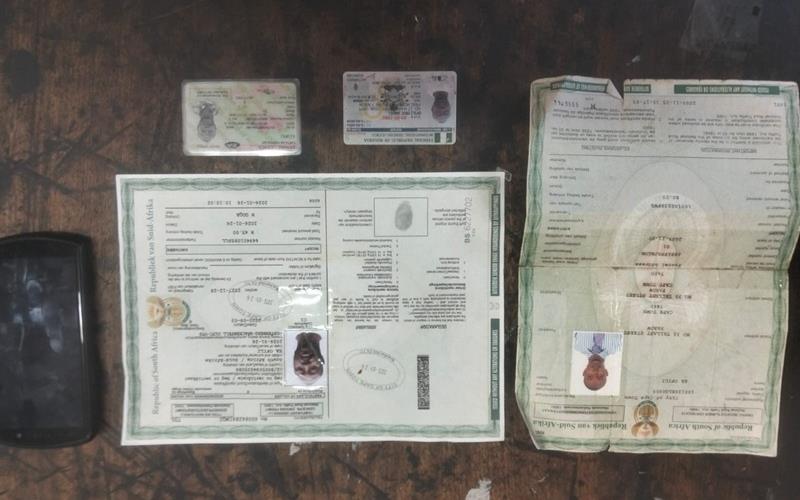
Licence to drive turns out to be fake

Metro Police officers arrested a motorist in Parow last week, not only because his driver’s licence was fake, but he also had equipment which could be used to make more fake documents. He was just one of 365 suspects arrested by the City’s enforcement departments in the past week.

Officers were on patrol in Parow on Thursday, 12 February at 09:30, when they noticed a driver acting suspiciously and trying to avoid looking at them.

The officers performed a traffic stop and found the ride-hailing driver's licence to be fraudulent. While searching the vehicle, they found a device which could be used to produce fraudulent licences.

The driver was arrested for the production of fraudulent documents and was detained at Parow SAPS for further investigation.

‘This is another example of public transport drivers putting the lives of their passengers, other road users and their own at risk. Not only is it a criminal offense to drive without a licence, and is it a safety risk, but it indicates a lack of proven competence.


‘Over the last few weeks, our officers have arrested a number of public transport drivers from those driving drunk, to unlicenced drivers and those guilty of extreme overloading. Reliable public transport is essential for the city’s economic development, and while there are many challenges, incompetent, unfit and unlicenced drivers should not be one of those challenges. Our officers will continue to patrol, check and arrest drivers who put the lives of hundreds at risk,’ said Mayoral Committee Member for Safety and Security, Alderman JP Smith.

This week Metro Police officers made 114 arrests, of which 21 were for driving under the influence, while their Law Enforcement counterparts made 183 arrests and issued 11 286 notices.

Traffic Officers recorded 68 arrests, of which 58 were for driving under the influence of alcohol, eight for reckless/negligent driving and two for other offences. They also recorded 28 865 offences, impounded 170 public transport vehicles and executed 928 warrants of arrest.
 
The Public Emergency Communication Centre recorded 1 277 calls for assistance this past weekend. Of the calls received, 446 were for medical assistance, 57 were assault related cases, 35 domestic violence reports and 37 pedestrian and motor vehicle accidents.

The public is reminded to report emergencies or any suspicious and/or criminal activities by phoning the City’s Public Emergency Communication Centre on 021 480 7700.

It’s important that the caller provide detailed information, such as the time, exact address and a short description. This will assist enforcement services to respond swiftly.

Photo: The fraudulent driver’s licence and device used to produce it.

AfriForum sends lawyer’s letter to Minister to object to Graaff-Reinet name change

AfriForum has sent a lawyer’s letter to Gayton McKenzie, Minister of Sport, Arts and Culture, to object to the name change of Graaff-Reinet. This follows in response to the Minister’s notice in the Government Gazette of 6 February 2026 that the town will henceforth be called Robert Sobukwe Town.

The South African Geographical Names Council Act 118 of 1998 provides for such objections to be lodged within 30 days of the publication of a name change.

According to Alana Bailey, AfriForum’s Head of Cultural Affairs, the civil rights organisation’s objection is based, among other things, on the fact that the Eastern Cape Provincial Policy on Naming and Renaming of Geographical Features emphasises that the name changing of places of particular historical significance should only be considered in exceptional cases.

According to AfriForum, in the case of Graaff-Reinet, which has had this name since its establishment 240 years ago, no such circumstances could be found. Contrary to the requirements of the policy, the change does not indicate that the necessary consideration has been given to the preservation of the town’s historical and cultural heritage.

In the letter, AfriForum refers to the study by Prof. Ronnie Donaldson, which established that 83,6% of the town’s residents are opposed to the name change. “Although it is claimed that the name change will improve social cohesion, it is achieving the very opposite, with growing local and national polarisation because of the name change. Residents even feel that the Minister and other relevant authorities are ignoring them,” Bailey says.

“The name change could cause incalculable damage to the cultural and historical content of the name, the tourism industry, the local economy and relations among communities. The responsible choice would be for the Minister to simply withdraw the change,” she adds.

AfriForum calls on everyone, who wants to preserve Graaff-Reinet’s name, to sign the petition against it here.

South Africa to receive one million FMD vaccine doses

The first consignment of one million high-potency Foot-and-Mouth Disease (FMD) vaccine doses from Biogénesis Bagó in Argentina is expected to arrive in South Africa this weekend, bringing much-needed relief to the most affected provinces and regions.

Agriculture Minister John Steenhuisen said the shipment marks the first phase of a broader agreement, with a further five million doses scheduled for delivery in March this year.

The Minister said the vaccines form part of the Department of Agriculture’s new strategy to combat FMD, which includes the proactive vaccination of South Africa’s national herd of more than 14 million cattle.

The goal is to transition the country to “FMD-Free Status with Vaccination”.

In addition to the supply from Argentina, Steenhuisen said the Botswana Vaccine Institute (BVI) remains a key partner, noting that since the FMD recent outbreak, BVI has delivered two million doses and is expected to continue supplying FMD vaccines every month.

Steenhuisen further announced that vaccines will also be supplied by Dollvet in Turkey through its local agent, Dunevax.

On 6 February 2026, the Agricultural Research Council (ARC) handed over the first batch of 12 900 locally produced FMD vaccine doses. The Minister reported that these vaccines have since been distributed to the provinces for administration.

The ARC has committed to produce 20 000 doses per week, with plans to scale up to 200 000 doses per week in 2027.

By the end of March, more than five million vaccine doses from three international suppliers are expected to have entered the country.

“Our farmers are the providers of our food and the backbone of our economy, bringing essential foreign currency into the country. In these tough times, we all need to work together.

“Every South African’s support is vital to help our farmers win this war against FMD. By following movement controls and biosecurity protocols, we protect the livelihoods of the entire nation,” Steenhuisen said on Tuesday.

The Minister also confirmed that veterinary capacity is being expanded as part of the national vaccine rollout.

“In terms of the Animal Diseases Act, private veterinarians can register to administer vaccines as part of the rollout strategy. This will greatly improve the available manpower to ensure that we are able to meet our vaccination target of 80% of the national herd by December this year,” he said.

New FMD support line launched
To strengthen support for farmers, the department has established a dedicated FMD Control Centre.

From Wednesday, 18 February, farmers can access a toll-free support line for expert guidance on FMD.

The toll-free FMD support line, 0860 246 640, will provide:

• Information about FMD symptoms;
• Advice on movement controls and permits;
• Updates on vaccine availability and vaccinations, and
• Practical tips on how to keep a farm biosecure.

The department has also launched a dedicated WhatsApp channel to provide regular FMD updates: 

Quarantine and movement restrictions
All properties where FMD is suspected or confirmed are immediately placed under quarantine. The movement of live cloven-hoofed animals and unprocessed animal products from affected farms is prohibited.

Farmers have been advised to implement strict biosecurity measures on farms to prevent the further spread of the disease.

Steenhuisen emphasised that if a FMD outbreak is detected in animals that are not fenced in to prevent contact with other animals, where movement controls cannot be effectively enforced, or where there is a lack of cooperation with the owners of the animals or the land on which the animals are found, then the declaration of a Disease Management Area (DMA) will be considered.

“A DMA is an area that is considered as one epidemiological 'unit', where premises are potentially epidemiologically linked. All properties in the area will be subjected to the same movement control conditions,” Steenhuisen said.

3 years later and German Tourist Nick Frischke is still missing

More than three years after German tourist Nick Frischke disappeared while hiking on Karbonkelberg in Hout Bay, there is still no trace of him.

The trial of four men accused of being found in possession of his belongings has resumed in the Wynberg Regional Court. All four have pleaded not guilty.

The case relates to the disappearance of 22-year-old German tourist Nick Frischke, who vanished while hiking the Karbonkelberg trail in February 2023. The accused – Carlo and Melvin Geunantin, Vanroy Petersen and Ishaam Fischer – allegedly robbed Frischke during his hike.

They face charges of aggravated robbery, illegal possession of firearms and ammunition, as well as gang-related offences in terms of the Prevention of Organised Crime Act.

Among the items recovered on the day of their arrest was a backpack later identified as belonging to Frischke. The backpack was booked into evidence at the Hout Bay Police Station.

Frischke has not been seen since his disappearance.

His family described their experience as a "nightmare" and continues to campaign for answers three years later. His mother Jana is hopeful that someone will come forward to say what happened to him.

Operation Shanela II nets over 16 000 suspects

Over 16000 suspects have been arrested in recent Shanela II operations across the country, the South African Police Service (SAPS) said.

Conducted between 9 and 15 February across the provinces, a total 16 565 suspects were arrested.

The police operations were conducted together with other law enforcement agencies.

According to the police, the suspects include those involved in serious crimes such as carjacking, armed robbery, murder, rape, sexual assault, drug dealing, and contravention of the Firearms Control Act. 

Moreover, police in Gauteng traced and arrested three suspects, aged between 24 and 30, following the hijacking and murder of a 23-year-old e-hailing driver in Pretoria West. The trio also face a charge of robbery with aggravating circumstances. 

The nationwide operations demonstrate SAPS’s continued commitment to intensifying crime prevention and enforcement beyond the festive season.

Key arrests include:
•    2957 wanted suspects traced and arrested across the provinces. 
•    171 suspects arrested for rape. 
•    154 suspects arrested for murder. 
•    158 suspects arrested for attempted murder. 
•    1657 suspects arrested for assault with intent to cause grievous bodily harm (GBH). 
•    72 suspects arrested for business and residential robberies. 
•    764 suspects arrested for illegal dealing in liquor. 
•    716 motorists arrested for driving while under the influence, majority arrested in Gauteng (222) followed by Mpumalanga (151) and Kwa-Zulu Natal (149).
•    1507 illegal immigrants arrested for contravening the Immigration Act

Additionally, 147 illegal firearms were seized that include handguns, rifles, shotguns, and homemade firearms. Also, 4,465 rounds of ammunition of different calibres were confiscated. Illegal contraband goods valued at more than R900 000 were also confiscated.

Infrastructure challenges threaten Joburg water supply

Water and Sanitation Minister Pemmy Majodina says ageing infrastructure, leaks and poor governance are undermining the reliable supply of water. 

Speaking to media on the sidelines of the 39th Ordinary Session of the African Union (AU) Assembly of Heads of State and Government in Addis Ababa, Majodina reiterated that the country’s major dams hold sufficient water, but systemic weaknesses in municipal infrastructure are placing water security at risk.

“As we pump the water, the infrastructure has decayed. The water is leaking and treated water, which is supposed to reach households, is running down the streets,” Majodina said.

The Minister’s remarks come amid ongoing water supply challenges in Johannesburg, where residents have experienced intermittent shortages, low pressure and disruptions linked to a system strain.

Majodina explained that her department’s constitutional mandate is primarily focused on bulk water resource development, including building dams, tunnels and canals, while municipalities are responsible for reticulation and distribution.

However, national government has stepped in to support local interventions, where possible.

She said working with Rand Water, government has invested in major bulk infrastructure, including upgrades to the Zuikerbosch Water Treatment Works System, one of the largest facilities in the country.

“That plant has the capacity not only to supply [to] South Africa but even to provide treated water to neighbouring countries,” the Minister said.

The core problem, she stressed, lies in municipal infrastructure that has not kept pace with rapid urban growth.

“When you drive through Johannesburg, you see water flowing in the streets. That is treated water. It is not reaching the taps because pipes are leaking,” Majodina said.

Consumption

The Minister also noted that South Africa’s per capita water consumption far exceeds international norms. While the global benchmark stands at approximately 173 litres per person per day, South Africa’s consumption has been recorded at around 239 litres per person per day.

“That is abnormal. If we continue at that rate, we are going to collapse the system,” she warned.

To stabilise supply in Johannesburg, she said authorities have implemented load shifting between pump stations and introduced “water soft locking”, a measure to reduce water pressure across the system.

“Soft locking does not mean people will not have water. It means we reduce the pressure so that those who are not getting water can receive supply,” Majodina explained.

She said municipalities have been advised to increase reservoir storage capacity and ring-fence water revenue to reinvest in infrastructure maintenance and upgrades.

“We have told municipalities to ring-fence water sales and invest back into water infrastructure. They have not done so. Today, some systems have collapsed because they do not have engineers and scientists,” she said.

Illegal connections and vandalism

Majodina further raised concern about illegal connections, vandalism and so-called “water mafias”, who tamper with infrastructure.

“Our infrastructure is vandalised day in and day out. Illegal connections are contributing to losses and destabilising the system.”

The Minister highlighted the significance of the proposed Water Services Amendment Bill, which seeks to separate the roles of water services authorities and water services providers.

“Currently, in many municipalities, you are both the referee and the player at the same time (sic). There is no oversight. If systems fail, no one is held accountable,” she said.

Majodina said the amendment bill will enable clearer governance distinctions and strengthen national government’s ability to intervene where service delivery collapses, a power currently limited under constitutional provisions that assign water services to local government.

Groundwater development

Looking ahead, she said government will intensify its focus on groundwater development, particularly in underserved communities that have never had access to clean piped water.

“We have not fully tapped into groundwater potential, especially for communities that have never received a drop of clean water,” she said.

While acknowledging that water challenges extend beyond South Africa to the broader continent, Majodina maintained that the country’s immediate priority is fixing infrastructure, strengthening governance, and restoring public confidence.

Meanwhile, Majodina has welcomed President Cyril Ramaphosa’s recent commitment to chair the National Water Crisis Committee, describing it as a crucial step in elevating water reform to the highest level of government. 

Western Cape unemployment rate drops even further

The Statistics South Africa latest Quarterly Labour Force Survey shows the Western Cape’s unemployment rate has dropped to 18.1%, the lowest in the country.

Western Cape Premier Alan Winde and Provincial Minister of Agriculture, Economic Development and Tourism Ivan Meyer have welcomed the figures, describing them as proof that the province’s job creation strategy is gaining momentum.

According to the data for the fourth quarter of 2025, the province added an average of 31 000 jobs per month over the last three months of the year. The unemployment rate declined by 1.5 percentage points year-on-year, reaching a five-year low.

At 18.1%, the Western Cape’s unemployment rate is substantially lower than the national rate of 31.4%.

Seven out of ten sectors recorded year-on-year job gains. Trade led the way with 48 000 new jobs, followed by Agriculture and Construction, which each added 22 000 jobs.

The province also maintained one of the highest labour force participation rates in the country at 68.8%, an increase year-on-year. This is well above the national rate of 59.3%, which declined over the same period.

The Western Cape’s youth NEET rate – referring to those aged 15 to 24 who are not in employment, education or training – dropped by 6.6% quarter-on-quarter. The province was one of only three to record a decline in this indicator and achieved a bigger reduction than the other two provinces combined.

Winde said the figures show that young people in the Western Cape have the best chance of accessing quality education and sustainable employment opportunities. He added that while progress is being made, much more work still needs to be done to reduce unemployment further.

Meyer said the province continues to lead South Africa in job creation, contributing 30% of the country’s total job gains in the fourth quarter of 2025. He said strong growth in trade, agriculture and construction is driving economic momentum and creating opportunities for more residents.

Alleged fraudster appears in Gqeberha court

A 42-year-old woman arrested in connection with an alleged R10.5 million payroll fraud at Isuzu Motors South Africa in Struandale, Gqeberha, has been granted bail.

The Serious Commercial Crime Investigation team of the Hawks in Gqeberha arrested Natasja Slabbert in connection with the alleged payroll fraud. She made her first court appearance on Monday and was granted bail of R5 000.

Slabbert was employed as a payroll administrator at the company and was arrested on 16 February 2026 following a thorough investigation conducted by the Hawks, working closely with the National Prosecuting Authority’s Specialised Commercial Crime Unit (SCCU).

“The case originated in 2024 after employees raised concerns when they noticed that their take-home pay was lower than expected, despite higher amounts reflecting on their pay slips. An internal review uncovered serious payroll irregularities, and the matter was subsequently referred to the Hawks for further investigation,” said the Hawks in a statement.

During the probe conducted by the Hawks, it is alleged that in August 2024, approximately R626 500 was apparently unlawfully transferred from the company’s payroll account into the suspect’s personal bank account.

“Further investigation allegedly revealed a well-planned scheme in which payroll records were manipulated and false entries created to conceal unlawful payments. These entries were allegedly made to appear as legitimate deductions and contributions,” the Hawks said.

As a result of the alleged fraud, the company reportedly suffered losses exceeding R10.5 million.

The Hawks adopted an intelligence-driven approach and secured evidence to uncover the full extent of the alleged crime before effecting the arrest.

The matter was postponed to 24 February 2026, and Slabbert is expected to appear before the Gqeberha Specialised Commercial Crimes Court for legal representation. 

“Commercial crime is not a victimless crime. It affects workers, damages businesses and harms our economy, further stated that people who abuse positions of trust to steal money will face the full force of the law,” said the Provincial Head of the Hawks in the Eastern Cape, Major General Mboiki Obed Ngwenya.

Call for stricter livestock permit controls

Western Cape Premier Alan Winde has called for tighter regulation of livestock movement permits and the temporary suspension of physical auctions as the province intensifies efforts to curb the spread of Foot-and-Mouth Disease (FMD).

The appeal comes as 450 heads of cattle were vaccinated against FMD in Fisantekraal, Cape Town, on Sunday as part of a province-wide vaccination campaign.

The Western Cape provincial government has embarked on a massive drive to vaccinate high-risk herds across the province.

The vaccination drive in Fisantekraal was overseen by Winde, Agriculture Minister John Steenhuisen; Western Cape Agriculture, Economic Development and Tourism MEC Dr Ivan Meyer, and Local Government, Environmental Affairs and Development Planning MEC Anton Bredell.

“This vaccination drive is a proactive step to protect cattle in this area. No cases of FMD have been detected in this Fisantekraal herd, but we are taking every precaution because we want to protect jobs and livelihoods,” Winde said.

The Premier confirmed that the province expects to receive 200 000 vaccine doses in the coming weeks and will prioritise vaccinating all high-risk herds. Vaccinated animals have been tagged to ensure proper identification, surveillance and monitoring.

In terms of the Animal Diseases Act, Winde has formally requested that the national Department of Agriculture move all physical livestock auctions online for 21 days and implement stricter permit control regulations governing livestock movement.

Winde, along with MECs Meyer and Bredell, was expected to meet with Steenhuisen to receive an update on the request.

21-point response plan
The vaccination campaign forms part of a broader 21-point response plan implemented by the Western Cape government in partnership with the agricultural sector to contain the national FMD outbreak within the province.

Key measures include:
•    Movement control, including 24/7 border monitoring.
•    Monitoring, surveillance, and traceability, through on-the-ground rapid response from veterinary services.
•    Protocols such as communication, by-law enforcement, and contingency plans.
•    Recovery involving cleaning operations and monitoring quarantine areas.
•    Major roadblocks and vehicle monitoring are taking place on various roads across 13 municipalities, including at the provincial borders.

“This is part of a national crisis. We are working tirelessly to protect jobs and the agricultural economy. If you are transporting livestock or any materials used in livestock farming, you must take every precaution,” Winde said.

Steenhuisen described FMD as a national emergency, noting that government is fighting to save the livelihoods of thousands of farmers and the future of our agricultural exports.

“We need every single livestock owner to stand with us. Biosecurity is not a suggestion; it is our only line of defence. If you move animals without permits or ignore basic hygiene, you are putting the entire country at risk,” Steenhuisen said.

The Minister urged farmers and livestock owners to stop illegal movements, report suspected cases immediately and treat their farm boundaries like fortress.

To protect livestock and the economy, livestock farmers and the public are strongly urged to adhere to these simple rules:

•    Stop all illegal movements. Never move cattle, sheep, goats, or pigs without a signed health certificate and valid permits.
•    Limit visitors to your farm. Anyone entering must use disinfectant footbaths and vehicle sprays to ensure they are not carrying the virus on their shoes or tyres.
•    If you buy new stock, keep them completely separate from your main herd for at least 28 days to ensure they are not carrying hidden diseases.
•    If you see animals drooling, limping, or showing sores on their mouths or feet, call your local state veterinarian immediately. Do not wait.
•    Ensure fences are in good repair to prevent your animals from mixing with roaming herds or wildlife.

National vaccination drive
In his State of the Nation Address on 12 February, President Cyril Ramaphosa announced that government aims to vaccinate South Africa’s national herd of at least 14 million cattle as the country battles one of the most severe FMD outbreaks in its history.

According to President Cyril Ramaphosa, the vaccination drive requires 28 million vaccines over the next 12 months. 
error: eRadio is protected !
Scroll to Top