Premier Winde commits to securing additional funding for disaster recovery

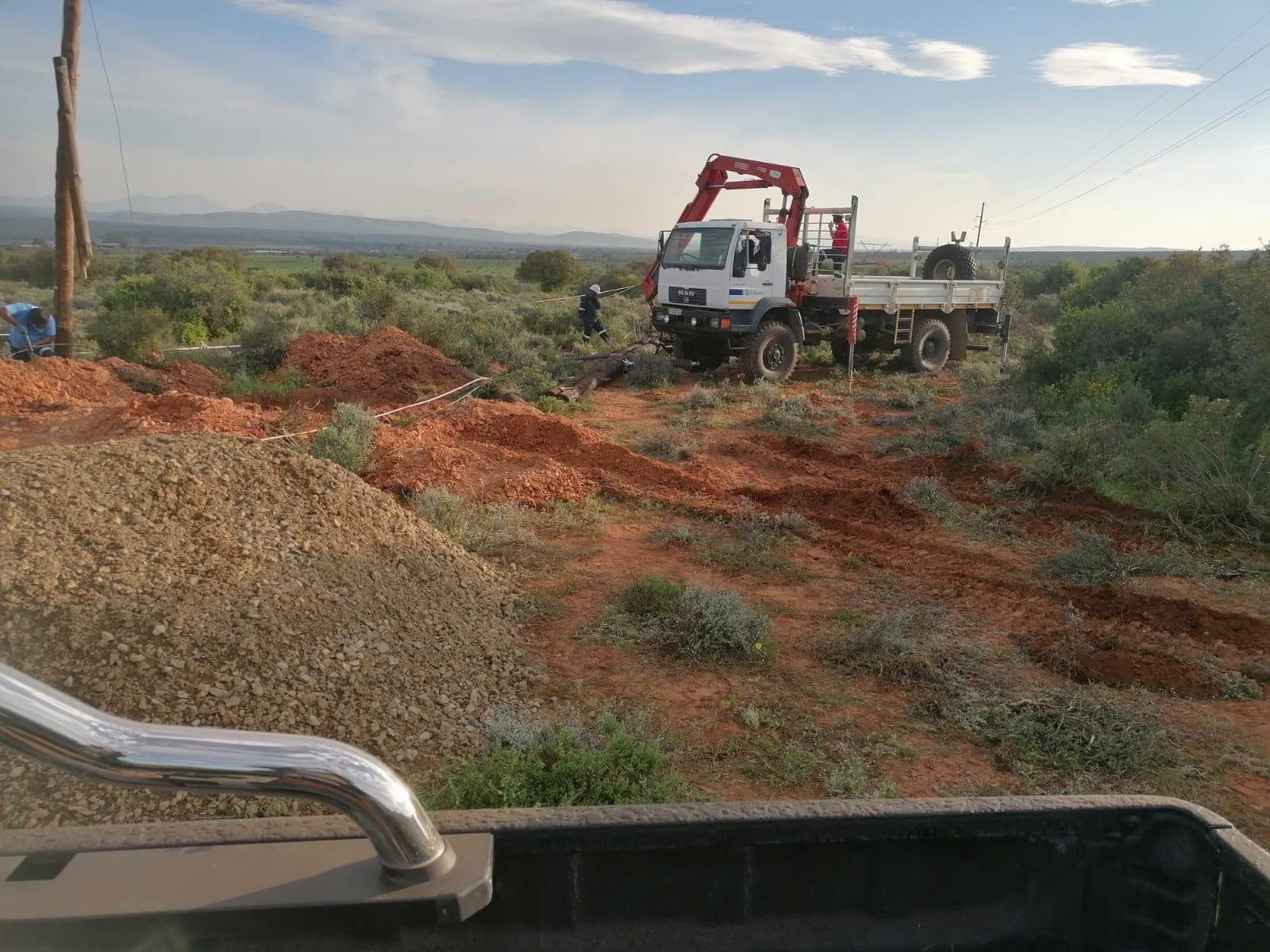
Premier Alan Winde on Wednesday, 24 June 2026, chaired a meeting of the Western Cape Government Cabinet, where provincial ministers received an update on the preliminary costs associated with the severe weather events that affected the province in May 2026.

While damage assessments remain ongoing, Cabinet noted that initial estimates indicate that the cost of repairs and recovery will exceed the Western Cape Government’s current affordability levels. 

Provincial departments affected by the disaster have submitted requests to national government as part of the broader assessment and recovery process.

To support urgent recovery efforts, Provincial Treasury today presented a proposal to Cabinet to allocate funding from the province’s Unforeseen and Unavoidable Reserve during the current financial year. The funding will be directed towards critical infrastructure repairs and other immediate recovery priorities.

Cabinet has also authorised all departments to reprioritise spending within their existing budgets and to make use of disaster procurement mechanisms to accelerate the delivery of goods and services required for response, recovery, and maintenance efforts.

Premier Winde said, "The funding available through our Unforeseen and Unavoidable Reserve will assist with immediate recovery needs, but it will only cover a portion of the overall costs. The scale of this disaster requires us to work even harder to secure every available rand needed to rebuild damaged infrastructure and support affected communities. The financial impact extends across multiple departments, which adds urgency to our response. We are committed to doing everything possible to ensure that recovery efforts continue without delay."

Cabinet further resolved to continue engaging with national government on reforms to the current disaster funding model to ensure provinces are better equipped to respond to increasingly frequent and severe weather-related events.

In addition, the provincial government will explore longer-term resilience measures, including self-insurance mechanisms in sectors such as agriculture, as well as appropriate insurance-linked products that can help residents better manage future disaster risks.

Premier Winde concluded that the Western Cape Government remains committed to working closely with all stakeholders, including national government, municipalities, businesses, and affected communities, to secure additional funding and support a coordinated recovery effort. 

“What adds to this urgency is the fact that at most risk from this disaster is our economy and jobs. We will not rest until the recovery is completed,” concluded Premier Winde.

Let’s plant 10 million trees on Heritage Day as part of President Ramaphosa’s one billion trees programme

President Cyril Ramaphosa has called on government to work with all South Africans to plant one billion trees over the coming years. In support of the President’s vision, the Department of Forestry, Fisheries and the Environment (DFFE) has launched an ambitious campaign to plant 10 million trees in a single day on Heritage Day, 24 September 2026.

The Presidential One Billion Trees Programme seeks to mobilise all sectors of society - government, business, labour, civil society, faith-based organisations, traditional leaders, diplomatic missions, youth formations and communities - to plant trees as part of our collective response to climate change.

This programme is a call to action for every South African. It is about protecting our environment, improving our communities and safeguarding the future for generations to come. On 24 September 2026, I call on all South Africans across the country to unite in an effort to plant ten million trees in a single day.

Trees will be planted in safe spaces across all nine provinces, including schools, clinics, hospitals, colleges, police stations, churches, parks and residential areas. We also encourage households to plant trees in their own yards. Every tree planted will contribute towards a greener, healthier and more climate-resilient South Africa.

I therefore make a clarion call to all South Africans - including all spheres of government, organised business, organised labour and civil society - to join us in this national campaign and help make history by planting ten million trees on Heritage Day.

I recently launched the Presidential One Billion Trees Programme under the theme: "My Tree, My Oxygen. Plant Yours Today." This programme is not merely about planting trees. It is about confronting the realities of climate change and taking meaningful action.

The science is clear: climate change is no longer a distant threat. It is a lived reality affecting communities across the globe and here at home. South Africa has experienced devastating floods, droughts, veld fires and heatwaves. Lives have been lost, livelihoods disrupted and infrastructure damaged. Standing by is no longer an option. We must act urgently, decisively and collectively.

Our ambitious target to plant ten million trees in a single day builds on the success of the 2025 One Million Trees Campaign. On Heritage Day last year, South Africans planted more than 1.3 million trees in a single day, surpassing the target of one million trees. Importantly, this achievement came at no cost to government, as citizens, businesses and organisations donated and planted the trees themselves.

The success of the 2025 campaign demonstrated the power of collective action and the willingness of South Africans to contribute to environmental protection and climate action. We extend our sincere gratitude to everyone who contributed their time, resources and commitment to making that campaign a success.

For the 2026 Ten Million Trees Campaign, we will adopt a similar approach. Government funds will not be used to purchase trees. Instead, we will rely on donations and partnerships from individuals, communities, businesses and organisations across the country.

The Presidential One Billion Trees Programme is also about creating economic opportunities, particularly for young people, women and persons with disabilities. Greening initiatives support nursery owners, landscapers, environmental workers and emerging entrepreneurs, while creating jobs for the people. It must also be stressed that the creation of jobs remains an important pillar of the Government of National Unity (GNU).   

I must also stress that our plan to plant ten million trees on Heritage Day, 24 September 2026 is not a public relations exercise. It is a national movement that is already gaining momentum. Over recent months, we have distributed tens of thousands of trees to traditional leaders and communities through our outreach programmes, community imbizos, school engagements and greening initiatives.
However, to reach our target of ten million trees, we need every South African to play their part. Whether you plant a tree in your yard, donate a tree through our departmental digital pledge platform, mobilise your workplace or encourage your community to participate, you are contributing to a lasting legacy.

If you are a business, sponsor trees. If you are an educator, encourage learners to participate. If you are a community leader, mobilise your neighbourhood. No contribution is too small.

The Presidential One Billion Trees Programme forms part of government's broader National Greening Programme, which focuses on creating sustainable and resilient settlements through tree planting, ecosystem restoration and climate change mitigation.

Recent years have shown us the devastating impact of extreme weather events. We have witnessed severe flooding in the Eastern Cape, Western Cape, Mpumalanga and Limpopo provinces. We have seen the destruction caused by floods in the Kruger National Park and surrounding communities, with tragic loss of life and significant economic damage. Our thoughts remain with all affected families and communities.

These events serve as a reminder that climate change affects every aspect of our lives. While we cannot control nature, we can take meaningful action to reduce our environmental impact and strengthen our resilience. 

Greening our country is not only about environmental protection; it is also an economic necessity. Research has consistently shown that well-greened neighbourhoods often experience increased property values and improved quality of life. This can strengthen municipal revenue bases and support improved service delivery.

Municipal participation in the planting of trees will also help identify projects that contribute to climate change mitigation, including the rehabilitation of degraded areas and the transformation of neglected spaces into safe community parks and recreational areas. 

Greening is also closely linked to spatial justice. Historically disadvantaged communities often bear the greatest burden of pollution, environmental degradation and inadequate green infrastructure. By expanding tree planting and greening initiatives, we contribute to creating healthier, safer and more equitable communities.

To ensure the success and sustainability of the Presidential One Billion Trees Programme, we are finalising a comprehensive implementation plan that includes the following interventions:

• Strengthening partnerships with academic, research and professional organisations, including the Institute of Environment and Recreation Management (IERM), to ensure that tree-planting initiatives are guided by scientific evidence.

• Integrating small and emerging nurseries into the programme to stimulate local economic development in rural and peri-urban communities.
• Expanding partnerships through Memoranda of Understanding with the Departments of Basic Education and Human Settlements to promote tree planting in schools and human settlements, particularly in low-income housing developments.
• Promoting commemorative and remembrance tree planting as a meaningful way for South Africans to honour important milestones and events.
• Supporting stakeholders involved in the rehabilitation of degraded land and ecosystems.

"I therefore call on all South Africans to make history on Heritage Day, 24 September 2026, by participating in our effort to plant ten million trees. Let us leave behind a greener, healthier and more sustainable South Africa for future generations. Let us plant ten million trees in a single day under the theme: "My Tree, My Oxygen. Plant Yours Today." 
Together, we can grow a legacy that will benefit our country for generations to come.

*Bernice Swarts is the Deputy Minister of Forestry, Fisheries and the Environment

Government calls for protesters against illegal immigration to march peacefully

Acting Police Minister Firoz Cachalia has called on citizens participating in the planned demonstrations against illegal immigration at the end of the month to protest peacefully and within the bounds of the law.

“Our message is clear: Everyone has the constitutional right to protest peacefully and within the confines of the law. However, criminality, intimidation, violence, the destruction of property and any attempt to undermine public safety will not be tolerated,” Cachalia said on Monday at a media briefing on government’s preparedness for the upcoming marches.

He warned those contemplating acts of lawlessness to refrain from doing so, stressing that police will enforce the law.

“Our message is equally clear: the full might of the law will be brought to deal decisively with anyone who seeks to undermine the safety, security and constitutional order of our Republic. We call on every South African to reject violence, to uphold the rule of law and to work with law enforcement in maintaining peace and stability,” Cachalia said.

He said the South African Police Service (SAPS) remains the lead law enforcement agency responsible for maintaining public order. 

“Should the operational environment require additional capacity, SAPS may request the support of the South African National Defence Force to augment existing policing capacity and ensure that sufficient operational resources are available,” the acting Minister said.

Cachalia assured the public that government has taken extensive measures to ensure that the country remains safe and secure. 
“The South African Police Service has elevated its operational readiness across all provinces, with comprehensive deployment plans in place to protect communities, critical infrastructure and key public spaces.

“There will be daily operational assessments and continuous monitoring of the security environment to ensure that our deployments remain responsive to any emerging risks,” he said.

Daily briefings will allow law enforcement to adjust operational plans where necessary and ensure that adequate resources are deployed at all times.

“Minister of Defence and Military Veteran Angie Motshekga and I are satisfied that the necessary coordination mechanisms across the  Justice, Crime Prevention and Security (JCPS) Cluster are in place to respond swiftly and effectively to any eventuality.

“As part of strengthening our national state of readiness, we will this week be engaging with Premiers across all nine provinces to ensure there is a coordinated, whole-of-government approach to maintaining peace, stability and the uninterrupted functioning of essential services,” the acting Minister said.

Police will continue to monitor and assess its operational preparedness on the ground.

“Over the weekend, I met with all Provincial Commissioners, together with the Divisional Commissioners responsible for operational policing, to review our plans, assess our state of readiness and ensure that every province is fully prepared.

“To all South Africans, I want to assure you that Government is prepared. Our law enforcement agencies are coordinated, our operational plans are in place, and we will continue to monitor the situation daily,” Cachalia said.

As part of our ongoing efforts to promote peace and stability, the JCPS Cluster led by Minister Mamoloko Kubayi met with the leadership of the Zulu Royal House, led by Prime Minister Thulasizwe Buthelezi.

“We appreciate the constructive engagement and the commitment shown by traditional leadership in supporting messages of peace, tolerance and non-violence.

“We acknowledge that many South Africans have genuine concerns about issues affecting our country.

“Government hears those concerns. However, those concerns must always be expressed lawfully, peacefully and without resorting to violence or intimidation,” the acting Minister said. 

Almost 3 million voters heed the call to register or update their details

The Electoral Commission (IEC) says South Africans responded to the call to register and update their voter details ahead of the 2026 Local Government Elections, with 2.9 million registration transactions recorded during the voter registration weekend.

The Commission’s Chief Electoral Officer, Sy Mamabolo, said the turnout reaffirmed the nation’s strong and enduring commitment to electoral participation.

Addressing the media in Pretoria on Monday, Mamabolo said the Commission had achieved two significant objectives during this voter registration weekend, including the continued growth of the voters’ roll and improved registration yield from young persons.

“Over the two voter registration days, the Commission recorded 2.9 million registration transactions. This is an improvement from the 1.7 million transactions recorded during the voter registration weekend for the comparable election in 2021,” Mamabolo said.

He said the ongoing drive to ensure that eligible South Africans are registered and correctly assigned to their respective voting districts has increased the total number of registered voters to 28.5 million.

“Placed in context, the voters’ roll used in NPE2024 [National and Provincial Elections] contained 27.7 million voters. In between elections, the roll reduces by 34 000 voters per month, owing principally to mortality. Consequently, since NPE2024, 1.3 million voters were lost from the roll. 

“The increase in the voters’ roll is attributable to, amongst others, the efficiencies introduced by Voting Management Devices (VMDs), which have significantly enhanced the speed of processing voter registration applications, as well as the convenience of the online registration portal,” he said.

The Commission acknowledged political parties, local community leaders and prospective candidates’ efforts in assisting voters to register on the online portal, as well as at the registration stations. 

Mamabolo explained that of the total 2.9 million recorded transactions, 477 174 were first time registrations, accounting for 16% of the total registration activity and voters who inspected and updated their details account for 2.4 million, which represents 84% of the total activity.

“The Commission is encouraged by the positive response of young persons. Young people in the age cohort 16 to 29 accounted for 785 078 of total registration activity, which represents 27% of the total 2.9 million transactions. 

“Of the 785 078, 59% are female, while males represent 41%. Young persons have also dominated the new registration category. Of the total new registrations (477 174), 379 767 or 80% are young people in the age cohort between 16 and 29. 

“The figures indicate that the youth-focused campaign is finding resonance with young persons and that far from it, young people are not apathetic,” he said.

Mamabolo said the VMDs at registration stations were the predominant channel of registration, with over 2.5 million (88%) of the voters opting to visit a voting station.

“On the other hand, 362 296 (representing 12% of total registration activity) transacted through the online registration portal. The age cohort 16 - 29 account for 48% of online self-registrations. This is consistent with the trend of young people's dominant use of this registration channel,” he said.

The highest volumes of registration transactions coincide with population densities. The highest was recorded in Kwa-Zulu Natal (691 504) representing 23%, followed by the Eastern Cape (534 773), representing 18% and Gauteng (502 229), representing 17%. 

Mamabolo said the total website visits recorded during the two-day registration period were 12 million. 

Citizens who have not yet registered are reminded that the Online Voter Registration Portal will remain available until the official proclamation of the 2026 Local Government Elections.

New batch of FMD vaccines arrive as immunisation gathers pace

The fight against Foot and Mouth Disease (FMD) is gathering pace with the arrival of another batch of vaccines and the acceleration of provincial vaccinations.

Some two million doses of the Dollvet vaccines arrived at OR Tambo International Airport on Sunday, Agriculture Minister John Steenhuisen announced in a statement.

“I am also pleased to announce that the Agricultural Research Council bottled 20 000 vaccines on 12 June 2026 with the process commencing for the bottling of another 20 000 before the end of June, which will bring our local production to 40 000 for the month.

“It remains imperative that we continue with the provision of a consistent supply of vaccine provision,” he said.
The total number of vaccinations has eclipsed five million with the Free State the second province to reach the one million vaccination milestone.

The total number of vaccinations per province are as follows:

•    Eastern Cape: 891 924
•    Free State: 1 015 020
•    Gauteng: 351 945
•    KZN: 1 163 193
•    Limpopo: 357 045
•    Mpumalanga: 531 096
•    North West: 753 522
•    Northern Cape: 114 071
•    Western Cape: 309 044

“We will continue to work closely with the provinces and reiterate our call for faster vaccinations. It is also important that the feedlots utilise their allocations in order to keep the economic value chain going.

“I have also engaged with my Department and requested them to expedite the Section 9 Report which should reach my Office within the next day or two in order to bring additional reprieve to our farmers,” Steenhuisen added.

The Minister thanked stakeholders for working together with the department to vaccinate at scale.

“The goal must remain: to work together to vaccinate as many cattle as possible as quickly as possible in order to end the current outbreak and place us on the path to ensuring that this is the last major outbreak of FMD in South Africa,” Steenhuisen said. 

More Than Half of SAPS Stations Unreachable by Phone, DA Audit Finds

A nationwide audit conducted by the Democratic Alliance (DA) has found that more than half of South Africa's police stations could not be reached by telephone.

The audit assessed 1,025 police stations across all nine provinces using officially listed contact numbers. According to the findings, 571 stations did not answer their phones, while 454 stations answered one or both listed numbers.

The results indicate that 56% of police stations could not be reached by telephone, while 44% were contactable.

Limpopo recorded the lowest reachability rate, with 78 of its 87 police stations failing to answer. The Free State recorded the second-lowest rate. The audit also found that several police stations in high-crime priority areas could not be reached.

The findings mirror concerns raised during a DA oversight visit to the SAPS 10111 Emergency Communication Centre. Officials reportedly cited staff shortages, communication challenges, outdated technology and difficulties contacting police stations as ongoing issues.

The DA said it would submit the audit findings to the Minister of Police and the National Commissioner of Police, and would call for corrective measures to improve public access to police stations.

IEC ready to welcome South Africans for voter registration this weekend

The Electoral Commission says it is ready to welcome South Africans of voting age at all its 23 706 voting stations across the country during the registration weekend on 20 and 21 June 2026.

“We call on all eligible South Africans to take full advantage of the voter registration weekend to register, verify, or update their details on the voters’ roll,” said the Commission’s Chief Electoral Officer, Sy Mamabolo, on Thursday.

The Commission also welcomed the Department of Home Affairs’ decision to operate during the registration weekend, providing identity document services to ensure eligible citizens have the necessary documentation to register to vote.

Addressing the media on the state of readiness in Pretoria today, Mamabolo told media that the voters’ roll currently stands at 28 million registered voters, despite ongoing monthly reductions of approximately 34 000 due to mortality.

“The voters’ roll stood at 27.7 million during the 2024 General Elections. The online registration platform is proving to be a crucial element in the growth of the voters’ roll,” he said.

He said the Commission remains committed to delivering free, fair and credible elections. Mamabolo urged all eligible citizens to play their part in strengthening South Africa’s constitutional democracy through active voter registration and participation.

He called on every voter to update their details, especially their address, as this will place them in the correct ward segment of the voters’ roll.

“Therefore, the voter registration weekend offers an opportunity to ensure that voters’ details are accurately captured and updated. There is no statutory mechanism to vote outside of the voting district in which voters are registered.

“Over the two-day registration weekend, all 23 706 voting stations, comprising 22 718 permanent stations, 960 temporary stations and 28 mobile stations for remote communities, will be operational. Registration stations will operate from 08h00 to 17h00,” Mamabolo said.

According to the Commission, KwaZulu-Natal has the highest number of registration stations at 5 021, followed by the Eastern Cape with 4 984, Limpopo with 3 317, Gauteng with 2 832, Mpumalanga with 1 846, North West with 1 730, the Western Cape with 1 623, the Free State with 1 614 and the Northern Cape with 739.

Mamabolo said the increase in the number of stations from 23 151 during the 2021 Local Government Elections is driven by the five-yearly review of wards by the Municipal Demarcation Board and the Commission’s efforts to expand accessibility to voter registration services.

Touching on voter registration materials, Mamabolo said the Electoral Commission has successfully delivered all essential voter registration materials across all provinces.

“A stock of 39 641 voter management devices is available to service registration stations across the country. These devices have undergone the necessary maintenance to ensure that they are fit for purpose.

“These devices are central to modern voter registration operations, enabling real-time citizenship verification, accurate capture of voter details and seamless integration with the voters’ roll,” Mamabolo said.

With regard to staffing, Mamabolo said the Commission has appointed and trained 48 212 registration staff members, who will be deployed to ensure a smooth and efficient voter registration process across all registration stations.

“Of the appointed staff members, 37 994 are women and 10 218 are men. Furthermore, 22 599 staff members are under the age of 35, while 19 806 are between the ages of 36 and 50. The remaining 5 807 staff members are aged 51 years and older.

“Significantly, 34 404 of the appointed staff members are unemployed qualified persons. This highlights the important contribution that electoral events make towards temporary employment opportunities and skills development.

“The recruitment criteria for registration staff were developed in consultation with the National Political Liaison Committee. The names of appointed staff members were also shared with the Local Political Liaison Committees to allow for objections against any individuals deemed unsuitable for appointment,” he said.

Mamabolo said the Commission reaffirms its commitment to advancing the aspirations of young people as voters and candidates in the forthcoming elections.

“Given that youth in the 18-19 age category have not had multiple opportunities to enlist on the voters’ roll and have only recently become age-eligible, more than 70% in this age cohort are still to register.

“The Electoral Commission urges all eligible youth, especially first-time voters, to seize this opportunity to register and participate in these elections,” Mamabolo said.

Boosting youth participation
Mamabolo said the Commission’s Tertiary Institutions Campaign (TIC) continues to strengthen youth participation.

“By 31 March 2026, the campaign had reached 269 552 students nationwide, of whom 158 446 (59%) were newly registered voters,” he said.

On 11 and 12 June 2026, the Commission trained more than 70 members of Blind SA on the use of the Universal Ballot Template (UBT) as part of its efforts to promote inclusive electoral participation.

Mamabolo explained that the initiative aims to empower blind and visually impaired voters to confidently cast their ballots independently and with dignity during the forthcoming elections.

“Workshops with additional disability groups are planned and ongoing to ensure that the Commission engages across the full spectrum of disabilities and incorporates diverse perspectives into its electoral programmes and services,” he said.

Mamabolo said the Electoral Commission’s Contact Centre is also fully equipped to support voters and stakeholders through a multi-channel service offering assistance via voice, email, live chat and social media in all official languages.

To date, it has successfully managed 51 400 citizen interactions, reflecting its capacity to provide accessible and responsive voter support. 

Cost of Recent Weather-Related Disasters Only Becomes Clear Over Time

“Figures released by the Western Cape Government show that the damage to the region following the recent extreme weather events is already running into billions of rand,” says Cobus Meiring of the Garden Route Environmental Forum (GREF). Roads damaged by stormwater will take months to repair, while several communities continue to experience disruptions to power and water supply.

It is often only in the weeks following a disaster that the true extent and cost of the damage emerge. Engineers assessing damaged roads and infrastructure frequently discover underlying structural failures that must first be addressed, delaying repairs and significantly increasing costs.

Authorities and disaster management agencies have once again demonstrated exceptional commitment in responding to emergencies, clearing fallen trees, reopening roads and restoring essential services. However, recent events raise an important question: how do communities and authorities adapt to a future where severe weather increasingly inflicts substantial damage on both natural and built infrastructure upon which thousands of residents depend?

Reflecting on the aftermath of disasters is critical if lessons are to be learned. Understanding what worked, identifying vulnerabilities and improving preparedness can help build resilience in the face of a changing climate.

GREF and its partners, in collaboration with Nelson Mandela University (NMU), will host the Garden Route Extreme Weather Reflection Summit on 2 July 2026. A panel of experts in climate science, environmental management and disaster management will analyse recent events and collectively explore practical ways forward for the region.

Interested and affected parties wishing to attend the Summit can RSVP to [email protected].

The Garden Route Environmental Forum is a public platform for environmental practitioners and a climate change think tank (www.grefecsf.co.za).

Government allocates R12.3 billion to municipal infrastructure

Government is intensifying efforts to address South Africa’s water and sanitation challenges, with the Department of Water and Sanitation allocating R12.3 billion in infrastructure grants to municipalities during the current financial year.

Delivering her budget vote speech in the National Council of Provinces (NCOP) on Wednesday, Water and Sanitation Minister Pemmy Majodina said government was implementing decisive interventions to improve water security, rehabilitate ageing infrastructure and expand access to reliable services across all nine provinces.

Majodina acknowledged that many communities continue to face water interruptions, sewage spillages, deteriorating wastewater treatment systems and high levels of water losses. 

These challenges had prompted President Cyril Ramaphosa to establish the National Water Crisis Committee and direct the implementation of the National Water Action Plan.

“The message we bring to this House is clear: Government is intervening decisively, projects are being accelerated, and partnerships are being strengthened to ensure that communities receive reliable water and sanitation services,” she said.

The Minister said the department’s priorities include completing delayed infrastructure projects, rehabilitating failing water treatment and wastewater works, expanding water supply to underserved communities, developing groundwater resources, and investing in water reuse and desalination initiatives.

Among the major projects highlighted were the R2.6 billion bulk water supply programme serving Mthatha, Libode, Ngqeleni and Mqanduli in the Eastern Cape; the R4 billion water and sanitation intervention in Maluti-a-Phofung in the Free State; the R1.3 billion Giyani water project in Limpopo, which has already connected 24 villages; and the R4.9 billion Mandlakazi Regional Bulk Water Supply Scheme in KwaZulu-Natal.

In Gauteng, the Hammanskraal water intervention is nearing completion, with a new 50-megalitre-per-day water package plant expected to improve access to clean water for approximately 47 000 households.

Majodina also outlined progress in Mpumalanga, the North West, Northern Cape and Western Cape, where several large-scale projects are under construction or nearing completion to improve water reliability and reduce service backlogs.

The department is increasingly using water boards as implementing agents to support struggling municipalities and is working with the Departments of Cooperative Governance and Traditional Affairs and National Treasury to improve governance and financial sustainability in the sector.

The Minister announced the rollout of a nationwide Rural Water Access Programme aimed at improving water security in unserved communities through borehole drilling, spring protection, rainwater harvesting and rehabilitation of non-functional systems.

More than 2 600 settlements have already been identified under the programme, with over R200 million allocated for the first phase in KwaZulu-Natal, Gauteng and the Eastern Cape. 

Implementation is scheduled to begin in July and conclude in September this year.

Majodina said government was also strengthening anti-corruption measures through the Water Sector Anti-Corruption Forum, established in partnership with the Special Investigating Unit.

She urged all spheres of government, communities and the private sector to work together to secure the country’s water future.

Police seize counterfeit goods worth millions in Belville

The South African Police Service (SAPS) National and Western Cape Counterfeit and Illicit Goods Units have seized counterfeit goods, with an estimated value of R10 million, during a multidisciplinary operation at a shopping complex in Bellville.

During the seizure, the police were supported by various internal and external stakeholders. 

“More than 40 shops were targeted during the operation on Tuesday, resulting in the seizure of high-end counterfeit branded clothing, shoes, bags, watches, sunglasses, caps and branded packaging,” the police said in a statement.

The multidisciplinary team comprised members from SAPS, the Cape Town Metropolitan Police Department, City of Cape Town Law Enforcement and brand protectors.

“This follows a similar takedown operation conducted at the same shopping complex a week ago, during which counterfeit goods valued at more than R98 million were seized.

“Combined, the two operations resulted in the seizure of counterfeit goods worth more than R100 million within a week.

“These operations form part of nationwide efforts to dismantle the trade in counterfeit and illicit goods, which threaten public safety, legitimate businesses and the country's economy,” the police said.
error: eRadio is protected !
Scroll to Top