SA Weather Service monitors tropical storm Gezani

The South African Weather Service (SAWS) is closely monitoring a moderate tropical storm named Gezani, currently located over the south-west Indian Ocean to the east of Madagascar.

At present, there is no indication of any direct threat to South Africa.

“Gezani is currently moving westward under favourable environmental conditions, and forecast guidance indicates that landfall over eastern Madagascar is likely on Tuesday. 

“As the system approaches Madagascar, environmental conditions may support further intensification, and Gezani could strengthen into a tropical cyclone, or possibly an intense tropical cyclone, before landfall,” SAWS said.

Following landfall, the system is expected to weaken while tracking south-westward across Madagascar.
“Gezani is then forecast to enter the Mozambique Channel late on Wednesday, 11 February 2026, where environmental conditions may once again become favourable for re-intensification.

“Some forecast scenarios suggest a possible approach toward the Mozambique coast later in the week; however, uncertainty remains regarding the exact track and intensity during this phase,” the weather service said.

The SAWS advises vessels operating in or transiting through the south-west Indian Ocean and the Mozambique Channel, as well as offshore marine operations to exercise caution, as rough seas, strong winds, and hazardous marine conditions are expected in the vicinity of the storm.

The name Gezani, contributed by South Africa, marks the seventh named system of the 2025/26 south-west Indian Ocean cyclone season. 

The SAWS will continue to monitor the system closely and will issue updates as new information becomes available. 

The public and relevant authorities are urged to follow official weather warnings and advisories from reliable sources. 

NERSA announces electricity price hike

Despite a court challenge and over 2,000 submissions from stakeholders attempting to block it, Eskom will go ahead with an additional R54 billion in charges to electricity users due to earlier errors by the energy regulator, NERSA.

NERSA confirmed over the past weekend that the extra amount will stand. As a result, South African consumers will see their electricity bills rise by an average of 8.76% this year, higher than the 5.36% increase NERSA had initially projected more than a year ago.

The new rates will take effect on 1 April for Eskom customers and on 1 July for those receiving electricity through municipalities. The adjustment follows a recalculation of Eskom’s revenue to correct previous mistakes made by NERSA.

Next year, the tariff increase is set at 8.83%, up from the originally planned 6.19%, as the additional R54 billion in revenue will be phased in over several years. Another R19.7 billion will be carried forward for future tariff hikes.

Western Cape Sets Aside R100m to Tackle Foot-and-Mouth Disease

On Sunday, 8 February 2026, Premier Alan Winde, and provincial Minister of Agriculture, Economic Development and Tourism, Dr Ivan Meyer, provided an update on the coordinated efforts to address the national Foot-and-Mouth disease outbreak in the Western Cape.

“We are acting swiftly with all stakeholders to get ahead of this outbreak. The Western Cape Government will set aside R100 million to procure enough vaccine doses to protect livestock,” stressed Premier Winde.

24/7 border controls have been in place since Wednesday, with consideration being given to complete border closures and a permit system for cross-border trade. In outbreak areas, animal movement is prohibited.

A 21-point plan is being urgently implemented. The plan includes:

-Movement control, including 24/7 border controls and a permit system.
-Monitoring, surveillance, and traceability, through on-the-ground rapid response from veterinary services.
-Protocols such as communication, by-law enforcement, and contingency plans.
-Recovery involving cleaning operations and monitoring quarantine areas.

"We are awaiting confirmation from national Minister of Agriculture, John Steenhuisen, to implement a border permit system and procure vaccines as a provincial government", Winde said.

A number of confirmed and suspected outbreaks in the province are at various stages of management and control. 

Since the confirmed Gouda outbreak in November 2025, the disease has been successfully resolved through strong cooperation between various role players. All animals on the infected farm were slaughtered after a suitable abattoir was approved, and the farm is currently undergoing cleaning and disinfection.

On Wednesday, 4 February 2026, a private veterinarian from Wellington informed his local state veterinarian of a suspected FMD case in the Mbekweni area, following a report from the owner of the cattle. The premises were visited immediately, and samples were flown to Pretoria by an Animal Health Technician on the same day. The farmer and surrounding cattle owners were placed under provisional quarantine, pending laboratory results.

FMD was confirmed on the morning of Friday, 6 February 2026. Animal health officials immediately commenced vaccination of the affected cattle, as well as cattle belonging to surrounding owners.

An investigation is currently underway to determine the extent of the outbreak and to establish what control measures will be required to prevent further spread.

Suspected cases have been reported and inspected in George, Mossel Bay, Mfuleni, Makhaza, and Kalkfontein. Blood samples have been collected and sent to the laboratory, and the Department will commence vaccination in the area with immediate effect.

“The Western Cape Government is taking the necessary action to slow the spread of FMD and vaccinate herds. Our focus is on protecting a critical multi-billion Rand industry which employs 50,000 residents,” said Premier Winde.

FMD is a controlled disease, and any suspicion of the disease must be reported immediately to the nearest state veterinarian. The disease is highly contagious and can spread through direct contact with infected animals, as well as via vehicles, equipment, clothing and feed. Farmers are therefore urged to purchase animals only from trusted sources, restrict access to their animals, and clean and disinfect any equipment, vehicles, footwear and clothing that may have had contact with other livestock - in line with good biosecurity practices.

FMD affects cloven-hoofed animals, including cattle, sheep, goats and pigs, and causes painful sores in the mouth and around the hooves. The disease does not affect humans.

Movement of livestock to and within the Western Cape must also be reported using the web application here

This enables Western Cape Veterinary Services to identify high-risk movements.

Information packs have been made available to animal and farm owners, auctions and livestock transporters to ensure awareness of responsibilities and applicable regulations. These are available here

Breakthrough in Foot and Mouth Disease fight

South Africa’s fight against Foot and Mouth Disease (FMD) has received a boost with the first batch of locally produced vaccines in over 20 years set to reach farmers soon.

This as the country has resumed local FMD vaccine production.

“This milestone signals a shift from reactionary disease chasing to a proactive, science led war on FMD. The goal is to reclaim South Africa’s FMD free status from the World Organisation for Animal Health (WOAH), using locally produced vaccines through collaboration between government, the Agricultural Research Council (ARC), and Onderstepoort Biological Products (OBP), “the Ministry of Agriculture said.

This as the Minister of Agriculture, John Steenhuisen, visited the ARC Onderstepoort Veterinary Research facility to witness the finalisation of the first batch of locally produced Foot and Mouth Disease vaccines on Friday. President and CEO of the ARC, Dr Litha Magingxa, handed over the first batch of locally produced vaccines.

The visit followed the completion and registration of the vaccines by ARC scientists and technical experts, developed using local infrastructure and expertise. 

The vaccine is registered as a stock remedy under Act 36 of 1947 and complies with the required quality, safety, and efficacy standards.

Minister Steenhuisen acknowledged the severe emotional and financial toll the current FMD outbreaks have taken on the agricultural community. 

“To our farmers who have watched their livelihoods disappear before their eyes, I hear you, and I feel the weight of this hardship with you. This has been a long, exhausting road, but I want you to know that help is not just coming; it is here.

“My Department and I will stop at nothing to ensure this disease is completely eradicated from our farms and communities. While the path to full recovery will take time, specifically through our focused ten-year strategy, we are finally moving from defence to offence. Please do not lose faith; we are building a system that will protect your herds for generations to come,” he said.

Ageing technology and infrastructure, which were non-compliant with international Good Manufacturing Practice standards, led to South Africa ceasing production of the vaccine in 2005.
However, after nearly two decades of research and modernisation, the ARC has successfully produced its first 12 900 doses using modern bioreactor technology.

The breakthrough involved identifying circulating regional strains and ensuring the vaccines provide high potency, long-lasting immunity that meets strict international biosafety standards. 

Between 2010 and 2018, the ARC started research within the existing facility, with the objective to:
1.    Identify new candidate vaccine strains appropriate for use within the  Southern African Development Community (SADC) region.
2.    Adapt the strains to in vitro cultivation in bioreactors, in large quantities, to improve product yields compared to previous production techniques.
3.    Determine the strains’ capacity to elicit protective immunity, both immunologically and clinically. 
4.     Determine the potency of the vaccine and the strength and longevity of immunity, which informs the vaccination schedule in the field.

The process was “very intensive” and required compliance with strict biosafety and biosecurity, safety, and good manufacturing practices, as well as regulatory compliance in terms of the Fertilizers, Farm Feeds, Agricultural Remedies and Stock Remedies Act, 1947 (Act No. 36 of 1947). 

“The 12 900 doses were produced at a pilot scale as proof of production concept for the new virus strains and production technology developed,” said the department.

Distribution 
The initial distribution of this batch is as follows: 
Free State (2 300 doses), 
Eastern Cape (2 600 doses), 
North West (2 000 doses), 
Gauteng (2 000 doses), 
Limpopo (2 000 doses) and 
Mpumalanga (2 000 doses).
From March 2026, the ARC will be able to supply 20 000 doses per week of its monovalent SAT 1, SAT 2, or SAT 3 vaccine, and subsequently 200 000 monovalent doses per week from 2027.

Securing the vaccine pipeline 
To bridge the gap while local production scales up, the Department of Agriculture has clarified its procurement strategy to ensure a steady supply.

“From the outset, it is important to clarify misinformation regarding vaccine imports by private companies. Minister Steenhuisen and the Department confirm they have no objection to the use of designated agents, such as Design Biologix for Argentina’s Biogénesis Bagó and Dunevax for Turkey’s Dollvet. 

“The priority is the consistent arrival of vaccines, not the specific procurement channel. The Department maintains that claims proposing a vaccine free for all are short sighted and reckless and fly in the face of established international and local precedent for disease control.”

The Ministry added that the department has already seen the serious risks posed by illegally imported vaccines in KwaZulu-Natal. 

“It should again be stressed that the Department welcomes assistance from the private sector in eradicating this disease. The private sector, industry bodies, and others have been included at every step, from the initial FMD lekgotla to the Ministerial Task Team and the FMD Industry Coordination Council.” 

The department has furthermore committed to working with private veterinarians and animal health technicians as the vaccine rollout proceeds. 

In order to regain FMD-free status with vaccination from the World Organisation for Animal Health, South Africa must prove there has been no virus transmission for at least twelve months. It said that this requires a strictly controlled vaccination rollout, official surveillance, strict movement controls, and systematic vaccination coverage that can be documented and verified.

“Without centralised monitoring and state-led control over the process, the country will fail to achieve this goal, causing long-term damage to agricultural exports and negating the entire vaccination strategy.” 

Through the Botswana Vaccine Institute (BVI), South Africa has already acquired, monitored, and administered two million vaccines to date. 

The BVI has confirmed the supply of 700 000 doses of FMD vaccine by the end of February 2026. This will be followed by monthly supplies of 700 000 doses in April, May, and June.

Biogénesis Bagó of Argentina will soon supply one million doses, with a further five million doses expected in March 2026. 

The 1.5 million-dose Dollvet vaccine from Turkey is expected to arrive in the country in the third week of February 2026, followed by a second supply of five million doses in March 2026. 

Disaster Updates and Scientific Rigor In line with WOAH agreements for FMD reference laboratories, local FMD strains have been sent to the Pirbright Institute in the United Kingdom for matching against circulating viruses. 
Additionally, the Department has finalised a memorandum to declare a National State of Disaster, which will be tabled soon in Cabinet. 

“This will unlock emergency funding for mass vaccination across affected provinces,” said the Ministry.

Minister Tau on a working visit to China

Trade, Industry and Competition Minister Parks Tau has undertaken a working visit to China.

The trip, which ends on Saturday, comes at a time when South Africa is pursuing an objective of market diversification and export growth. 

The purpose of the trip is to sign the China-Africa Economic Partnership Agreement (CAEPA), which will see South African exports getting duty free access to the Chinese Market and attract investment into South Africa.

Tau will also take the opportunity to meet with various Chinese companies that have an interest in investing in South Africa.

China has been South Africa's major trading partner for more than 15 years. 

“South Africa and China have a strong bilateral relationship that has been elevated to an all-round strategic cooperative partnership as formalised during President Cyril Ramaphosa's official visit to China in September 2024,” the Department of Trade, Industry and Competition said in a statement. 

Have your say on draft Cannabis Regulations

The Department of Justice and Constitutional Development (DJCOD) has called for public comments on the draft regulations in terms of the Cannabis for Private Purposes Act, 2024.

“Copies of the draft regulations are available on the Department of Justice and Constitutional Development website and in the Government Gazette. Members of the public and interested stakeholders are invited to submit written comments to the Department by 5 March 2026.

“All submissions received will be carefully considered before the regulations are finalised. Once finalised, the proposed limits will be submitted to Parliament for approval prior to coming into effect,” the DJCOD said on Tuesday.

The department explained that the draft regulations propose the “upper limits for the possession and cultivation of cannabis for private use and form part of the ongoing process to implement the Act”.

“In developing the draft regulations, the Minister considered a range of factors, including what may reasonably constitute private use, the number of cannabis plants required to support such use, and relevant international benchmarks.

“The draft regulations also set out administrative and technical processes relating to the expungement of qualifying criminal records,” the DJCOD said.

Constitutional question
Some eight years ago, the Constitutional Court delivered a judgement which found that it is not reasonable and justifiable to criminalise the private use of cannabis by an adult in “an open and democratic society founded on human dignity, equality, and freedom”.

The court also declared that the relevant legislative provisions related to this were constitutionally invalid and South Africa’s law-making body, Parliament, was ordered to effect the necessary amendments.
Subsequently, Parliament gave effect to the judgement by enacting the Cannabis for Private Purposes Act, 2024.

“The Act provides a regulatory framework for the use, possession, cultivation and transportation of cannabis for private purposes and makes provision for the expungement of criminal records for persons previously convicted of certain cannabis-related offences.

“While the Constitutional Court did not prescribe specific limits on the quantity of cannabis that may be possessed or cultivated for private use, it left this determination to Parliament,” the department explained.

The judgement by the Constitutional Court paved the way for decriminalisation of the use or possession of cannabis for private use by adults.

Scope 
However, this does not extend to the buying or selling of cannabis.

“Matters relating to the commercial cultivation, buying or selling of cannabis or cannabis products, as well as the recognition of traditional growers, fall outside the scope of the Act and are being addressed by other government departments, including those responsible for Trade, Industry and Competition, Agriculture, and Health,” the department said.

The judgement also does not extend to persons who are under the age of 18.

“The use of cannabis by children remains prohibited, primarily due to medical concerns regarding its impact on the developing brain.

“While the Constitutional Court found in the Centre for Child Law v Director of Public Prosecutions, Johannesburg (CCT 210/21) judgement that criminalising a child for the use or possession of cannabis was not in the child’s best interests, the Act places clear responsibility on adults and criminalises conduct where an adult permits a child to use or possess cannabis or supplies cannabis to a child.

“The draft regulations and the Cannabis for Private Purposes Act are confined to implementing the Constitutional Court decision on the private use of cannabis,” the department emphasised.

Warning Issued for Severe Thunderstorms in Garden Route

An impact-based Yellow Level 2 warning has been issued by the SA Weather Service (SAWS) for severe thunderstorms, expected to affect parts of the Western Cape.

According to the warning, heavy downpours could lead to localised flooding of susceptible roads, low-lying areas and bridges. Damaging winds, excessive lightning and hail are also expected, which may result in damage to infrastructure and settlements.

The Garden Route district is forecast to experience these conditions today, Thursday 5 February 2026.

Residents in the affected areas are urged to exercise caution, avoid flooded roads and remain alert to rapidly changing weather conditions.

World Cancer Day highlights global fight against cancer

World Cancer Day is marked annually on 4 February to raise awareness about cancer and to encourage action aimed at prevention, early detection, treatment and care. The day was established in 2000 at the World Summit Against Cancer for the New Millennium in Paris and has since been led by the Union for International Cancer Control, uniting communities across the globe in the fight against the disease.

The aim of World Cancer Day is to promote research, improve education and mobilise individuals, organisations and governments to make meaningful progress in addressing cancer. Supporters are working together to reimagine a world where everyone has access to cancer prevention, treatment and care that meets their specific needs.

Each year, hundreds of activities take place worldwide, bringing together communities, schools, businesses, hospitals and organisations through events held in public spaces, workplaces, healthcare facilities and online platforms.

Cancer occurs when changes in normal cells lead to uncontrolled and abnormal growth, forming a tumour. If left untreated, these tumours can spread to surrounding tissue or other parts of the body through the bloodstream and lymphatic system, affecting vital organs and normal body functions.

According to the World Health Organization and the International Agency for Research on Cancer, cancer remains the second leading cause of death globally. About one in five people will develop cancer during their lifetime, while approximately one in nine men and one in twelve women will die from the disease.

The global cancer burden is expected to rise sharply in the coming decades. More than 35 million new cancer cases are predicted by 2050, representing a 77 percent increase from the estimated 20 million cases recorded in 2022. In that year alone, cancer claimed 9.7 million lives worldwide.

Lung cancer remains the most commonly diagnosed cancer, accounting for 2.5 million new cases globally. Female breast cancer ranks second, followed by colorectal, prostate and stomach cancers. Lung cancer is also the leading cause of cancer-related deaths, followed by colorectal, liver, breast and stomach cancers.

Experts estimate that over 40 percent of cancer deaths worldwide are linked to preventable risk factors such as tobacco use, alcohol consumption and high body mass index. While individuals are often blamed for these risks, public health experts stress the importance of creating healthier environments and addressing the commercial factors that drive harmful consumption.

The World Health Organization estimates that an additional 3.7 million lives could be saved each year through effective prevention strategies, including vaccination, early detection and timely treatment, particularly for common cancers such as breast, cervical, colorectal and prostate cancer.

Cancer continues to have a disproportionate impact on low- and middle-income countries, where about 70 percent of cancer deaths occur. These countries often lack access to adequate screening, treatment and support services. This inequality is especially evident in breast cancer outcomes, where survival rates are significantly higher in countries with strong healthcare systems.

Beyond its human toll, cancer also places a heavy economic burden on societies. The total global cost of cancer is estimated at 1.16 trillion US dollars, driven by healthcare expenses, lost productivity, reduced quality of life and premature death.

World Cancer Day serves as a reminder that while the global cancer burden is growing, millions of lives can be saved through prevention, early detection and equitable access to care.

Full Speech: John Steenhuisen steps down as DA Leader

The following speech was delivered in eThekwini today by the Leader of the Democratic Alliance, John Steenhuisen.

Ladies and gentlemen,

I am joined here today by my beautiful family, some of my closest friends, and some of my dearest colleagues. I want to particularly acknowledge those who were there in the beginning, Rosemary Harrison, who’s mother and father ran every one of my campaigns for council right here in Durban North Ward 36.

A few weeks ago, I climbed up the steps to the Union Buildings for the umpteenth time since the Democratic Alliance entered national government 19 months ago.

But instead of rushing straight to the next meeting, I felt a sudden urge to stop at the top.

I turned around and looked out over the green lawns and the skyline of Pretoria.

For a long moment, I just stood there, thinking about the enormous meaning behind this seemingly small activity of walking up the steps.

Not long ago, it was unthinkable that the leader of the DA would ever walk up the steps to the Union Buildings.

For 30 years under democracy, and for many decades before that, the DA and its predecessors fought to one day carry our vision of building an open, opportunity society for all into national government.

The DA strove for this goal because it was only by gaining access to the levers of national power that we could ever hope to build a more prosperous, fair and successful country.

But to actually get there, a leader was required who would do the hard work of converting the DA from a party of mere opposition, into a governing force strong enough to bend the arc of history – away from a South Africa marked by joblessness, decline and despair, in a new direction towards economic growth, rising prosperity, and renewed hope in the future.

Very few people believed we would ever get there.

Far too many people were comfortable with the DA being a perpetual opposition, smirking and pointing fingers while South Africa declined.

And yet, once we got the DA back on track following my election as Federal Leader in 2019, we set out to achieve exactly this in the 2024 general election: to enter national government for the first time.

In April 2023, following my re-election as Federal Leader with a decisive mandate of 83% from Federal Congress delegates, I announced that the DA was ready to take this Moonshot.

That we were going to shed our image as a party that only shouted at others from the comfort of the side-lines, and mature into a party that gets stuck in to fix the country we all love.

In an address that reshaped the DA’s approach to coalition government – and that would go on to reshape South Africa a little over a year later – I announced that my party would move towards a more collaborative form of politics that sought to unite those who want to build up our country, while isolating those who seek to break it.

At the time, I also warned that if the DA was unable to mature and rise to the demands of a coalition country, it would be responsible for selling South Africa out to the populist Doomsday Coalition.

A little over a year later, on the 3rd of July 2024, the DA achieved our Moonshot.

After the ANC lost its majority for the first time since 1994, and after the emergence of Jacob Zuma’s MK Party made our mission even more urgent, the DA successfully negotiated the formation of the Government of National Unity with President Cyril Ramaphosa.

DA members were sworn in as Ministers, Deputy Ministers, Deputy Speaker, Chairpersons and Portfolio Committee Chairs in the National Assembly and National Council of Provinces, as well as MECs and Deputy Speaker in KwaZulu-Natal – in addition to retaining outright control of the Western Cape.

This outcome, which included the Democratic Alliance’s ascension to national power, constituted the single greatest achievement in the history of our party.

Against all the odds, a party that once languished at 1.7% of the national vote, that was subsequently seen as little more than a regional party and regarded as too arrogant and oppositional to play any national role, now carried the hopes and dreams of our 3.5 million voters into national government for the first time ever.

That we were able to get back to growth after the previous leader walked off the job –
That we had the strategic foresight to reposition the party in anticipation of the coalition era –
That we were able to negotiate our way into becoming a leading partner in South Africa’s first-ever democratically-elected national multiparty government –
And that we have since leveraged our influence in government to set South Africa on a fundamentally better path –
Is an achievement that will go down in history.

In the long story of the DA and its predecessors, dating back at least to 1959, there is only one leadership era that will ever be remembered for marshalling our party across the Rubicon, into national government.
Only one.
And it is this one.

A little over a year-and-a-half later, the people of South Africa are beginning to experience the full impact of this breakthrough.

The GNU has more than doubled economic growth during its first calendar year in office.

The DA made a major contribution to this through our victory against a proposed VAT increase last year, in favour of deeper and faster economic reform.

South Africa recently got its first credit rating upgrade in twenty years, and we have been removed from the Financial Action Task Force’s grey list.

Growth projections are improving across the board, and unemployment has started to tick down.

Of course, we have much more to do, but there is no doubt that South Africa’s economy is on the up, after more than a decade of rapid decline.

For the first time in many years, life is getting better for the people of South Africa, thanks to the work of the Democratic Alliance at municipal, provincial, and – crucially – national level.

Through the GNU, we have opened major agricultural export markets in the last 18 months, and we are working scientifically and with determination to end the worst foot-and-mouth outbreak in our country’s history.

Systemic reform is underway at Home Affairs, where a department that was once synonymous with failure is rapidly becoming a world leader in efficiency and secure digital service delivery.

Basic Education is reforming our school curriculum, while the Department of Communications and Digital Technologies is unlocking equity equivalent investments to massively expand digital inclusion.

Public Works and Infrastructure is driving a construction boom across our economy.

Forestry, Fisheries and the Environment is now working to unlock sustainable economic growth for rural and fishing communities, while rebuilding the Kruger National Park following devastating floods.

South Africa today is a profoundly better country than it was on the eve of the 2024 general elections.

A major part of the reason is because I delivered on my pledge to turn the DA into a party of national government, which enabled the talented colleagues who lead these Cabinet portfolios to demonstrate that the DA truly delivers for all.

In fact, one of the things I am most proud of is the pool of talent I actively nurtured in the DA.

Whether it is Siviwe Gwarube, Ashor Sarupen, Leon Schreiber, Dean Macpherson, Solly Malatsi, Mimmy Gondwe or Sello Seitlolo as Ministers and Deputy Ministers, or Geordin Hill-Lewis and Cilliers Brink as mayors of metropolitan cities – these talented young leaders and many others like them, became household names during my tenure because I worked to empower them at every turn.

Rather than insecurely fearing competition, the mark of a true leader is to foster talent wherever it can be found.

Because, as these excellent young leaders continue to shine in the DA for many years to come, it will always reflect on the leader who first believed in them.

I am also particularly proud of how the DA is increasingly seen as a political home for all the people of South Africa.

At the start of my leadership term, many commentators underestimated my commitment to ensuring that the party broadens its appeal beyond its traditional base.

But the Moonshot that catapulted the DA into the GNU was predicated on my commitment to reshape this party into one that transcends the boundaries or race, ethnicity and class to serve all the people of our beautiful country.

I believe the key reason why the DA is now polling at historically high levels, and winning by-elections in areas where it traditionally struggled, is because the party’s work in the GNU has proven that we care about all South Africans, from all backgrounds.

Whether it is empowering emerging farmers and fishers, issuing Smart IDs to people in villages and rural areas, or delivering better education in township schools – no one can deny that the DA is now delivering for all.

I also feel it is important to remind my fellow Democrats that the progress we have experienced since 2019 did not happen automatically or by osmosis.

Although decisions like the formation of the Moonshot Pact and entering the GNU were proven correct, we must not gloss over the fact that some people opposed these bold moves at the time I pushed for them.

I say this as a reminder to all of us that the threat of the populist Doomsday Coalition ultimately entering government has not disappeared.

Just look at what happened in this province in December last year, when the MK Party came within a single vote of toppling the Government of Provincial Unity.

In the wake of losing the motion of no confidence they had instituted against the GPU, they inflicted violence and destruction in the chamber of the legislature, including by assaulting the Speaker.

Make no mistake about it: the scenes we saw on that day, is what awaits all of South Africa if we ever allow the MK-EFF Doomsday Coalition into power.

As the DA, but also other GNU partners, hold internal elections over the coming months, it is paramount that we all continue to put South Africa ahead of factional and personal agendas.

It would be a tragedy too great to contemplate for internal party manoeuvring to plunge the GNU and our country into chaos.

We have come too far, and we still have too far to go, to allow anyone to derail the progress we are making.

My fellow South Africans,

When I stood at the top of those steps at the Union Buildings a few weeks ago, I was reminded of another set of steps I ascended for the first time 27 years ago.

They were the steps to the Durban City Council, where I was elected as the youngest ever councillor in 1999.

If someone had told that bright-eyed and bushy-tailed young man that he would, just over two decades later, be the person to lead the DA into national government, he would not have believed you.

And as I stood there looking out over South Africa’s capital city, I realised: it is mission accomplished for me.

I have delivered everything that I promised my party when I was first elected as Federal Leader back in 2019.

I proudly picked up the party’s banner when its internal polling was down to just 16% and after the media declared the “Death of the DA.”

Built on the simple message that I believed there was nothing wrong with the DA that couldn’t be fixed by what is right with the DA, I worked hard with others who love the DA to not only resurrect the party’s fortunes but also carried it to new heights.

Previous chapters of the DA’s history were marked by the party becoming the official opposition and entering provincial government in the Western Cape.

My term will be remembered for leading the DA into national government and putting South Africa on a new path to prosperity.

Don’t get me wrong: this is not the end of the road for the DA, or for myself.

The way I see it, there is an important next mission that beckons for the party.

That is to build upon my legacy and the DA’s success in the GNU, in order to turn our party into the biggest in South Africa, so that we can lead future coalition governments at local, provincial and national level.

But, ladies and gentlemen, that is a mission for the next DA leader.

Because I now have another mission, and it is urgent.

For the rest of this term of office, I will focus all my time and energy as Minister of Agriculture on defeating the most devastating foot-and-mouth disease outbreak our country has ever seen, and to pursue mass vaccination to ensure that this is the last mass outbreak of FMD our country ever sees.

After leading the DA into the GNU, my next chapter must be to eradicate this devastating disease from our shores once and for all.

That is not a part-time job.

It would not be fair to the incredible farmers of South Africa for me to split my time between battling the worst FMD outbreak ever on the one hand, while also running an internal campaign for the next three months and then leading a local government election campaign, on the other hand.

So, to my colleagues and friends in the DA,

It has been the honour of a lifetime to lead our party to the top of the Union Building steps. And I want to thank every public representative, every staff member and every activist. For three elective congresses I placed my trust in you and you in me.

I told you we would land our Moonshot and keep out the Doomsday Coalition.

And today, I simply say: mission accomplished.

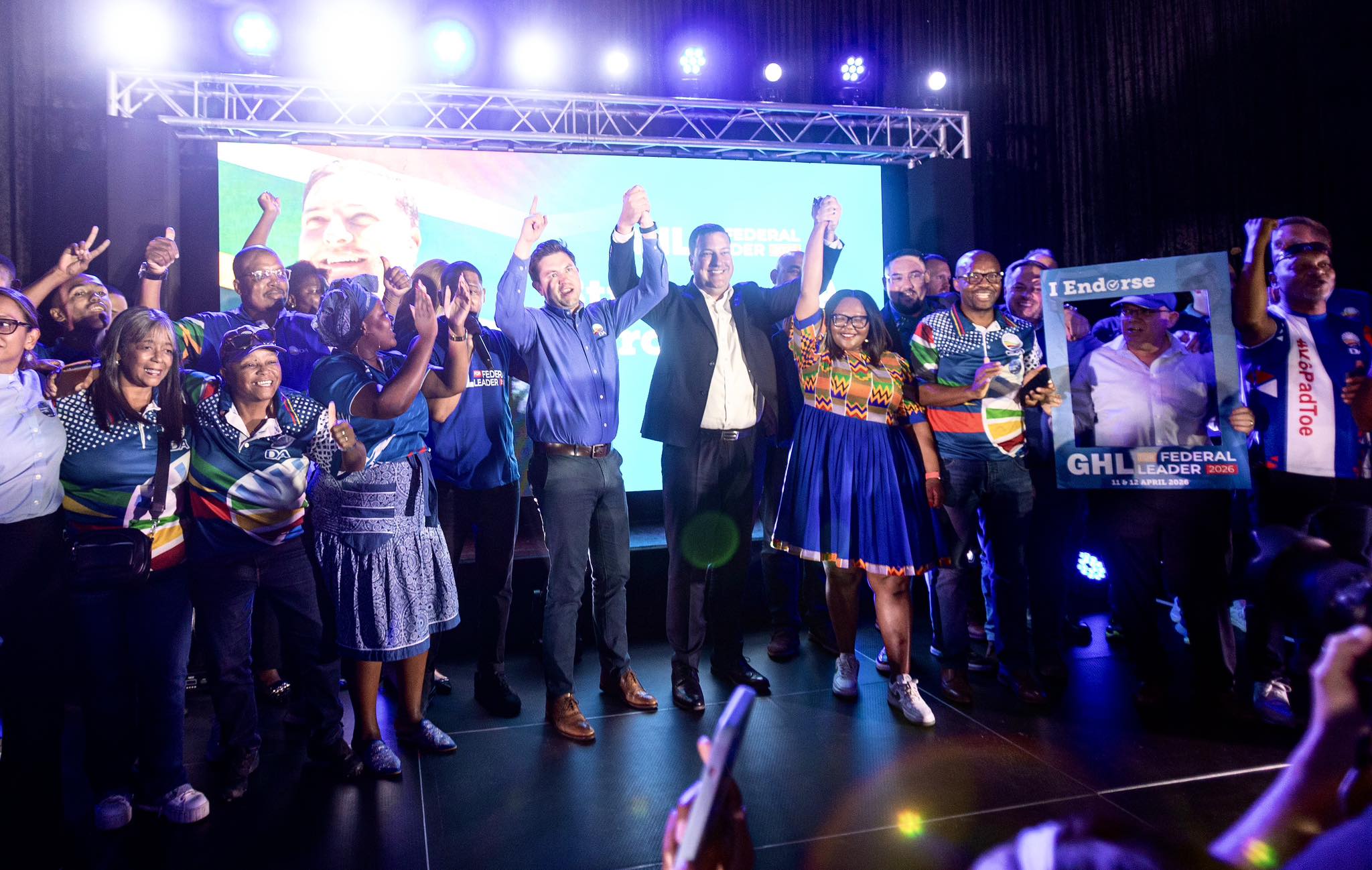
From right here in Durban – not far from where I first climbed the steps to the council chambers 27 years ago – I today announce that I will not seek re-election for a third term as DA Federal Leader at the party’s upcoming Federal Congress.

I do so with a full heart, knowing that I have accomplished my DA Moonshot mission, and that my work in government now requires me to similarly pour my heart and soul into defeating foot-and-mouth disease.


I also do so in the knowledge that I hand over the reins to a fundamentally healthier party than the one I inherited.

Instead of 16%, the DA is now consistently polling at 30%, and is within striking distance of becoming the biggest political party in South Africa.

The next duly-elected DA leader can rely on my full support, and will be given the space to lead the party as they see fit.

For the true test of whether you love a thing, is the ability to let it go when the time is right.

I have loved leading the DA, which is why today I let it go with a smile on my face, and triumphant peace in my heart.

The DA I inherited was reading its own obituary, in a country that was in rapid decline.

The DA I leave behind, co-governs a country that is firmly on the up.

It is now up to the next generation of leadership to ensure that the DA continues to do so with ever-growing confidence for many more years to come, so that we can deliver the country of our dreams to all of our children.

I love my party and I love my country, and I will continue to work every day to ensure the success of both.

Thank you.

Ten Drownings in a Week: NSRI Urges Water Safety After Tragic Week

Over seven days, from Sunday 25 January to Sunday 1 February, the National Sea Rescue Institute (NSRI) responded to over thirty rescue incidents across South Africa. Sadly, at least ten people have drowned or are missing, many of them teenagers.

Thirty-nine people were rescued from the water during the same period. These included a mass rescue at Kleinmond Main Beach involving nine people swept out by rip currents, as well as individual and group rescues along the coast in Gordons Bay, Wilderness, Hout Bay, and East London. 

“This has been an extremely difficult week,” said Brett Ayres, NSRI Chief Operating Officer. “Our crews responded to multiple drownings and non-fatal drownings across the country. Each of these tragedies is a stark reminder that water activities are never without risk.”

The drownings occurred across a wide geographic area - from KZN to the Eastern Cape and the Western Cape - and involved both coastal and inland waters.

Among the fatalities, a concerning pattern has emerged:

-Teenagers between the ages of 14 and 16 made up a significant portion of those reported missing or deceased.
-Many incidents occurred during a full moon spring tide, which contributes to stronger rip currents and more powerful tidal flows.
-One fatal drowning occurred in a dam on Table Mountain, and another at the Kanana Dam near Rustenburg.

“We are seeing the same risk factors repeating: young people swimming in unguarded areas, rip currents not recognised, and well-meaning bystander rescuers also getting into difficulty,” said Andrew Ingram, NSRI Communications Manager.

“Rip currents are fast, narrow channels of water that pull swimmers away from the shore,” explained Ingram. They’re hard to spot and incredibly dangerous - especially when combined with a spring tide, which we experienced last week.”

However, not all drownings occurred at the ocean. “The two drownings in dams are a painful reminder that inland water can be just as hazardous, even when it appears shallow and calm,” added Ingram.

Despite the tragedies, NSRI and emergency responders and members of the public using Pink Buoys successfully rescued 39 people during this period:

-Nine people, including teenagers and parents, were rescued in a mass rescue at Kleinmond Main Beach using NSRI Pink Rescue Buoys.
-A 47-year-old woman was rescued after being swept off rocks near Gordons Bay.
-Two seafarers were medically evacuated from a ship off Richards Bay.
-Multiple kayakers and small craft operators were assisted after mechanical failures or capsizes.

“These rescues highlight how critical flotation devices, early calls for help, and coordinated responses are in saving lives,” said Ingram. “Good Samaritans, lifeguards, and our volunteer crews all played key roles in preventing more tragedy.”

In the wake of this devastating week, the NSRI urges the public to follow these water safety principles:

-Drinking alcohol before swimming or taking part in a water-related activity puts your life at risk.
-Choose to swim at beaches where lifeguards are on duty, and stay between the flags.
-Supervise children closely at all times - especially teens, who remain at high risk.
-Float if caught in a rip current. Don’t panic - swim out of the current parallel to the shore.
-Never attempt a rescue without taking something that floats with you, and call for help before entering the water.
-Treat inland waters with extreme caution. Fresh water has less buoyancy than salt water and needs more energy to stay afloat.
-Download the NSRI SafeTrx App for safer boating and paddling.

“Summer is far from over,” said Ayres. “As we continue to enjoy our coastline and inland waters, we must remember that safety is everyone's responsibility. These incidents are tragic. We urge the public to remain vigilant, informed, and prepared.”

For emergency assistance, call NSRI’s Emergency Operations Centre on 087 094 9774 or dial 112 from any mobile phone.
error: eRadio is protected !
Scroll to Top