Police clamp down on 1600 litres of alcohol in Garden Route

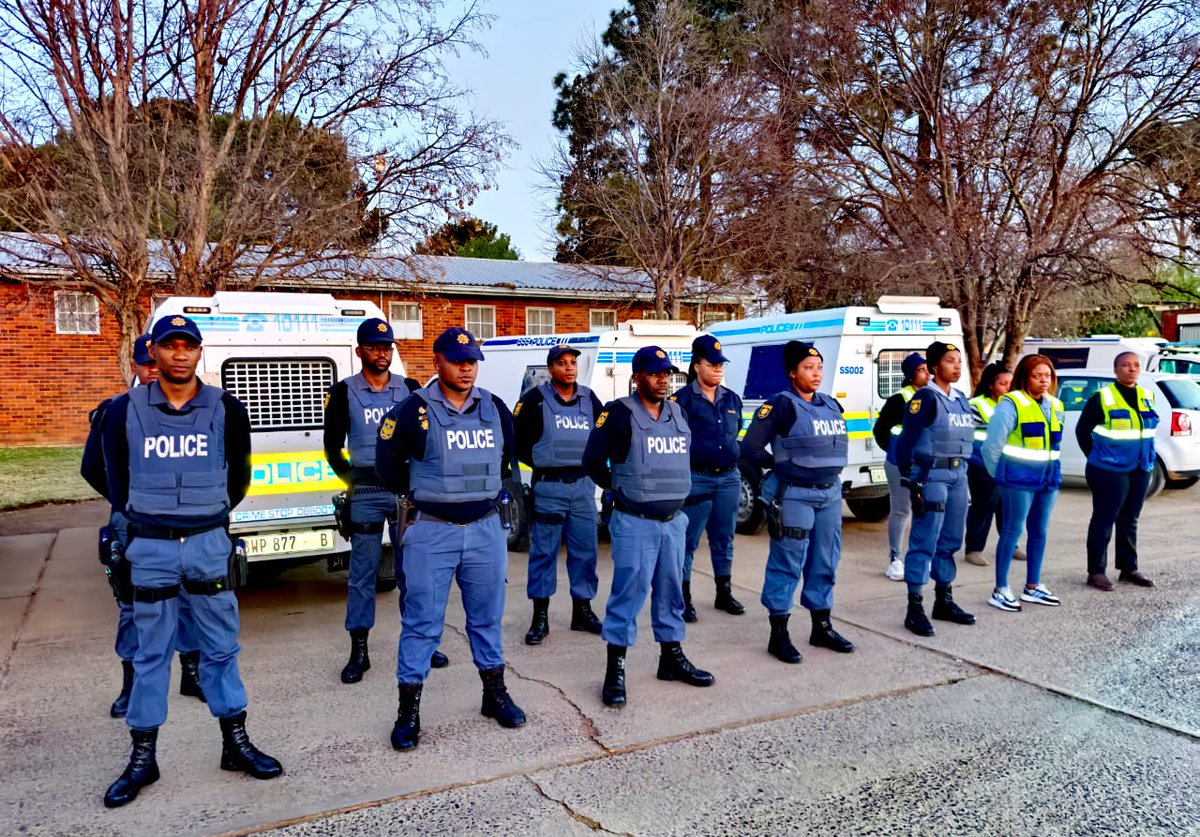
Police in the Garden Route District have shut down six unlicensed liquor outlets and confiscated more than 1,600 litres of alcohol during crime prevention operations conducted over the weekend.

On Friday night, De Rust police acted on information about illegal activity and raided a property in the Riemvasmaak informal settlement, where they seized 1,569 litres of liquor and arrested a 48-year-old man.

In a separate operation on Saturday, Riversdale police raided two properties in Heidelberg, confiscating small quantities of liquor and arresting two women, aged 46 and 41.

Further operations in Oudtshoorn, Ladismith and Heidelberg led to the arrest of three more suspects.

All suspects face charges of selling liquor without a licence and are expected to appear in court once formally charged.

Police say the operations form part of efforts to curb alcohol and drug abuse, which contribute to incidents of gender-based violence and femicide in the region.

Minister saddened by Kruger National Park murder

Minister of Tourism Patricia de Lille has expressed her condolences following the discovery of the bodies of a South African couple near a river in the northern section of the Kruger National Park.

In a statement, de Lille said she was saddened by the incident and extended her sympathies to the victims’ family and friends.
"The safety of all travellers is of utmost importance to the tourism industry. Our thoughts and prayers are with the family and friends of the victims," said the Minister.

She added that the tourism sector continues to work closely with law enforcement agencies and other stakeholders to support tourist safety across the country and called on anyone with information related to the incident to assist police with their investigation.

The couple’s bodies were discovered on Friday after a search operation was launched when they failed to return to their camp on Thursday evening.

Addressing the media at Skukuza at the weekend, South African National Parks (SANParks) spokesperson, Reynold Thakhuli, described the incident as unprecedented in the history of the park.

"I would like to extend our condolences to the family and affected friends as well. It is indeed a tragic incident. We've never really seen this kind of incident in the 100 years of the Kruger National Park. This is the very first time that we are seeing something of this nature," he said.

Preliminary investigations by park rangers have revealed that the couple’s vehicle remains missing. However, evidence suggests the vehicle may have left the park through a fence bordering neighbouring Mozambique.

"The vehicle has not been found, but our rangers have done some preliminary investigations, and it has been discovered that tyre tracks are actually pointing us to the car having exited the park through a fence in Mozambique," Thakhuli said.

He noted that the vehicle did not leave the park through any official gate and that SANParks' surveillance systems had last detected it on the day the couple disappeared.

"We've got technology within the park. We have seen it as it came in, and we've seen it on the days that they were here in the park, but we have not seen it since Thursday when they disappeared," he said.

The incident has prompted SANParks to reassess security measures in remote sections of the park despite the organisation's existing surveillance capabilities.

Thakhuli also said SANParks executives and representatives of the South African Police Service met with the victims' family on Saturday and pledged ongoing support throughout the investigation and repatriation process.

The family is expected to visit the park on Monday.

"We're really going to be supporting the family throughout the entire process," Thakhuli said.

Meanwhile, Minister of Forestry, Fisheries and the Environment, Willie Aucamp, said he had been briefed on the incident and had engaged SANParks leadership to ensure continued cooperation with the investigation being conducted by the South African Police Service. 

Moody’s revises South Africa’s outlook to positive

Government has welcomed Moody’s decision to revise South Africa’s sovereign credit rating outlook from stable to positive, while affirming the country’s domestic and foreign-currency long-term ratings at Ba2.

According to the National Treasury, this makes South Africa the only Group of Twenty (G20) country currently on a positive outlook from Moody’s.

The decision comes amid negative ratings momentum globally, with more than 23 sovereign credit ratings negatively affected since the start of the current Middle East conflict.

Moody’s attributed its decision to South Africa’s gradually strengthening fiscal performance and sustained commitment to structural reforms, with prospects of increasingly tangible results.

"The agency expects a rising primary surplus and gradually improving debt-service costs to stabilise the government debt burden in the near term," the National Treasury said.

It said that while the Middle East conflict poses a risk to South Africa’s near-term growth outlook, Moody’s expects the policy response to remain measured and macroeconomic stability to be preserved.

The agency also expects stronger investment, supported by ongoing reforms, to gradually lift real gross domestic product (GDP) growth to around 2% by 2028 and support fiscal improvements.

Moody’s expects the primary fiscal surplus to rise to around 2% in 2028, supporting a gradual decline in the debt-to-GDP ratio.

National Treasury Director-General Duncan Pieterse said the latest decision by Moody’s further confirms South Africa’s improving fiscal credibility, driven by a turnaround in the sustainability of public finances.

"We continue to focus on our two fiscal objectives: ensuring that revenue remains higher than non-interest spending, and maintaining a debt-to-GDP ratio that declines from the current year onwards. We plan to embed the fiscal turnaround through the introduction of a fiscal anchor for South Africa," Pieterse said.

National Treasury reiterated that government remains firmly committed to reducing public debt while maintaining social spending and accelerating structural reforms to support inclusive growth and job creation.

The positive outlook is Moody’s first for South Africa since 2007, which was followed by an upgrade of the rating itself in 2009.

The decision follows S&P Global Ratings’ one-notch upgrade of South Africa’s rating in November 2025, while retaining its positive outlook. 

Call to vaccinate as 3.5 million FMD vaccine doses arrive

With the arrival of the first batch of a 3.5 million-dose consignment of Biogénesis Bagó Foot and Mouth Disease (FMD) vaccines, Agriculture Minister John Steenhuisen has called on all provincial departments to prioritise vaccinating as many animals as possible over the coming weeks.

The remainder of the record-breaking shipment from Argentina is already en route and is expected to arrive during the week.

“This is the largest single consignment of FMD vaccines ever imported into South Africa. Provinces must now move with speed and urgency to scale up frontline vaccination efforts and protect our national herd of approximately 14 million cattle,” the Minister said on Sunday.

South Africa has successfully secured and imported a total of 13.5 million vaccine doses before the end of May 2026, including the 3.5 million doses that arrived on Sunday.

“The acquisition of 13.5 million doses in just four months demonstrates the seriousness with which we are confronting this disease,” Steenhuisen said.

The rollout forms part of the Department of Agriculture’s broader strategy to achieve and maintain “FMD free with vaccination” status, while safeguarding rural livelihoods, food security and agricultural exports.

“If we maintain this disciplined and aggressive trajectory, and ensure these vaccines are administered rapidly and effectively, we can ensure that South Africa never again experiences outbreaks on this scale. But the government cannot do this alone. 

“Every livestock owner has a responsibility to protect their animals through strict biosecurity measures, compliance with movement controls, and full participation in vaccination and identification programmes,” he said.

The Minister emphasised that defeating FMD requires a unified national effort across government, industry and farming communities.

“This is a moment that demands partnership and collective action. Commercial farmers, communal farmers, veterinarians, industry bodies and government all have a role to play if we are to defeat this disease and secure the future of our livestock sector.

“The stakes could not be higher. This is about protecting jobs, defending rural economies, safeguarding food security, and protecting the national interest,” Steenhuisen said.

To support the accelerated vaccination campaign, more Animal Health Technicians will be appointed and deployed across affected provinces to strengthen the frontline operations and expand vaccination capacity

SANParks tightens security after couple found dead in Kruger National Park

South African National Parks has announced plans to strengthen security measures in isolated areas of the Kruger National Park following the tragic discovery of a couple who went missing in the park last week.

The bodies of the Mossel Bay couple Dina (73) and Ernst Marais (71), were discovered on Friday near a river area in the northern section of the park after a search operation was launched when the couple failed to return to their camp on Thursday evening.

Speaking to members of the media on Sunday at Skukuza, SANParks Head of Communication and Spokesperson, Reynold Thakhuli, described the incident as unprecedented in the park’s history.

“I would like to extend our condolences to the family and affected friends as well. It is indeed a tragic incident. We've never really seen this kind of incident in the 100 years of the Kruger National Park. This is the very first time that we are seeing something of this nature,” Louw said.

According to preliminary investigations conducted by park rangers, the tourists’ vehicle remains missing. However, tyre tracks suggest that the vehicle may have exited the park through a fence into neighbouring Mozambique.

“The vehicle has not been found, but our rangers have done some preliminary investigations, and it has been discovered that tyre tracks are actually pointing us to the car having exited the park through a fence in Mozambique,” Thakhuli said.

He added that the vehicle did not leave through any official gate.

“We've got technology within the park. We have seen it as it came in, and we've seen it on the days that they were here in the park, but we have not seen it since Thursday when they disappeared,” he said.

Thakhuli said the incident has prompted SANParks to reassess security in remote sections of the park despite existing surveillance systems.

“We have really high-class security technology that we are using within the park, but this incident has actually given us another process that we need to embark on in terms of ensuring that even those areas that are isolated, we can have some security there,” he said.

He confirmed that SANParks would later issue a statement outlining mitigation measures aimed at improving security across the park.

Thahuli said SANParks executives and police representatives met with the victims’ family on Saturday and pledged continued support throughout the process.

“We were told that the couple are people who really loved the Kruger, and it’s people who would not really get out unnecessarily into areas that are dangerous,” he said.

The family is expected to visit the park on Monday, where SANParks will assist with arrangements, including the transportation of the deceased.

“We’re really going to be supporting the family throughout the entire process,” Thakhuli said.

Meanwhile, Minister of Forestry, Fisheries and the Environment, Willie Aucamp, said he had been briefed on the incident and had engaged SANParks leadership to ensure continued cooperation with the investigation being conducted by the South African Police Service.

“On behalf of SANParks and the Department, we extend our sincere condolences to the family of the victims during this difficult time.

“The SAPS and SANParks have located and notified the family of this tragedy,” Aucamp said.

Western Cape pushes ahead with recovery efforts following severe weather

Recovery and mop-up operations are continuing across the Western Cape following severe weather incidents that caused widespread damage to infrastructure, disrupted electricity supply and affected hundreds of roads across the province.

The recent weather events have officially been classified as disasters, highlighting the extent of the impact on communities, infrastructure and service delivery.

Providing an update on ongoing recovery operations, Western Cape Premier Alan Winde acknowledged the frustrations experienced by residents as efforts continue to restore services.

“We understand the frustration many residents are feeling. It has been an exceptionally difficult time and we, along with all role players, apologise for any inconvenience. We thank residents for their patience. Officials have been working tirelessly under extremely difficult conditions to restore power and other critical services as quickly and safely as possible,” Winde said. 

According to the provincial government, Eskom has restored electricity to 80% of affected customers.

However, restoration efforts have been hampered by difficult terrain, vandalism and cable theft.

The Western Cape Government strongly condemned acts of vandalism and theft, saying they continue to aggravate the situation. 
In the Cape Winelands District, repairs to the main power line between Boskloof and Romansrivier are progressing, while teams are also attending to faults in Chavonnes, Hexrivier, Rawsonville and Witzenberg.

In the Cederberg area, repair teams are replacing and restringing damaged poles and conductors in Citrusdal. Work in Algeria is expected to begin once repairs in Citrusdal and Lutzville have been completed.

Several areas in the Garden Route District, including Blanco farms and Harkerville, also remain without electricity as restoration efforts continue.

Construction work in Lutzville in the Matzikama region is progressing, while recovery operations are ongoing in Elgin, Papiesvlei and Stanford in the Overberg region.

The province said about 400 roads were affected by the storms, with more than 60% already repaired and reopened.

Humanitarian relief efforts have also intensified across affected communities.

Non-governmental organisations funded by the Western Cape Department of Social Development are working with relief organisations and government entities to provide meals, blankets, mattresses, water, baby packs and clothing to affected residents.

On Friday, Winde visited the Mustadafin Foundation in Cape Town, where volunteers have been distributing warm meals and disaster relief packs.

“The work this foundation and others do is inspiring. Thank you for your selflessness,” the Premier said during the visit.

Winde also visited the National Sea Rescue Institute Volunteer Support Centre in Cape Town, commending rescue personnel involved in search and rescue operations during and after the storms.

“These brave women and men think little of giving their time and expertise, often risking their own safety to help others. You are truly extraordinary,” the Premier said.

The Provincial Disaster Management Centre continues to coordinate the province’s disaster response and recovery operations.

SA Crime Stats released: Murder rate drops

South Africa recorded a 9.5% decrease in murders during the fourth quarter of the 2025/26 financial year, with 546 fewer people killed compared with the same period a year earlier, Police Minister Firoz Cachalia announced on Friday.

Presenting crime statistics for the period January 1 to March 31, 2026, Cachalia said murders declined from 5 727 in the corresponding quarter of the previous year to 5 181.

Compared with the same quarter in 2024, murders fell by 1 355 cases, representing a 20.7% reduction.

“Most strikingly, murder has decreased nationally by 9.5%,” Cachalia said, describing the figure as the country’s most reliable crime indicator.

The decline formed part of a broader reduction in serious violent crime. Contact crimes, which include offences involving direct contact between perpetrators and victims, decreased by 4.6%, with 7 405 fewer cases reported than in the same quarter last year.

Cachalia highlighted significant reductions in aggravated robbery categories. House robberies fell by 20.4%, business robberies by 18.3%, and robberies at non-residential premises by 22%.

Property-related crimes, including burglary and theft of and from motor vehicles, declined by 8.5%, while other serious crimes such as general theft and shoplifting dropped by 4.2%.

The Minister attributed the improvements in part to the efforts of police officers and communities working together to combat crime.

Despite the gains, Cachalia cautioned that crime levels remain unacceptably high. 

South Africa recorded an average of 58 murders a day during the quarter.

“A decrease in crime is not the same as achieving safety,” he said. “Our goal is not just fewer crimes, but that communities are and feel safe everywhere.”

The statistics showed that Gauteng, the Western Cape, Eastern Cape and KwaZulu-Natal all recorded notable decreases in murders. However, those four provinces still accounted for more than 80% of all murders nationally.

The Minister said government would continue implementing its police reform agenda, strengthen efforts against organised crime and expand violence-prevention initiatives aimed at addressing the social factors driving violent crime.

“These statistics provide us with guidance,” Cachalia said. “Our task is to transform this decline in violent crime into a sustained, long-term reduction in violence and organised criminality across the country.”

Fitch affirms Eskom credit rating

Credit rating agency Fitch has affirmed Eskom’s Local-Currency Issuer Default rating at ‘B’ with a stable outlook.

The agency further affirmed the power utility’s senior unsecured debt at ‘B’ with a Recovery Rating of ‘RR4’ and its senior unsecured guaranteed debt at ‘BB-’.

“The affirmation reflects the strong links between Eskom and South Africa’s ‘BB- ‘Outlook Stable, under Fitch’s latest Government-Related Entities rating criteria.

“In its detailed update report, Fitch noted Eskom’s operations are improving and the delivery of its business plan may lead to funding on an unguaranteed basis over the medium term,” Eskom said in a statement on Thursday.

Eskom Group Chief Executive, Dan Marokane said the rating is as a result of a steadfast commitment to the Generation Recovery Plan.

“We remain singularly focused on delivering the turnaround plan that is central to continuing to restore Eskom’s operational and financial stability.

“Reaching the milestone of one year without load shedding on Saturday, 16 May advances this stability, as well as the South African and Sub-Saharan Africa economy, competition and the integration of renewable energy,” Marokane said.


Soaring fuel prices threatening South Africa’s agricultural sector

While welcoming the drop in food inflation to its lowest level in 14 months, Agriculture Minister, John Steenhuisen, has warned that soaring fuel prices are threatening South Africa’s agricultural sector.

The Consumer Price Index (CPI) data released by Statistics South Africa on Wednesday, showed that annual food and non-alcoholic beverages inflation eased to 2.9% in April 2026, down from 3.6% in March.

The decline marks the third consecutive month of easing food inflation, providing some relief for consumers struggling with the cost of living.

However, the easing in food inflation coincided with a sharp increase in fuel costs.

According to the CPI data, the national fuel index rose by 18.2% in April compared with March - the steepest single-month increase since the current CPI series began in 2008.

Petrol prices increased by 15.2%, with inland 93-octane petrol rising from R20.19 to R23.25 per litre.

Diesel prices surged by 35.4%, climbing from R21.28 to R28.80 per litre.

Steenhuisen said diesel remained one of the most critical production inputs for farmers.

“Fuel, primarily diesel, is a crucial input for South African farmers, typically accounting for 11% to 18% of total production and logistics costs. With farmers being price takers, they struggle to pass these high energy costs onto consumers, putting pressure on profit margins across grain, fruit, and livestock sectors,” Steenhuisen said.

The Minister warned that instability in global oil markets linked to ongoing conflict in the Middle East could worsen the situation later this year.

“It [also] needs to be noted that the global oil markets might remain volatile for some time, caused by ongoing conflicts in the Middle East. If these tensions trigger further fuel price increases later in the year, production and logistical costs will rise. This creates an uncertain outlook where domestic progress on food inflation could be reversed by global shocks.”

Meat and grain prices ease

Despite pressure from fuel costs, several food categories recorded slower inflation or continued deflation during April.

Meat inflation slowed from 11.6% in March to 9.4% in April, partly due to increased cattle slaughter linked to national Foot-and-Mouth Disease management measures.

Beef mince inflation slowed from 22.2% to 15.3%, while stewing beef inflation declined sharply from 22.6% to 8.7%.

The grains and cereals category recorded its third consecutive month of deflation, with products such as maize meal, white rice, basmati rice, porridge, and bread flour all cheaper than a year ago.

Milk, dairy and eggs shifted to a marginal annual increase of 0.1% in April, compared with -0.5% in March, marking the category’s first annual increase since May 2025.

However, powdered milk and eggs remained in deflation at -3.4% and -5.8% respectively.

The Department of Agriculture said it will continue working with agricultural bodies, logistics networks and state resources to identify mechanisms to ease input costs for farmers.

“Protecting producers from global energy shocks is necessary for long-term national food security,” Steenhuisen said.

Western Cape welcomes disaster classification following severe weather

The Western Cape Provincial Government has welcomed the classification of a provincial disaster following severe weather conditions that affected large parts of the province between 10 and 14 May 2026.

The classification forms part of a process led by the National Disaster Management Centre towards the formal declaration of a disaster, which is expected to unlock additional funding for emergency response and recovery efforts.

Western Cape Premier, Alan Winde, chaired a Provincial Executive Council meeting on Wednesday, where the impact of the recent storms and flooding dominated discussions.

Minister of Cooperative Governance and Traditional Affairs, Velenkosini Hlabisa, attended the meeting and engaged with the council on the ongoing disaster response and recovery operations.

Winde stressed the importance of ensuring that funding is made available urgently to support affected communities, restore damaged infrastructure, and strengthen resilience against future disasters.

“These kinds of disasters are becoming more frequent and more destructive. We need a new approach from national government that prioritises proactive budgeting and futureproofing of public infrastructure.

“The Western Cape remains committed to investing in resilience, preparedness and protecting our residents, but we need national support to move faster and respond more effectively,” the Premier said.

Hlabisa commended the provincial government for its leadership and proactive response to the severe weather conditions and assured the province of continued support from national government wherever possible.

The Executive Council meeting noted that the provincial response has now shifted toward ongoing humanitarian relief, the repair of critical infrastructure, and the restoration of essential services.

Electricity restoration 

Representatives from Eskom informed the council that electricity supply had already been restored to 72% of the areas affected by the severe weather.

Restoration teams remain on the ground and continue working to reconnect remaining communities as quickly and safely as possible.

The council also expressed its gratitude to disaster management teams, including municipalities, emergency services personnel, humanitarian organisations, volunteers, businesses, and residents for assisting affected communities during the crisis.

“The response from communities across the Western Cape has once again demonstrated the strength, compassion and resilience of our province. We thank every individual and organisation who stepped up to help those in need,” Winde said.
error: eRadio is protected !
Scroll to Top