The City of Cape Town has taken its investment proposition to two of South Africa’s key economic centres, using a national roadshow to strengthen partnerships, engage businesses and showcase the opportunities positioning Cape Town as one of Africa’s leading investment destinations.
Alderman James Vos, Mayoral Committee Member for Economic Growth at the City of Cape Town, opened the Johannesburg Stock Exchange (JSE) trading floor on Thursday, 13 August, with the ceremonial sounding of the market’s opening horn. The event marked the Johannesburg leg of the City’s national investment positioning roadshow.
Municipal officials from the Economic Growth Directorate joined representatives from industry bodies and business partners, including Wesgro, GreenCape, CapeBPO, UVU Africa, the Atlantis Special Economic Zone, Cape Town Tourism and other sector-focused organisations supporting investment, trade and economic development.
The programme also marked the launch of the City’s new global investment campaign, Cape Town. Built for Business. The campaign will roll out across multiple channels in more than 60 cities worldwide.
The City also showcased Maya, Invest Cape Town’s new AI-powered investment facilitation tool. Maya is designed to help investors navigate municipal processes and connect with relevant suppliers, partners and officials.
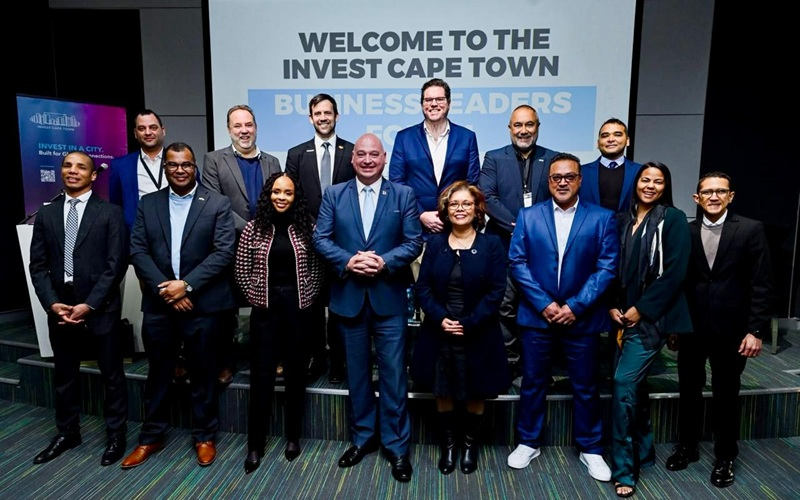
Invest Cape Town, the business and investment brand of the City’s Economic Growth Directorate, hosted business leader engagements in Johannesburg and Durban, bringing together senior representatives from businesses, investors, industry associations, investment promotion agencies and economic development organisations.
“Standing on the JSE trading floor and opening the market is something I will remember. But the real purpose of being here is much bigger. We are here to connect, collaborate and build relationships that can strengthen South Africa’s economic proposition,” said Vos.
“We are not here to compare Cape Town with Johannesburg or Durban. South Africa needs strong economic centres working together. We want to complement what other cities are doing and showcase the sectors and opportunities where Cape Town has a particular competitive advantage.”
These sectors include technology and business process outsourcing, manufacturing, tourism, the blue economy, renewable energy, creative industries and international trade.
The Johannesburg Business Leaders Forum gave the City and its partners an opportunity to engage directly with companies and investors about expansion plans, challenges and opportunities for collaboration.
“We need to get out of our offices and into the boardrooms. We want to hear from businesses about what they need, what is holding them back and where we can work together to unlock investment and jobs,” Vos said.
In Durban, the delegation visited Dube TradePort to learn more about its approach to developing manufacturing, logistics and industrial opportunities around its airport and trade infrastructure.
“We were particularly interested in seeing how Dube TradePort is creating an environment where manufacturing businesses can establish new factories and operations seamlessly,” Vos said.
The Durban programme also included an Invest Cape Town Business Leaders Forum, continuing discussions with businesses and strategic economic partners around investment, collaboration and inclusive growth.
The engagements highlighted the City’s new Manufacturing Support Policy, Business Support Policy and Ease of Doing Business Index, all aimed at making it easier for businesses to operate, grow and invest in Cape Town.
“Cape Town has a very clear proposition: we want to be the easiest place to do business in Africa. That means creating the right conditions for businesses to invest, expand and create jobs, but it also means working with our partners across South Africa.
“Ultimately, when Cape Town attracts investment, creates jobs and grows its economy, it strengthens the South African economy too. That is the message we are taking to the rest of the country and, now, to the world,” Vos said.
Alderman James Vos, Mayoral Committee Member for Economic Growth at the City of Cape Town, opened the Johannesburg Stock Exchange (JSE) trading floor on Thursday, 13 August, with the ceremonial sounding of the market’s opening horn. The event marked the Johannesburg leg of the City’s national investment positioning roadshow.
Municipal officials from the Economic Growth Directorate joined representatives from industry bodies and business partners, including Wesgro, GreenCape, CapeBPO, UVU Africa, the Atlantis Special Economic Zone, Cape Town Tourism and other sector-focused organisations supporting investment, trade and economic development.
The programme also marked the launch of the City’s new global investment campaign, Cape Town. Built for Business. The campaign will roll out across multiple channels in more than 60 cities worldwide.
The City also showcased Maya, Invest Cape Town’s new AI-powered investment facilitation tool. Maya is designed to help investors navigate municipal processes and connect with relevant suppliers, partners and officials.
Invest Cape Town, the business and investment brand of the City’s Economic Growth Directorate, hosted business leader engagements in Johannesburg and Durban, bringing together senior representatives from businesses, investors, industry associations, investment promotion agencies and economic development organisations.
“Standing on the JSE trading floor and opening the market is something I will remember. But the real purpose of being here is much bigger. We are here to connect, collaborate and build relationships that can strengthen South Africa’s economic proposition,” said Vos.
“We are not here to compare Cape Town with Johannesburg or Durban. South Africa needs strong economic centres working together. We want to complement what other cities are doing and showcase the sectors and opportunities where Cape Town has a particular competitive advantage.”
These sectors include technology and business process outsourcing, manufacturing, tourism, the blue economy, renewable energy, creative industries and international trade.
The Johannesburg Business Leaders Forum gave the City and its partners an opportunity to engage directly with companies and investors about expansion plans, challenges and opportunities for collaboration.
“We need to get out of our offices and into the boardrooms. We want to hear from businesses about what they need, what is holding them back and where we can work together to unlock investment and jobs,” Vos said.
In Durban, the delegation visited Dube TradePort to learn more about its approach to developing manufacturing, logistics and industrial opportunities around its airport and trade infrastructure.
“We were particularly interested in seeing how Dube TradePort is creating an environment where manufacturing businesses can establish new factories and operations seamlessly,” Vos said.
The Durban programme also included an Invest Cape Town Business Leaders Forum, continuing discussions with businesses and strategic economic partners around investment, collaboration and inclusive growth.
The engagements highlighted the City’s new Manufacturing Support Policy, Business Support Policy and Ease of Doing Business Index, all aimed at making it easier for businesses to operate, grow and invest in Cape Town.
“Cape Town has a very clear proposition: we want to be the easiest place to do business in Africa. That means creating the right conditions for businesses to invest, expand and create jobs, but it also means working with our partners across South Africa.
“Ultimately, when Cape Town attracts investment, creates jobs and grows its economy, it strengthens the South African economy too. That is the message we are taking to the rest of the country and, now, to the world,” Vos said.