
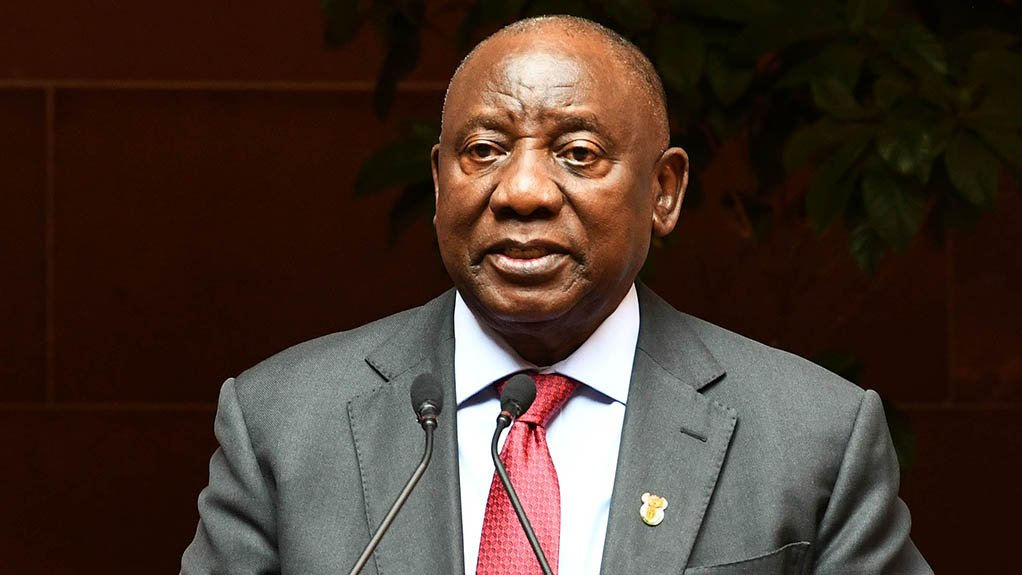
President Cyril Ramaphosa is set to answer questions in the National Assembly this week as Parliament focuses on municipal governance, South Africa’s international standing and the work of the Ad Hoc Committee investigating allegations made by Lieutenant General Nhlanhla Mkhwanazi.
Ramaphosa is scheduled to respond to oral questions at 2pm on Tuesday.
Key issues expected to come under scrutiny include efforts to restore South Africa’s credibility as a Pan-African voice amid protests against foreign nationals, as well as structural reforms aimed at improving municipal capacity, accountability and the delivery of basic services.
The Ad Hoc Committee examining allegations made by Mkhwanazi will also remain in focus. The committee is scheduled to meet on Monday evening and Thursday to consider its draft report. Its reporting deadline has been extended by the Speaker of the National Assembly to 11 September.
The National Council of Provinces (NCOP) will also host several question-and-answer sessions during the week.
Ministers in the Peace and Security Cluster are expected to address issues including Truth and Reconciliation Commission reparations, the justice department’s case-management system, overcrowding in correctional centres, cellphone smuggling and the deployment of the military to assist police in tackling illegal mining.
International Relations and Cooperation Minister Ronald Lamola will face questions on global developments affecting South Africa, including the conflict involving the United States, Israel and Iran, the closure of the Strait of Hormuz, anti-immigration protests and illegal immigration.
Parliament has scheduled 37 committee meetings from Monday to Friday. Topics on the agenda include foot-and-mouth disease control, immigration backlogs, preparations for the 2026 FIFA World Cup, the recovery of state property, municipal audit outcomes, military deployments and Parliament’s funding.
Both Houses will begin their constituency periods on 31 August. The NCOP constituency period will run until 5 October, while the National Assembly will return on 21 September.
Ramaphosa is scheduled to respond to oral questions at 2pm on Tuesday.
Key issues expected to come under scrutiny include efforts to restore South Africa’s credibility as a Pan-African voice amid protests against foreign nationals, as well as structural reforms aimed at improving municipal capacity, accountability and the delivery of basic services.
The Ad Hoc Committee examining allegations made by Mkhwanazi will also remain in focus. The committee is scheduled to meet on Monday evening and Thursday to consider its draft report. Its reporting deadline has been extended by the Speaker of the National Assembly to 11 September.
The National Council of Provinces (NCOP) will also host several question-and-answer sessions during the week.
Ministers in the Peace and Security Cluster are expected to address issues including Truth and Reconciliation Commission reparations, the justice department’s case-management system, overcrowding in correctional centres, cellphone smuggling and the deployment of the military to assist police in tackling illegal mining.
International Relations and Cooperation Minister Ronald Lamola will face questions on global developments affecting South Africa, including the conflict involving the United States, Israel and Iran, the closure of the Strait of Hormuz, anti-immigration protests and illegal immigration.
Parliament has scheduled 37 committee meetings from Monday to Friday. Topics on the agenda include foot-and-mouth disease control, immigration backlogs, preparations for the 2026 FIFA World Cup, the recovery of state property, municipal audit outcomes, military deployments and Parliament’s funding.
Both Houses will begin their constituency periods on 31 August. The NCOP constituency period will run until 5 October, while the National Assembly will return on 21 September.