Class of 2025 sets new national record with historic 88% pass rate

The Matric Class of 2025 has achieved a historic 88% National Senior Certificate (NSC) pass rate – the highest in South Africa’s history - marking a significant milestone for the basic education sector. 

The national pass rate represents an increase of approximately 0.7 percentage points from 2024 and was met with resounding applause when announced by Basic Education Minister Siviwe Gwarube, during the official release of the results on Monday evening, at Mosaïek Church, in Fairlands. 

More than 900 000 full time and part time candidates wrote the matric examinations at approximately 6 000 centres across the country, making it the largest cohort to sit for the NSC exams. Of these, over 656 000 learners successfully passed. 

Congratulating the Class of 2025, the Minister acknowledged their resilience and determination. 

“To the Class of 2025, I say: congratulations on a record-breaking 88% pass rate. Siyazingca ngani. Nisebenzile. You have shown resilience – not only in these examinations, but across years of learning in a country that has asked much of you. South Africa sees you. 

“And to the learners of our no-fee schools: you have shown the country what is possible. You have proven that talent lives everywhere and that when we strengthen the roots, hope becomes an outcome, not a slogan,” Gwarube said. 

Addressing educators, learners, parents and stakeholders, Gwarube confirmed that the results had been quality-assured and approved by Umalusi, affirming the credibility and integrity of the examination process. 

“We can have confidence: these results are earned, not gifted. South Africans, we must also put a stubborn myth to rest: 30% is not ‘the matric pass mark’. 

“The NSC is earned by meeting minimum requirements across a full subject package – including higher thresholds in key subjects, with different pass types that open different pathways after school,” the Minister said. 

She extended her gratitude to the entire education sector for their contribution to attaining this year’s pass rate. 

“To every Premier, every MEC, every Head of Department, every district director, every principal, and every teacher: these outcomes are built day by day, term by term, year by year – and we honour the work behind them,” she said.

Provincial performance 
KwaZulu-Natal emerged as the best performing province in the country, achieving a pass rate of 90.6%, followed closely by the Free State at 89.33% and Gauteng at 89.06%. 

Northern Cape was the most improved province with 87.79% in sixth place. 

For the first time, all 75 school districts across the country recorded pass rates of 80% and above, pointing to more evenly spread performance across provinces. 

Quality of passes and system stability 
While the overall pass rate reached a new high, the Minister emphasised that quality remains a key concern. 

The proportion of Bachelor passes – which provide access to university degree studies – declined slightly from 48% in 2024 to 46% in 2025. 

However, in absolute numbers, more learners than ever before achieved Bachelor passes, increasing by 8 700 to over 345 000 candidates. 

Diploma passes accounted for 28% of results, while 13.5% of candidates achieved Higher Certificate passes. 

The results also reflect a more stable education system, with the majority of candidates writing matric at the expected age of 18, and a sharp decline in the number of learners unable to complete their exam papers – down from about 17% in 2017 to around 2% in 2025. 

Girls continued to outperform boys in participation, making up 56% of the matric cohort. The Minister cautioned, however, that the growing underrepresentation of boys in Grade 12 and post-school pathways requires urgent intervention. 

“But the boy child is increasingly being left behind, becoming underrepresented in matric cohorts and less likely than girls to return through second-chance pathways. This imbalance requires urgent and targeted intervention,” the Minister said. 

Gateway subjects under pressure 
Despite overall progress, performance in key gateway subjects declined. 

The Mathematics pass rate dropped from 69% to 64%, while Accounting fell from 81% to 78%. Physical Science showed a marginal improvement, increasing from 76% to 77%. 

Only 34% of candidates wrote Mathematics, with the majority opting for Mathematical Literacy – a trend the Minister described as concerning for long-term access to scarce skills and economic participation.

“So, as we celebrate, we do so with clear eyes. The next phase is about deeper mastery – especially in gateway subjects. It is about increasing the number of learners taking and excelling in Mathematics, Physical Science and other gateway subjects with support, so opportunity expands without quality collapsing,” Gwarube said. 

Equity and no-fee schools 
The 2025 results highlighted continued progress in expanding opportunity for learners from disadvantaged backgrounds. More than 66% of Bachelor passes were achieved by learners from no-fee schools, reinforcing the message that poverty is not destiny. 

In addition, participation by learners with special education needs increased by 57%, with notable improvements in both pass rates and Bachelor-level achievements. 

However, concerns were raised about the performance of learners reliant on social grants. 

While more grant beneficiaries wrote the exams, their pass rate declined to 78%, compared to 86% previously. The Minister said the department will engage with the Department of Social Development to prevent the discontinuation of grants during learners’ matric year.

A new course for basic education 
Gwarube said the record-breaking results reflect a system that is stabilising, but warned against complacency. 

“Taken together, these results tell a clear story. The system is more stable. Participation is improving. Inclusion is expanding. Integrity is holding firm. But the results also confirm the central truth of our reform agenda: without strong foundations in the early years, inequity will always return later. 

“The new course we have set for the basic education system is defined by deep roots, strong foundations and long vision,” she said. 

The department’s reform agenda, she explained, is focused on strengthening early childhood development, improving early grade reading and numeracy, expanding teacher support, and ensuring learner safety and nutrition. 

The Minister assured those who did not pass that alternative pathways and second-chance opportunities remain available. 

“And to every learner who did not get the result you hoped for: you are not a failure, and your story is not over. There are pathways to improve your results – through rewrites, support programmes and second-chance opportunities. What matters now is that you take the next step, with support, and without shame,” she said.

Highest ever matric pass rate for the Western Cape

The Western Cape Class of 2025 has achieved a historic milestone, delivering the highest matric pass rate and the highest bachelor’s pass rate ever recorded in the province since the introduction of the National Senior Certificate.

The overall matric pass rate increased from last year’s record-breaking 86.6% to 88.2%, setting a new provincial record. This achievement underscores the continued improvement in learner performance across the Western Cape.

The province’s bachelor’s pass rate, a key indicator of quality matric results, also rose from 47.8% to 49.2%. This is the highest bachelor’s pass rate ever achieved in the Western Cape and the second-highest in the country.

Western Cape candidates further excelled by achieving the second-highest distinction rate nationally. A total of 13 234 candidates earned 31 220 distinctions in 2025, highlighting strong academic performance across multiple subjects.

In key subjects, the province once again led the way. The Western Cape achieved the highest Mathematics pass rate in the country at 73.7%, while candidates also delivered the second-highest Physical Science pass rate nationally, at 80.6%.

Learners with Special Education Needs (LSEN) recorded outstanding results, with a matric pass rate of 91.9%. The Western Cape also achieved the second-highest bachelor’s pass rate for LSEN candidates in the country, at 60.4%.

These achievements were reached alongside the highest retention rate in South Africa, at 70.0%. This is also the best retention rate recorded by the province since 2021, meaning more learners stayed in school, wrote their exams, and completed their schooling on time, opening doors to further studies and career opportunities.

The Western Cape also produced two top national achievers. Abigail Kok, from York High School in George, was named the top candidate of the Class of 2025 and the top Physical Science candidate nationally. This marks the fifth consecutive year that South Africa’s top matric candidate comes from the Western Cape.

Takunda Muchuweni, from Jan Kriel School in Kuils River, was named the top LSEN candidate in South Africa, a remarkable achievement that reflects dedication, perseverance, and hard work.

Congratulations are extended to the Class of 2025 for an exceptional set of results. This group of learners has been one of the hardest-working matric classes to date and has set a strong example for future cohorts.

Appreciation is also expressed to matric teachers for their outstanding commitment, long hours, and extra support provided throughout the year. Gratitude is extended to parents and guardians who supported learners every step of the way and now share in this important milestone.

To the Class of 2026, the baton now passes to you. Learners are encouraged to commit themselves fully to their studies, following the example set by the Class of 2025. Every hour invested in schoolwork is an investment in the future, and the province looks forward to celebrating your achievements next year.

Department monitors Knysna water supply interventions

The Department of Water and Sanitation (DWS) has reassured the public that work is being done to stabilise the water supply and improve system resilience in Knysna and the broader Garden Route coastal route.

In a statement on Friday, the department said it noted with concern the escalating water supply challenges currently affecting Knysna and other coastal towns within the Garden Route District in the Western Cape.

In early December 2025, the Knysna Council at a meeting, declared the Greater Knysna Municipality as a water-stressed area. At the time, Executive Mayor Thando Matika said it was a necessary step to allow national and provincial interventions to be completed and evaluated for their effectiveness in providing sustainable water solutions for the area. In addition, water restrictions were increased to Level 4.

At another meeting with senior representatives from national and provincial government, including the DWS, the Mayor made reference to the combined pressures of below-average rainfall, ongoing drought patterns across the Garden Route, saline intrusion in critical water sources, and limited reservoir storage capacity in certain supply zones.

“The National Department of Water and Sanitation (DWS) notes with serious concern the escalating water supply challenges currently affecting Knysna and other coastal towns within the Garden Route District.
“The department is working closely with the Western Cape Provincial Government, Knysna Municipality, and other municipalities, which are Water Services Authorities, to safeguard water security and mitigate the impact of the crisis on residents, businesses, and the tourism sector,” the department said.

The DWS added that Knysna’s water supply system has reached a “critical stage” with the Akkerkloof Dam, the municipality’s primary storage facility, currently at approximately 19% full, translating to an estimated 13 days of usable water at present consumption levels.

“The situation constitutes a serious water security crisis and warrants immediate and collective action from all sectors of society.

“Compounding this pressure are below-normal rainfall patterns, reduced river flows due to drought conditions, and recent incidents of infrastructure vandalism. These factors have significantly reduced inflows into the system and further constrained the Municipality’s ability to meet growing demand,” it said.

Response
In response to the deteriorating situation, a Joint Operations Committee (JOC), a standing intergovernmental structure, has been activated to oversee coordinated interventions.

The structure is co-chaired by DWS, the Western Cape Department of Local Government, and Knysna Municipality and draws technical and regulatory support from the Breede-Olifants Catchment Management Agency (BOCMA) and the Garden Route District Municipality.

The JOC is tasked with planning and executing short-term emergency measures, medium-term resilience interventions, as well as longer-term water resource solutions to reduce vulnerability to future climatic and environmental shocks.

Given the severity of the matter, the department has directed the municipality to urgently explore and activate alternative water sources, including groundwater abstraction, borehole development, and reuse technologies.

The DWS, together with BOCMA, the Western Cape Department of Environmental Affairs, and Knysna Municipality, will implement a Compliance and Enforcement Blitz to assess adherence to water use authorisations, imposed restrictions, and environmental regulations.

The intervention is intended to prevent illegal abstraction, wastage, and non-compliance that could further compromise available supply.

The following measures are currently being monitored by DWS in collaboration with the JOC:
1.    Demand reduction initiatives encouraging all water users to significantly curtail consumption.
2.    Sourcing and blending of additional water supply where technically feasible.
3.    Enforcement and monitoring of Level 4 water restrictions.
4.    Public communication and awareness campaigns to keep residents and visitors informed.
5.    Preventative maintenance of critical infrastructure to minimise unplanned outages or leak-related water losses.

These actions are aimed at extending available supply, delaying system failure, and preserving reserves for priority domestic and public health needs.

Climate change
“The current crisis underscores the growing impact of climate change on water resources, particularly in coastal and tourism-driven municipalities,” it said.

The department further reiterated that Water Services Authorities can no longer rely exclusively on surface water systems and must diversify portfolios through a mix of groundwater development, water reuse and recycling, and stormwater capture, among others.

“To support institutional resilience, DWS is further assisting Knysna Municipality through its Policy Development Special Project to develop and implement new Water and Sanitation By-Laws, enabling more effective regulation, tariff alignment, and enforcement capacity going forward.”

Appeal
DWS remains concerned about the potential socio-economic implications of the crisis on households, public services, the local economy, and the tourism industry, particularly during peak season.

It appealed to residents, businesses, and visitors to use water sparingly and responsibly. It also condemned incidents of vandalism of municipal infrastructure and called on community members to report such actions to law enforcement authorities.

“DWS wishes to reassure the public that the national, provincial and district spheres of government, along with sector stakeholders, are aligned and working collectively to stabilise water supply and improve system resilience in Knysna and the broader Garden Route coastal route,” it said.

Western Cape Education ready for the 2026 school year

The Western Cape Education Department (WCED) has expressed its readiness for the 2026 academic year, with schools set to reopen on Wednesday, 14 January.

“The Western Cape Education Department (WCED) is prepared and ready for the start of the 2026 school year. Educators and school-based staff will return on Monday, 12 January 2026, and learners will enter the school gates on Wednesday, 14 January 2026, to begin their first term,” the provincial department said.

It further added that the beginning of a new school year sees hundreds of thousands of young people starting their learning journey, which is the first step towards independence and economic inclusion.

“By ensuring that their children are well-prepared for the school year, as well as every school day, parents are giving their children the strongest foundation for becoming independent and thriving adults.

“We urge parents to ensure they are fully prepared for the start of the school year by reading all communication from their child’s school carefully. Notices often include important details such as stationery lists, uniform requirements, and other essentials,” said the WCED.

The WCED has procured and delivered essential items well in advance to ensure teaching and learning in schools can begin immediately.  It said that schools were able to order top-up textbooks between 12 and 23 May 2025, with full delivery completed by October 2025, amounting to R58.7 million.

Stationery for non-section 21 schools valued at R25.3 million was delivered by November 2025, and an additional R31.6 million worth of goods were delivered by December 2025.

“We are also ready to respond to new requirements that may arise due to late applications or unexpected demand.”

Late applications
The WCED is currently processing a significant number of late school applications for the 2026 academic year.

“As of 7 January 2026, the WCED has successfully placed 180 960 (96% of) learners for whom applications were received for Grade R, 1, and 8 for the 2026 school year.

Placement is still in progress for 7 540 learners in these grades. However, late applications continue to affect placement progress. 

Since 1 November 2025, the WCED has received 10 666 late applications:
•    November 2025: 5 873 new late applications
•    December 2025: new late 4 035 applications
•    January 2026 (up to 7 January): 758 new extremely late applications

“Late applications create considerable challenges for the WCED. They disrupt planning for learner placement, resource allocation, and staffing, and place additional strain on the department to place learners immediately during a period when schools are closed for the holidays. This means that discussions around placement can only resume once schools reopen, delaying the process further,” it explained.

The department is working to secure placement opportunities for learners who are still awaiting allocation.

“With schools reopening for staff on Monday, we will engage more extensively with principals and management teams to identify additional spaces. Further movement within the system is expected as schools finalise promotion, progression, and enrolment lists, which often create additional capacity.”

In addition, the WCED will conduct its 10-day snap survey once schools have been open for ten days. The survey provides accurate data on learner numbers in each grade, allowing the system to settle before reporting.

The information gathered is critical for determining where additional resources - such as furniture and equipment—are needed and where further placement opportunities may exist.

The department also urged any parent who has not yet applied for the 2026 school year to do so immediately at their education district office.

eRadio Charity Focus: SA Harvest 2025 Reflections with CEO Ozzy Nel

In this episode of Charity Focus, we reflect on SA Harvest’s impact during 2025 with CEO Ozzy Nel.

He shares key moments, challenges, and successes from the year, highlighting how partnerships and community action helped fight hunger across South Africa.

A thoughtful look back at lives touched, lessons learned, and the road ahead.

For more information, visit: https://saharvest.org/

Happy Holidays! The eRadio SA Newsroom will be back early January 2026

The eRadio Newsroom is taking a well-deserved break and will be back with all the news you need to know from Monday 5 January 2026. Happy Holidays!

Concern over heavy motor vehicle incidents

The Western Cape Mobility Department has expressed concern over the high number of heavy motor vehicle accidents recorded since the start of December 2025.

“From 1 December 2025, the province has recorded 43 incidents involving heavy motor vehicles on Western Cape roads. These include breakdowns, collisions, and overturned vehicles. This trend is worrying, especially ahead of the expected high traffic volumes as residents and visitors travel in and out of the province for the holidays,” the department said in a statement on Friday.

The department said that heavy motor vehicle incidents not only pose a serious safety risk to drivers, passengers and pedestrians, but also cause major traffic delays and disrupt economic activity. Clearing these scenes can take between two to six hours, or longer, depending on the nature of the incident.

"Road safety is a shared responsibility. Every overturned truck is a preventable tragedy that endangers lives and hampers mobility. We urge the freight industry to take immediate action to improve safety standards and protect all road users,” said Western Cape Mobility MEC, Isaac Sileku.

The department said it values the critical role that the freight industry plays in keeping the economy moving and urged operators and drivers to partner with it in prioritising safety during this peak travel period.

Freight operators and drivers are encouraged to take the necessary precautions by:
•    Ensuring vehicles are properly maintained and roadworthy.
•    Adhering to speed limits and load regulations.
•    Managing driver fatigue through adequate rest periods.
•    Avoiding reckless overtaking.
•    Complying with all road rules and instructions from traffic authorities.

It added that Provincial Traffic Law Enforcement will be on duty 24/7 across all key routes this weekend to ensure the safety of residents and visitors.

With high traffic volumes expected this weekend, motorists and pedestrians are also urged to take extra care.

Motorists:
•    Check your vehicle before travelling, tyres, lights, indicators, brakes, and fluid levels.
•    Obey all road signs, rules, and instructions from traffic officers.
•    Expect congestion in certain areas and plan extra time for your trip.
•    Be patient and courteous; avoid speeding and reckless overtaking.
•    Take regular rest breaks on long journeys.
•    Make mindful decisions; your safety and the safety of others depends on you.
•    Remember: arriving late is better than not arriving at all.
Pedestrians:
•    Cross only at designated places and make sure you are visible, especially at night.
•    Do not walk on highways or along poorly lit roads and avoid roadways if intoxicated.
•    Avoid distractions such as cellphones or headphones when walking near traffic

Holiday Roads Ahead: Eight Essential Tips to Protect Your Car – and Your Family – this Festive Season

As thousands of South Africans prepare to hit the road for the festive season, ensuring your vehicle is ready for the journey is one of the most important steps you can take to protect your family. Whether you’re driving to the coast, visiting relatives upcountry, or moving between holiday gatherings, long-distance trips place extra pressure on your car – and many of the breakdowns that occur on South African roads every Festive Season are entirely preventable.

According to Bhavish Vallabhjee, Product Manager at Engen, a few simple checks can mean the difference between a stress-free trip and hours stranded on the roadside. “You don’t need to be a technical expert to keep your car safe,” he says. “With a bit of preparation and the right products, you can avoid most mechanical issues that typically occur during the December rush.”

1. Start with Your Tyres
Tyres are one of the most common causes of holiday breakdowns, yet they remain one of the most overlooked components. Vallabhjee explains that tyre pressure changes significantly when a vehicle is fully loaded or towing, which is why it’s essential to check the manufacturer’s recommended pressure before you leave. Drivers should also take a moment to inspect tread depth, look for cracking or uneven wear, and ensure their spare tyre is in good condition and that they have the locknut key if the vehicle uses anti-theft wheel nuts. Rotating tyres at each service also extends their lifespan and promotes even wear.

2. Don’t Neglect the Heart of Your Engine: Your Oil
Engine oil is vital to your car’s health. As Vallabhjee puts it, “Oil doesn’t just lubricate – it cools and cleans your engine. Running low or using the wrong grade can cause severe and costly damage.” Before heading off on a long trip, motorists should check their oil levels and top up if necessary, then recheck after a few hundred kilometres. Oil should be replaced annually or at the service intervals recommended by the manufacturer, and it’s crucial to use the correct grade specified for the vehicle.

3. Why the Right Oil Matters
Not all engine oils are created equal. Vallabhjee emphasises that South Africa’s environment – with its heat, dust and varied terrain – places unique demands on vehicles. “Engen Xtreme oils are formulated specifically for local conditions,” he says. “Whether you drive an older model, a taxi or a modern vehicle, there’s an Engen Xtreme product suited to your engine.” He urges motorists to request their preferred oil brand when servicing their vehicles.

4. Check All Fluids – Not Just Oil
Several other fluids play a crucial role in vehicle safety and reliability. Coolant prevents overheating (especially important in hot, dry regions), brake fluid enables safe stopping distances, power steering fluid ensures smooth and responsive steering, and windscreen washer fluid improves visibility by removing insects and road grime. Vallabhjee recommends adding a small amount of liquid soap or specialised cleaner to the wash water to help clear stubborn debris from the windscreen.

5. Make the Most of Your Forecourt Stop
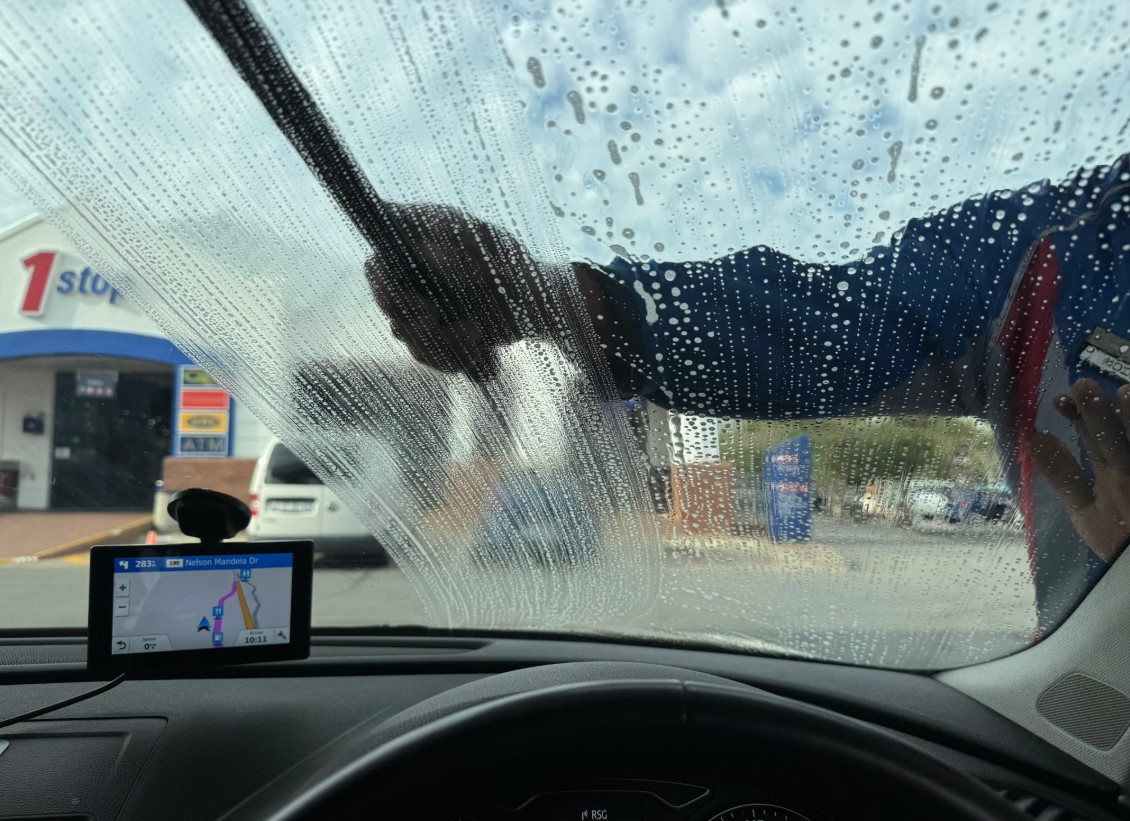
A quick stop at a service station can prevent major problems later. Engen forecourt staff are trained to help motorists with tyre pressure checks, wiper inspections, window cleaning, oil top-ups and windscreen wash refills. “Engen service stations are equipped to assist with these basic checks,” says Vallabhjee. “Take the time. It improves safety and could save you money in the long run.” He also reminds drivers to look after themselves: stay hydrated, take regular breaks, and grab a Brazmata coffee or snack to remain alert.

6. Fuel Matters Too
High-quality fuels can make a noticeable difference in performance, especially on long trips. Vallabhjee notes that products such as Engen Primax Unleaded and Engen’s ultra-low sulphur diesel (10 ppm) help keep engines clean, protect injectors and improve fuel efficiency over time.

7. Plan Your Route – and Know Help Is Close
With the country’s largest service station footprint, Engen ensures that help is never far away. Vallabhjee points out that many of Engen’s 1 040+ forecourts can be found on all major routes and in most towns across South Africa, offering motorists peace of mind during long journeys.

8. A Small Habit That Makes a Big Difference
If he had to offer just one rule, Vallabhjee says it would be this: “Stop at an Engen service station before and during your trip. Let the team run through the key checks – it gives you peace of mind and keeps your family safe.”

Drive Safe, South Africa
As we head into the busiest travel season of the year, a few minutes of preparation can prevent mechanical failures, reduce roadside emergencies and save you from costly repairs. Safe cars save lives. 

Take your time, check your vehicle, and enjoy a smooth journey this festive season.

Source: Arrive Alive

Two officials suspended over matric exam paper leaks

Basic Education Minister Siviwe Gwarube has confirmed that two officials from the Department of Basic Education (DBE) have been suspended with immediate effect following a breach that saw matric exam papers leaked to learners in Pretoria.

Gwarube revealed the development during a media briefing on Thursday, saying the leak was detected through the system’s stringent marking processes. 

This year, over 900 000 candidates sat for the 2025 exams across 7 000 centres, supported by thousands of invigilators and more than 51 000 markers and moderators. 

“The National Senior Certificate (NSC) examination is one of the largest and most complex national undertakings in our democracy.  

“It is through our markers’ diligence that we were able to detect a breach in our exams. This morning, I want to inform the country that our systems worked exactly as they were designed to do: to detect, isolate, investigate and address any manipulation of the NSC exams,” the Minister said. 

How the breach was detected
Marking began on 1 December at 183 centres nationwide, and early in the process, markers in Gauteng picked up an anomaly in six English Home Language Paper 2 scripts.

“The Gauteng Department of Education officially alerted the national Department of Basic Education, on 02 December 2025, to an unusual similarity between the answers provided by a candidate with the answer provided in the marking guideline for English Home Language Paper 2,” she said. 

The Minister said a preliminary investigation confirmed the suspicion.

“The breach did not come to light through rumours. It was not discovered by chance. It was detected because markers… are equipped to know the difference between authentic learner responses and content that should only be accessible to markers,” she said. 

Extent of the leak
Gwarube said interviews with 26 learners revealed that they had gained access to question papers and marking guidelines prior to examinations. Investigators traced the material back to the DBE’s national office. 

“Of the 162 papers that we had set, only 3 subjects were accessed prior to the examination: English Home Language Papers 1, 2 and 3; Mathematics Papers 1 and 2; and Physical Sciences Papers 1 and 2,” she said.
 
These papers were distributed through a USB device, with the leak confined to seven schools in one Pretoria area.

“Our systems are robust. They have allowed us to identify that the suspect involved is an employee of the Department of Basic Education who has a child in Grade 12. Evidence suggests that she received the question paper from another DBE employee who works within the examination unit,” the Minister said.

The Minister said that both staff members have since been suspended.

Independent investigation launched
To ensure full accountability, Gwarube announced the establishment of a National Investigative Task Team (NITT), which will begin work within 24 hours.

The NITT will include an independent chairperson; Umalusi; Universities South Africa; Teacher Unions; SAQA; DBE officials; and a private forensic investigator.

Its mandate includes confirming the source and spread of the breach, identifying all implicated learners, safeguarding the credibility of the 2025 NSC, and recommending measures to prevent future breaches. 

Additional processes including investigative marking, verification of scripts, interviews, statistical analysis, and correlation of exam marks with school-based assessments are being deployed.

Umalusi informed, results not affected

The Minister said that Umalusi has been formally notified and will receive both a preliminary and final report before results approval.

“We want to reassure the country that no results have been finalised; no certification processes have begun and a preliminary report will be provided to the National Examination Irregularities Committee on 29 December 2025, and the final report will be submitted to both the Minister and Umalusi on 31 December 2025,” she said.

The Minister will work with the team to study the report to ensure that the department is ready to announce the results on 12 January 2026. 

“Our investigations show that this incident was limited to a few individual learners in 7 schools. There is no evidence of systematic and widespread breaches and as such we don’t expect it to affect the credibility of the NSC,” she said. 

Zero tolerance for cheating
Gwarube said the exam system is designed with multiple layers of protection, including secure setting and printing; strict distribution protocols; locked storage; trained invigilators; multi-tiered marking by skilled markers; moderation and advanced statistical verification. 

“The fact that only a limited number of scripts triggered our alarms; that markers escalated their observations as per their training; and the system responded immediately and in full force, demonstrates that our system is functioning and able to address the matter immediately.

“This sends a clear message to the public - you cannot cheat the NSC system and get away with it. We will detect it; we will investigate it; and there will be consequences,” she said. 

The Minister further urged learners to uphold integrity. 

“Your matric certificate is a symbol of your effort, your resilience, and your integrity. When you cheat, you not only break the rules but you undermine your own future.”

The Minister assured that the department “will leave no stone unturned” and that criminal investigations are underway, with the South African Police Service notified of the possession of stolen state property.

“South Africa can rest assured that any cheating in the NSC examinations will be detected. Our systems are strong, our professionals are vigilant, and we will always act to protect the integrity of our national examinations,” she said.

Next steps for the affected learners and communities
Gwarube urged calm among parents and school communities in the affected Pretoria area, stressing that the department was moving decisively while ensuring fairness. 

She said the DBE would be communicating directly with the schools involved and confirmed that the staff members suspected of orchestrating the leak have been immediately suspended.

She added that implicated learners would not be prejudged. 

“Learners who are implicated will be afforded due process and treated in accordance with established prescripts. We are not making assumptions about guilt – each case will be individually assessed,” she said. 

“We follow a zero-tolerance approach to cheating in the NSC exams and are committed to supporting innocent learners who worked hard and played no part in this breach,” said the Minister.

NSRI urges caution as the holidays begin: Stay safe this festive season

As the summer school holidays start, the National Sea Rescue Institute (NSRI) would like to take this opportunity to wish everybody a safe and joyful festive season. We hope that everyone enjoys time with loved ones, takes the opportunity to recharge, and steps into the New Year refreshed.

At the same time, we strongly encourage people to prioritise safety, especially in and around water.

Over the past three weeks, NSRI rescue crews have seen a notable increase in emergency responses, many involving families and children on holiday at beaches, rivers, dams, and swimming pools.

"Public vigilance, lifeguard services, and community collaboration continue to save lives every day," says Andrew Ingram, NSRI Communications Manager.

“Pink Rescue Buoys have now been used in 230 rescues that we know of, with the most recent rescue where a Pink Buoy was used being for a father and his daughter at Brenton-On-Sea near Knysna. The impact of Public Rescue Equipment and emergency flotation cannot be overstated.”

Recent Stats at a Glance:
*NSRI volunteers have responded to 13 drownings in progress in the past three weeks. Tragically, 7 of these were fatal drownings. This does not include incidents that the NSRI was not called-out to.
*A combination of NSRI volunteers, NSRI lifeguards, and members of the public has saved twenty-five lives over this period.
*5 people have been rescued using Pink Rescue Buoys.
*Widespread use of the Free NSRI SafeTrx App and positive, proactive public involvement have all saved lives.
*This holiday season, the NSRI encourages everyone, families, and communities to help prevent tragedies by staying informed and prepared.

NSRI's Top 5 Holiday Water Safety Tips

1. Avoid alcohol when swimming or boating
Alcohol impairs judgment and may put your life at significant risk if you swim after drinking alcohol. When drinking alcohol, ask another responsible adult to supervise children in or near water. The same rules that apply to drinking and driving also apply to water.

2. Always supervise children
Drowning is silent. There is often no splash or cry for help. Keep young children within arm’s reach and never take your eyes off them near water. Do not be distracted by your phone.

3. Swim where lifeguards are present
Choose to visit a beach where lifeguards are on duty and swim between the lifeguard flags. Most beachgoers can’t identify rip currents. Lifeguards can. If you’re caught in a current, float, wave for help, and swim sideways out of the current before heading back to shore.

If someone else is in danger in the water:
*Call for help.
*Give them something that floats (such as a Pink Rescue Buoy).
*Only attempt a rescue if you have flotation and are confident in your ability. Even strong swimmers should not enter the water to attempt a rescue without something that floats.

4. Save emergency numbers
*Call 112 from any cell phone (a free call which connects to all emergency services).
*NSRI Emergency Operations Centre: 087 094 9774. One call can activate any Sea Rescue station nationwide.
*Save these numbers before your holiday starts. If you don’t have them in an emergency, Google "NSRI emergency number" in a crisis.

5. Take extra care during summer rain and flooding
*Never try to cross fast-flowing rivers on foot or in a vehicle.
*Don’t enter the water to assist someone without flotation.
*In flood situations, call for help and stay safe. Don’t become a second victim.

For more safety information or to support the NSRI, visit www.nsri.org.za.
error: eRadio is protected !
Scroll to Top