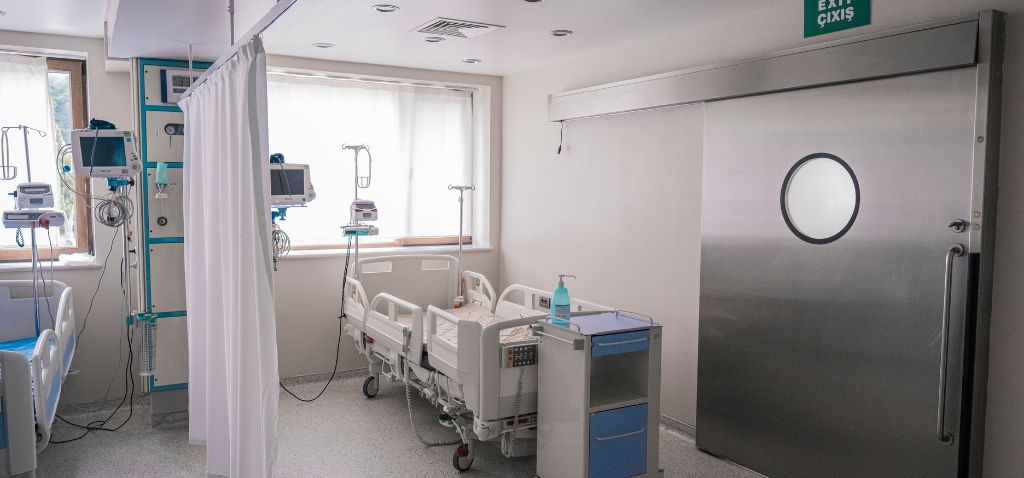
Tygerberg Hospital completes SA’s first fully internal limb reconstruction

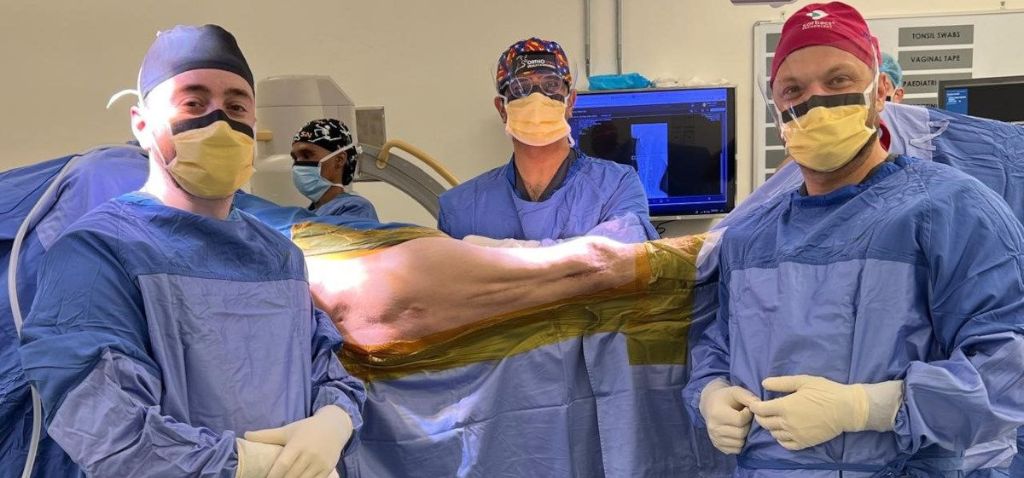
Tygerberg Hospital has reached a major national milestone by performing South Africa’s first fully internal bone transport and limb-lengthening reconstruction. 

The hospital is a flagship tertiary facility of the Western Cape Department of Health and Wellness (WCDHW). 

In partnership with Stellenbosch University, the hospital now stands among only a few centres worldwide with the capability to perform this advanced limb salvage technique within the public sector. 

The provincial department said the patient, a 64-year-old former police officer, had lived with the long-term consequences of a severe gunshot injury sustained in 2018. 

“Despite multiple surgeries elsewhere, he continued to struggle with chronic pain, an unhealed fracture, and a substantial difference in leg length that affected his quality of life.” 

Professor Nando Ferreira said: “This operation demonstrates how far we have come in building world-class limb reconstruction capacity within the South African public sector. For patients who have lived for years with chronic pain and disability, advanced internal bone transport offers a genuine second chance at normal function.”
tygerhospital
The surgeons had to reconstruct a 50 mm bone defect and correct a 30mm limb-length discrepancy. 
The fully internal device allows surgeons to complete both bone transport and subsequent limb lengthening without external frames, improving comfort, reducing complication risks, and shortening recovery. 

The newly regenerated bone is expected to form over roughly 100 days, followed by several months of consolidation

According to the International Centre for Limb Lengthening, bone transport is a procedure to grow new bone in a region where there is a missing section of bone due to infection, trauma or disease.

Ferreira said his unit was selected as one of only a few centres worldwide to use this procedure during its limited market release. 

“This level of innovation reflects the strength of our surgical team, our academic partnership, and our commitment to delivering patient-centred care at an international standard,” he continued. 

Expanding on the clinical benefits, Dr Edward Fuzy explained how this method allows them to tackle complex bone loss in a single operation while avoiding many of the complications of traditional approaches. 

Tygerberg Hospital CEO, Dr Matodzi Mukosi, welcomed the milestone as evidence of the institution’s excellence. 

“This breakthrough highlights the incredible talent and innovation within our hospital. It shows what is possible when clinical excellence and strong partnerships work together for our patients.”

The department said the milestone reflected the Western Cape’s broader effort to build a health system that supports people throughout their life journey. The advanced trauma and limb reconstruction services play a vital role in helping residents live well by restoring mobility, dignity, and independence. 

“The skills developed through this procedure could strengthen orthopaedic care for children who start life with congenital limb differences or experience early trauma, helping them start well.”

This means older adults, who are increasingly vulnerable to injury and complex fractures, could benefit from safer surgical innovation that helps them age well with greater confidence and mobility. 

“Achievements like this are only possible because the provincial health system continues to run well through strong governance, academic partnerships, and the commitment of clinicians who serve the 85% of residents who rely on public healthcare.” 

The department said that for many patients in the Western Cape, particularly those from vulnerable communities who carry the long-term burden of trauma-related injuries, this breakthrough offers a realistic pathway back to work, independence, and improved quality of life. 

NATJOINTS, Madlanga Commission discuss safety of witnesses

The National Joint Operational and Intelligence Structure (NATJOINTS) on Saturday met with officials of the Madlanga Commission of Inquiry following the killing of Marius van der Merwe.

Van der Merwe, who was killed on Friday, 5 December, recently testified before the Judicial Commission of Inquiry into Criminality, Political Interference and Corruption in the Criminal Justice System as Witness D.

Officials from the Department of Justice and Constitutional Development also formed part of the meeting to discuss the safety and security of witnesses and officials.

The meeting, held in Pretoria at the NATJOINTS Operations Centre, agreed to enhance the Commission’s security operational plan over the next two days. 

“While extensive measures have been put in place to secure witnesses and officials since the start of the Commission, the meeting identified a need to heighten these measures by roping in the NATJOINTS and all other relevant role players.

“As investigations proceed into the murder of Mr Van Der Merwe, members of the public are urged not to speculate,” NATJOINTS said, adding that media will be briefed in due course. 

Van der Merwe was shot in full view of his family outside their Brakpan home. He was a Brakpan-based security industry member and former Ekhurhuleni Metropolitan Police Department official.

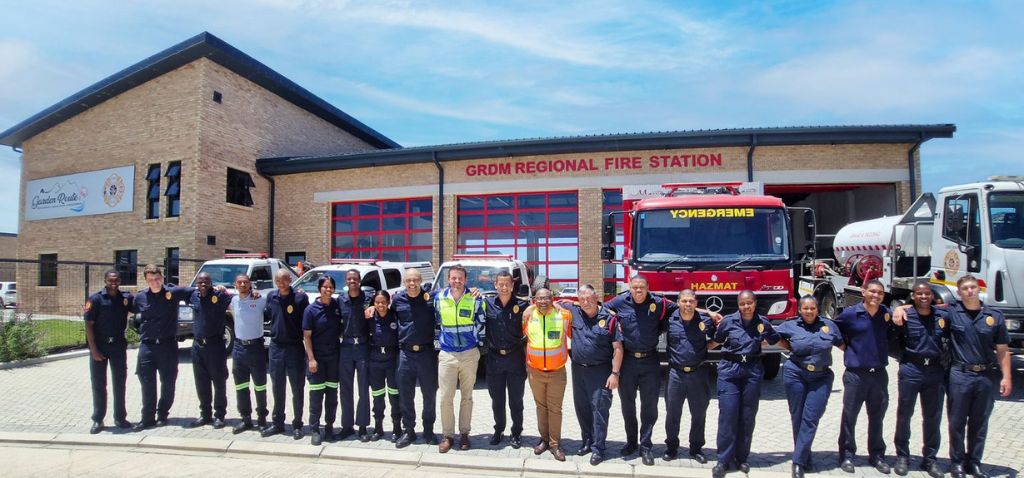
Garden Route District Municipality Firefighters ready and on standby for holiday season

Due to the region’s high-risk summer fire season, the Garden Route District Municipality (GRDM) has enhanced its firefighting capacity.

“We’ve already noted the extremely dry vegetation, coupled with lower than usual rainfall and declining dam levels, and persistent hot and windy conditions. It is for this reason that the GRDM Firefighters have again increased their operational readiness across the district,” said Deon Stoffels, Chief Fire Officer.

According to Executive Mayor Marais Kruger, “the GRDM employs 32 full-time firefighters across its three fire stations located in George, Riversdale, and Ladismith. During the peak summer period, an additional 30 seasonal (temporary) firefighters are brought on board in from December 2025 until end of March 2026.”

The district’s firefighting fleet is equipped to respond rapidly across diverse and often challenging terrains.

Resources include:

4×4 off-road LDV skid units designed for rugged terrain and first-response deployment.
4×4 off-road fire trucks for mountain and veld firefighting.
Water tankers to support operations in water-scarce areas or in locations where hydrants are unavailable.

GRDM also has a chemical fire (otherwise known as hazmat) responsibility and has a fully equipped hazmat response unit at its regional station. Additionally, a first response equipped mobile trailers at the Riversdale station and at the Knysna Fire Department for similar purposes in the Bitou and Knysna area.

The procurement process is in an advanced stage for a 3rd First Response mobile trailer for the Kannaland and Oudtshoorn areas.

Aerial resources for first hour deployment to high-risk fires, are funded through the Western Cape Government’s Fire and Rescue Services and Disaster Management Directorate as well as from the Department Forestry’s, Fisheries, and the Environment. Five aircraft is planned for this purpose, and will be positioned at Denneoord, comprising of Command-and-Control aircraft, helicopters and a fixed-wing bomber plane. Additionally, ad-hoc resources are stationed at George Airport, and Still Bay, comprising of a bomber plane and helicopter respectively.

GRDM Firefighters maintain round-the-clock readiness. All three stations operate 24/7, with Riversdale and Ladismith functioning on an after-hours standby system.

GRDM’s Mandate
Veld and mountain fires.
Chemical and hazardous materials incidents.
Support during major emergencies through Mutual Aid Agreements with all municipalities, including with PetroSA.

Within Kannaland, GRDM performs the full firefighting function, including:
Structural fires.
Motor vehicle incident response.
Hazardous materials.
Highly prevalent snake removal call-outs during summer.

The following fire safety measures are essential for residents, businesses, and visitors:
-Protect homes and structures by maintaining a safe, clear, defendable space.
-Fires can be reduced by reducing the burn of materials that are flammable, such as dry wood, biomass, and excessive debris.
-Make sure firebreaks are properly maintained and compliant.
-Immediately report illegal burning, smoke, or suspicious activity.
-Local municipalities issue burning permits that must be strictly adhered to. From 1 December to 28 February 2026, controlled burns are not permitted.
-Stay informed by following official alerts and communicating with the appropriate authorities.
-Keep outdoor braai fires supervised, ensure they are fully extinguished, and use only designated braai areas.
-Campsite and resort owners must enforce strict oversight of visitor braai fires.

For emergencies, residents are encouraged to contact their local fire station or the GRDM Emergency Call Centre on 044 805 5071 or WhatsApp 081 709 5193.

NSRI Warns Beachgoers to Take Extra Care as Spring Tide Peaks

The National Sea Rescue Institute is urging the public to be cautious along the coast this weekend, after a full moon spring tide peak. The alignment of the sun, moon and Earth during the full moon phase increases the gravitational pull on the oceans, which leads to higher-than-normal high tides and lower-than-normal low tides.

This increased tidal range can create stronger currents, particularly in narrow inlets, and may result in more powerful rip currents that pose dangers to swimmers. Some coastal hiking routes may also become unsafe or inaccessible during high tide, and shoreline anglers are urged to be especially careful as waves may reach further up rocks and beaches than usual.

Beachgoers are advised to swim only at beaches where lifeguards are on duty, and always between the designated flags. The NSRI also encourages the public to check daily weather updates from the South African Weather Service and to consult tide timetables before heading out.

Hikers are urged to avoid trails that may be cut off by rising tides, while anglers should remain well back from the water and wear life jackets when fishing from rocks or cliffs. They are encouraged to carry basic flotation devices that can be thrown to someone in trouble.

Boaters and paddlers should ensure they wear life jackets, carry safety gear and keep mobile phones fully charged in waterproof pouches. The NSRI SafeTrx app can also be used to log trips and request assistance quickly.

The public is further reminded to avoid alcohol when taking part in any water-related activities, to supervise children closely, and to be cautious around rivers, lakes and dams—especially after heavy rain or when conditions are windy.

The NSRI says spring tide effects can last several days, and encourages people to stay aware of changing tidal conditions, follow local safety alerts and exercise caution during both incoming and outgoing tides.

For emergency assistance, call 112 from your cellphone.

Public urged to stay alert this fire season: Prevent wildfires, save lives

CapeNature is calling on the public to stay alert and proactive as the wildfire season gears up, reminding all that the cost of runaway fires is far greater than many realise. Each year, wildfires threaten lives, destroy homes and infrastructure, and cause lasting damage to the Western Cape’s biodiversity.

From displaced families and lost livelihoods to injured wildlife and devastated habitats, the impact is felt across communities, ecosystems, and the economy.

During the 2024/25 fire season, CapeNature’s cost for fire suppression alone exceeded R20 million.

Damage to the Entity’s infrastructure was also severe, while private landowners also sustained damage.

Legal claims for damages to forests and infrastructure exceeded R300 million.

Yet the true cost of fire cannot be measured in rands alone. Wildfires take lives, displace families, and put communities at risk. They also carry a devastating price for nature. In 2024/25, a total of 97 fires covering over 75 000 hectares burned, destroying vital habitats, threatening wildlife, and reducing biodiversity resilience. Of the area burned, 42% was private land, and 58% CapeNature-managed land.

By fighting fire on both private and CapeNature-managed land, the Entity showcases its commitment to containing fire as soon as possible. The losses also remind us that the impact of fire ripples far beyond infrastructure and can undermine the ecological foundation on which both people and nature depend.

Wildfires are a natural part of the landscape, but the increasing frequency and severity of human-caused fires place an unsustainable burden on people and nature alike. With only 19.5% of fires resulting from natural means during the last fire season, preventing fire remains our best protection.

By making simple, responsible choices - such as never leaving open flames unattended, disposing of cigarette butts correctly, clearing defensible spaces around properties, and reporting smoke or fire immediately - each person can play a critical role in safeguarding lives and landscapes.

CapeNature also emphasises that fire prevention is not only a government responsibility but a shared community duty.

"When a fire breaks out, everyone pays the price, whether through lives lost, infrastructure destroyed, or biodiversity harmed. But when we act before a fire can even start, everyone benefits," said Dr Ashley Naidoo, CEO of CapeNature.

This season, CapeNature is taking an extra step to share practical knowledge with the public. Through the new Fire Fridays with Kai and Friends social media series, CapeNature will provide weekly tips on fire awareness and prevention. The campaign is designed to educate families, schools, and communities in a simple and engaging way, making fire safety knowledge more accessible.

CapeNature calls on all residents, landowners, and visitors to stay vigilant during the wildfire season and to work together in keeping the Western Cape’s people, properties, and natural heritage safe.

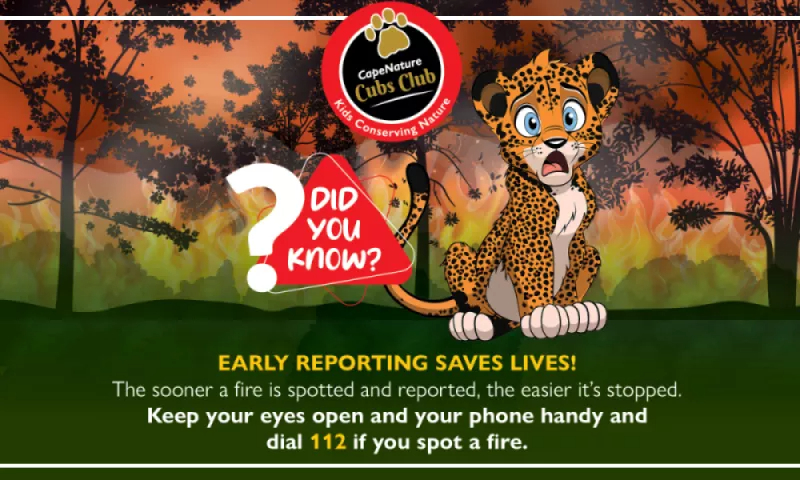
If prevention fails, detection is the next defence, and the public should report any sign of smoke or fire by dialling 112 from a mobile phone or 10177 from a landline.

Be safe on the roads this festive season

Transport Minister Barbara Creecy has called on all South Africans to take personal responsibility for reducing crashes and fatalities on the country’s roads as the 2025/26 festive season begins.

The Minister officially launched the 365-day Arrive Alive Road Safety Campaign in Kroonstad, in the Free State on Sunday, emphasising that safer roads depend on every driver, passenger and pedestrian making responsible choices. 

In her remarks, the Minister said the theme for this year’s campaign, ‘It Starts With Me’, reflects the critical role of individual behaviour in preventing loss of life.

“We have chosen this theme to highlight the point that each and every one of us has an important role to play in reducing road accidents and road fatalities,” Creecy said.

She stressed that most crashes are preventable and linked to human behaviour.

“Drivers, pedestrians and passengers make important choices on the roads every day. When we make the right choices, we arrive alive,” she said. 

Creecy said the festive period required heightened vigilance, as millions travel for holidays, family gatherings and year-end celebrations.

“Our festive season campaign is aimed at ensuring that each and every one of us will make the correct choices on the roads so that we can go home for our family reunions. We can enjoy well-deserved breaks, we can participate in celebrations, and we can all return safely home in January,” the Minister said. 

She highlighted South Africa’s commitment to the UN Decade of Action for Road Safety (2021–2030), which seeks to halve global road deaths by 2030. 

She announced a significant milestone for 2025. “For the first time in five consecutive years we have this year managed to reduce the road death toll by 700 people,” she said. 

However, she cautioned that the overall numbers remained deeply concerning.

“With over 9 400 fatalities on our roads already this year, we all agree that the accident rate is much, much too high, and there is still a lot more work that we have to do,” the Minister said. 

Evidence-driven enforcement
The 365-day campaign is based on evidence gathered throughout the year, which shows that human error accounts for nine out of ten accidents. The provinces of Gauteng, KwaZulu-Natal, Western Cape, Eastern Cape and Limpopo collectively account for the majority of fatal crashes.

The Minister said pedestrians account for more than half of all those who are killed on the roads.

As a result, the campaign will focus on behaviour change, enhanced law enforcement and 24-hour patrols in high-risk areas.

“A massive public education and awareness campaign; partnerships with all levels of government and all aspects of civil society; enhanced law enforcement operations focusing on driver and pedestrian behaviour and 24-hour patrols particularly in high risk areas – intensified law enforcement operations. 

“Research shows weekends, late-night travel and fatigue periods are high risk. We will increase roadblocks, checks for vehicle roadworthiness, driver licenses, seatbelt and child-restraint use, as well as clamp down on speeding and drunken driving,” Creecy said.

Priority routes identified by the department include the N1, N2, N3, N4, N17, as well as notorious secondary roads such as the Moloto Road.

Creecy welcomed early signs of responsible behaviour from motorists following law-enforcement reports from the morning’s operations.

“There were several drivers who had been tested for alcohol use today, and none of them tested positive. That's the way we need to behave when we get behind the wheel of a car,” she said. 

Public transport and cross-border focus
Public passenger transport, including minibus taxis, will come under increased scrutiny, supported by partnerships with SANTACO and the NTA. Cross-border operations will target driver fitness, vehicle roadworthiness, overloading and compliance with permit conditions.

Waybridges across major national routes, including Heidelberg (N3), Donkerhoek (N4), Mantsole (N1), Potchefstroom (N12) and Pinehaven (N14), will intensify inspections.

Community mobilisation and awareness
The Minister emphasised that enforcement alone would not reduce fatalities, public education and community involvement remain central.

Provinces have submitted 537 road safety education and awareness activities for the festive season, targeting taxi ranks, bus stations, malls, churches, toll gates, rest stops, sporting events and border posts.

The Minister urged motorists to prioritise vehicle checks, rest breaks, valid licences, seatbelts and sober driving. 

Passengers are encouraged to take responsibility for their own safety, while pedestrians are encouraged to wear visible clothing. “Please wear something that is white, not black, because it's very difficult for you to be seen,” she said. 

Creecy said meaningful reductions in road fatalities depend on a united national effort that includes government, civil society, faith-based organisations, emergency services and the private sector.

Government welcomes continued GDP growth in Q3 of 2025

Government has welcomed the latest Gross Domestic Product (GDP) figures released by Statistics South Africa, confirming that the economy grew by 0.5% in the third quarter of 2025.

This is the third consecutive quarter of expansion, following the 0.9% growth recorded in the previous quarter.

The steady improvement highlights the resilience of the economy and the positive impact of ongoing structural reforms aimed at boosting inclusive and sustainable growth.

Several sectors contributed to the uptick. Trade, catering and accommodation grew by 1.0% on the back of stronger retail, wholesale, tourism and food services activity. Mining expanded by 2.3%, driven by platinum group metals, manganese ore and coal.

Finance, real estate and business services grew by 0.3%, general government services by 0.7%, and manufacturing by 0.3%. Agriculture, forestry and fishing also improved by 1.1%, supported by better output in crops, horticulture and animal products.

Government says that although challenges persist, the latest data shows the economy is gradually recovering.

Efforts to support growth, investment and job creation will continue.

Teenager Dies in Drowning Incident Near Hermanus New Harbour

A 17-year-old local boy has died following a drowning incident near the Hermanus New Harbour on Tuesday afternoon.

NSRI Hermanus station commander, Edrich Kotze, says crews from NSRI Hermanus, CMC ambulance services, ER24 and the South African Police Service responded to the cliff path at 13:27 after reports of a drowning in progress.

When NSRI crew arrived, paramedics were already performing CPR on the teenager. Despite all efforts to resuscitate him, he was declared dead at the scene.

His body was taken into the care of police and the Government Health Forensic Pathology Services. Police have opened an inquest docket.

It appears the teenager encountered difficulty while swimming. Friends reportedly carried him up to the cliff path and alerted authorities, where paramedics met them and immediately began CPR.

Condolences have been extended to the family and friends of the deceased.

More than 90 motorists arrested as festive season begins

Law enforcement officers have arrested more than 90 motorists and issued 5 626 traffic fines on the first day of the national festive season road safety campaign.

The Road Traffic Management Corporation (RTMC) said the arrests, made on 1 December, were linked to offences including driving under the influence of alcohol, speeding, and reckless or negligent driving, among others.

“Of particular concern is that more than a third of the individuals had outstanding warrants of arrests against their traffic fines that they had ignored to pay. Motorists are advised to ascertain if they have outstanding traffic fines before embarking on their holiday trips in the coming weeks,” the RTMC said on Tuesday.

The festive period is likely to pose great challenges for law enforcement because of the increase in the number of vehicles and heavy rainfalls and infrastructure damaging storms. 

Moreover, the number of registered vehicles in the country has increased from about 13 613 451 in September to 13 646 029 in October.

“The increase in vehicle populations will most likely increase the burden on officers and cause more congestions on the roads during peak travel periods. Travellers planning long distance trips are advised to carefully consider their time of travel and avoid night time as more crashes occur after sunset.

“Motorists are further advised to take into consideration that heavy rains experienced by the country recently have compromised the quality of some of the roads. Therefore, travel must take place when visibility is clear to avoid possible potholes that can cause serious damage to vehicles and dent the joyous festive season spirit,” the RTMC said. 

Petrol & Diesel going up this December

The Minister of Mineral and Petroleum Resources has announced new fuel price adjustments that will take effect on 3 December 2025, driven by global oil prices, international product costs and the exchange rate.

South Africa’s fuel prices are reviewed monthly based on international crude prices, refinery margins, shipping costs and the Rand/US Dollar exchange rate.

Brent Crude oil averaged 63.54 US dollars a barrel during the review period, slightly down due to oversupply concerns and slower global demand. International petrol and diesel prices rose, however, because of low inventories and refinery outages in the Northern Hemisphere, increasing Basic Fuel Price contributions for all products.

The Rand strengthened marginally from R17.29 to R17.23 per dollar, softening some of the increases. The slate levy remains at zero cents per litre. The Minister also approved annual margin adjustments: 3.6 c/l for petrol and 5.48 c/l for diesel and illuminating paraffin.

LPGas retail prices will increase by 60 c/kg at the coast and 70 c/kg inland, while LPGas imported through Saldanha Bay will retail at a maximum of R32.99 per kilogram.

Fuel price changes effective 3 December 2025:
Petrol 93 and 95: +29 c/l
Diesel 0.05%: +65.48 c/l
Diesel 0.005%: +82.48 c/l
Illuminating paraffin (wholesale): +74.48 c/l
SMNRP for IP: +99 c/l
Maximum LPGas retail price: +24 c/kg, and +9 c/kg in the Western Cape.
error: eRadio is protected !
Scroll to Top