FlySafair Introduces Temporary Fuel Surcharge Amid Rising Global Fuel Costs

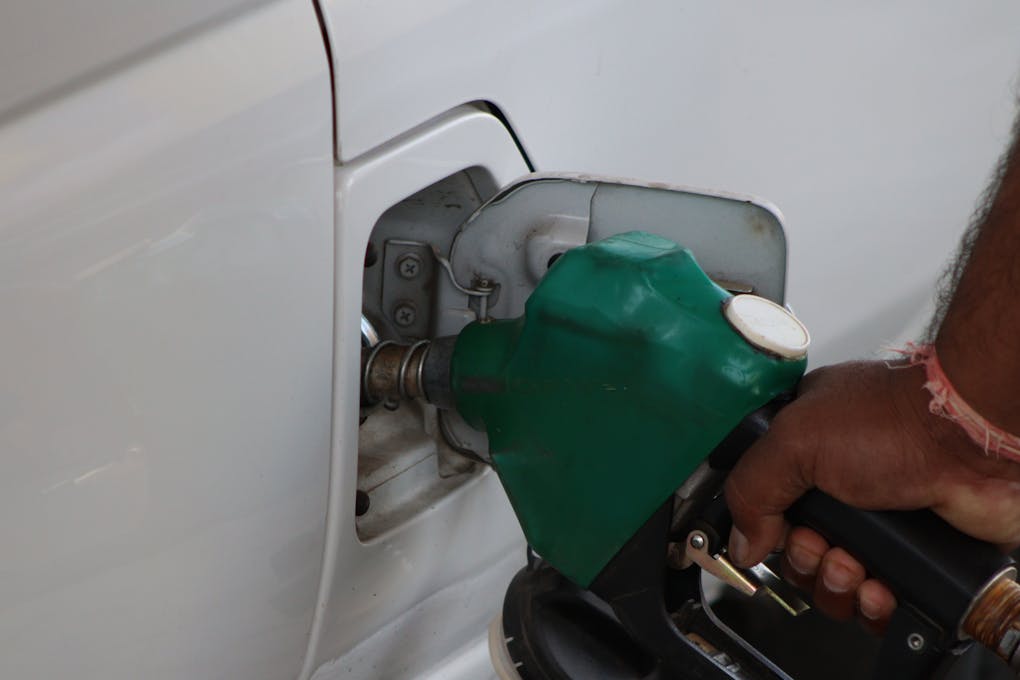
Low-cost airline FlySafair will introduce a temporary fuel surcharge on certain flights as rising global fuel prices put pressure on operating costs.

The airline says it has been absorbing higher fuel prices since the Middle East crisis began on 28 February, but the situation has now reached a point where some of the costs must be passed on to customers to ensure the long-term sustainability of the airline.

Jet A1 fuel prices at South African coastal airports have increased by about 70% in just one week. The spike follows disruptions to global oil supply linked to the effective shutdown of the Strait of Hormuz, a key shipping route through which roughly 20% of the world’s oil supply normally passes.

The temporary surcharge will take effect from today, 12 March 2026 and will apply only to flights departing on or before 12 May 2026.

FlySafair’s Chief Marketing Officer, Kirby Gordon, says the airline chose to itemise the surcharge separately on tickets to ensure transparency for customers.

Fuel is one of the largest operating expenses for airlines and typically accounts for about half of FlySafair’s direct operating costs. The airline estimates that the current fuel price increases add about R35,000 per flight hour for each Boeing 737-800 aircraft in its fleet.

The airline says the surcharge is intended as a short-term measure and will be reviewed regularly based on movements in jet fuel prices. It says the amount charged will vary depending on the length of the route to reflect the fuel required for each journey.

Passengers who have already booked flights will not be affected. Their ticket prices will remain unchanged and no surcharge will be added retrospectively.

However, bookings made from 12 March for flights departing on or before 12 May will include the surcharge as a separate line item on the ticket. Passengers who change an existing booking to a flight within that period will also be subject to the surcharge.

FlySafair says it has not previously implemented a fuel surcharge and has historically avoided passing fuel price volatility on to customers.

The airline adds that the surcharge is not intended to generate profit but to help maintain operations while fuel prices remain unusually high. The charge will be reduced or removed once market conditions improve.

Airlines around the world have adjusted pricing in response to volatile fuel markets. Several international carriers, including Japan Airlines and All Nippon Airways, already use fuel surcharges linked to jet fuel benchmarks.

Industry analysts say higher fuel prices can affect both domestic and international travel demand, particularly among leisure travellers, and may have knock-on effects for tourism and hospitality sectors.

FlySafair says it continues to monitor global fuel markets and supply conditions while working with suppliers to manage costs. The airline maintains that its goal remains to keep air travel accessible while maintaining financially sustainable operations.

Vaccine Boost as Sixth Foot-and-Mouth Case Confirmed in Garden Route

A sixth case of Foot-and-mouth disease has been confirmed on a farm near Mossel Bay in the Western Cape.

The farm is just outside the 10-kilometre quarantine zone. Garden Route disaster management head Gerhard Otto says strict livestock movement controls remain in place. More than 14,000 animals in the area have already been vaccinated.

Meanwhile, the province’s response has received a boost after 100,000 additional vaccine doses arrived at Cape Town International Airport. The vaccines will be distributed across the West Coast, Cape Winelands and Garden Route districts to speed up vaccinations and help contain the outbreak.

March events provide a major economic boost

Cape Town is hosting at least 91 events during March, with more permit applications still coming in. Collectively, these events are expected to attract approximately 300 000 attendees to venues across the metro in the coming weeks.

March includes several signature annual events that deliver a significant economic injection and reinforce the city’s position as a leading global events destination.
 
‘March is undeniably one of the busiest months on Cape Town’s events calendar. It means a significant boost to our tourism sector, with hotels, restaurants, transport operators and retailers all benefitting from the increased footfall and extended visitor stays.

Four of the events have a combined economic impact of around R1.8 billion. It is a powerful demonstration of how events drive economic growth while showcasing the very best of Cape Town to the world,’ said Mayoral Committee Member for Safety and Security, Alderman JP Smith.   

The City of Cape Town-sponsored Standard Bank Ladies Open teed off this month of events at the Durbanville Golf Club on Thursday, 5 March, featuring 90 players from more than 20 countries.
 
On Sunday, 8 March, around 30 000 cyclists will take part in the 48th edition of the Cape Town Cycle Tour over three distances – the flagship 109 km circuit, the 78km from Fish Hoek and the 42km race.  
 
On Tuesday, 10 March, Cape Town City FC will take on log-leading Milford FC in a Motsepe Foundation Championship fixture at Athlone Stadium.
 
Entry to the match is free. Spectators can secure their seat through Webtickets. Kick off is at 15:30, with gates opening an hour before.  
 
On 14 March, the National Extreme Festival blasts off at the Killarney International Raceway. 
 
South Africa’s premier Circuit Racing Series features several competitive categories, including the Polo Cup, Extreme SuperCars Driven By Dunlop, Formula Ford Kent, GR Cup, MSA4, South African Touring Cars, SupaCup, ZX10 Masters Cup and the Rookie Cup.

The National Championship Series attracts around 150 visiting teams, with around 700 race crew and travelling support, to Cape Town. 
 
Tickets  are available through Webtickets from R40. Children under 12 enter free.
 
This month will also see the return of the Absa Cape Epic Prologue, taking place at Durbanville’s Meerendal Wine Estate on Sunday, 15 March. 
 
And, on Saturday, 21 March, around 1 500 performers will entertain crowds along Somerset Road and Green Point Main Road for the 16th edition of the Cape Town Carnival.

Other highlights for March include:  

*DHL Stormers vs Dragons RFC – DHL Stadium on 22 March 2026
*Cape Town Triathlon - Oceana Power Boat Club on 22 March 2026
*Cape Town International Jazz Festival Free Concert - Greenmarket Square on 25 March 2026
*Cape Town International Jazz Festival – CTICC on 27 & 28 March 2026
*Wynberg Family Festival - Maynardville Park, Wynberg from 27 – 29 March 2026.
*Cape Town Sixes Festival – Western Province Cricket Club, Rondebosch on 28 & 29 March 2026
*DHL Stormers vs Edinburgh – DHL Stadium on 28 March 2026
*SPAR Women’s Challenge - Green Point Precinct on 29 March 2026
*Bafana Bafana vs Panama – DHL Stadium on 31 March 2026
 
For more information on these and other events hosted in Cape Town, visit www.eventsincapetown.com.   

How NSRI Supports Communities During Fires

The National Sea Rescue Institute exists to save lives at sea and on inland waters. Fire response is not part of its core mandate, and any involvement in wildfire incidents must take place within South Africa’s legal and emergency-response framework.

Retired Koeberg fireman and former Melkbosstrand Station Commander Rhine Barnes explains that the Fire Brigade Services Act makes provision for formally appointed firefighters and volunteers who operate under the authority of a Chief Fire Officer.

For this reason, when NSRI volunteers are present at fire incidents, their involvement is carefully managed and guided by the fire service in charge.

Rhine explains that the law provides clear boundaries for members of the public, including NSRI volunteers. A member of the public may not:

-Join an active firefighting operation
-Enter the danger zone of the fire ground
-Take instructions directly as a firefighter
-Exercise any powers granted to fire brigade members

This legal boundary is critical. It protects volunteers and ensures that fire scenes remain structured, controlled and safe.

How NSRI Volunteers Step Forward

Within these limits, NSRI volunteers are often present when wildfires threaten their towns and communities. Their motivation is rooted in the organisation’s culture of service.

“The very nature of the NSRI is to save lives and to serve those who need help. This is the driving factor that prompts a crewmember to get involved and to assist wherever possible when the community needs it most,” Rhine says.

That instinct does not disappear when an emergency happens on land. When fire services are stretched, and communities are under threat, NSRI crews are often nearby, trained in teamwork, risk awareness and incident discipline.

Their role is not to replace firefighters, but to support them when requested and authorised.

A Story from the Fire Line

Rhine recalls a wildfire that once moved rapidly toward Duynefontein in Melkbosstrand. At the time, he was the Chief Fire Officer and had access to a large fire engine, but not enough firefighters who could leave their posts.

“I asked for volunteers from Station 18, and in no time, had a truck full of willing hands who would use the hoses and equipment available to put out the fire. The crew were almost as excited to be driving around in a fire engine as they were going to sea in a rescue vessel.”

The story is not about Sea Rescue becoming firefighters. It is about trained volunteers responding when asked, under proper authority, in a moment when extra hands made a difference.

Limits, Safety and Discipline

Rhine is clear that assistance must be controlled and lawful. He warns that fire officers should not allow informal participation because of the risks involved. For NSRI stations that are regularly asked to assist, formal arrangements and training are essential.

“If a rescue station is regularly called upon to assist with fighting fires, then I suggest that the station first get the ok from Brett Ayres as the Operations Director before approaching the local authority Chief Fire Officer. There may be a need to set up a formal agreement and basic training requirement.”

Even clothing matters when assisting. “If a crewmember is not properly dressed, ie. Long pants and long sleeve shirt of natural fibres, closed shoes and a cap, they should not be involved in fighting the fire.”

And above all, crews must report to the incident commander and wait for instructions, not arrive independently or act on their own initiative.

Strengthening Community Trust

Supporting fire services, within legal and safety limits, reinforces the NSRI’s role as a trusted community organisation.

“From a publicity perspective, to portray the image of the NSRI as an organisation that will support and take care of their community in times of need, it is good for our crew to offer and render assistance.”

Rhine adds that fire services value working with disciplined volunteers. “A fire service would much rather deploy the members of a structured and disciplined organisation such as the NSRI than a member of the public.”

Wildfires test more than fire crews. They test communities, emergency systems and volunteers.

The NSRI’s involvement is not about fighting flames. It is about standing with communities under threat and offering lawful, safe and responsible help. Not as firefighters. But as Sea Rescue volunteers who understand what it means to respond when lives and property are at risk.

No immediate risk of fuel shortages, says dept

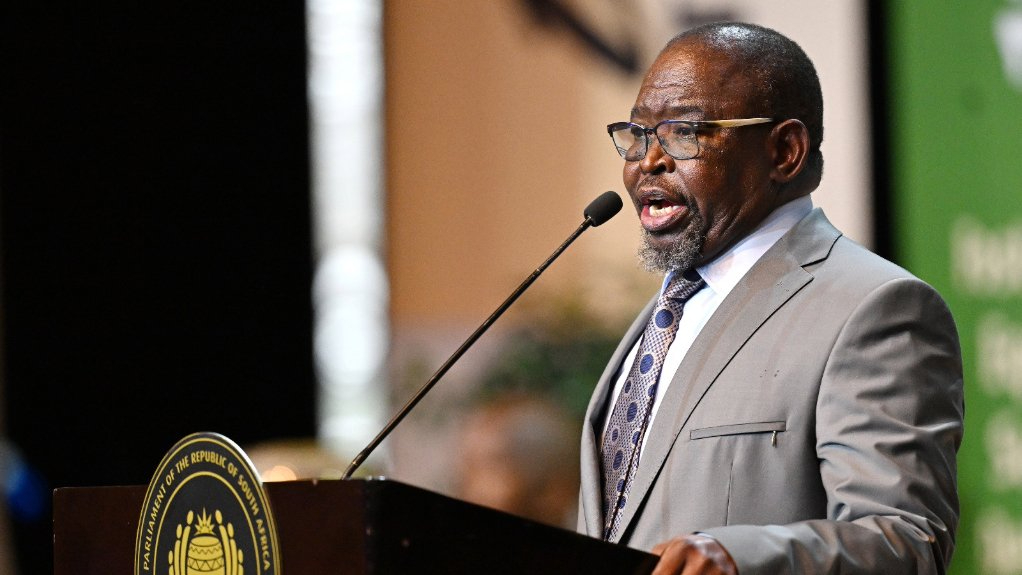
The Department of Mineral and Petroleum Resources has reassured South Africans that the country currently faces no immediate risk of fuel shortages, despite rising global oil prices and ongoing geopolitical tensions affecting international markets.

In a media statement issued on Tuesday, the department said it remains in constant communication with oil companies operating in the country to ensure the stability and security of fuel supply. 

The department is closely monitoring developments in the Middle East and their potential impact on global oil markets and fuel prices.

“While prolonged geopolitical tensions may exert pressure on international oil prices, the department wishes to assure the public that there is currently no immediate risk of fuel shortages in South Africa,” it said.

Despite the closure of several refineries in recent years, South Africa currently has two operational crude oil refineries, namely NATREF and Astron Energy, in addition to the Sasol Secunda coal-to-liquids plant, which continues to play a critical role in domestic fuel production. 

These facilities rely on crude oil imports sourced primarily from West Africa and increasingly from other countries across the African continent.

The department confirmed that the Astron Energy refinery is currently undergoing a planned maintenance shutdown. However, the company has secured sufficient fuel imports as part of standard operational planning to meet supply requirements during the maintenance period.

The department said the continued rise in international crude oil prices is expected to result in higher fuel prices at the pump from April 2026. The under-recovery on fuel prices has been fluctuating since the onset of the conflict. 

It said it will continue to monitor the situation closely and will provide further updates before the official fuel price adjustments for April are announced. 

“Oil companies that currently import refined petroleum products from countries affected by the conflict are actively exploring alternative supply sources to ensure uninterrupted fuel availability in the domestic market. 

“The department remains optimistic that the tensions will de-escalate in the near future, which would help stabilise global oil markets and contribute to improved fuel price conditions."

Koeberg’s Unit 2 reaches 365 consecutive days of operations

Unit 2 at the Koeberg Nuclear Power Station has successfully operated for 365 consecutive days - at an average of 99.4% Energy Availability Factor (EAF) - since major upgrades were completed.

This is according to Eskom, who said in a statement on Tuesday that the unit delivers about 946MW of reliable electricity to the national grid.

Bheki Nxumalo, Eskom Group Executive for Generation, said: “This milestone follows major upgrades to Unit 2, which returned to the grid on 30 December 2024 and has operated continuously since 9 March 2025.

“It showcases the strength of South Africa’s nuclear skills base. The successful installation of the new steam generators highlights the skill and dedication of the Koeberg team, engineers, technicians, operators, and support staff, who have worked tirelessly to ensure the unit runs safely and efficiently.”

The last time Unit 2 achieved a record-breaking performance run was on 18 January 2022, when it operated for 454 consecutive days.

The current run will not reach that milestone because the unit is scheduled to be taken offline for planned maintenance on 26 April 2026. By that date, projections indicate it will have achieved 412 consecutive days of continuous operation.

Eskom said although this figure has not yet been reached, the unit’s present performance already reflects strong reliability and operational stability.

“It also stands as proof of Eskom’s ongoing success in reducing unplanned outages and strengthening the dependability of its generation fleet.”

The continuous operation of Koeberg Unit 2 is not just a technical achievement; it has a direct impact on the daily lives of South Africans.

“For Cape Town and the rest of the Western Cape, Koeberg provides a local source of electricity, reducing dependence on power lines that stretch from coal‑fired stations in the north.

“This results in a more stable and reliable supply for households and businesses. For the country, Koeberg strengthens the grid by acting as a steady anchor, helping to prevent instability and reducing the need to run more costly power stations,” said the power utility.

Nuclear power also produces electricity without greenhouse gas emissions, supporting a cleaner environment while keeping costs affordable.

Eskom added that Unit 2’s nonstop run is a reminder of Koeberg’s vital role in supporting economic growth, protecting jobs, and ensuring energy security for South Africa.

To maintain this performance, the unit will enter its next planned outage on 26 April 2026, allowing Eskom to safeguard recent investments and ensure continued reliability for the next 20 years.

SA economy improves

Government has welcomed the latest data released by Statistics South Africa showing that South Africa’s economy grew by 1.1% in 2025, with Gross Domestic Product (GDP) expanding by 0.4% in the fourth quarter.  

Fourth quarter performance, covering the period from October to December, marks the fifth consecutive quarter of economic growth, signalling continued resilience in the economy, despite a challenging global environment. 

On the production side, growth was largely driven by key service-related sectors, including finance, real estate and business services, as well as trade, catering and accommodation and personal services.

Positive contributions were also recorded in agriculture and general government services, further supporting overall economic activity during the quarter.

On the expenditure side, economic expansion was supported by increased household spending, growth in gross fixed capital formation, and higher government consumption, which together contributed to the positive quarterly outcome.

The fourth quarter performance helped to lift annual GDP growth to 1.1% in 2025, the highest annual growth rate since 2022 when the economy expanded by 2.1%.

Government said the sustained growth reflects the impact of ongoing economic reforms and partnerships aimed at strengthening the country’s economic performance.

“Government believes that the reforms that are being implemented through Operation Vulindlela and the Government-Business partnership are enablers of this sustained growth,” government said in a statement. 

Government said that it will continue working with social and economic partners to accelerate inclusive growth, support investment and build a resilient economy. 

“Government will continue to work with all partners to accelerate inclusive growth, support investment and build a resilient economy that delivers sustainable development and job creation,” the statement read. 

National voter registration weekend to be held in June

The Electoral Commission has urged South Africans to prepare for the upcoming local government elections by ensuring they are registered to vote where they ordinarily reside.

At a media briefing on Tuesday, the Commission announced that a national voter registration weekend will take place on 20 and 21 June 2026, to maximise opportunities for citizens to register closer to where they live and to broaden electoral participation.

The Commission said it must be ready to administer elections whenever they are lawfully called.

Once the voter registration process is completed, the election date is expected to be proclaimed by the Minister of Cooperative Governance and Traditional Affairs. Eligible voters will have until midnight on the day the election date is announced to register. 

The proclamation will also trigger key processes, including the certification and publication of the voters’ roll, the inspection of the roll and lodging of objections, the adjudication of those objections and the submission of candidate nominations.

The Commission emphasised that an early announcement of an election date is important to allow voters to decide where they will be on Voting Day, as this determines where they should register. 

It noted that in Local Government Elections, voters must cast their ballot at the voting station where they are registered, as ward councillors represent communities in which voters ordinarily live.

Preparations for the elections are already underway, including the ward delimitation process. 

In December 2025, the Municipal Demarcation Board finalised and handed over 4 305 wards to the Commission, representing 95% of all wards nationally. 

Outstanding wards are in four municipalities in KwaZulu-Natal, namely eThekwini, Mkhambathini, Inkosi Langalibalele and Alfred Duma municipalities. According to the Board, court proceedings relating to the affected areas have concluded and the delimitation exercise has resumed.

Ward adjustments have also led to the subdivision of 1 865 voting districts, representing about 8% of the total nationally. 

The provinces with the highest proportion of affected voting districts are KwaZulu-Natal and Gauteng, followed by Mpumalanga and North West. These adjustments, combined with population movement, require the Commission to revise voting district boundaries and update the network of voting stations ahead of each election.

The Commission reported steady growth in voter registrations through both digital and in-person platforms. 

Between November 2025 and March 2026, a total of 260 205 new voters registered, with 128 113 registrations captured through voter management devices and 132 092 through the online self-service portal. 

The Commission attributed the increase to its nationwide online registration campaign conducted during February 2026.

In preparation for voter registration activities, the Commission has begun recruiting registration staff based on approved criteria discussed with the National Political Liaison Committee. 

Candidates must be South African citizens and registered voters; must not have held political office or campaigned for a political party in the past five years and must not have been convicted of serious criminal offences.

 Municipal Political Liaison Committees will review the lists of designated presiding and deputy presiding officers to ensure compliance with these criteria.

The Commission is also conducting training programmes for electoral staff and journalists. A nationwide training initiative with the South African National Editors’ Forum aims to equip journalists with a better understanding of electoral laws and processes to promote accurate and ethical reporting during the election period.

Currently, there are 508 registered political parties in South Africa, including 20 that were registered between October 2025 and February 2026. Of these, 299 are registered nationally while 209 operate at provincial, district or metropolitan level.

The Commission warned that the growth of artificial intelligence and digital platforms has contributed to the spread of misinformation, including fake voter registration websites designed to capture personal information. 

Members of the public have been urged not to share their personal details on suspicious websites and to use only the official online voter registration portals.

It also cautioned the public about a fraudulent recruitment notice circulating on social media, stressing that all legitimate vacancies are published only on the Commission’s official website and that no payment is required during its recruitment processes. 

Applications for 2027 school admissions now open

The Western Cape Education Department says the on-time admissions window for learners entering Grade R, Grade 1 and Grade 8 in 2027 opens today, and parents are urged to prepare the necessary documents before applying.

The application period runs from Tuesday, 10 March 2026, until Tuesday, 14 April 2026.

Parents are responsible for submitting applications on time. The department says applying during the official window ensures that learners are included in the first round of placements and helps officials plan for the 2027 school year.

Parents and caregivers will need to upload several supporting documents when submitting an online application. These include the learner’s most recent official school report, where applicable, and certified proof of identity such as a birth certificate, ID or passport.

Foreign learners must provide a passport, study permit, proof that a permit has been applied for, or a copy of a parent’s asylum seeker or refugee permit. If none of these documents are available, an affidavit from the South African Police Service will be accepted.

For primary school applications, parents must also submit the learner’s immunisation card, also known as the Road to Health certificate. Proof of residence, such as a municipal account, lease agreement or affidavit confirming the home address, must also be uploaded.

The department says that once parents have gathered and uploaded the required documents, completing the online application should be quick and straightforward.

The WCED’s online admissions system is also zero-rated, allowing parents to access the platform without using mobile data.

Parents can apply through the WCED admissions website, which also provides step-by-step guidance and video tutorials explaining the process.

To assist parents who may not have internet access or who need help completing the online form, the department will set up pop-up admissions sites across the province during the application period.

Information about these support sites will be published on the WCED website.

The department says late applications every year place significant strain on the system and delay school placements. Parents are therefore encouraged not to wait and to submit their applications between 10 March and 14 April.

Partnership with banks to cut queues at Home Affairs offices

The Department of Home Affairs has launched a digital partnership model with banks, allowing people to apply for Smart ID cards directly at participating bank branches.

The initiative officially entered its live operational phase on Sunday, marking what the department described as a significant reform in its history.

Through the programme, South Africans can complete a secure Smart ID application at selected bank branches within minutes using integrated digital systems.

The partnership is part of the department’s broader reform programme, known as Home Affairs @ home, aimed at transforming how citizens access identity and civic services through digital platforms.

Instead of travelling long distances to one of the country’s 349 Home Affairs offices, applicants will be able to access services at bank branches in their communities. 

The Department of Home Affairs said in a statement on Monday that the system allows banks to connect directly to the department’s systems through a secure digital gateway, enabling applications to be processed within 5 to ten minutes without completing paper forms or making prior bookings.

Nine bank branches began offering the service from Sunday, with the number expected to increase to 17 by the end of the week. 

The first participating institutions include Capitec Bank and Standard Bank, while First National Bank is in the final phase of testing. Other banks that joined the partnership last year are also preparing to roll out the service.

The department explained that the new model replaces the previous arrangement in which banks hosted small Home Affairs offices inside their branches where clients had to complete applications on the eHomeAffairs platform and visit primarily for biometric capture.

Under the new system, applications are handled entirely through the banks’ own service environments, integrated directly with Home Affairs through an API-based digital gateway.

Initially, the service will allow South African citizens, qualifying naturalised citizens and permanent residents who still hold the green ID book to convert to the Smart ID card. Existing Smart ID holders will also be able to apply for re-issues.

The department estimates that about 16 million South Africans still use the green ID book, which has been widely identified as one of the most commonly defrauded documents on the continent. Officials say accelerating the shift to Smart IDs is critical for strengthening the country’s identity system and reducing identity fraud.

As the system stabilises during 2026, the department plans to expand services available through the banking partnership. These are expected to include first-time Smart ID applications, passport services, courier delivery of documents and the ability to apply through banking apps.

The rollout will be phased to ensure system stability, with more bank branches expected to join the programme throughout the year.

Government has set a target of expanding the digital partnership to 1,000 participating bank branches across South Africa by 2029 as part of its Medium-Term Development Plan.

Home Affairs Minister, Dr Leon Schreiber, said the launch represents a major milestone in the department’s reform drive.

“By embracing digital transformation, we are redefining what public service delivery looks like in the modern age,” he said. 

“Instead of forcing people to go to Home Affairs to endure long queues and manual processes, we are using technological security and efficiency to bring Home Affairs to the people, delivering access, inclusion and dignity for all.”

The first participating branches include several Capitec branches such as Orange Farm’s Eyethu Mall, Howick, Swellendam, Sandton City, Kathu Village Mall, Matoks, Hermanus and Jeffreys Bay’s Fountains Mall, as well as selected Standard Bank branches including Maponya Mall in Soweto and Rosebank.

Additional branches are expected to be added as the programme expands nationwide. 

Citizens can find participating branches through the Department of Home Affairs website: www.dfa.gov.za
error: eRadio is protected !
Scroll to Top