Government revises inflation target to 3%

In a landmark moment for South Africa’s monetary policy agenda, government has decided to reduce South Africa’s inflation target to 3%, with a 1 percentage point tolerance band.

This will reduce the cost of living and borrowing costs for households, businesses and government, supporting higher long-term economic growth and job creation. 

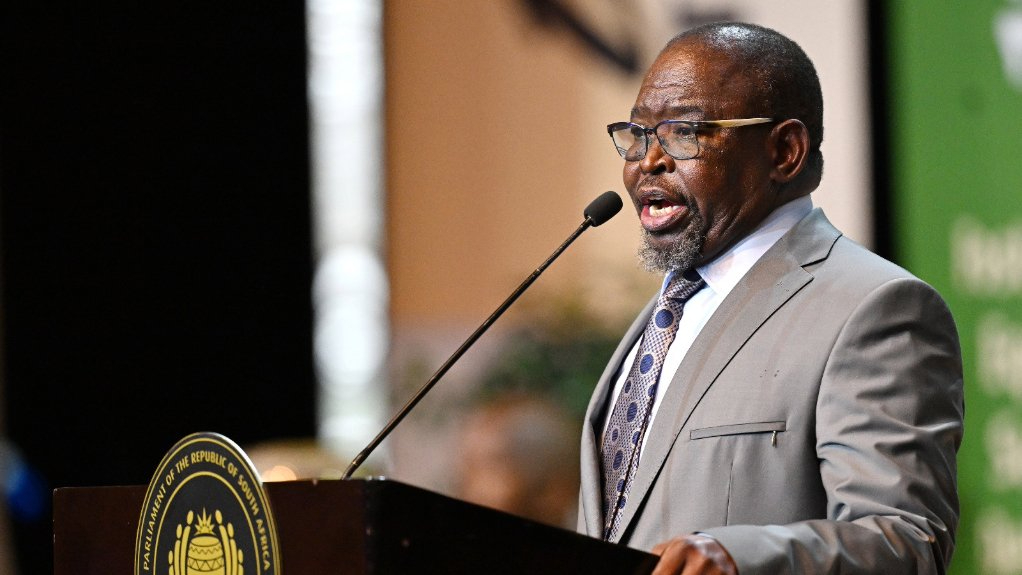
Presenting the Medium-Term Budget Policy Statement (MTBPS) at a sitting of the National Assembly at the Good Hope Chamber in Parliament, Minister Enoch Godongwana said the 1 percentage point band provides flexibility to accommodate any unexpected inflationary shocks.

“This decision follows agreement between the Governor of the South African Reserve Bank and my consultations with the President and Cabinet. This new target immediately replaces the previous target range of between 3% and 6% and will be implemented over the next two years,” Minister of Finance Enoch Godongwana said on Wednesday.

This is in line with South Africa’s approach to inflation targeting, which has always been a flexible one, looking beyond short-run deviations in inflation. 

“The Reserve Bank will pursue the target on a continuous basis and clearly communicate any deviations from the target. Over time, the lower target will decrease inflation expectations and inflation, creating room for lower interest rates.

“The short-term fiscal costs of a lower target, which include lower nominal Gross Domestic Product and revenue growth, will make achieving fiscal targets more challenging. 

“Yet the long-term benefits of taking this step far outweigh these costs. We remain committed to ensuring that our macroeconomic policies serve the best interests of all South Africans,” the Minister said.

A lower target aligns the country with international best practice and makes the cost of borrowing cheaper by reducing the inflation risk premium that investors demand to lend to South Africa.

The Minister of Finance and the Governor of the Reserve Bank will closely coordinate policy settings to maximise the economic benefits of the new target and enhance fiscal and monetary policy alignment.


Minister Godongwana to deliver Medium-Term Budget Policy Statement (MTBPS)

The Minister of Finance, Enoch Godongwana, will deliver the Medium-Term Budget Policy Statement (MTBPS) at a sitting of the National Assembly at the Good Hope Chamber in Parliament, today, Wednesday, 12 November 2025.

The MTBPS plays a critical role in the overall budget process, as it sets out the policy framework for the budget that is presented every February.

“It also provides the country and its elected representatives with an update on the National Treasury’s economic forecasts, adjusts the budgets of government departments, and makes emergency changes to spending,” Parliament said.

At the sitting, the Minister is also scheduled to table the Adjustments Appropriation Bill, the Rates and Monetary Amounts and Amendment of Revenue Laws Bill, the Taxation Laws Amendment Bill, the Division of Revenue Amendment Bill, and the Tax Administration Laws Amendment Bill.

The MTBPS makes it possible for Parliament and the public to interact with the government's budget through committee oversight over government departments, when committees review the effective and efficient use of available resources.

The process is known as the Budget Review and Recommendations Reports, which must be tabled in the National Assembly before the MTBPS reports are adopted. 

The address will be broadcast on various television channels and live streaming platforms at 2pm.

Western Cape tourism, wine industries shine on the global stage

The Western Cape Government has congratulated the province’s remarkable achievers who have made the province proud in the global tourism and wine industries. 

The provincial government said the achievers’ recent awards at the 2025 World Travel Awards and other esteemed platforms have not only brought international recognition to the region, but have also reaffirmed the Western Cape’s position as a world-class destination for responsible tourism and wine excellence.

The Township and Village (T&V) initiative in Stellenbosch was awarded silver in the Peace, Understanding and Inclusion category. 

Launched in 2018 with the support of the Stellenbosch Municipality, T&V has welcomed over 2 500 visitors and empowered more than 40 local tourism providers, including guides, artisans, and home-based entrepreneurs. 

The initiative has been widely praised for promoting dignity, inclusivity, and economic opportunity in historically marginalised communities.

T&V was one of 15 participants in the Sustainable Tourism Enterprise Partnership pilot project, funded by the Department of Economic Development and Tourism (DEDAT) earlier this year.

According to the provincial government, Khwa ttu San Heritage Centre received gold in the “Increasing Local Sourcing and Creating Shared Value” category. 

“This cultural and educational hub honours the heritage of the San people while advancing rural development through ethical sourcing and immersive visitor experiences,” the statement read. 

In 2024 alone, the centre supported 44 local producers and created 4 500 employment days – demonstrating the transformative power of tourism in preserving cultural knowledge and uplifting communities. 

The department said it was proud to be associated with the centre which is a former recipient of the Tourism Growth Fund.

Meanwhile, four Western Cape wine estates have been recognised on the extended World’s 50 Best Vineyards list for 2025, showcasing the region’s excellence in wine tourism. 

These include Tokara Wine and Olive Estate in Stellenbosch, Delaire Graff Estate in Stellenbosch, La Motte Wine Estate in Franschhoek Valley and Hamilton Russell Vineyards in Hemel-en-Aarde. 

“These esteemed estates offer visitors world-class experiences that blend breathtaking landscapes, exceptional wines, and warm hospitality, further cementing the Western Cape’s reputation as a premier wine tourism destination.” 

Western Cape MEC for Agriculture, Economic Development and Tourism, Dr Ivan Meyer, expressed his pride in the province’s achievements.

“These accolades underscore the Western Cape’s unwavering commitment to excellence in tourism and wine. They reflect the innovation, resilience, and dedication of our local communities and businesses. We remain committed to driving sustainable growth and inclusivity across the province,” said the MEC.

The Western Cape Government has conveyed its sincere congratulations to all the winners and said it looks forward to continued success in establishing the province as a global leader in responsible wine tourism.

SA Unemployment Drops to 31,9% in Third Quarter of 2025

South Africa’s official unemployment rate fell to 31,9% in the third quarter of 2025, according to the latest Quarterly Labour Force Survey.

The QLFS shows that employment grew by 248 000, bringing the total number of employed persons to 17,1 million. At the same time, unemployment declined by 360 000 to 8 million. Combined, these shifts resulted in a net decrease of 112 000 in the labour force when comparing the second and third quarters of 2025.

However, the expanded unemployment picture remains complex. Discouraged jobseekers rose by 36 000 to 3,5 million, while other available jobseekers increased by 130 000 to 965 000. A further 64 000 people joined the ranks of unavailable jobseekers, now totalling 83 000.

These changes pushed the potential labour force up by 230 000 to 4,5 million. In addition, the broader group classified as "other not economically active" increased slightly by 8 000 to 12,4 million. As a result, South Africa’s total population outside the labour force climbed to 16,9 million.

The decrease in unemployment translated into a 1,3-percentage point drop in the official unemployment rate, down from 33,2% in the previous quarter.

Other labour underutilisation indicators also showed improvement. The LU2 measure — unemployment combined with time-related underemployment — fell by 1,2 percentage points to 34,9%. LU3, which includes unemployment and the potential labour force, dropped by 0,6 percentage points to 42,4%.

The most comprehensive measure, LU4 — incorporating unemployment, time-related underemployment and the potential labour force — stood at 44,9% in the third quarter.

Stats SA says the underutilisation measures give a fuller picture of how different groups remain connected or disconnected from the labour market.


Southern African Large Telescope marks 20 years of breakthroughs

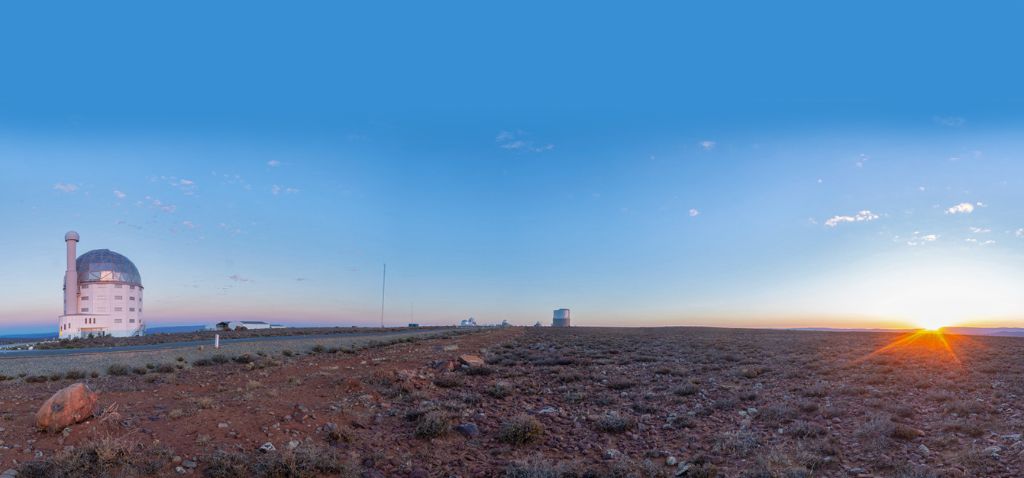
The Southern African Large Telescope (SALT), which is Africa’s largest optical telescope and one of the most powerful in the world, celebrated its 20th anniversary of astronomical achievements and breakthroughs.

According to the National Research Foundation (NRF), this flagship facility for South African and global astronomy was officially inaugurated in 2005 by then-President Thabo Mbeki.

The milestone celebrations on Monday were co-hosted by SALT, the Department of Science, Technology and Innovation (DSTI), and the South African Astronomical Observatory (SAAO), a national facility of the NRF in Sutherland in the Northern Cape, where SALT operates.

The commemorative celebration brought together dignitaries, prominent astronomers and scientists, and representatives from international partners to reflect on SALT’s scientific impact and enduring legacy.

In his welcome address, Professor Brian Chaboyer, Chair of the SALT Board, stated that the telescope is the first optical telescope built in South Africa. He described this decision as courageous on many levels, given that all previous optical telescopes had been constructed outside the country.

“Motivated by an ambitious Science White Paper from the new government, there was a plan for South Africa to build and operate the largest single optical telescope in the Southern Hemisphere,” said Chaboyer.

Delivering the keynote address, Deputy Minister of Science, Technology and Innovation, Dr Nomalungelo Gina, said the democratic government’s decision in 1998 to fund SALT’s construction was a defining moment for South African science. 

“SALT was built to serve both science and society, linking frontier research with education, technology and socio-economic development. It showed that big science can drive national progress.”
As South Africa looks ahead, Gina reaffirmed the department’s commitment to sustaining and expanding the country’s global leadership in astronomy. 

“SALT’s 20-year journey is a story of vision, perseverance and excellence. We remain committed to ensuring it continues to shine as a beacon of African science, uniting research, education, and innovation for the benefit of humanity,” said Gina.

SALT is more than a telescope, but a symbol of what is possible when vision, investment, and international cooperation come together in pursuit of knowledge and progress, Gina added.

Human development

Speaking on behalf of the NRF, the Board Chair, Professor Mosa Moshabela, emphasised that the conception of SALT was not only a scientific ambition, but a governance decision of courage. 

“It represented a conviction that South Africa could build and sustain a world-class research facility and, through it, redefine its place in global science,” he said.

The NRF leadership championed that vision and provided the stewardship needed to make SALT a reality, said Moshabela. 

“From conception to construction, and through two decades of operation, the NRF has remained the principal shareholder, funder, and custodian of SALT’s success.”

Moshabela emphasised that every discovery made by SALT involves a person – be it a student, technician, engineer, or scientist – whose development reflects a story of progress.

He added that SALT has served not only as a laboratory for scientific discovery but also as a workshop for human development. 

“Over fifty doctoral theses have been produced using SALT data, and hundreds of students have gained hands-on training at the observatory. Many of them now occupy leading positions in research and technology, locally and abroad,” Moshabela. 

Affectionately known as Africa’s Giant Eye on the Sky, SALT remains the largest single optical telescope in the Southern Hemisphere, capable of detecting light from celestial objects a billion times too faint to be seen with the naked eye. 

Originally conceptualised in the late 1990s as a bold national scientific endeavour, the project became a reality in 1998 when the South African government committed US$10 million towards its construction. 

Completed in 2005, SALT entered full scientific operations in 2011 and has since delivered groundbreaking research that continues to shape our understanding of the universe.

Nationwide Safer Festive Season Operation reaps rewards

The South African Police Service (SAPS) is implementing a nationwide Safer Festive Season Operation alongside Operation Shanela II in the fight against crime ahead of the festive season. 

“These intensified intelligence-led driven operations resulted in the arrest of 17 817 suspects from 03 to 09 November 2025 across multiple provinces,” the police said in a statement.

The week-long operations saw police tracking down and apprehending 2 843 wanted suspects for serious crimes such as murder, rape, car hijackings, drug trafficking, robberies and sexual offences.

The number of national arrests are as follows: 

Murder: 145
Attempted murder: 154
Rape: 137
Assault grievous bodily harm: 1 505
Driving under the influence of alcohol or drugs: 630
Illegal migrants: 1 366
Illegal dealing in liquor: 921
Illegal possession of firearms: 85
Dangerous weapons possession: 529
Possession of drugs: 3 255
Dealing in drugs: 293

The police added that contraband to the value of more than R18.9 million was seized during this period; 121 firearms were seized, including 9 rifles, 4 homemade, 4 shotguns; 2 238 rounds of ammunition were seized; 48 vehicles were seized as well as 871 dangerous weapons.

Police, in collaboration with Interpol NCB Pretoria members, rescued three Botswana nationals, aged between 20 and 23 years, who fell victim to human trafficking at OR Tambo International on 07 November 2025.

Also, the Gauteng Counterfeit Unit, in collaboration with National Head Office Counterfeit, Border Police, Public Order Police, Commercial Unit, and brand protectors, conducted an operation targeting counterfeit goods in Johannesburg Central on Friday, 7 November 2025. The operation resulted in the seizure of counterfeit goods valued at R11.4 million, including clothes, shoes, embroidery machines, printing machines, stickers and packaging materials.

Four suspected cash-in-transit robbers were shot and killed in a shootout with police and other law enforcement officers in Bronkhorstspruit on 07 November 2025. The fifth suspect was arrested, and three firearms, including two rifles and magazines, loaded with ammunition as well as a Mercedes Benz, were seized during the operation.

In Limpopo on 04 November 2025, a 54-year-old male suspect, who is the brother of former police officer Rachel Kutumela, was arrested in connection with the ongoing R10 million insurance murder, fraud and money laundering case in Moletjie, outside Seshego.

In the Western Cape, police arrested four suspects believed to be behind the brutal murder cases in Philippi East on 30 September 2025, where victims were shot and set alight.

Members of Operation Lockdown III and the Endangered Species K9 Unit arrested Chinese and Malawian nationals for possession of abalone worth more than R3 million in Primrose Park on 07 November 2025. Drying equipment and gas cylinders were also confiscated.

In Ngome in KwaZulu-Natal, a 48-year-old suspect was arrested after he allegedly burnt his 41-year-old girlfriend to death and hacked her 28-year-old daughter with an axe before raping her 13-year-old daughter on 06 November 2025.

In Mpumalanga, police intercepted a truck transporting suspected illicit goods on the N4 in Middelburg, and three suspects aged between 30 and 38 years were arrested on the scene. They seized counterfeit and illicit goods, including sneakers, slides, soccer boots, and different brands of flip-flops worth R1 million.

In the Northern Cape, police intercepted a vehicle at the N7 Road and uncovered dagga worth R7.7 million. Two suspects were arrested, and the vehicle used in the commission of crime was also confiscated.

In Libode, in the Eastern Cape, a 34-year-old suspect was arrested for the possession of an unlicensed AK-47 and ammunition and found to be in possession of drugs on 05 November 2025.

The South African Police Service said it continues to urge communities to remain vigilant and report suspicious activity as the festive season intensifies.

AARTO delay proves government’s chaos, not citizens’ fault – OUTA

The Organisation Undoing Tax Abuse (OUTA) welcomes government’s recognition that the Administrative Adjudication of Road Traffic Offences (AARTO) system is not ready for implementation, following Minister of Transport Barbara Creecy’s announcement that the rollout will be postponed to July 2026.

“This delay was inevitable,” says OUTA CEO Wayne Duvenage. “AARTO was never ready, not in 2020, not in 2024, and certainly not now. These repeated postponements confirm what we have warned all along: the system is unworkable in its current form.”

OUTA has tracked AARTO’s development for over a decade, consistently raising concerns about its practicality, transparency and alignment with the principles of fair administration.

“We support any system that improves road safety and encourages motorists to obey the law,” says Duvenage. “But regulation must be clear, fair and functional. AARTO fails that test.”

He adds that the latest regulations, rushed through without proper public participation, have only deepened concerns. The new version represents a complete re-write of the regulations first published for public comment in 2020 - far beyond the usual refinements that follow public input. To make matters worse, the most recent amendments, published in the Government Gazette of 31 October 2025, include pages of unreadable text in the very schedules that list offences, fines and demerit points.

“Citizens cannot comply with laws they cannot read,” Duvenage notes. “That’s not enforcement; that’s confusion.”

Several municipalities have already indicated they wish to withdraw from the system. “They can see the risks - a bureaucratic and costly process that won’t make our roads safer but will frustrate law-abiding motorists and strain local resources,” says Duvenage.

“This postponement should be used to get AARTO right,” Duvenage concludes. “If government is serious about road safety, it must return to the drawing board - build a transparent, practical system that supports enforcement, earns public trust, and genuinely saves lives.”

OUTA will continue to monitor developments and challenge any process that undermines citizens’ rights or good governance.

Pilot dies after helicopter crash at Patensie

The pilot who died on Monday morning in a helicopter crash on a farm near Patensie in the Eastern Cape - while spraying crops in the Gamtoos Valley and hitting power lines - has been identified as a chef, writer, host of the television show Speel met Vuur on DStv’s VIA channel, and in recent years also a helicopter pilot.

Mynie Steffens was, according to the police, the only occupant of the Robinson helicopter and was declared dead on the scene. Police spokesperson Warrant Officer Majola Nkohli says an inquest is being conducted.

It is believed that the freak incident occurred at about 07:45, when the helicopter was spraying crops at the farm outside Patensie.

NSC exams progressing smoothly at halfway mark

As the 2025 National Senior Certificate (NSC) examinations reach the halfway mark, the Department of Basic Education (DBE) has reported that the overall administration of the exams continues to proceed smoothly, with stability, integrity and efficiency across all nine provinces.

More than 920 000 candidates are currently writing their final examinations at 6 800 examination centres nationwide. 

“Despite the scale and logistical complexity of this process, the vast majority of sessions have unfolded without disruption, a reflection of the strength of the DBE’s examination systems, the dedication of invigilators and educators, and the discipline shown by learners,” the department said in a statement. 

While a few isolated incidents have been reported, including limited community protests, and minor administrative and technical challenges, the department said these have been swiftly and effectively managed through established risk management and contingency measures. 

“These timely interventions continue to demonstrate the preparedness and resilience of South Africa’s examination system, which is built on firm safeguards to maintain fairness and credibility,” the department said. 

The DBE also responded to public discussions around the perceived difficulty of the 2025 Mathematics Paper 1 and Paper 2, assuring learners, parents and the public that all NSC papers are carefully designed to assess a full range of cognitive skills, in line with curriculum standards.

The department said each paper is designed to include a balanced mix of fundamental concepts and higher-order problem-solving questions.

“Importantly, the standardisation process overseen by Umalusi, the Quality Council for General and Further Education and Training, ensures that any variations in performance trends are scientifically reviewed before final results are approved. 

“Should any paper prove more challenging than expected, this process guarantees that no learner is unfairly disadvantaged. Confidence in the integrity, credibility and fairness of the examination system therefore remains well placed,” the department said. 

The department extended appreciation to learners, parents, educators, provincial teams, law enforcement agencies, municipalities, and community leaders for ensuring a peaceful and secure examination environment. 

As the exams enter their final stretch, the DBE appealed to communities to continue protecting schools as zones of learning and peace.

“Any form of protest or unrest that disrupts teaching, learning or examination activities undermines the hard work and aspirations of thousands of learners nationwide,” the DBE said. 

Learners are also encouraged to manage exam anxiety by maintaining a balanced routine, getting enough rest, eating well and taking short breaks while studying. 

“Candidates are reminded that calm focus and confidence go a long way [towards preparation, and a positive mindset remains the best tool for success,” the DBE said. 

With the continued cooperation of all South Africans, the department said it remains confident that the 2025 NSC examinations will conclude successfully, upholding the high standards and credibility that define the national education system.

Police rescue three who fell victim to a human trafficking scam

The South African Police Service (SAPS) rescued three young women, all Botswana nationals, at OR Tambo International Airport on Friday, 07 November 2025.

The victims, aged between 20 and 23, were reportedly lured via social media by a syndicate under the false pretence of being offered job opportunities in Sierra Leone.

The victims were en route from Botswana to Sierra Leone via South Africa and Nairobi when they were intercepted and rescued by members of INTERPOL NCB Pretoria and the Germiston Serious Organised Crime Investigation Unit after landing at OR Tambo International Airport.

A preliminary report suggests the Botswana High Commission in Pretoria had alerted INTERPOL to assist in tracing the missing victims.


error:
Scroll to Top