Flying Squad stops scammers in their tracks

Vigilant members attached to Maitland Flying Squad arrested five suspects aged between 46 and 49 for possession of presumed stolen property and fraud under the electronics act on 17 September 2025.

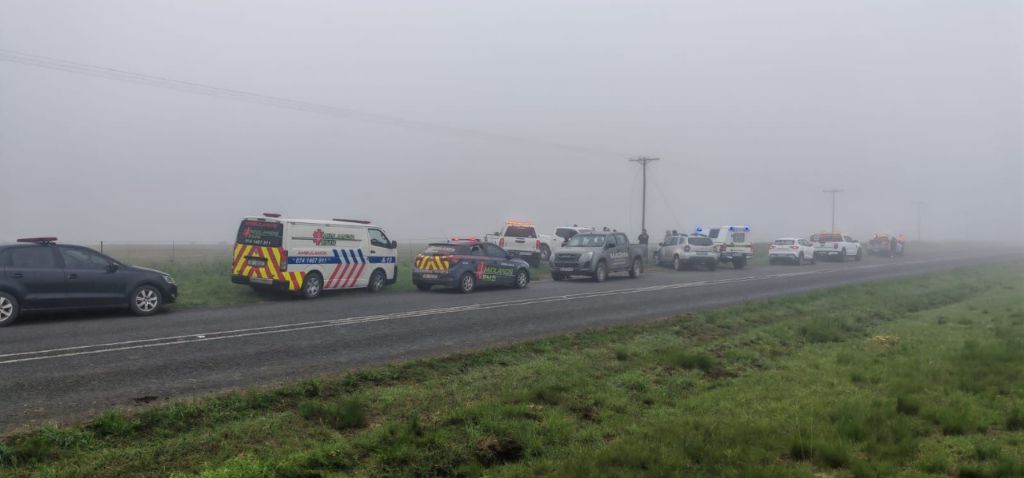
The members were patrolling in Cape Town when they noticed a silver Toyota Urban Cruiser which was allegedly used during several card scamming incidents in the Western Cape. Members indicated to the driver of the vehicle to pull over, but instead the vehicle swerved towards the SAPS vehicle and sped off. The vehicle was blocked in on the corner of Loop and Strand Street, Cape Town and the five suspects were arrested.

After searching the vehicle it was found that it was a rental vehicle fitted with false number plates. Inside the vehicle, the members found two banking key pads, two hand radios, and security caps and nametags of security and tourist guides badges, and bank cards of an individual staying in Greece. All suspects were detained at Cape Town Central SAPS, and are due to appear in the Cape Town Magistrates court today, Friday, 19 September 2025 for the mentioned charges.

In an unrelated incident, on Thursday, 18 September 2025 at about 01:20 during a self-driven operation members of Public Order Policing conducting stop and searches, and visible patrols in Freedom Park, Lost City. In Bayern Munich Street, the members saw a suspicious looking person in the street and stopped and searched him. He was arrested for possession of a prohibited firearm and illegal possession of ammunition, when found to be in possession of a zip gun. The 24-year-old suspect was detained at Mitchells Plain SAPS and will appear in court once charged.

Members attached to Operation Shanela II arrested a 28-year-old male for possession of a prohibited firearm on 18 September 2025 at 14:40 at Mnixi Drive, Browns Farm. The members were doing visible policing and stop and searches in the Browns Farm area when they saw a male who acted suspiciously when he saw them. They stopped and searched him and found him to be in possession of a firearm. The suspect will appear in the Athlone Magistrates court once charged.

Meanwhile, Lingelethu-West and Harare SAPS members conducted a cross-border operation and arrested a 37-year-old female for dealing in drugs. Members received information that drugs are being sold at a premises in Venola Street, Lingelethu-West.

They immediately operationalised the information and search the premises. The members found and confiscates an amount of 1200 heroin units, five ecstasy tablets, 50 units of dagga, and an undisclosed amount of cash believed to be the proceeds of crime. She will appear in the Khayelitsha Magistrates court today, Friday, 19 September 2025 for the mentioned charges

SA Reserve Bank keeps repo rate unchanged

The South African Reserve Bank’s Monetary Policy Committee (MPC) has decided to keep the repo rate unchanged at 7%, with the prime lending rate to also remain at 10.5%.

This was announced by SARB Governor Lesetja Kganyago following a meeting of the bank’s MPC.
“Four members preferred to keep rates on hold, while two favoured a cut of 25 basis points. Since September last year, we have reduced rates by 125 basis points, and we want to see how this is affecting the economy, how expectations evolve, and how inflation risks are resolved.

“The forecast has rates easing gradually, as inflation returns to the bottom end of the 3%-6% target range. The MPC emphasises that stabilising inflation at 3%, rather than 4.5%, implies a lower longer-term level for the policy rate. 

“That said, the rate path from the Quarterly Projection Model remains a broad policy guide. As usual, our decisions will be taken on a meeting-by-meeting basis, with careful attention to the outlook, data outcomes, and the balance of risks to the forecast,” Kganyago said.

The governor noted that the Gross Domestic Product numbers released by Statistics South Africa “surprised on the upside, with the highest quarterly growth rate in two years”.

The GDP improved by some 0.8% in the second quarter. 

“We have therefore marked up our growth forecast for the year, from 0.9% to 1.2%. This is despite a weaker export outlook, given higher tariffs.

“Although the strong GDP report was welcome, we do not want to overstate the importance of one good quarter. We continue to see modest output gains over the next few years, helped by structural reforms. 

“There are also some cyclical indicators, such as credit extension, which look positive. However, reaching a healthy growth rate will require much higher investment levels than we are achieving now,” he said.

Kganyago said the MPC anticipates that headline inflation – which slowed to 3.3% in August – will rise over the coming months, peaking at some 4%.

“Our forecast now incorporates higher electricity price inflation, of nearly 8% rather than 6%, given the recent pricing correction by NERSA [National Energy Regulator of South Africa]. This is a reminder of the serious dysfunction in administered prices, which undermines purchasing power and weakens growth. The solution to this crisis is not a higher level of inflation, but rather sector-specific reforms to improve efficiency.

“Our inflation projections also have upward adjustments to food and services prices, partly offset by a stronger exchange rate assumption. Overall, we expect headline inflation to average 3.4% this year, and 3.6% next year, before reverting to 3% during 2027,” he said.

On the global front, Kganyago noted that the global economy has shown resilience.

“While the geopolitical environment remains difficult, and trade disruptions continue, growth is holding up and market volatility has subsided. Since our last meeting, policy rates have been cut in the United States and the United Kingdom, and the dollar has weakened. Various commodity prices have risen, although oil prices remain contained. These conditions are supportive for emerging markets like South Africa.

“However, while the cyclical factors mean global conditions are currently favourable, there are also more adverse structural developments, which are likely to prove challenging. Long-term interest rates have shifted higher in several major economies. This reflects a range of pressures, especially high and rising debt levels, as well as inflation risks,” Kganyago said.

WC Taxi routes remain closed in response to ongoing violence

The Western Cape Provincial Government has announced the closure of several taxi routes in the Cape Town metropolitan area for a period of 30 days due to ongoing violence within the industry. 

The closures, which began on Wednesday, 17 September 2025, are being enacted under Section 91 of the National Land Transport Act (2009), applying specifically in Mfuleni, Somerset West, Khayelitsha, Nomzamo and Lwandle.

“This measure is aimed at preventing further violence, ensuring commuter safety and restoring stability.

“It is important to note that taxi ranks and roads will not be closed. Only the affected routes directly linked to the ongoing instability will be suspended,” a statement from the provincial department read. 

To ensure continued mobility for residents, the provincial government said Golden Arrow Bus Services (GABS) and Metrorail will provide alternative transport options during this period. 

Meanwhile, they announced that temporary permits may also be issued to substitute operators where needed.

In addition, the South African Police Service (SAPS), the City of Cape Town law enforcement and provincial traffic officers will be deployed to enforce the extraordinary measures. 

The province warned that operators, who contravene the notice, face fines of up to R5 000 or imprisonment of up to six months.

Western Cape Mobility MEC Isaac Sileku acknowledged the gravity of the decision. 

“This was not an easy decision, but it is one that had to be taken to protect the lives of commuters and residents. 

“The safety of our communities is our top priority. While extraordinary measures are in place, we will continue to engage with Cape Amalgamated Taxi Association (CATA) and Cape Organisation for the Democratic Taxi Association (CODETA) to work toward a sustainable resolution and long-term peace in the mini-bus taxi industry.” 

The routes that will be closed for 30 days include: 
611 Khayelitsha – Somerset West
43 Lwandle – Khayelitsha
M18 Mfuleni – Somerset West
X19 Nomzamo – Mfuleni
AA20 Khayelitsha – Somerset West CBD via Vergelegen Medical Clinic
AA21 Khayelitsha – Sitari Village Mall
R96 Khayelitsha – Somerset West via Somerset Mall
R97 Khayelitsha – Waterstone Mall – Somerset West
YEX63 Mfuleni – Somerset West
YEX64 Mfuleni – Strand via Somerset West

Closed lanes of ranks:
Lane 1 - Khayelitsha (Nonkqubela and Makhaza)
Lane 1 - Mfuleni (new and old facilities)
Lane 2 - Somerset West Interchange
Lane 4 - Nomzamo taxi rank
Lane 4 - Lwandle taxi rank

“The Western Cape Mobility Department remains committed to open dialogue with all stakeholders to secure a peaceful and sustainable resolution,” the statement read.

Consumer inflation slows in August

Statistics South Africa has recorded a slight decrease in annual consumer inflation for August – easing from some 3.5% to 3.3%.

This as fuel and food inflation slowed last month.

“The monthly change was also lower. The consumer price index (CPI) decreased by 0.1% between July and August, with four of 13 categories in the inflation basket registering monthly declines.

“These were food and non-alcoholic beverages [NAB] (-0,1%); furnishings, household equipment & routine maintenance (-0,1%); transport (-0,2%); and information & communication (-0,2%),” Stats SA said.
The annual rate for food and non-alcoholic beverages (NAB) edged lower to 5.2% in August from 5.7% in July.

Lower rates were also recorded in cereal products; fish and other seafood; milk, other dairy products and eggs; fruits and nuts, and vegetables.

“The rate for cereal products retreated from 2.1% in July to 1.5% in August. Some staples are cheaper than a year ago, including hot cereals (-7.8%) and white rice (-7.2%). Bread and pasta products recorded zero or low-price increases. 

“Examples include white bread (0.0%), brown bread (+0.4%), macaroni (+0.5%) and spaghetti (+0.6%). Some items are notably more expensive, such as samp (+14.8%) and maize meal (+8.2%),” the institution said.

Although beef continues to have high annual rates, the monthly increase in August is the lowest since April.

“Beef mince recorded a 12-month change of 27.2% and a monthly rise of 0.2%. Stewing beef reached an annual rate of 32.3% while its monthly change was 0.6%. Beef steak prices were 28.6% higher than a year ago but down by 1.2% between July and August.

“These low monthly changes follow factory-gate inflation of -7.8% in July for beef carcasses,” Stats SA noted.

Furthermore, the price index for milk, other dairy products and eggs “declined by 1.1%, the lowest annual print since March 2011 when the rate was -1.4%. Prices for fresh full-cream milk decreased by 2.9% between August 2024 and August 2025”. 

Eskom and BYD Partner to Drive South Africa’s Electric Vehicle Future

Eskom has taken a bold step toward cleaner mobility by signing a Memorandum of Cooperation with BYD Auto South Africa. The agreement, reached on 16 September, paves the way for collaboration on electric vehicles and coincides with the launch of the BYD Dolphin Surf — a compact, all-electric car aimed at affordability and accessibility.

The move follows Eskom’s own rollout of 20 electric vehicles and 10 charging stations for internal use earlier this month. Acting Group Executive for Distribution, Agnes Mlambo, says the utility is now ready to extend that capability to the public by supporting wider EV adoption and charging infrastructure.

The Dolphin Surf is positioned as an affordable entry into cleaner mobility, offering lower running costs compared to petrol and diesel and significant lifetime savings for owners.

Through the new partnership, Eskom and BYD will explore expanding charging infrastructure across the country, supporting South Africa’s national drive to decarbonise transport, and creating opportunities for local skills development, small businesses, and job creation in the EV sector.

Future discussions may also cover renewable-powered fast-charging hubs, the repurposing of used EV batteries for energy storage, and integrating electric vehicles into Eskom’s demand-side management to help balance supply and demand.

Mlambo says Eskom is committed to driving a cleaner future by enabling affordable and innovative mobility solutions for South Africans, while continuing its broader strategy of shaping a smarter and more inclusive energy future.

Help CT Mayor ‘Wear the Hope’ this summer

The City of Cape Town has launched a new challenge this year and is calling for Capetonians to design and make the Mayor’s annual festive-wear top.

This year, the Festive Lights Switch-On adds a new layer of creativity and community spirit with the launch of the Mayor’s Festive-wear Challenge 2025 - under the banner Wear the Hope – Share the Light.

For the past three years, Cape Town Mayor Geordin Hill-Lewis has kicked off the festive season in a different Christmas-themed jersey for the annual Festive Lights Switch-On. In 2025, that tradition evolves into something with a bit of fun for the whole city: a public design competition inviting all Capetonians - from young designers and fashion students to sewing clubs, schools, elders, and crafters - to create a fun festive-wear top (a jersey, pullover, shirt etc). 

The winning creation will make its first public appearance, together with its creator at the testing of the City’s Festive Lights on 11 November 2025, before being worn by the mayor at the official Festive Lights Switch-On concert in front of 80 000 Capetonians. 

‘The Festive Lights Switch-On is about more than switching on the bulbs - it’s about shining a light on Cape Town’s creativity, joy and hope.  This year, through the “Wear the Hope - Share the Light” challenge, I’m inviting every Capetonian to help usher in some festive fun. I can’t wait to wear the winning creation and showcase the talent of our people on stage,’ said Mayor Hill-Lewis.

How to enter:

Challenge opened on 12 September 2025 and closes at midnight on 6 October 2025
Open to all Capetonians, individuals or groups (e.g. schools, clubs, families, communities).

Entry process:
1. Submit a design sketch or concept description (PDF or photo) with a short write-up (max 300 words) explaining the inspiration, use of sustainable materials (if using), and the story behind the design.
2. Entries must be emailed with the subject line: Wear the Hope Challenge 2025
3. Include your full name, contact details (mobile phone and email), your location in Cape Town, and group/organisation name if applicable.
4. Email to: [email protected]
5. Judges will review entries and select finalists based on creativity, sustainability, theme interpretation, and craftsmanship.

Judging criteria includes creativity & originality – festive in a fresh, unexpected way. Theme interpretation – a strong symbolic/visual expression of hope and unity. There will also be points for use of sustainable or upcycled materials, as well as craftsmanship and presentation that looks at the creation’s wearability, construction, and stage presence. Of equal importance, is the story behind the stiches and the community spirit. 

Creative hint: The winning creation should visually shine under stage lights and reflect Cape Town’s vibrancy – joyful, hopeful, bold, and dignified.

The winner’s prize:
Unlike traditional competitions, this one is about honour, recognition, and community pride. The winner of the Wear the Hope - Share the Light challenge will:

Have their creation worn by the Mayor at the 2025 Festive Lights Switch-On, test drive and the main stage event to be witnessed by thousands.
Be invited on stage with the Mayor to help shine the lights.
Receive a professional photo shoot of the creation and the winning entrant(s),
Have a community donation of creative material up to the value of R5 000 made in their name to a local sewing/knitting group, school, or creative hub.

Production of the design is for the entrant’s own account. 

Entries opened on 12 September and close 6 October 2025. Submission details available here

#DontBeTrashy campaign fights waste on land and sea in Western Cape

CapeNature, with Soapbox and the Western Cape’s Department of Environmental Affairs and Development Planning, has launched the “Don’t Be Trashy” Drive to fight waste threatening ecosystems on land and at sea.

The campaign promotes awareness, education, and community action to reduce pollution, with a special focus this year on protecting Marine Protected Areas. Minister Anton Bredell said waste should be seen as a resource in a circular economy, while CapeNature CEO Dr Ashley Naidoo called on communities, schools, and businesses to take part in clean-ups, recycling, and reducing single-use plastics.

Soapbox’s Captain Fanplastic Programme adds a creative, youth-focused element, using storytelling and outdoor experiences to inspire learners to become “Plastic Pirates.” Over the past three years, it has reached more than 15 000 children in 11 countries.

CapeNature urges the public to support the drive by reducing waste, reporting illegal dumping, and sharing the message online using #DontBeTrashy.

Cape Town to host G20 outreach on climate resilience, coastal protection

The spotlight will be on Cape Town when Cooperative Governance and Traditional Affairs Minister Velenkosini Hlabisa leads the G20 Disaster Risk Reduction (DRR) Ministerial Outreach in the city next week.

The high-level gathering on 22 September is themed ‘Coastal Protection and Eco-Based Disaster Risk Reduction’. It will demonstrate the urgent need for stronger coastal defences as rising seas, storm surges and erosion threaten cities worldwide.

According to the Department of Cooperative Governance and Traditional Affairs (CoGTA), Cape Town’s own challenges — from frequent storms to erosion along the Green Point coastline — make it an ideal case study for showcasing innovative approaches to environmental and climate resilience.

“The Green Point coastline and Green Point Urban Park highlight both the risks and opportunities for urban resilience, underscoring the need for sustainable coastal protection that blends engineering with Ecosystem-based Approaches (EbA),” the department said.

The outreach will showcase disaster risk reduction strategies rooted in climate adaptation and risk-informed urban planning, aligning with South Africa’s G20 Presidency priorities. These include climate resilience, infrastructure investment, nature-based solutions, and inclusive resilience.

CoGTA said the programme is expected to:
*Build a shared understanding of coastal resilience as a global priority.
*Deliver policy recommendations to shape the G20 DRR Ministerial Declaration.
*Strengthen international cooperation through partnerships, joint research and innovative financing for resilience.

The event will also feature exhibitions of local disaster risk reduction projects, volunteer programmes, and community-based resilience efforts. Participants will include the City of Cape Town Disaster Management Volunteer Corps, NGOs, private sector partners, the National Sea Rescue Institute, the South African Weather Service, the Langa Advice Forum, and other emergency and community organisations.

By hosting the outreach, South Africa aims to position itself as a leader in advancing practical solutions to the climate challenges under its G20 Presidency.

Western Cape Agriculture records strong growth in second quarter of 2025

Western Cape Minister of Agriculture, Economic Development and Tourism, Dr Ivan Meyer, has welcomed the positive performance of the province’s agricultural sector as reflected in the Agricultural Economic Quarterly Report for the second quarter of 2025.

The report provides an overview of the economic performance in the Western Cape, with a focus on the agricultural sector, and is informed by the national and sub-national economic performance statistics for the second quarter of 2025 (Q2 2025) released by Statistics South Africa (Stats SA) last week.

According to the report, the Western Cape economy expanded by 0.7% quarter-on-quarter and 1.3% year-on-year, with agriculture making a significant contribution to this growth. The agricultural sector accounted for 4.7% of the provincial economy and recorded a robust 2.5% growth quarter-on-quarter and an impressive 14% year-on-year increase.

Minister Meyer stated, “Agriculture remains a cornerstone of the Western Cape’s economy. The sector’s resilience and growth are a testament to the hard work of our farmers, agri-workers, and agri-processors. This performance supports our Growth for Jobs Strategy, which aims to achieve 4–6% economic growth per annum and create 6,000 new jobs by 2035.”

The report highlights that the Western Cape consistently contributes 20% to South Africa’s national agricultural gross value added (GVA), driven primarily by the horticultural sector. In Q2 2025, horticulture generated R44 billion in gross farm income nationally, with citrus, vegetables, and deciduous fruits leading the way.

Employment figures also reflect the sector’s importance. Agriculture and agri-processing combined supported 302,604 jobs in the province, representing 11% of total employment. Of these, 202,120 jobs were in primary agriculture, with crop production accounting for 81% of agricultural employment. The agri-processing sector added 100,484 jobs, with food manufacturing and beverage production being the largest contributors.

Minister Meyer added, “The agricultural sector not only drives economic growth but also plays a vital role in job creation, especially in rural communities. We remain committed to supporting this sector through innovation, infrastructure investment, and market access initiatives.”

Western Cape Government places Knysna Municipality under administration

The Western Cape Government recently decided to place the Knysna Municipality under administration in terms of Section 139(1)(c) of the Constitution. At a special Cabinet meeting, it resolved to dissolve the Municipal Council and appoint an Administrator with full executive and legislative authority until fresh elections are held within 90 days.

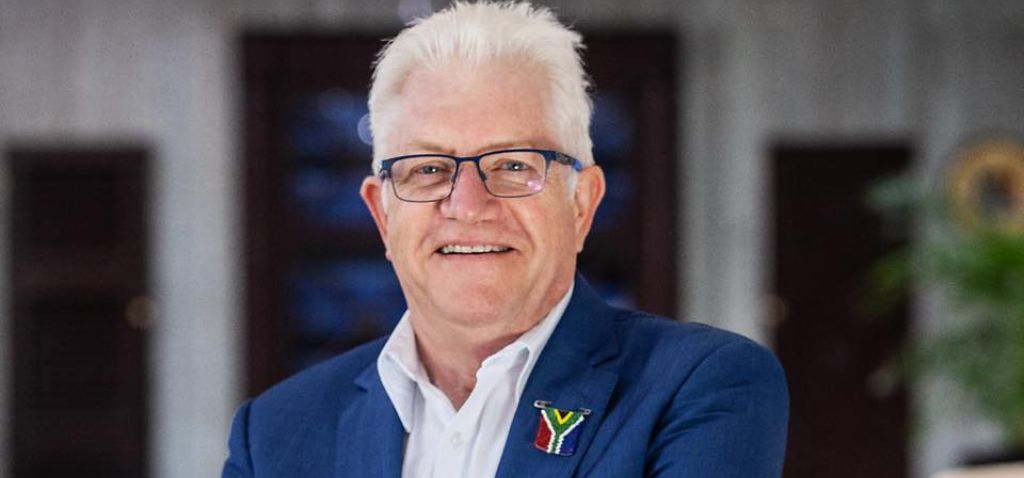
Premier Alan Winde said the decision was taken as a last resort after repeated failures in governance and service delivery. He stressed it was necessary to protect residents, restore stability, and ensure reliable services.

Local Government MEC Anton Bredell said Knysna has faced escalating crises despite years of support, including a Section 154 Support Plan, technical assistance, and millions in provincial funding. Chronic infrastructure breakdowns have left residents exposed to sewage spills, water shortages, and irregular waste collection.

A recent provincial assessment found that of 67 sewage pump stations, only 11 were fully functional, while nearly half were non-operational or missing pumps altogether. These failures have resulted in raw sewage flowing into homes, streets, waterways, and the Knysna estuary, creating severe health and environmental risks.

Despite interventions such as emergency water tankers, backup generators, and refuse vehicles, the municipality has not fulfilled its obligations, and conditions have continued to deteriorate.

“The situation has become untenable,” Winde said. “We must act in the interests of Knysna’s residents.”
Bredell added that recovery will take time but assured residents the province will work with national government, the Garden Route District Municipality, and local civil society to stabilise the municipality and prepare for fresh elections.
error: eRadio is protected !
Scroll to Top