Don’t forget to top up!

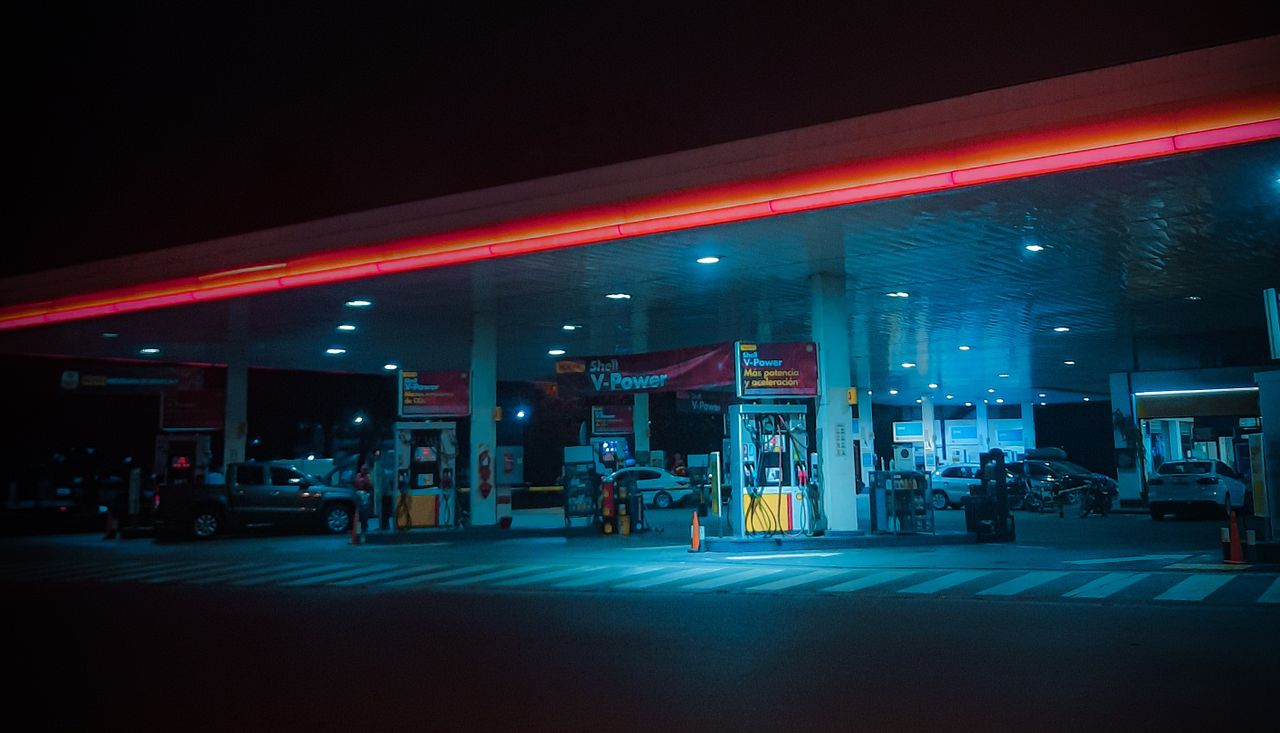
The Department of Mineral and Petroleum Resources (DMPR) has announced significant fuel price increases, which will take effect from Wednesday, 2 September.

The increases are as follows:

Petrol 93 and 95 (ULP and LRP): R1.34 per litre
Diesel 0.05% sulphur: R2.93 per litre
Diesel 0.005% sulphur: R3.14 per litre
Illuminating paraffin (wholesale): R2.13 per litre
Illuminating paraffin (national retail price): R2.84 per litre
LPGas: 69 cents per litre, increasing to 79 cents per litre in the Western Cape

The DMPR attributed the increases to a sharp rise in international oil and fuel prices.

“The average Brent Crude oil price increased from 82.37 US Dollars (USD) to 87.88 USD during the period under review,” the department said.

It said the increase was driven by continued tensions between the United States and Iran, uncertainty over the flow of oil through the Strait of Hormuz and higher shipping costs.

International petrol, diesel and illuminating paraffin prices also increased amid supply shortages linked to the ongoing Russia-Ukraine conflict and lower global inventories.

These factors increased contributions to the Basic Fuel Prices (BFP) for petrol, diesel and illuminating paraffin by 127.79 cents per litre, 321.29 cents per litre and 239.06 cents per litre, respectively.

The DMPR said propane and butane prices also increased during the period under review.

However, the rand strengthened against the US dollar, partially offsetting the increases. This resulted in lower BFP contributions for petrol, diesel and illuminating paraffin of 21.07 cents, 29.06 cents and 26.69 cents per litre, respectively.

The department also highlighted the growing slate levy.

The cumulative slate levy balance stood at a negative R9.519 billion for petrol and diesel at the end of July 2026.

“In line with the provisions of the Self-Adjusting Slate Levy Mechanism, the slate levy of 83.28 c/l will be implemented in the price structures of petrol and diesel with effect from the 2nd of September 2026,” the DMPR said.

The slate levy has increased by 21.90 cents per litre, from 61.38 cents to 83.28 cents per litre.

Volkswagen celebrates 75th anniversary in South Africa


The industrial town of Kariega, established in 1804, has been home to Volkswagen for 75 years, helping the German automaker build a lasting legacy in South Africa.

Volkswagen is celebrating 75 years of manufacturing and selling vehicles in the country, marking the anniversary of the first Beetle rolling off the production line at its Kariega plant on 31 August 1951.

At the time, the factory was operated by South African Motor Assemblers and Distributors (SAMAD), with Studebaker and Austin models also produced at the facility.

The arrival of the Beetle quickly made an impression on South African motorists, while the introduction of the Type 2, better known as the Kombi, in 1955 further strengthened Volkswagen’s popularity in the local market.

In 1956, Volkswagenwerk in Germany acquired a controlling stake in the factory, making it the company’s first manufacturing plant outside Germany.

The SAMAD factory was renamed Volkswagen of South Africa in 1966 before becoming a wholly owned subsidiary of Volkswagen AG in 1974.

Over the decades, Plant Kariega has produced almost 40 models, including the Beetle, Kombi, Golf, Audi, Citi Golf, Jetta, Polo and Polo Vivo.

More than 4.8 million vehicles have rolled off the production line, with over three million built for the South African market.

Renamed Volkswagen Group Africa (VWGA) in 2025 to reflect its plans to expand its presence across the continent, the company is currently the sole global exporter of the Polo.

The Kariega plant also produces the country’s best-selling passenger car, the Polo Vivo, and is set to add a third model, the Tengo, to its production line-up.

VWGA also serves as the headquarters for Region Africa, which includes assembly operations in Kenya, Rwanda and Ghana.

More than just manufacturing


Volkswagen’s contribution to South Africa extends beyond vehicle manufacturing, with the company highlighting its long-standing focus on people and communities.

During the 1980s, Volkswagen made headlines by training black artisans at a time when segregation was enforced by law outside the factory.

Working with figures including John Gomomo, who became one of Volkswagen’s first shop stewards and later served as a Member of Parliament, these efforts helped lay the foundation for strong and ongoing union representation at the company.

Volkswagen has also invested around R800 million in community projects since 1994 through the VW Community Trust, as well as various partnerships and initiatives.

During the Covid-19 pandemic, the company opened a field hospital and vaccination centre and helped fund upgrades to the National Health Laboratory Service (NHLS) testing laboratory, among other initiatives.

75 years of Volkswagen

To mark the anniversary, Volkswagen has partnered with Mastertons Coffee and Tea Specialists, South Africa’s oldest coffee roaster, to create the limited-edition People’s Blend coffee.

The milestone was also celebrated at a gala dinner on 31 August, attended by President Cyril Ramaphosa as the special guest.

“Like me, many South Africans carry memories of the place of Volkswagen cars in their lives,” Ramaphosa said in his keynote address.

“This brand is so woven into our culture that we sometimes have to remind ourselves that Volkswagen is not a South African vehicle.”

The President said Volkswagen had become part of the country’s social and economic fabric.

“Volkswagen has never been content simply to do business in South Africa. It has sought to become part of the fabric of our nation,” he said.

“We celebrate this proud history. We celebrate generations of Volkswagen employees who have built this company.

“We celebrate the suppliers, dealers, organised labour and communities that have been part of this journey, and we celebrate the contribution that Volkswagen has made to Kariega, Nelson Mandela Bay, the Eastern Cape and the South African economy.”

The gala dinner will be followed by a full-day celebration for employees on 1 September, with both events offering a first look at the Tengo, the new model that will be built in Kariega for South African and African markets.

VWGA Chairperson and Managing Director Martina Biene said the company’s roots in Kariega and the Eastern Cape would remain central to its future.

“Our roots run deep in this town and in the Eastern Cape, and from this foundation we intend to build a future for Volkswagen across the African continent,” Biene said.

“As the second-oldest vehicle brand in South Africa, there are not many companies that can say they have been operating in one place and delivering quality products for 75 years.”

Biene said the milestone was possible because of generations of employees who had helped build both vehicles and the Volkswagen legacy in South Africa.

“I am deeply grateful to our employees, past and present, our customers, suppliers, dealers, government stakeholders and Volkswagen fans, for how they have shaped our journey in South Africa so far,” she said.

Thomas Schaefer, global CEO of the Volkswagen brand and former Managing Director of Volkswagen Group South Africa, said Kariega had established itself as an important part of the Volkswagen network.

“Kariega has secured its place in the Volkswagen world over the past 75 years,” Schaefer said.

“Generations of employees have built vehicles here that have won the trust of customers in South Africa and far beyond. The plant stands for quality, competitiveness and a clear commitment to performance.”

Schaefer said South Africa was more than simply a manufacturing base for Volkswagen.

“It is the strategic anchor for our business in Africa and an important part of our global success story,” he said.

“As we celebrate this milestone, we look ahead with confidence, determined to build on this foundation, develop skills and deliver world-class products for customers across Africa and around the globe.”

Tourism Month kicks off with call for South Africans to explore their own country


Tourism Month gets underway in South Africa today under the theme “Growing South Africa’s Tourism Sector in the Digital Era.”

Tourism Minister Patricia de Lille says the country’s tourism industry must start at home, with more South Africans encouraged to explore their own country.

Speaking at the recent launch of Tourism Month, De Lille said domestic tourism is a key pillar of a resilient tourism economy.

“Before we ask the world to discover South Africa, we must continue encouraging South Africans to discover their own country,” she said.

De Lille said every domestic trip contributes to the economy, whether it is a family weekend away, friends exploring another province or young people discovering destinations they have previously only seen online.

In the first half of 2026, South Africans took 21.2 million overnight trips, up 4% from 20.4 million during the same period last year.

While domestic tourism spending remains below last year’s levels, the number of holiday trips increased significantly. South Africans took 5.2 million holiday trips, a 36% increase compared with the same period in 2025.

“Domestic tourism matters. It is not a secondary part of our tourism economy. It is one of the foundations of a resilient tourism economy,” De Lille said.

She said growing domestic tourism requires cooperation between government, the private sector, provinces, cities, technology platforms, the media and tourism businesses.

Government must create an enabling environment, while tourism operators need to offer compelling, competitive and affordable products. Provinces and cities should also promote experiences beyond traditional tourism routes.

De Lille said technology and digital platforms have an increasingly important role to play by making tourism businesses and destinations more visible and easier to discover.

She also called on South Africans to become ambassadors for their own country.

“Tourism is not simply about travelling from one place to another. It is about creating jobs, supporting entrepreneurs, preserving our heritage, strengthening communities and building national pride,” she said.

Tourism Month is celebrated every September to promote domestic travel and showcase South Africa’s diverse tourism offerings.
The 2026 campaign places a strong emphasis on digital innovation, artificial intelligence and online discovery as drivers of tourism growth.

“Every journey has the potential to contribute to a stronger economy and a more inclusive South Africa,” De Lille said.
error:
Scroll to Top