Volkswagen celebrates 75th anniversary in South Africa


The industrial town of Kariega, established in 1804, has been home to Volkswagen for 75 years, helping the German automaker build a lasting legacy in South Africa.

Volkswagen is celebrating 75 years of manufacturing and selling vehicles in the country, marking the anniversary of the first Beetle rolling off the production line at its Kariega plant on 31 August 1951.

At the time, the factory was operated by South African Motor Assemblers and Distributors (SAMAD), with Studebaker and Austin models also produced at the facility.

The arrival of the Beetle quickly made an impression on South African motorists, while the introduction of the Type 2, better known as the Kombi, in 1955 further strengthened Volkswagen’s popularity in the local market.

In 1956, Volkswagenwerk in Germany acquired a controlling stake in the factory, making it the company’s first manufacturing plant outside Germany.

The SAMAD factory was renamed Volkswagen of South Africa in 1966 before becoming a wholly owned subsidiary of Volkswagen AG in 1974.

Over the decades, Plant Kariega has produced almost 40 models, including the Beetle, Kombi, Golf, Audi, Citi Golf, Jetta, Polo and Polo Vivo.

More than 4.8 million vehicles have rolled off the production line, with over three million built for the South African market.

Renamed Volkswagen Group Africa (VWGA) in 2025 to reflect its plans to expand its presence across the continent, the company is currently the sole global exporter of the Polo.

The Kariega plant also produces the country’s best-selling passenger car, the Polo Vivo, and is set to add a third model, the Tengo, to its production line-up.

VWGA also serves as the headquarters for Region Africa, which includes assembly operations in Kenya, Rwanda and Ghana.

More than just manufacturing


Volkswagen’s contribution to South Africa extends beyond vehicle manufacturing, with the company highlighting its long-standing focus on people and communities.

During the 1980s, Volkswagen made headlines by training black artisans at a time when segregation was enforced by law outside the factory.

Working with figures including John Gomomo, who became one of Volkswagen’s first shop stewards and later served as a Member of Parliament, these efforts helped lay the foundation for strong and ongoing union representation at the company.

Volkswagen has also invested around R800 million in community projects since 1994 through the VW Community Trust, as well as various partnerships and initiatives.

During the Covid-19 pandemic, the company opened a field hospital and vaccination centre and helped fund upgrades to the National Health Laboratory Service (NHLS) testing laboratory, among other initiatives.

75 years of Volkswagen

To mark the anniversary, Volkswagen has partnered with Mastertons Coffee and Tea Specialists, South Africa’s oldest coffee roaster, to create the limited-edition People’s Blend coffee.

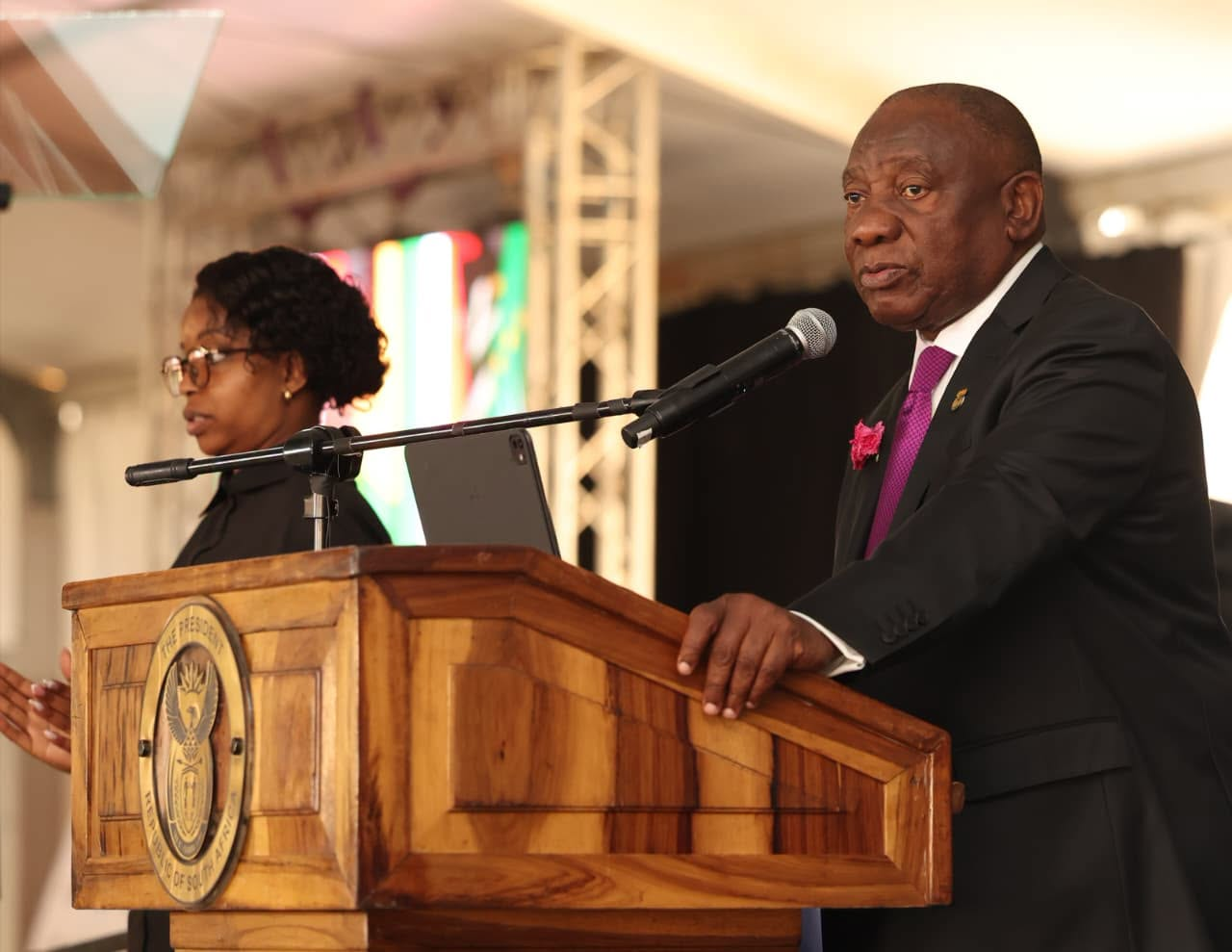
The milestone was also celebrated at a gala dinner on 31 August, attended by President Cyril Ramaphosa as the special guest.

“Like me, many South Africans carry memories of the place of Volkswagen cars in their lives,” Ramaphosa said in his keynote address.

“This brand is so woven into our culture that we sometimes have to remind ourselves that Volkswagen is not a South African vehicle.”

The President said Volkswagen had become part of the country’s social and economic fabric.

“Volkswagen has never been content simply to do business in South Africa. It has sought to become part of the fabric of our nation,” he said.

“We celebrate this proud history. We celebrate generations of Volkswagen employees who have built this company.

“We celebrate the suppliers, dealers, organised labour and communities that have been part of this journey, and we celebrate the contribution that Volkswagen has made to Kariega, Nelson Mandela Bay, the Eastern Cape and the South African economy.”

The gala dinner will be followed by a full-day celebration for employees on 1 September, with both events offering a first look at the Tengo, the new model that will be built in Kariega for South African and African markets.

VWGA Chairperson and Managing Director Martina Biene said the company’s roots in Kariega and the Eastern Cape would remain central to its future.

“Our roots run deep in this town and in the Eastern Cape, and from this foundation we intend to build a future for Volkswagen across the African continent,” Biene said.

“As the second-oldest vehicle brand in South Africa, there are not many companies that can say they have been operating in one place and delivering quality products for 75 years.”

Biene said the milestone was possible because of generations of employees who had helped build both vehicles and the Volkswagen legacy in South Africa.

“I am deeply grateful to our employees, past and present, our customers, suppliers, dealers, government stakeholders and Volkswagen fans, for how they have shaped our journey in South Africa so far,” she said.

Thomas Schaefer, global CEO of the Volkswagen brand and former Managing Director of Volkswagen Group South Africa, said Kariega had established itself as an important part of the Volkswagen network.

“Kariega has secured its place in the Volkswagen world over the past 75 years,” Schaefer said.

“Generations of employees have built vehicles here that have won the trust of customers in South Africa and far beyond. The plant stands for quality, competitiveness and a clear commitment to performance.”

Schaefer said South Africa was more than simply a manufacturing base for Volkswagen.

“It is the strategic anchor for our business in Africa and an important part of our global success story,” he said.

“As we celebrate this milestone, we look ahead with confidence, determined to build on this foundation, develop skills and deliver world-class products for customers across Africa and around the globe.”
President to answer questions in Parliament this week

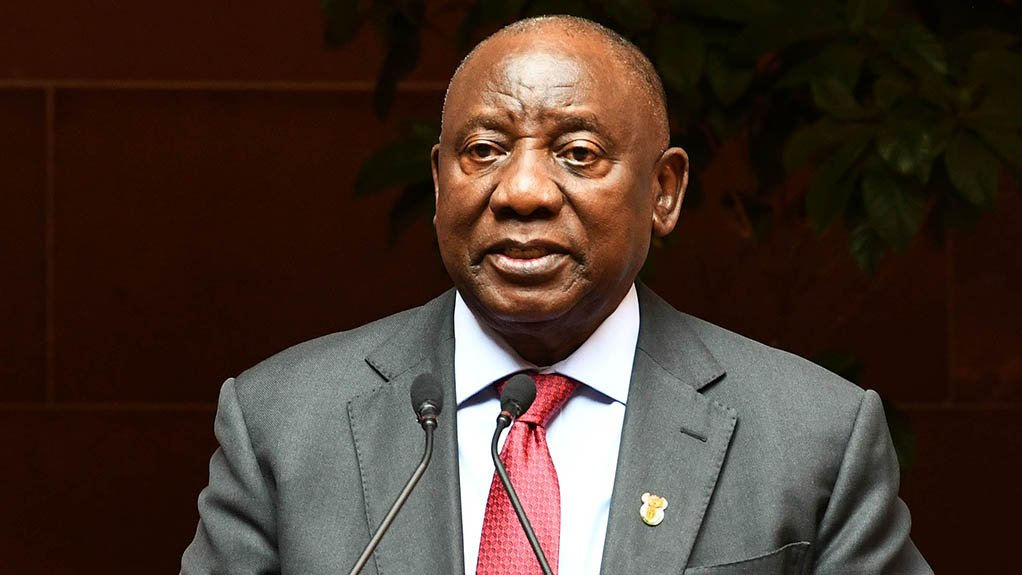
President Cyril Ramaphosa is set to answer questions in the National Assembly this week as Parliament focuses on municipal governance, South Africa’s international standing and the work of the Ad Hoc Committee investigating allegations made by Lieutenant General Nhlanhla Mkhwanazi.

Ramaphosa is scheduled to respond to oral questions at 2pm on Tuesday.

Key issues expected to come under scrutiny include efforts to restore South Africa’s credibility as a Pan-African voice amid protests against foreign nationals, as well as structural reforms aimed at improving municipal capacity, accountability and the delivery of basic services.


The Ad Hoc Committee examining allegations made by Mkhwanazi will also remain in focus. The committee is scheduled to meet on Monday evening and Thursday to consider its draft report. Its reporting deadline has been extended by the Speaker of the National Assembly to 11 September.

The National Council of Provinces (NCOP) will also host several question-and-answer sessions during the week.

Ministers in the Peace and Security Cluster are expected to address issues including Truth and Reconciliation Commission reparations, the justice department’s case-management system, overcrowding in correctional centres, cellphone smuggling and the deployment of the military to assist police in tackling illegal mining.

International Relations and Cooperation Minister Ronald Lamola will face questions on global developments affecting South Africa, including the conflict involving the United States, Israel and Iran, the closure of the Strait of Hormuz, anti-immigration protests and illegal immigration.

Parliament has scheduled 37 committee meetings from Monday to Friday. Topics on the agenda include foot-and-mouth disease control, immigration backlogs, preparations for the 2026 FIFA World Cup, the recovery of state property, municipal audit outcomes, military deployments and Parliament’s funding.

Both Houses will begin their constituency periods on 31 August. The NCOP constituency period will run until 5 October, while the National Assembly will return on 21 September.

South Africa launches Electronic Travel Authorisation to make international travel easier and more secure


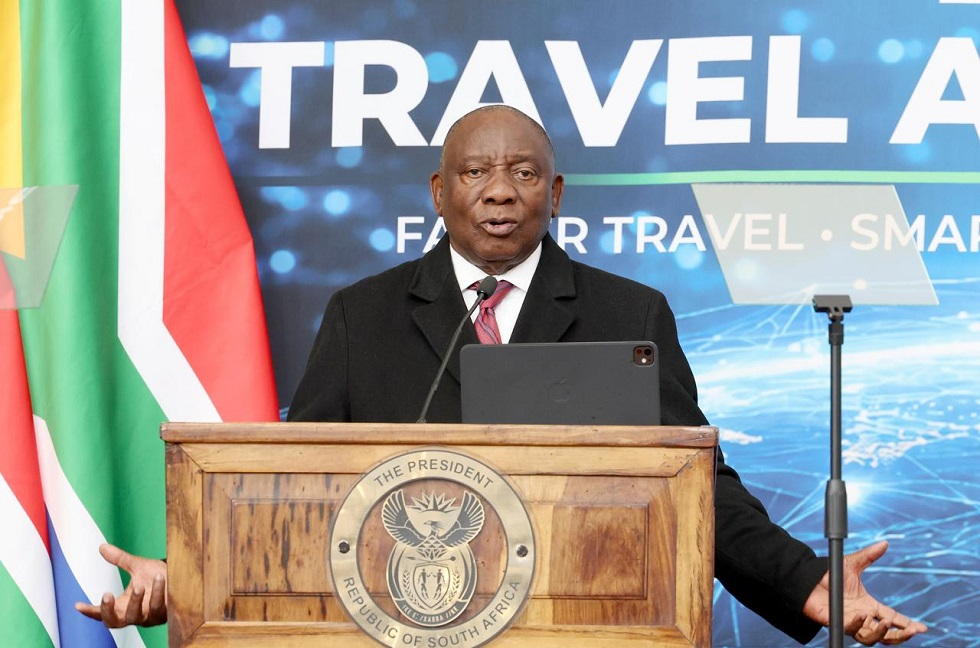
South Africa has taken a major step towards modernising international travel with the official launch of its Electronic Travel Authorisation (ETA), a digital system designed to make entry into the country faster, easier and more predictable while strengthening border security.

President Cyril Ramaphosa launched the system at OR Tambo International Airport on Wednesday, describing the reform as more than a digital upgrade.

“This is far more than the introduction of a new digital platform. It is a statement about the kind of country we are building,” Ramaphosa said.

He said the ETA would make South Africa more welcoming to legitimate travellers while improving security and strengthening the country's competitiveness in the global economy.

“It is about making South Africa more open to opportunity, more welcoming to legitimate travellers, more secure for our citizens and more competitive in the global economy.”

ETA expected to boost tourism, trade and investment

The launch forms part of government's broader structural reform programme aimed at removing barriers to economic growth, investment and job creation.

Ramaphosa said the ETA would support tourism, trade, investment, skills development and knowledge exchange, while improving the management and integrity of South Africa's borders.

“The Electronic Travel Authorisation system will make travel to South Africa easier, faster and more predictable. It will encourage tourism. It will support trade. It will attract investment,” he said.

The President said visa reform should be viewed as an economic intervention because international visitors contribute to a wide range of industries.

“More visitors mean more hotel bookings, more restaurants filled, more tour operators employed, more flights, more conferences, more exports, more investment, and more opportunities for South Africans to earn an income and build a better future.”

Digital gateway to South Africa

The ETA forms part of the Department of Home Affairs' Home Affairs @ Home vision, which aims to create a fully digital department capable of delivering secure, efficient and accessible public services.

Eligible travellers can apply online from anywhere in the world without having to visit a South African diplomatic mission or visa processing centre.

The digital system is designed to speed up applications, provide more predictable decisions and improve the overall travel experience.

The ETA was initially introduced in four strategic source markets - China, India, Indonesia and Mexico - in support of South Africa's G20 Presidency.

Government plans to expand the system to additional countries. Over time, digital processing is also expected to extend to other immigration services, including work and study visas.

Ramaphosa said the ETA represents the beginning of a much broader transformation of South Africa's immigration system.

Faster travel with stronger border security

While the ETA is intended to make legitimate travel easier, Ramaphosa stressed that greater efficiency does not mean weaker border controls.

“A modern immigration system is not a weaker immigration system. It is a smarter immigration system.”

The President said the use of technology would allow government to obtain more information about travellers before they arrive while strengthening biometric verification, identity management, risk assessment and border security.

The system will also help authorities identify people who may seek to abuse South Africa's immigration system while allowing lawful travellers to enter the country more efficiently.

Ramaphosa said the ETA supports government's Comprehensive Approach to Migration Management, balancing economic openness with national security.

A modern border experience

During his visit to the processing facilities at OR Tambo International Airport, Ramaphosa was taken through the ETA system by Border Management Authority Commissioner Dr Michael Masiapato.

The demonstration included a tourist application being processed through the new system, offering a practical example of the faster and more digitally enabled experience government wants international travellers to have.

Ramaphosa said OR Tambo was a fitting venue for the launch because of its role as South Africa's busiest international gateway and its association with struggle icon Oliver Reginald Tambo.

“For many years, OR Tambo travelled the world to rally support for the struggle against apartheid. He carried South Africa's hopes across continents,” Ramaphosa said.

“He took South Africa to the world. Today, through this new system, we are strengthening the way in which the world comes to South Africa.”

He said the ETA would help ensure that South Africa's welcome is “not only warm, but also modern, efficient and secure.”

The launch also coincides with the country's Milestones of Freedom campaign, themed “Honouring the Past. Delivering the Future.” The year-long initiative promotes social cohesion, reflects on South Africa's democratic journey and links historical remembrance with community service.

ETA forms part of wider economic reforms

The ETA is being implemented as part of the structural reforms under Operation Vulindlela, established in 2020 to address longstanding constraints to South Africa's economic growth.

The programme has focused on areas including electricity, logistics, telecommunications, water infrastructure, the ease of doing business and immigration.

Ramaphosa said the reforms were interconnected and aimed at removing barriers to investment, economic growth and job creation.

“These are not isolated reforms. Together, they are removing barriers to growth, investment and job creation. They are making South Africa a more competitive economy.”

He said the progress showed that meaningful reform was possible when government worked with urgency, purpose and strong partnerships.

Government working together

The President said the success of the ETA would depend on cooperation between the Department of Home Affairs, Border Management Authority, South African Revenue Service, Department of Tourism, South African Tourism, the aviation industry, diplomatic missions, technology partners and the private sector.

He described South Africa's borders as strategic national assets where security, trade, tourism, logistics and economic development intersect.

“Our borders are not merely points of entry. They are strategic national assets. They are where security, trade, tourism, logistics and economic development come together.”

Ramaphosa commended the departments, agencies, technology partners and other stakeholders involved in implementing the ETA.

A new chapter in South Africa's global presence

Ramaphosa said the ETA represents a vision of a South Africa that is both open and secure - welcoming legitimate travellers while protecting its borders and advancing the country's economic interests.

“Today's launch is about much more than visas. It is about the future of our country,” he said.

The President said South Africa must remain a country that welcomes the world with confidence, attracts investment, embraces innovation and delivers efficient, modern and responsive public services.

“This is the country we are building. It is a country that understands that economic growth requires both openness and security. It is a country determined to compete with the best in the world.”

He said the ultimate goal was to create more jobs, expand opportunities and improve the lives of South Africans.

SA commemorates 70 years of 1956 Women’s March

President Cyril Ramaphosa has led South Africa in commemorating the 70th anniversary of the 1956 Women’s March, describing the historic protest as one of the most important moments on the country’s national calendar.

Addressing the National Women’s Day gathering at the Union Buildings in Tshwane on Sunday, President Ramaphosa paid tribute to the more than 20 000 women who marched against apartheid pass laws on 9 August 1956.

“Today is no ordinary commemoration. National Women’s Day is a day on which we honour the women of South Africa. But it is also a day of profound significance for our entire country,” Ramaphosa said.

He said the 1956 Women’s March was far more than a moment in South Africa’s struggle against apartheid, arguing that it helped reshape the movement and demonstrated the leadership role played by women.

“The Women’s March of 1956 was not a footnote in our struggle for freedom. That helped to change the course, the character and the leadership of that struggle. It demonstrated that women were not merely supporters of the struggle. They were its leaders, its organisers and its authors,” he said.

Women of 1956 stood in silence

On 9 August 1956, thousands of women marched to the Union Buildings, then the seat of apartheid government, carrying petitions containing around 100 000 signatures opposing the pass laws.

After delivering the petitions, the women stood in silence for 30 minutes.

Ramaphosa said their silence was a powerful act of resistance.

“But theirs was not the silence of fear. It was not the silence of submission. It was the silence of courage gathering its strength,” he said.

“For thirty minutes, there was no chant, no speech and no cry. Yet their silence said everything that needed to be said. The Union Buildings may have been quiet, but the conscience of a nation was being awakened.”

The President also paid tribute to the four women who led the historic march: Lilian Ngoyi, Helen Joseph, Rahima Moosa and Sophie de Bruyn.

He stressed, however, that the four leaders represented thousands of other women whose names and stories have not yet been fully recorded.

Ramaphosa welcomed the “Write Her into History” campaign by the Ahmed Kathrada Foundation and the Sophia and Henry De Bruyn Legacy Foundation, which seeks to restore the names and stories of the women who participated in the 1956 march.

He called on families and anyone with information about the women who took part to come forward and help complete the historical record.

South Africa’s progress in empowering women

Ramaphosa said South Africa has made significant progress in advancing women's rights and representation since the advent of democracy in 1994.

Women now occupy some of the country's highest political and public offices, including positions as Ministers and Deputy Ministers, as well as Chief Justice, Speaker of the National Assembly, Chairperson of the National Council of Provinces, Public Protector and Auditor-General.

“These gains matter. They were fought for. They must be defended,” Ramaphosa said.

He said South Africa also performs strongly on international measures of women's empowerment, including gender parity, education, financial inclusion and political representation.

“We are proud of how far we have come. We are proud to stand on the shoulders of giants, of the imbokodo of 1956,” he said.
Gender-based violence remains a national crisis

Despite the progress made, Ramaphosa acknowledged that South Africa still faces major challenges, particularly gender-based violence and femicide (GBVF).

He said the government’s classification of GBVF as a national disaster was aimed at mobilising the resources and capabilities of the state to combat the crisis.

“In 1956, the women of our country lived in fear of being arrested for not having a pass. Today, women live in fear of the gender-based violence that continues to stalk them in the streets of our country, in the pathways of our villages and in their homes,” he said.

Ramaphosa stressed that GBVF is not solely a women's issue, but a societal problem that requires men and boys to play an active role in preventing violence against women.

“We need to steer men away from behaviours as well as mindsets that breed violence against women,” he said.

He also called for an end to the silence surrounding GBVF, warning that people who choose to look away can contribute to a culture that allows violence to continue.

Ramaphosa calls for a better future for women

Looking ahead, the President urged South Africans to honour the legacy of the women of 1956 by building the society they fought for.

“We commit to build a South Africa in which no woman’s potential is limited by poverty, prejudice, violence or discrimination. We will build a nation in which women are equal in law, equal in opportunity, equal in safety and equal in power,” Ramaphosa said.

“The women of South Africa have shaped our freedom, and we thank them. Together, we will shape our future.”

Meanwhile, Sophie de Bruyn, one of the four leaders of the 1956 Women’s March, called on a new generation of women to confront the modern challenges of gender-based violence, corruption and inequality.

De Bruyn reflected on the courage of the women who marched in 1956, saying they confronted the apartheid government not because they were without fear, but because they were determined to resist oppression.

“The joy of that solidarity, the triumph of knowing that we could break the back of oppression is a fire that still burns deep within me even today,” she said.
error:
Scroll to Top