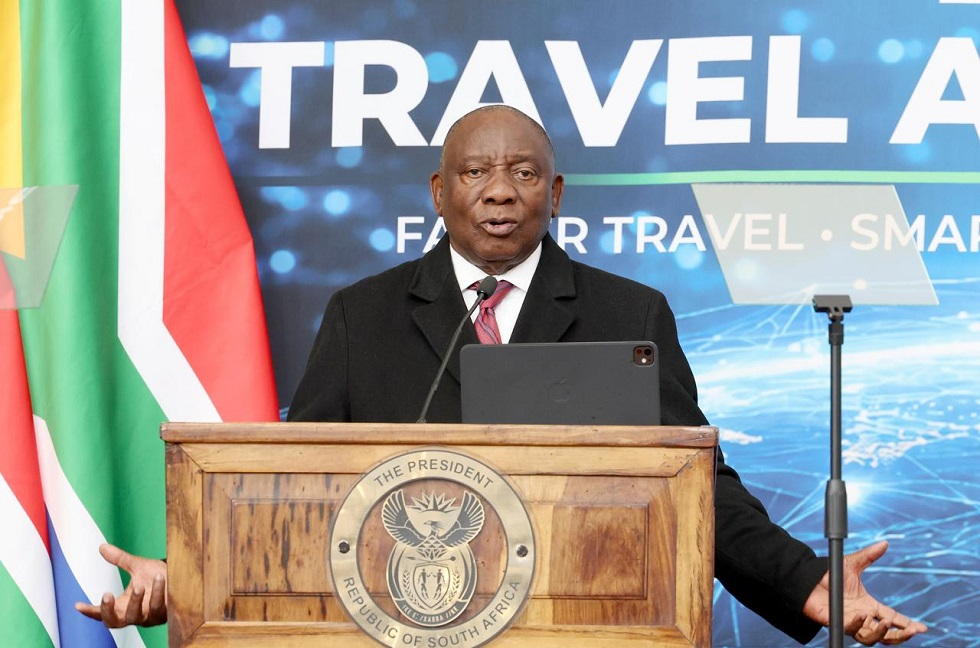
South Africa has taken a major step towards modernising international travel with the official launch of its Electronic Travel Authorisation (ETA), a digital system designed to make entry into the country faster, easier and more predictable while strengthening border security.
President Cyril Ramaphosa launched the system at OR Tambo International Airport on Wednesday, describing the reform as more than a digital upgrade.
“This is far more than the introduction of a new digital platform. It is a statement about the kind of country we are building,” Ramaphosa said.
He said the ETA would make South Africa more welcoming to legitimate travellers while improving security and strengthening the country's competitiveness in the global economy.
“It is about making South Africa more open to opportunity, more welcoming to legitimate travellers, more secure for our citizens and more competitive in the global economy.”
ETA expected to boost tourism, trade and investment
The launch forms part of government's broader structural reform programme aimed at removing barriers to economic growth, investment and job creation.
Ramaphosa said the ETA would support tourism, trade, investment, skills development and knowledge exchange, while improving the management and integrity of South Africa's borders.
“The Electronic Travel Authorisation system will make travel to South Africa easier, faster and more predictable. It will encourage tourism. It will support trade. It will attract investment,” he said.
The President said visa reform should be viewed as an economic intervention because international visitors contribute to a wide range of industries.
“More visitors mean more hotel bookings, more restaurants filled, more tour operators employed, more flights, more conferences, more exports, more investment, and more opportunities for South Africans to earn an income and build a better future.”
Digital gateway to South Africa
The ETA forms part of the Department of Home Affairs' Home Affairs @ Home vision, which aims to create a fully digital department capable of delivering secure, efficient and accessible public services.
Eligible travellers can apply online from anywhere in the world without having to visit a South African diplomatic mission or visa processing centre.
The digital system is designed to speed up applications, provide more predictable decisions and improve the overall travel experience.
The ETA was initially introduced in four strategic source markets - China, India, Indonesia and Mexico - in support of South Africa's G20 Presidency.
Government plans to expand the system to additional countries. Over time, digital processing is also expected to extend to other immigration services, including work and study visas.
Ramaphosa said the ETA represents the beginning of a much broader transformation of South Africa's immigration system.
Faster travel with stronger border security
While the ETA is intended to make legitimate travel easier, Ramaphosa stressed that greater efficiency does not mean weaker border controls.
“A modern immigration system is not a weaker immigration system. It is a smarter immigration system.”
The President said the use of technology would allow government to obtain more information about travellers before they arrive while strengthening biometric verification, identity management, risk assessment and border security.
The system will also help authorities identify people who may seek to abuse South Africa's immigration system while allowing lawful travellers to enter the country more efficiently.
Ramaphosa said the ETA supports government's Comprehensive Approach to Migration Management, balancing economic openness with national security.
A modern border experience
During his visit to the processing facilities at OR Tambo International Airport, Ramaphosa was taken through the ETA system by Border Management Authority Commissioner Dr Michael Masiapato.
The demonstration included a tourist application being processed through the new system, offering a practical example of the faster and more digitally enabled experience government wants international travellers to have.
Ramaphosa said OR Tambo was a fitting venue for the launch because of its role as South Africa's busiest international gateway and its association with struggle icon Oliver Reginald Tambo.
“For many years, OR Tambo travelled the world to rally support for the struggle against apartheid. He carried South Africa's hopes across continents,” Ramaphosa said.
“He took South Africa to the world. Today, through this new system, we are strengthening the way in which the world comes to South Africa.”
He said the ETA would help ensure that South Africa's welcome is “not only warm, but also modern, efficient and secure.”
The launch also coincides with the country's Milestones of Freedom campaign, themed “Honouring the Past. Delivering the Future.” The year-long initiative promotes social cohesion, reflects on South Africa's democratic journey and links historical remembrance with community service.
ETA forms part of wider economic reforms
The ETA is being implemented as part of the structural reforms under Operation Vulindlela, established in 2020 to address longstanding constraints to South Africa's economic growth.
The programme has focused on areas including electricity, logistics, telecommunications, water infrastructure, the ease of doing business and immigration.
Ramaphosa said the reforms were interconnected and aimed at removing barriers to investment, economic growth and job creation.
“These are not isolated reforms. Together, they are removing barriers to growth, investment and job creation. They are making South Africa a more competitive economy.”
He said the progress showed that meaningful reform was possible when government worked with urgency, purpose and strong partnerships.
Government working together
The President said the success of the ETA would depend on cooperation between the Department of Home Affairs, Border Management Authority, South African Revenue Service, Department of Tourism, South African Tourism, the aviation industry, diplomatic missions, technology partners and the private sector.
He described South Africa's borders as strategic national assets where security, trade, tourism, logistics and economic development intersect.
“Our borders are not merely points of entry. They are strategic national assets. They are where security, trade, tourism, logistics and economic development come together.”
Ramaphosa commended the departments, agencies, technology partners and other stakeholders involved in implementing the ETA.
A new chapter in South Africa's global presence
Ramaphosa said the ETA represents a vision of a South Africa that is both open and secure - welcoming legitimate travellers while protecting its borders and advancing the country's economic interests.
“Today's launch is about much more than visas. It is about the future of our country,” he said.
The President said South Africa must remain a country that welcomes the world with confidence, attracts investment, embraces innovation and delivers efficient, modern and responsive public services.
“This is the country we are building. It is a country that understands that economic growth requires both openness and security. It is a country determined to compete with the best in the world.”
He said the ultimate goal was to create more jobs, expand opportunities and improve the lives of South Africans.