Western Cape urged to prepare for El Niño risks


Western Cape Premier Alan Winde has urged residents to prepare for the growing risks associated with climate change and the current El Niño Southern Oscillation (ENSO) climate pattern.

Speaking during a digicon on Thursday, Winde, Western Cape Local Government, Environmental Affairs and Development Planning Minister Anton Bredell, and provincial officials outlined the province’s preparedness for possible weather-related impacts.

“The Western Cape has learned difficult lessons over the past several months and years; we must all always be prepared for the pressures of climate change and associated risks,” Winde said.

Understanding the risks

ENSO is a global climate cycle driven by changes in Pacific Ocean temperatures that can influence weather patterns around the world.

The system is currently in an El Niño phase and is expected to strengthen over the coming months. While its most severe effects in South Africa are generally felt in summer-rainfall regions, the Western Cape could still face increased temperatures, extreme heat, higher fire risks and additional pressure on water resources.

The fire risk has been compounded by a relatively dry winter so far.

Winde noted that while the province experienced severe flooding and heavy rainfall in May 2026, this does not necessarily mean enough rain fell to secure water supplies through the summer.

“We must all be aware of our water usage,” he said.

Climate modelling raises concerns


The provincial government has worked with the University of Cape Town to model future climate patterns in the Western Cape.

Karen Shippey, Chief Director of Environmental Sustainability at the Western Cape Government, said the province is experiencing significant temperature increases and an acceleration in climate change.

The modelling points to increasingly frequent and intense droughts, more hot days and fewer cold days, reduced autumn rainfall across most sub-regions, and changes in wind patterns and strength.

More than R65 million for water resilience

Western Cape dam levels are currently 5% lower than they were at the same time last year.

To strengthen water security, the provincial Department of Local Government has allocated R40.5 million through its Water Resilience Grant for the 2026/27 financial year.

A further R25.2 million has been allocated through the Groundwater and Response Programme, bringing total targeted investment in water resilience initiatives to more than R65 million.

The funding is aimed at helping municipalities improve infrastructure, reduce water losses, strengthen monitoring and management systems, and develop alternative water sources.

Winde said the province is investing proactively in preparation for future natural disasters.

“We must be more proactive and predictive in our planning. We must ensure we are prepared for any eventuality. But this responsibility does not only fall on us as a provincial government; all of us play a role,” he said.

Bredell stressed that disaster preparedness must begin before an emergency develops.

“Preparedness cannot begin when the first major wildfire breaks out, or when water systems come under pressure, or when a prolonged heatwave starts affecting vulnerable communities. By then, we are already responding to a crisis,” he said.

Graham Paulse, Head of the Department of Local Government, also stressed the importance of cooperation between municipalities, disaster management structures, stakeholders and residents to reduce the growing risk of fires.

Head of the Provincial Disaster Management Centre, Dr Colin Deiner, said disaster planning is an ongoing process and requires the support of residents.

“Our planning does not start now; it starts at the end of every summer. And we need the help of every single resident of our province,” he said.

Winde urged residents, particularly those living in high-risk areas, to prepare now.

“Where you live matters and if you know that there is a fire risk in your area, now is the time to prepare,” he said.
Western Cape Government brings Rental Housing Tribunal services closer to Garden Route residents


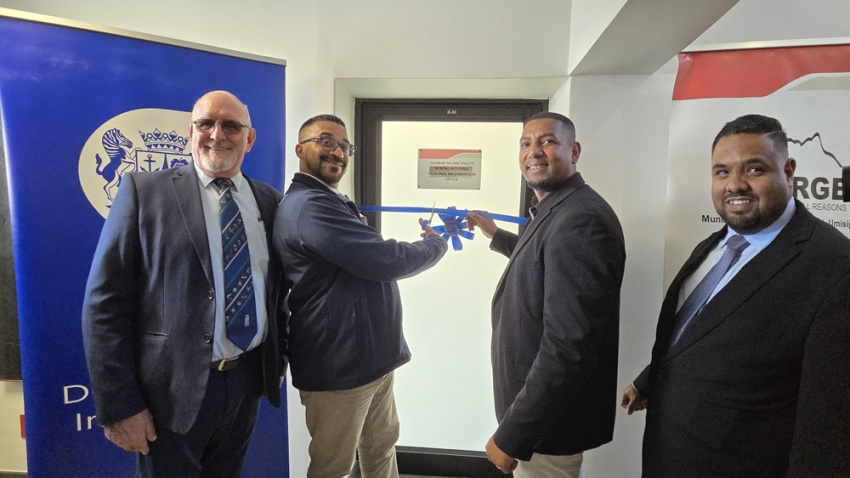
The Western Cape Government has expanded access to rental housing support in the Garden Route with the launch of two new Rental Housing Tribunal offices in George and Oudtshoorn.

Western Cape Minister of Infrastructure Tertuis Simmers officially launched the offices on Monday, 17 August, bringing the number of local, free and professional rental housing advisory and dispute-resolution services in the Southern Cape to four.

The new offices mean residents no longer need to travel hundreds of kilometres to Cape Town to access administrative justice and assistance with rental-related disputes.

Operating under the Rental Housing Act, the offices will provide tenants and landlords with guidance on their rights and responsibilities, face-to-face advice, early dispute-resolution support and formal referrals to the Western Cape Rental Housing Tribunal.

Speaking at the launch, Minister Simmers said the initiative is aimed at making government services more accessible while promoting a fair, transparent and stable rental market.

“Today is about much more than opening government offices. It is about bringing government closer to the people.”

The expansion comes as rapid economic and population growth in the Garden Route continues to drive demand for well-regulated rental housing. The new offices will help communities better understand their rights and responsibilities, resolve disputes earlier and support safe, lawful and dignified living conditions.

The George and Oudtshoorn offices complement the fully operational Rental Housing Tribunal office in Mossel Bay and the recently launched office in Bitou, further strengthening access to rental housing services across the region.

Minister Simmers stressed that the Tribunal’s role is not to favour either landlords or tenants, but to ensure a balanced rental environment.

“Responsible property owners must feel secure in their investments, while tenants must be treated with dignity and fairness.”

The Western Cape Department of Infrastructure says it will continue working to decentralise advisory and dispute-resolution services across municipalities, bringing government support closer to communities while strengthening housing stability and access to justice for both landlords and tenants.

Western Cape Government Strengthens Financial Response to Severe Weather Damage


The Western Cape Government is strengthening its financial response to the damage caused by a series of severe weather events that hit the province in May 2026, with total losses estimated at R9.979 billion.

Western Cape Premier Alan Winde chaired a provincial Cabinet meeting on Wednesday, where Cabinet received an update on the ongoing recovery and repair efforts.

The scale of the damage means the cost of rebuilding and restoring infrastructure is expected to exceed the province’s current financial capacity. Provincial departments will therefore need to reprioritise their budgets to ensure critical recovery work continues.

The Western Cape Department of Local Government has submitted a funding application to the Department of Cooperative Governance and Traditional Affairs (COGTA), through the National Disaster Management Centre (NDMC), for financial assistance to address the shortfall in funding for essential infrastructure repairs and restoration.

The provincial government has also asked for its funding application to be considered by the relevant National Treasury Committee under national provisions for unforeseeable and unavoidable expenditure.

In the meantime, Cabinet has approved R480 million in financial commitments to various provincial departments from the province’s 2026/27 Unforeseen and Unavoidable Reserve.

Premier Winde said the province could not afford to wait for national disaster relief processes to be finalised before taking action.
“As a province we cannot wait for lengthy disaster relief processes from National Government to be finalised. We must act decisively. We have excellent financial management mechanisms in place and a contingency reserve which we now have to exhaust because our economy and communities cannot be held ransom by damaged infrastructure.”

The R480 million allocation will allow provincial departments to intensify their response and recovery efforts while the Western Cape awaits confirmation of additional funding from the NDMC.

Winde said the province would continue prioritising interventions aimed at restoring essential services and repairing damaged public infrastructure.

“The magnitude of this disaster requires us to work even harder to secure every available rand needed to rebuild damaged infrastructure and support affected communities. The financial impact extends across multiple departments, which adds urgency to our response. We are committed to doing everything possible to ensure that recovery efforts continue without delay.”

Cabinet also committed to ensuring that the recovery funding process is managed transparently and responsibly.

Winde warned that the increasing frequency and severity of extreme weather events, driven in part by a changing climate, means government must place greater emphasis on disaster prevention and risk reduction.

“We cannot only respond after disaster strikes. We must also do more to reduce the risks before these events happen.”

Preventative measures will include accelerating the cutting and maintenance of firebreaks, clearing invasive alien vegetation from waterways and water bodies, upgrading stormwater systems and strengthening the maintenance of critical infrastructure.

The Western Cape Government says these measures are essential to building greater resilience and reducing the impact of future extreme weather events on communities and infrastructure.

Construction Begins on R1.2 Billion Welmoed Affordable Housing Development in Eerste River

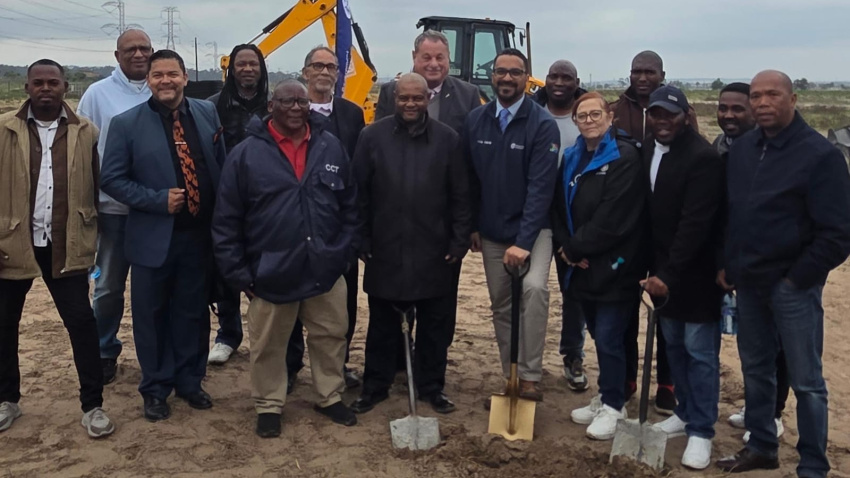
Construction has officially begun on the Western Cape Government's Welmoed Estate development in Eerste River, marking the start of one of the province's largest affordable housing projects.

Western Cape Minister of Infrastructure Tertuis Simmers turned the first sod on Thursday, signalling the beginning of a development that is expected to deliver around 8,000 housing opportunities by 2040 at an estimated cost of R1.2 billion.

The project follows months of public engagement, with the Western Cape Department of Infrastructure holding a series of community meetings from August last year. During these meetings, residents were able to raise concerns, ask questions and receive updates on the progress of the development.

The department also conducted two Beneficiary Verification Drives, allowing people registered on the housing demand database to update their information. A total of 6,253 beneficiaries visited verification centres in Mfuleni, Stratford, Blackheath, Kalkfontein and Hillcrest.

Minister Simmers said the project reflects what can be achieved through collaboration between government and local communities.

"This exciting day is only possible because of the residents being willing to walk this journey with us. From the many public meetings we held, to verification drives, to the sod-turning today, the Western Cape Government and the people of this community walked the journey together to make this possible."

The Welmoed Estate development will include more than just housing. Plans feature two large retail sites, four community facilities including a clinic and sports precinct, as well as five school sites, creating a fully integrated mixed-use community.

The first phase of the project is expected to be completed by 2030 and will provide 3,296 housing opportunities. Of these, 2,961 will be allocated for affordable housing through programmes such as First Home Finance, Rental Housing, Breaking New Ground and Deferred Ownership. A further 380 opportunities have been reserved for micro and private developers.

The first homes are expected to be handed over to beneficiaries towards the end of next year.

In addition to addressing the housing shortage, the project is expected to boost the local economy by creating jobs and supporting business activity throughout the construction period.

Minister Simmers said reaching the construction stage was a significant milestone.

"It brings me so much joy to get to this point in our housing delivery process. To turn the sod of a project that will not only provide housing opportunities for our people, but also establish a new community filled with opportunity, is a great pleasure."

The Welmoed Estate forms part of the Western Cape Government's broader strategy to accelerate affordable housing delivery through integrated, mixed-use developments located closer to economic opportunities.
error:
Scroll to Top