Western Cape mobilises emergency response to Beaufort West water crisis

The Western Cape Government has launched a coordinated emergency response after severe flooding damaged critical water infrastructure in Beaufort West, disrupting water services to the town.

Local Government MEC Anton Bredell says the priority is to restore water supply as quickly as possible while ensuring residents receive emergency water.

Government agencies, the Beaufort West Municipality, Central Karoo District Municipality, disaster management teams and private and humanitarian partners have been mobilised since the incident was identified on 4 September.

Emergency measures include deploying water tankers, distributing water to affected communities, assessing damaged infrastructure and providing engineering support. The province has also made R1 million available for urgent repairs.

Bredell says calls for a formal disaster declaration have not delayed the response, stressing that government can provide emergency assistance without such a declaration.

Access to the damaged 600-millimetre pipeline was initially difficult because of high river levels and flooding. Technical teams have since continued working on the infrastructure, while parts of the municipal water system have been restored and reservoir levels replenished.

Emergency water supplies remain in place, with vulnerable communities and critical public facilities receiving particular attention.

Bredell says all available resources will continue to be directed towards maintaining emergency water supplies and restoring normal services as quickly and safely as possible.

Temporary measures agreed to protect Diaz Beach as erosion worsens

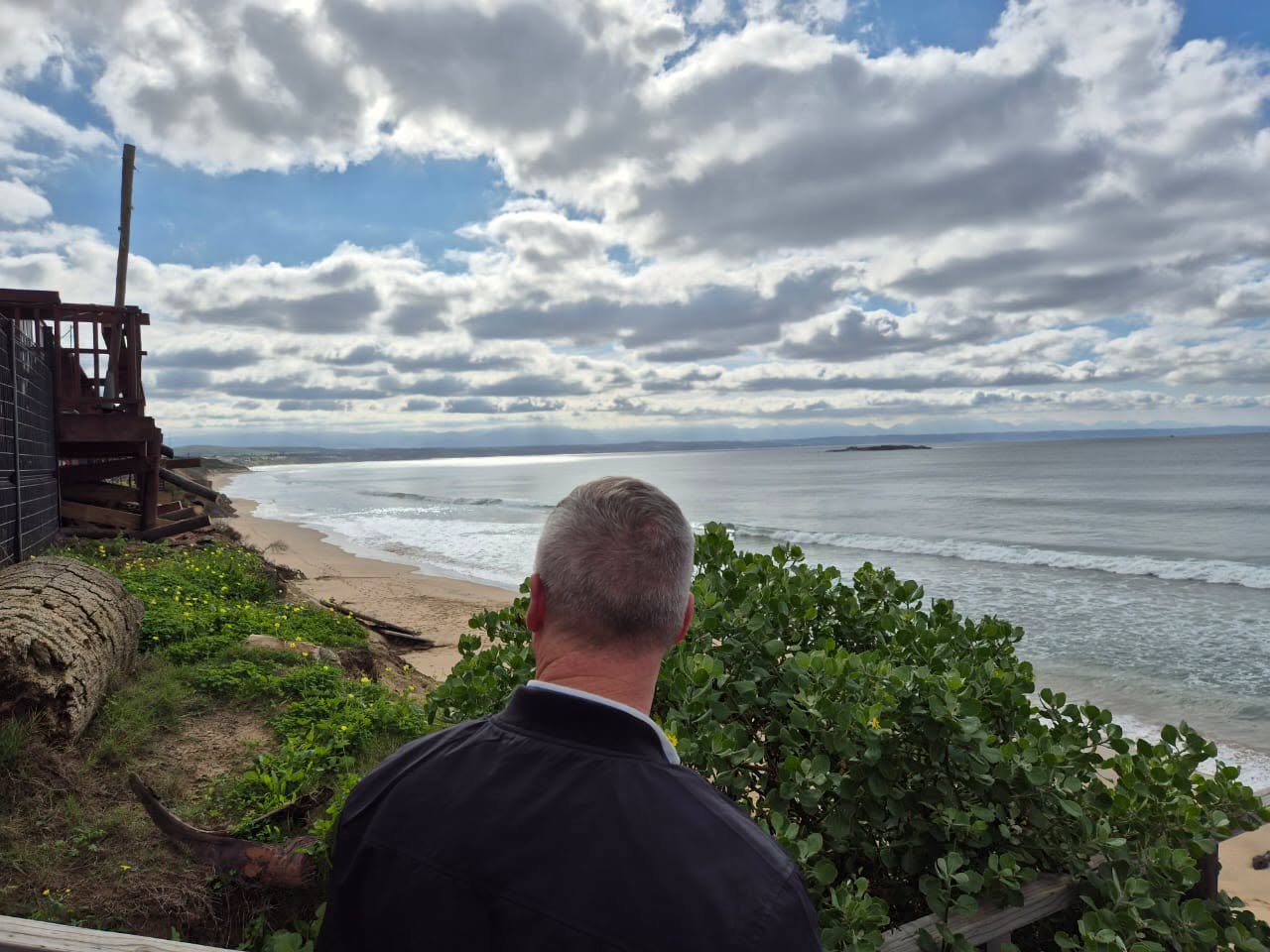
The Western Cape Government and Mossel Bay Municipality have reached an agreement on urgent temporary measures to address the ongoing coastal erosion threat at Diaz Beach.

The provincial Department of Environmental Affairs and Development Planning said it recognised the serious risks posed by the erosion and the need to protect people, nearby properties and public infrastructure.

As an immediate intervention, Mossel Bay Municipality has proposed installing geotextile sandbags to stabilise the affected dune and reduce the risk of further collapse.

The temporary measure is aimed at preventing properties and infrastructure from collapsing onto the beach, while also helping to reduce the danger to members of the public entering an area that remains unsafe.

The provincial government said both authorities agreed that a permanent solution to the coastal erosion problem is needed. A Basic Assessment process currently underway will help determine the most appropriate long-term intervention.

Department spokesperson Rudolf van Jaarsveldt stressed that the proposed sandbags should not be viewed as a permanent solution.

He warned that coastal protection structures can interfere with the natural movement of sand between the dune, beach and nearshore areas. If poorly designed or managed, such measures could contribute to further erosion, beach narrowing and the eventual loss of the beach as a public amenity.

Environmental Affairs and Development Planning MEC Anton Bredell has decided to comply with a court order permitting the sandbags to be installed as an urgent temporary measure.

The final long-term approach will be determined through the Basic Assessment process in the coming months. This could potentially result in the removal of the sandbags, while options such as sand replenishment may also be considered.

The Western Cape Government and Mossel Bay Municipality said they would continue working together to manage the immediate risks at Diaz Beach while developing longer-term measures to improve coastal management in the area.

Diaz Beach remains closed to the public due to unstable dune slopes and severe weather erosion.

Western Cape urged to prepare for El Niño risks


Western Cape Premier Alan Winde has urged residents to prepare for the growing risks associated with climate change and the current El Niño Southern Oscillation (ENSO) climate pattern.

Speaking during a digicon on Thursday, Winde, Western Cape Local Government, Environmental Affairs and Development Planning Minister Anton Bredell, and provincial officials outlined the province’s preparedness for possible weather-related impacts.

“The Western Cape has learned difficult lessons over the past several months and years; we must all always be prepared for the pressures of climate change and associated risks,” Winde said.

Understanding the risks

ENSO is a global climate cycle driven by changes in Pacific Ocean temperatures that can influence weather patterns around the world.

The system is currently in an El Niño phase and is expected to strengthen over the coming months. While its most severe effects in South Africa are generally felt in summer-rainfall regions, the Western Cape could still face increased temperatures, extreme heat, higher fire risks and additional pressure on water resources.

The fire risk has been compounded by a relatively dry winter so far.

Winde noted that while the province experienced severe flooding and heavy rainfall in May 2026, this does not necessarily mean enough rain fell to secure water supplies through the summer.

“We must all be aware of our water usage,” he said.

Climate modelling raises concerns


The provincial government has worked with the University of Cape Town to model future climate patterns in the Western Cape.

Karen Shippey, Chief Director of Environmental Sustainability at the Western Cape Government, said the province is experiencing significant temperature increases and an acceleration in climate change.

The modelling points to increasingly frequent and intense droughts, more hot days and fewer cold days, reduced autumn rainfall across most sub-regions, and changes in wind patterns and strength.

More than R65 million for water resilience

Western Cape dam levels are currently 5% lower than they were at the same time last year.

To strengthen water security, the provincial Department of Local Government has allocated R40.5 million through its Water Resilience Grant for the 2026/27 financial year.

A further R25.2 million has been allocated through the Groundwater and Response Programme, bringing total targeted investment in water resilience initiatives to more than R65 million.

The funding is aimed at helping municipalities improve infrastructure, reduce water losses, strengthen monitoring and management systems, and develop alternative water sources.

Winde said the province is investing proactively in preparation for future natural disasters.

“We must be more proactive and predictive in our planning. We must ensure we are prepared for any eventuality. But this responsibility does not only fall on us as a provincial government; all of us play a role,” he said.

Bredell stressed that disaster preparedness must begin before an emergency develops.

“Preparedness cannot begin when the first major wildfire breaks out, or when water systems come under pressure, or when a prolonged heatwave starts affecting vulnerable communities. By then, we are already responding to a crisis,” he said.

Graham Paulse, Head of the Department of Local Government, also stressed the importance of cooperation between municipalities, disaster management structures, stakeholders and residents to reduce the growing risk of fires.

Head of the Provincial Disaster Management Centre, Dr Colin Deiner, said disaster planning is an ongoing process and requires the support of residents.

“Our planning does not start now; it starts at the end of every summer. And we need the help of every single resident of our province,” he said.

Winde urged residents, particularly those living in high-risk areas, to prepare now.

“Where you live matters and if you know that there is a fire risk in your area, now is the time to prepare,” he said.

Firefighters honoured after one of the Western Cape’s toughest fire seasons

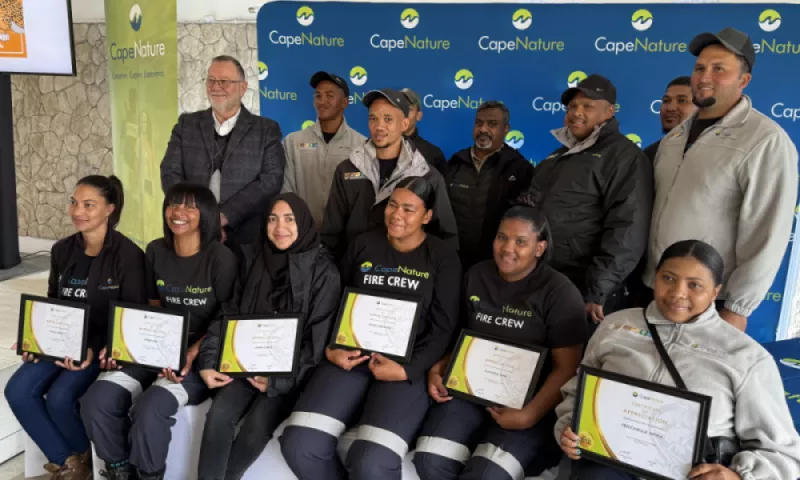
CapeNature has paid tribute to the firefighters and field rangers who risked their lives during one of the Western Cape's most challenging wildfire seasons.

An appreciation event was held in Velddrif on Tuesday, 4 August, recognising a representative group of firefighters and field rangers who served on the frontlines throughout the 2025/26 fire season.

Despite battling extreme heat, rugged terrain and unpredictable fire conditions, the teams worked tirelessly to protect communities, infrastructure and the province's unique biodiversity. Their efforts helped minimise damage to homes, public infrastructure and environmentally sensitive areas.

The event also marked International Firefighters' Day, observed annually on 4 May, and followed World Ranger Day on 31 July, highlighting the dual role many CapeNature field rangers play as firefighters.

CapeNature also acknowledged the vital support received from municipalities, the City of Cape Town, the Provincial Disaster Management Centre, Working on Fire, Fire Protection Associations, Volunteer Wildlife Services and private landowners who assisted throughout the wildfire season.

Western Cape Minister for Local Government, Environmental Affairs and Development Planning, Anton Bredell, praised the firefighters for their dedication.

"The reality is that firefighting is one of the most physically demanding occupations imaginable. Thank you for your professionalism, your courage and the sacrifices your families make alongside you. You represent the very best of the public service," Bredell said.

CapeNature CEO Dr Ashley Naidoo warned that wildfire activity continues to increase across the province.

"Our firefighters continue to go above and beyond to protect our communities, biodiversity and infrastructure, often under extremely difficult conditions. Our long-term analysis shows the number of fires is on a significant upward trend, with the average area burned per fire more than doubling over the past 20 years," Naidoo said.

The 2025/26 fire season began earlier than usual, with 35 fires recorded during spring before the Cederberg Wilderness Area experienced its largest wildfire since 1997. About 53,310 hectares burned, affecting roughly 75% of the reserve.

Two major fires in January later scorched another 33,719 hectares in the Paarl, Franschhoek and Jonkershoek areas, destroying the historic Chamonix Hotel National Monument. Between January and March alone, nearly 68,000 hectares were burned.

Over the entire season, CapeNature responded to 107 wildfire incidents that burned a combined 215,936 hectares. Nearly 76,650 hectares of the affected land fell within CapeNature-managed reserves.

CapeNature field ranger and firefighter Ethan le Fleur said conditions on the fireline could change in an instant.

"A fire that looked contained could suddenly shift with the wind and escalate quickly. You are exhausted, but you keep going because people are depending on you, your team, communities and the landscapes we protect," he said.

Firefighter Claudene Zimri added that while the work is physically and emotionally demanding, teamwork remains one of the greatest strengths during major wildfire operations.

"The physical and emotional demands are intense, but so is the motivation to keep protecting lives and the environment. What stands out is how different organisations work together. That support makes the hardest days manageable," she said.
error:
Scroll to Top