Firefighters honoured after one of the Western Cape’s toughest fire seasons

CapeNature has paid tribute to the firefighters and field rangers who risked their lives during one of the Western Cape's most challenging wildfire seasons.

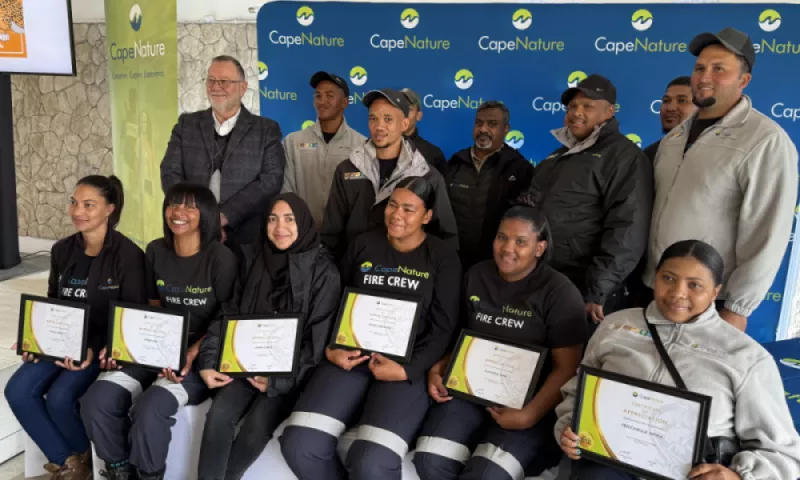
An appreciation event was held in Velddrif on Tuesday, 4 August, recognising a representative group of firefighters and field rangers who served on the frontlines throughout the 2025/26 fire season.

Despite battling extreme heat, rugged terrain and unpredictable fire conditions, the teams worked tirelessly to protect communities, infrastructure and the province's unique biodiversity. Their efforts helped minimise damage to homes, public infrastructure and environmentally sensitive areas.

The event also marked International Firefighters' Day, observed annually on 4 May, and followed World Ranger Day on 31 July, highlighting the dual role many CapeNature field rangers play as firefighters.

CapeNature also acknowledged the vital support received from municipalities, the City of Cape Town, the Provincial Disaster Management Centre, Working on Fire, Fire Protection Associations, Volunteer Wildlife Services and private landowners who assisted throughout the wildfire season.

Western Cape Minister for Local Government, Environmental Affairs and Development Planning, Anton Bredell, praised the firefighters for their dedication.

"The reality is that firefighting is one of the most physically demanding occupations imaginable. Thank you for your professionalism, your courage and the sacrifices your families make alongside you. You represent the very best of the public service," Bredell said.

CapeNature CEO Dr Ashley Naidoo warned that wildfire activity continues to increase across the province.

"Our firefighters continue to go above and beyond to protect our communities, biodiversity and infrastructure, often under extremely difficult conditions. Our long-term analysis shows the number of fires is on a significant upward trend, with the average area burned per fire more than doubling over the past 20 years," Naidoo said.

The 2025/26 fire season began earlier than usual, with 35 fires recorded during spring before the Cederberg Wilderness Area experienced its largest wildfire since 1997. About 53,310 hectares burned, affecting roughly 75% of the reserve.

Two major fires in January later scorched another 33,719 hectares in the Paarl, Franschhoek and Jonkershoek areas, destroying the historic Chamonix Hotel National Monument. Between January and March alone, nearly 68,000 hectares were burned.

Over the entire season, CapeNature responded to 107 wildfire incidents that burned a combined 215,936 hectares. Nearly 76,650 hectares of the affected land fell within CapeNature-managed reserves.

CapeNature field ranger and firefighter Ethan le Fleur said conditions on the fireline could change in an instant.

"A fire that looked contained could suddenly shift with the wind and escalate quickly. You are exhausted, but you keep going because people are depending on you, your team, communities and the landscapes we protect," he said.

Firefighter Claudene Zimri added that while the work is physically and emotionally demanding, teamwork remains one of the greatest strengths during major wildfire operations.

"The physical and emotional demands are intense, but so is the motivation to keep protecting lives and the environment. What stands out is how different organisations work together. That support makes the hardest days manageable," she said.


Marine Protected Areas Day 2026: How MPAs Support Oceans, Communities and Human Wellbeing

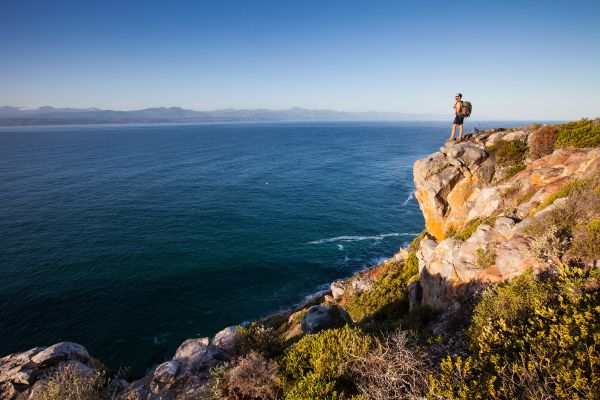
Marine Protected Areas (MPAs) Day was observed on Saturday (1 August), marking a global initiative first introduced in 2021 to highlight the vital role MPAs play in protecting the world's oceans, while supporting the wellbeing of people and communities. The day encouraged greater appreciation of Marine Protected Areas and the many benefits they provided for both marine biodiversity and society.

The 2026 theme, "Ocean Protection Needs Human Connection," emphasised that safeguarding the oceans is a shared responsibility. Individuals, businesses, communities and governments are encouraged to reduce pollution, respect Protected Areas, support sustainable fisheries and make environmentally responsible decisions to help secure the future of marine ecosystems.

The message closely reflected the One Health approach, which recognises that the health of people, animals and ecosystems is interconnected. The concept gained renewed international attention during the IUCN World Conservation Congress 2025, where it was promoted as a key framework for addressing biodiversity loss, climate change and other environmental challenges. Marine Protected Areas remain central to this approach because healthy oceans ultimately support healthy people.

MPAs protect marine and estuarine ecosystems, allowing species to thrive while preserving relatively undisturbed environments where harvesting is restricted or prohibited. These Protected Areas also serve as valuable reference sites for scientists studying long-term ecological changes and demonstrate how intact ecosystems are more resilient to climate change, pollution and extreme weather.

Healthy marine ecosystems also benefit surrounding communities. As fish and other marine species naturally move beyond MPA boundaries through a process known as "spillover", they help replenish nearby fisheries, strengthen marine ecosystems and support food security and local livelihoods.

One example is the Betty's Bay MPA, where a thriving marine environment and its African Penguin colony continue to attract thousands of visitors annually. Tourism generate valuable income for local businesses, including the community-run On the Edge restaurant, demonstrating how healthy oceans support both biodiversity conservation and economic development.

However, experts warned that these benefits could not be taken for granted. Rivers, estuaries and oceans remain closely connected, meaning pollution entering freshwater systems eventually reach coastal waters, threatening marine habitats, wildlife, tourism, public health and local economies.

The One Health approach had already proven its value in the Western Cape when authorities responded to rabies cases detected in Cape fur seals. Human and animal health experts worked together to monitor and manage the disease, highlighting the importance of coordinated action to protect both wildlife and people.

Marine Protected Areas Day ultimately reinforced that protecting the oceans extended far beyond conserving marine life. Healthy marine ecosystems continue to underpin food security, tourism, recreation, cultural heritage and human wellbeing.

The observance served as a reminder that safeguarding South Africa's Marine Protected Areas require collective action to ensure they continue benefiting both nature and future generations.
error: eRadio is protected !
Scroll to Top